
Tag: Advice

  • Ask the Editor: The Meaning of Jeffrey Epstein

    Ask the Editor: The Meaning of Jeffrey Epstein

    To the editor,

    Will Trump’s past association with Jeffrey Epstein take him down, as it did to Prince Andrew and Peter Mandelson in the UK? Who else might be involved and why is everything so slow to come out? I’ve been hearing about Epstein and Ghislaine Maxwell for years but have only followed the story over the past year.

    Respectfully,

    Robert.

    Hi Robert,

    It is impossible to judge whether the full magnitude of the Epstein ring will ever emerge. When this story first made headlines, it seemed plausible that the crimes were only the work of a perverted billionaire who used people like Bill Clinton, Donald Trump, Bill Gates and various Hollywood celebrities to shield his reputation. Since Trump was returned to the White House he has made blunt attempts to suppress the Epstein story—even labelling it as a hoax. Predictably, this tactic has backfired and instead made Epstein an even greater object of scrutiny.

    Setting the prurient details of the pedophile ring aside, the number of prominent people that Epstein had personally met and spent time with is strange. Over the summer, Chris Hedges recorded an illuminating podcast with Nick Bryant, the investigative journalist who first published Epstein’s contact list and flight logs. They cover the obscure relationship that Jeffrey Epstein had with Ghislaine Maxwell, his mysterious source of wealth and the possibility that he was an intelligence asset running a honeytrap operation. The “friendships” that Epstein was desperate to make and his connections to the Israeli government certainly add weight to that possibility.

    The political ramifications are fairly straightforward. Trump’s proclivities are well documented and long-known at this point. It is unlikely that his involvement in Epstein’s crimes will move the needle for anybody unconvinced by prior evidence. Outside of the Trump cult, don’t be surprised to see a few more heads roll as more details about Epstein’s past associations come to light. 

    The meaning of Jeffrey Epstein should not be partisan scorekeeping. These are crimes committed against flesh-and-blood working class children whose victimization was enabled by capitalist class power. Intelligence asset or not, it is no coincidence that Epstein first accessed wealth before building a sex trafficking ring. Mark Fisher once described capital as “an abstract parasite, an insatiable vampire and zombie-maker; but the living flesh it converts into dead labour is ours, and the zombies it makes are us.”1 As capitalism turns both nature and humanity into venal objects, those who live by the labour of others are the most ripe to feel entitled to the bodies of workers and their children.

    The crimes are obscene but that is not why it runs in the collective consciousness. What the Epstein saga and other conspiracy theories reflect is a deep-seated insecurity that we have about our position in the hierarchy of capitalist production. The glaring lack of justice for working class families preyed on by Jeffrey Epstein and Ghislaine Maxwell is an illustration of class domination; an economy where labouring bodies transform the world into a playground for the rich.

    In sols,

        Your editor.

    Send your questions to the Reclamationeditor@thereclamation.co

    Footnotes:


    1. Mark Fisher, Capitalist Realism: Is There No Alternative? (Zero Books, 2009): 15. ↩︎
  • Ask the Editor: “I’m Afraid of Dying”

    Ask the Editor: “I’m Afraid of Dying”

    Dear editor,


    I’ve been surrounded by death recently. At least it feels like that. My mentor from college passed away from metastatic breast cancer a few months ago. She was in her thirties. Then it was a cherished family friend; in her sixties, also cancer. Most recently a co-worker’s heart gave out on the job. That was only two months ago. I have felt doom since then. It is affecting my sleep. What if I don’t wake up in the morning? Any moment my life could be torn away from me. Will I receive a cancer diagnosis? Brain aneurysm? Could my heart explode next time I am on the treadmill? What happens afterward? I’m afraid of dying.

    Thanks,

    Charlotte.

    Dear Charlotte,

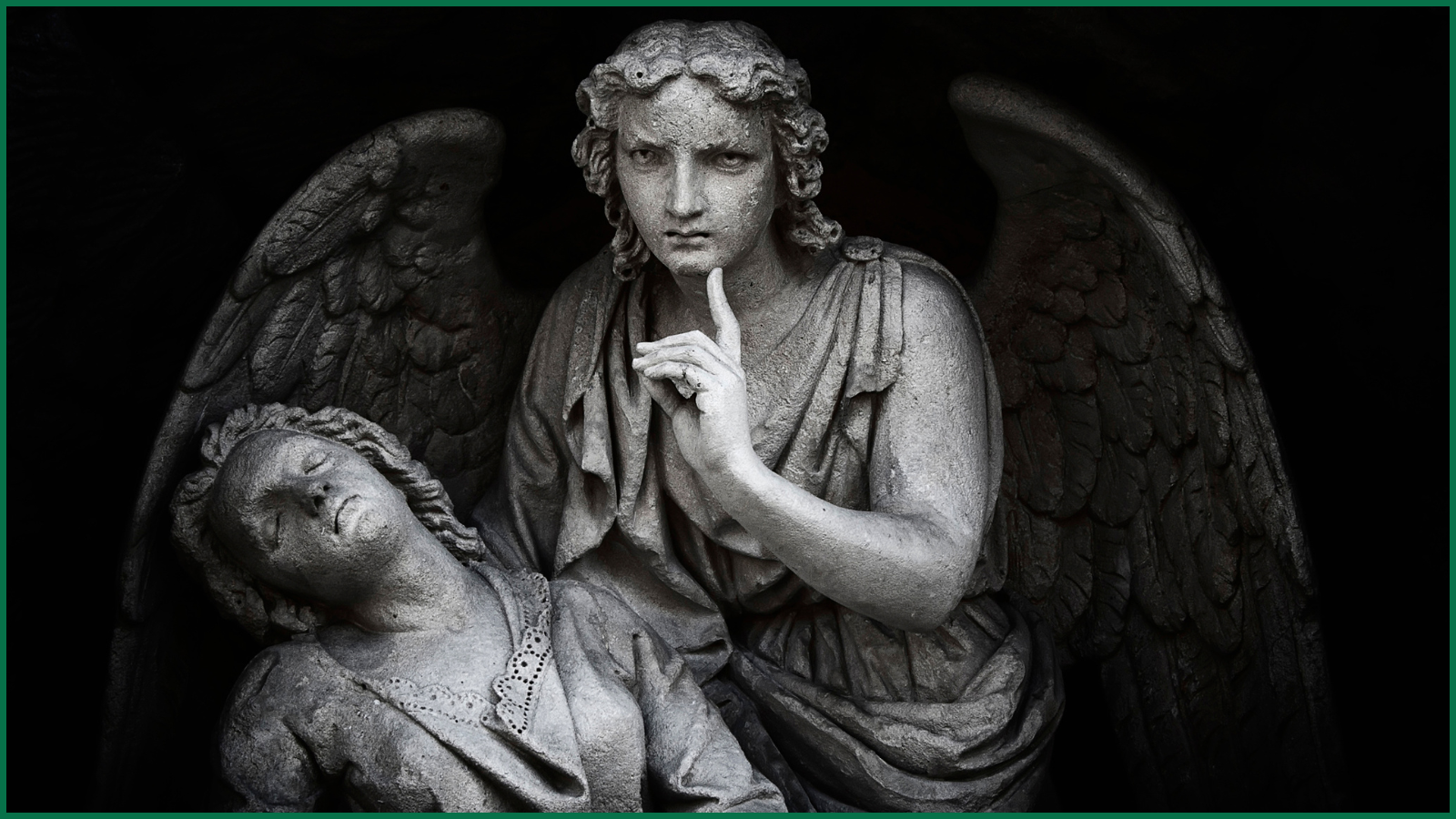
    I find the present age a little too scientific about this issue. Regularly attend the doctor, have blood analyzed, wear a helmet on the bike and don’t think about mortality. That’s a long ways off. And it might be. But it might not be. In my own experience, grief is almost “not supposed to be” discussed past the funeral and, for pensive people, this prohibition may exacerbate the death anxiety. In order to live with the uncertainty of existence we must dispel the image of a hungry grim reaper hanging about our shadows with a gleaming sickle.

    Freud saw death as a drive to “restore an earlier state”—the state of inorganic being. And Marx said that “death seems to be a harsh victory of the species over the particular individual and to contradict their unity.” Both are true in that rational Enlightenment sort of sensibility but they have all the comfort of a cold steel bed. 

    Religious beliefs aside, I’ll point out that the ancient philosophers tended to be more confrontational with this subject than those that came later. At the height of Christendom all attention was paid to the afterlife and in modernity all attention is paid to rigid inquiry. For this subject I turn to to the Epicureans who lived by the adage: “Death is nothing to us.” As atomic beings, once we lose our senses, we lose our ability to perceive, worry or fear anything. It is therefore irrational to worry about non-existence as there is nothing that can be feared in that state. What you are experiencing is neither an authentic fear of death nor a fear of loss. We do not lose our lives, we only cease to live them.

    It seems to be the suddenness by which your loved ones and colleague stopped living that has aggravated your grief and catalyzed anxiety. There may be unfulfilled wishes that flummox you. Epicurus said: “He who is in least need of tomorrow will approach it with the greatest pleasure.”1 This is where I believe you should channel your conscious energy. What provides you enjoyment? Try to arrive happy every night to bed. There are likely social pressures and internal judgements that you are facing. Consciously and humbly work through them. Do you have unfulfilled goals and aspirations stoking this “need for tomorrow”? It is important that you locate these because they are the true sources of anxiety. The fear of dying is relieved once you temper the need for tomorrow and render it no more than a pleasant want.

    In sols,

        Your editor.

    Send your questions to the Reclamationeditor@thereclamation.co

    Footnotes:


    1. Brad Inwood and L.P. Gerson, eds., The Epicurus Reader: Selected Writings and Testimonia (Hackett Publishing, 1994), 103. ↩︎
  • Ask the Editor: “What is Postmodernism?”

    Ask the Editor: “What is Postmodernism?”

    Dear editor,


    Here’s something I’ve heard applied to Donald Trump, woke liberal activists and everyone Jordan Peterson doesn’t like: postmodern. It’s also a label placed onto some of my favourite films, buildings and artwork, like Eternal Sunshine of the Spotless Mind, the Petronas Towers in Kuala Lumpur and Andy Warhol prints.


    What is postmodernism? Is it good or bad?

    Cheers,

    Sora.

    Dear Sora,


    In his 1991 book Postmodernism, or, the Cultural Logic of Late Capitalism, Fredric Jameson argued presciently that the radical structural changes to the economy underway in the 1980s created a western culture disillusioned by progress, marking a break with modernity in the process.1 33 years later, the disillusionment has deepened and postmodernism rules the public sphere


    After the medieval period was destroyed by the riches of exploited labour and resources from the Americas, modernity followed in its wake. Modernity is characterized by Enlightenment philosophy, secularization and science, liberal democracy, romantic and realist artwork and International Style architecture. It is debatable whether we have truly exited modernity but postmodernism can at least describe its latest evolution. 


    The most consequential casualty of the postmodern turn is the belief in progress. This has given space for right wing populists around the world to lash out at the previous order and ruling institutions. Lacking any philosophical grounding, there has been a tidal wave of contradictory political expressions coming in from the right: nostalgia for past glory while undermining the institutions that facilitated it; trickle down tax policies and trade protectionism; conspiracy theories and “alternative facts;” religious affirmations and hedonistic menageries of drugs and sex. Anything goes, and this is the hallmark of postmodernism. Because there is no grand narrative of history or final destination for humanity, nothing has to make sense beyond the present moment. Postmodernism did not produce identity politics; on the contrary, identity politics relied on the modernist narrative of a society gradually abolishing social prejudices. The triumphalism of postmodern politics has destroyed the “woke” idea, and liberals abandon it as rats flee a sinking ship.


    Many of the postmodern elements seen lately in politics have existed for years in the realm of culture. The parade of cinematic reboots and remakes, nonlinear story structures, imitation of past styles without context and a fusion of high and low art are a few postmodern characteristics that Jameson identified. Postmodernist culture like film, music, artwork or architecture, relies on extensive reference to the past because of an inability to apprehend the future.


    Postmodernism isn’t good or bad. It is simply the cultural analog to our current economic structure and material life. Finding resonance with postmodern culture is expected as we, too, are products of late capitalism.  Just as we see postmodernism dominate the society of a nihilistic West, futurism dominates the society of an optimistic China. Only when the West has consciously apprehended its economic levers will it be able to determine its future and set foot to a new era yet again.

    In sols,

        Your editor.

    Send your questions to the Reclamationeditor@thereclamation.co

    Footnotes:


    1. Fredric Jameson, Postmodernism, or, the Cultural Logic of Late Capitalism (Duke University Press, 1991). ↩︎