
Tag: Africa

  • Marx and Shakespeare: Unracing Othello

    Marx and Shakespeare: Unracing Othello

    If virtue no delighted beauty lack,
    Your son-in-law is far more fair than black.

    —Duke of Venice, Act 1, Scene 3.

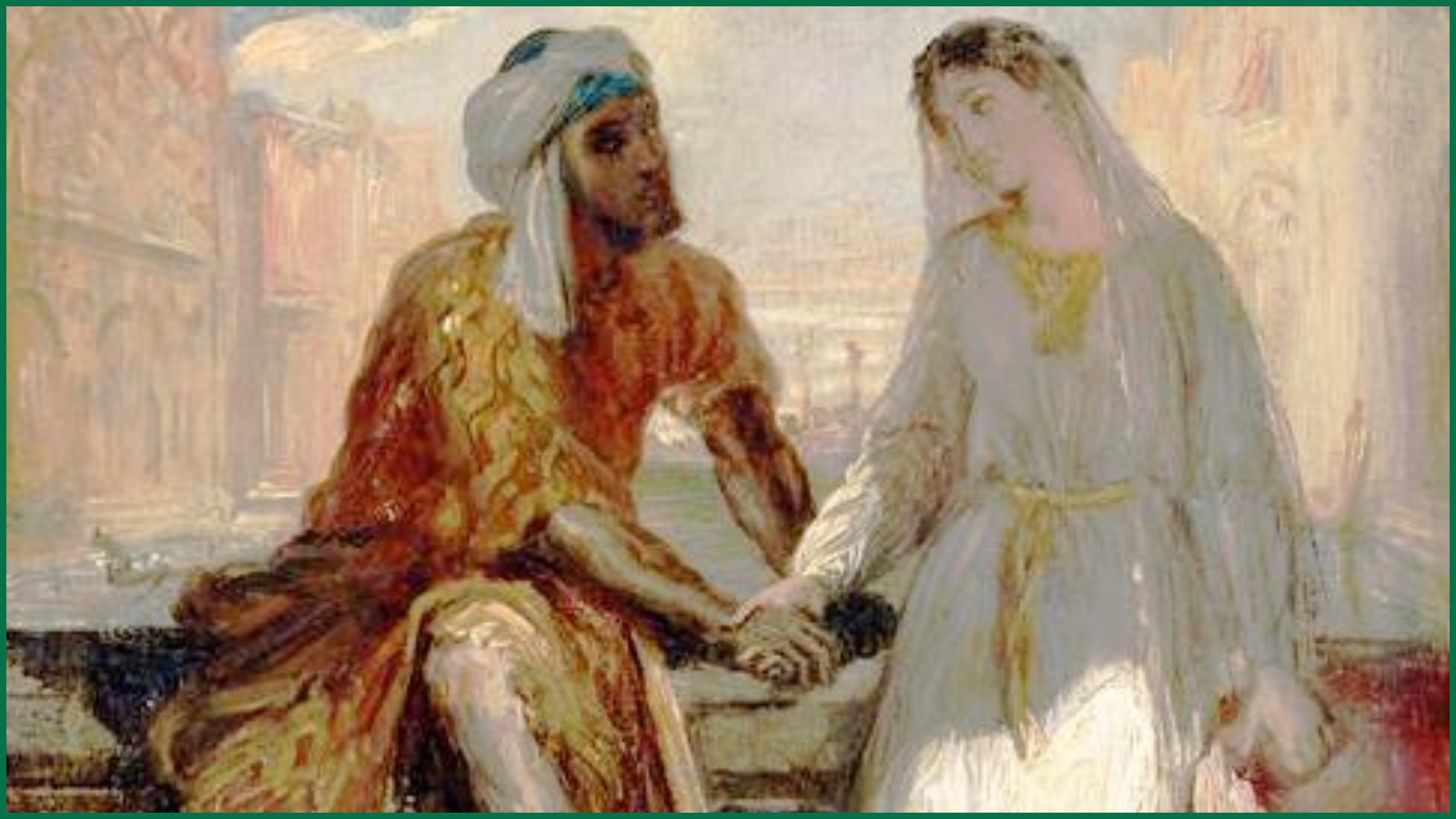
    The Tragedy of Othello, the Moor of Venice is a Shakespeare play that carries an echo of the European imagination that lasted beyond Karl Marx’s lifetime. “Moor” was a term used by Europeans to refer to the Muslim North Africans who had conquered and ruled the Iberian Peninsula between 711 and 1492. The Muslim population of Al-Andalus—modern day Spain and Portugal—were quite heterogeneous and did not use the Moor identifier themselves. Even after the Christian reconquest of the Iberian Peninsula, “Moor” was a common European designate applied to continental Africa and the Middle East.

    The term was derived from the ancient Roman province of Mauretania—modern day Morocco and Algeria— and it eventually came to denote virtually anyone of a darker complexion. Marx, a German and ethnic Ashkenazi, was nicknamed “the Moor” by friends and family owing to his swarthy skin tone, hair and eyes.

    The Moor label—applied to Marx but also by Shakespeare to his Othello title character—is emblematic of European perceptions of race as they evolved through centuries. Since the era of ancient Rome, people of North African, Middle Eastern and sub-Saharan African origin worked and lived in continental Europe. Yet “the ancients did not fall into the error of biological racism; black skin colour was not a sign of inferiority.”1

    The ancient world was hardly free of prejudice; individuals were judged harshly according to their occupation, cultural identity or status as citizens. But the concept of race did not exist and physical differences between groups were thought only to be the effects of climate on the human body. This view of race and ethnicity largely held through Europe’s medieval era and into Elizabethan England: “The theory of the humours, the basis of Elizabethan psychology, maintained that men were of different complexions, statures, and countenances of mind and body according to the climate of their birth.”2

    Lacking a social construction of race, ancient Rome based their in-group identity on citizenship. And medieval Europe and Renaissance England did much the same thing, only with Christianity as the defining in-group characteristic. This began to change in many parts of Europe during Shakespeare’s lifetime with the advent of the trans-Atlantic slave trade. Othello therefore occupies a blurry space somewhere at the dividing line between the western religious sorting of peoples and the systematic racial categorization that would later come.

    A World of Sighs

    At the open, we learn that Othello has married Desdemona, the daughter of a Venetian senator. Othello descends from a vague “Moorish” nobility but lives as “a Christianized black in Venice” who has risen to the rank of an esteemed general in the Venetian military.3 Iago serves as Othello’s trusted ensign but he has an axe to grind: Othello has passed him over for the position of lieutenant in favour of Cassio. This enrages Iago but he carefully keeps his feelings hidden. With discretion, Iago alerts Desdemona’s father to her betrothal and appeals to him with charged language in order to rouse opposition: “You’ll have your daughter covered with a Barbary horse…I tell you your daughter and the Moor are making the beast with two backs.”4

    Desdemona’s father, betrayed by his daughter marrying without his permission, appeals to the Venetian senate to overturn the ceremony. However, the senators are not persuaded. Desdemona had married with full consent and besides, they require the “valiant Moor” to defend Cyprus from an invading Turkish fleet. Iago then embarks upon a set of hateful schemes designed to ruin Cassio’s reputation, snatch money from Roderigo and destroy Othello’s otherwise happy marriage to Desdemona.

    Iago holds the crown amongst Shakespeare’s villains because of the sociopathic manner in which he weaponizes the trust that other characters place in him. Eventually snared by his own web of lies, Iago’s malevolent nature is laid bare in the last act before a bed loaded with the lifeless bodies of Desdemona, Othello and even Emilia, Iago’s wife.

    There is exceptional wickedness displayed here, as Iago ruthlessly manipulates Desdemona, Emilia, Cassio and Roderigo in order to convince Othello that his wife was unfaithful to him. But interest in Othello lingers due to the uniqueness of Shakespeare’s choice of protagonist. Shakespeare did not invent the character of Othello whole-cloth; he was devised from a “Moorish” character in a short story by the Italian poet Cinthio. Shakespeare’s version leaves open the possibility that Othello is an Arab or Berber noble of some type, but there are also a number of references to Othello’s appearance that suggest a black complexion.5 This was a bold choice for Elizabethan audiences as only an estimated 300-500 Black people are thought to have resided in England over that period of time. 

    Bootless Grief

    Shakespeare takes measures to ensure that the foreign Othello is perceived favourably by his audience. He possesses a Christian identity, his nobility and rank bless him with a majesty of speech and his bravery in battle has earned him the respect of the Venetian ruling class.6 Even spiteful Iago acknowledges Othello’s virtues that would make him a good husband to Desdemona:

    The Moor, howbeit that I endure him not,
    Is of a constant, loving, noble nature,
    And I dare think he’ll prove to Desdemona
    A most dear husband.7

    When Othello capitulates to jealousy and slays Desdemona, the labour that Shakespeare undertook establishing his merits persuade the audience to interpret Othello’s horrendous act as contrary to his nature. It is Iago’s scheming that appropriates the blame for this crime and Othello’s motivations are not presented by Shakespeare as “different from any white husband.”8 The extremely patriarchal relations of Renaissance Europe are fully displayed in Othello, without question. But despite the use of vulgar language on the part of antagonistic characters, Othello is assuredly not a racist play.

    While Shakespeare lived in a time just prior to the establishment of the concept of race, by Marx’s age this terrible social construction had reached a zenith. It is difficult to imagine that a story like Othello could be devised during the Victorian era without being subsumed by the social relations of race. In Capital, Marx asserted that racism and the capitalist mode of production shared a common origin during the age of colonial exploitation:

    The discovery of gold and silver in America, the extirpation, enslavement and entombment in mines of the aboriginal population, the beginning of the conquest and looting of the East Indies, the turning of Africa into a warren for the commercial hunting of black-skins, signalized the rosy dawn of the era of capitalist production.9

    While Elizabethan society viewed Christianity as a positive civilizing force, by the Victorian era Marx found a Christian society that was completely subordinate to capital accumulation and its accordant crimes:

    The barbarities and desperate outrages of the so-called Christian race, throughout every region of the world, and upon every people they have been able to subdue, are not to be paralleled by those of any other race, however fierce, however untaught, and however reckless of mercy and of shame, in any age of the Earth.10

    Destructing the Construction

    We can therefore assert that race and racism is a byproduct of economic relations born from the spiral of capital accumulation which early on necessitated colonial subjugation, forced labour and abject slavery. The impoverishing impacts of these economic forces have had profound effects upon global society into the present day, where we remain haunted by these spectres of history. If race is a social construction burnished by the capitalist paradigm then its demolition can only commence with the creation a new economic order.

    It was the Nigerian-British poet Ben Okri who said it best: “If Othello did not begin as a play about race, then history has made it one.” Indeed, Othello’s own race is as shapeless as the concept was during Shakespeare’s lifetime. But the aspiration today cannot be a return to feudalism or mercantilism or the harsh economies of antiquity. 

    Concerning race-based slavery, Marx wrote: “Labour cannot emancipate itself in the white skin where in the black it is branded.” Ending the systematic subjugation of labour along racial lines is one step of a larger emancipatory project. A society that does not sort individuals by race is one thing; a society that does not sort individuals by class is quite another.

    Martin Luther King Jr.’s dream of universal liberty will be seen through the eyes of a classless people that recognize the interconnectedness of the universe, of humanity, of all things living. Once the predatory fetters of competition are shed, cooperation will prevail by the motto: “The free development of each is the condition for the free development of all.”11

    Thanks for reading!


    1. Frank Snowden, Blacks in Antiquity: Ethiopians in the Greco-Roman Experience (Harvard University Press, 1970): 169. ↩︎

    2. Philip Butcher, “Othello’s Racial Identity” in Shakespeare Quarterly Vol. 3, No. 3: 246. ↩︎

    3. Peter Erickson, “Representations of Blacks and Blackness in the Renaissance” in Criticism Vol. 35, No. 4: 505. ↩︎

    4. Excerpts from Act 1, Scene 1. ↩︎

    5. Philip Butcher goes as far as saying that Othello is “undeniably black” in “Othello’s Racial Identity,” 247. ↩︎

    6. Russ McDonald writes, “Early-seventeenth century Europeans thought of Moors, Turks and Africans as pagan, but Othello is a Christian, a baptized convert whose Christianity is an important marker of his assimilation into Venice and the values of “civilization.” Russ McDonald, ed. Othello (Penguin, 2016): xxxvi. ↩︎

    7. From Act 2, Scene 3. ↩︎

    8. Ruth Vanita quoted in Rebecca Olson, “‘Too Gentle’: Jealousy and Class in Othello” in Journal for Early Modern Cultural Studies Vol. 15, No. 1: 6. ↩︎

    9. Karl Marx, Capital Vol. One (Ancient Wisdom Publishing, 2019): 533. ↩︎

    10. Ibid, 534. Quoting W. Howitt. ↩︎

    11. Karl Marx and Friedrich Engels, The Communist Manifesto. ↩︎
  • Capitalism

    Capitalism

    This article is part of a series on classical Marxism.

    There is a claim that capitalism is defined by free trade and markets but this is an obscurity. Capitalism utilizes both markets and economic planning where beneficial, just like every other economic system has done—including hunter-gatherers, ancient Rome and feudal Japan. The definition of capitalism is actually very simple and specific: private ownership of production and wage labour. These characteristics may seem unimpressive from today’s vantage point but their fruition conceals a long and shady history.

    In Capitalist Realism, Mark Fisher points out the prevailing sentiment of 21st century disempowerment: “It is easier to imagine the end of the world than the end of capitalism.”1 As recent movies and television series indicate, there is a fascination with the apocalypse and barren moral landscapes that burn on our consciousness. Now that capitalism is concretized as the social reality in most of the world, the mind’s eye has tunnel vision regarding it. However, this anguish is not a distinct capitalist phenomena. Eschatology is an ancient subject. Generations of medieval peasants saw little change, despite the shifting boundaries of feudal fiefdoms and principalities. The Roman Empire and Ancient Egypt were supposed to last forever. And the Paleolithic era nearly did. For so many who lived and died in the past, it must have also been easier to imagine the end of the world than the end of their own way of life.

    That would not be true of every single generation—after all, there are active periods of revolution where artifacts and norms are torn down within the lifetime of individuals. And if anything distinguishes capitalism from what has preceded it, it must be the fixed quality of hectic upheavals. Karl Marx observed: “Constant revolutionizing of production, uninterrupted disturbance of all soil conditions, everlasting uncertainty and agitation distinguish the [capitalist] epoch from all earlier ones.”2 And again: “Modern industry never views or treats the existing form of a productive process as the definitive one. Its technical basis is therefore revolutionary, whereas all earlier modes of production were essentially conservative.”3 The nature of capitalism is therefore paradoxical—its end is unimaginable but so too is any status quo within it. Revolutionary change—in consumer goods, living costs, warfare, culture, nature and demographics—are always descending upon us under capitalism.

    Primitive communism, ancient slave societies and feudalism all arose gradually. The phase transitions triggered by natural human evolution, a warming Neolithic climate and the supplanting of Rome’s slave economy with feudalism all took place over centuries. Not so with capitalism. If capitalism is a spinning-hot mess of instability, conflict, technological invention and brutal exploitation, it’s because it was born in a frenzy of looting, genocidal violence, biological contagion and piracy. Feudal Europe was a pressure cooker of mounting debts, stifled trade routes, Catholic Inquisitions, bubonic plague and a bridled merchant class. Capitalism did not really emerge in the world—it exploded onto it the moment Columbus made landfall on Caribbean shores. Observing the golden adornments and timid nature of the Arawak people he encountered, Columbus salivated: “With fifty men we could subjugate them all and make them do whatever we want.”

    In a short matter of decades the indigenous societies, mired in less-advanced modes of production like primitive communism and slave economies, were broken to the thunder of Old World disease, technology and thirst for lucre. Gold and silver deposits in the Americas were drained by indigenous labour toiling under the swords of conquistadors, oceans were mercilessly exploited, vast tracts of land were cleared for plantations of sugar, tobacco and cotton, the African slave trade was engaged.4 From the European perspective, wealth seemed to amass from thin air, as all debts were paid far from home in the form of blood and environmental ruination. In a preview of what would later become the stock market, expeditions dedicated to pillaging native kingdoms were funded by investors risking capital for shares on future spoils. It was the ransacking of the Americas, the mass-utilization of African slaves and gunboat diplomacy in Asia that marked capitalism’s primitive accumulation stage. To follow still was the Industrial Revolution and formal colonization of South Asia, the Middle East and continental Africa.

    The concept of phase transition is also described as “the transformation of quantity into quality.” The pillaging of the Americas illustrates this, as a massive rupture to the feudal mode of production burst open once the natural and social wealth of two continents was exposed to those with armaments and the backing of mercantile investors. European land—the primary source of life and wealth through the feudal age—diminished in its preciousness, and the fortunes of the landed aristocracy diminished along with it. The massive surplus of inputs—precious metals, sugar, cotton, forced labour, etc.—was absorbed by the relatively small population of western Europe and forced a phase transition from a relatively closed and stable feudal system into a rabidly expansionary global capitalism.

    As land in Europe lost its importance in a rapidly evolving mode of production, pressure was applied to agriculture to squeeze more out of the lands. New rotation methods were implemented, new American crops like potatoes and corn were planted, new ploughs were deployed, peasants that had worked lands for generations were evicted by force. The separation of peasants from their livelihood on the land is how wage labour emerged. The collision between the masses of peasants dispossessed of their ancestral lands and a new class of capital owners is what gave birth to the modern system: 

    The historical conditions of [capitalism] are by no means given with the mere circulation of money and commodities. It can spring to life only when the owner of the means of production and subsistence meets in the market with the free labourer selling his labour-power. And this one historical condition comprises a world’s history. Capitalism, therefore, announces from its first appearance a new epoch in the process of social production.5

    Feudalism was being negated fast, especially in Britain where the Industrial Revolution began. The overwhelming amounts of resources flooding Europe spurred productive innovation in order to process it all. New forms of capital were merged into a fledgling factory system, such as steam power, milling machines, blast furnaces and power looms. But now the capital owner was faced with a unique problem posed by this new web of economic relations: overproduction. Too many goods could be produced for the domestic market to possibly absorb at a profit.

    Typical in the history of capitalism, the solution was found at the end of a gun. Leveraging their technological advantages, European states in the service of financial capital laid siege to India and China, the great powers of Asia. China became a dumping ground for opium and the Indian domestic economy collapsed as their market was flooded with cheap European textiles and manufactures. Much of South Asia and Africa were formally colonized, transformed into outlets for excess European production and becoming sites of resource extraction under systems of forced labour.

    It was these three broad motions that resulted in a world under capitalist domination. First, the pillaging of North and South America and genocidal exploitation of enslaved Africans and indigenous peoples. Second, the creation of a mass of wage labourers drawn from the European peasantry through enclosures that separated them from their land. Finally, the establishment of extractive colonies across almost the entirety of Asia and Africa. While these processes have continued to evolve rapidly over the 20th century to the present, the mechanism whereby one class extracts profit at the expense of another has not changed—it is baked into the logic of capitalism. The geographer, David Harvey, sums up capitalist history thus: 

    The transformation of labour, land and money into commodities rested on violence, cheating robbery, swindling and the like. The common lands were enclosed, divided and put up for sale as private property. The gold and silver that formed the initial money commodities were stolen from the Americas. The labour was forced off the land into the status of a “free” wage labourer who could be freely exploited by capital when not outright enslaved or indentured. Such forms of dispossession were foundational to the creation of capital. But even more importantly, they never disappeared.6

    It is difficult not to recognize capitalism as a zero-sum game when considering its history and present-day unfolding. Over a billion people in less-developed capitalist countries live in slums—a number projected to double by 2050. Over 700 “dead zones” without oxygen have formed in the ocean as a byproduct of heavy shipping traffic, plastic waste, overfishing and the acidification of waters by carbon emissions. Over 187 million people have died from wars involving capitalist competition over resources since the last century—and that number is climbing. Even in the core capitalist countries of the West, an increasing number of crises and epidemics are building—the mental health crisis, climate crisis, housing crisis, inflation crisis, drug epidemic, refugee crisis—with more to come. While its productive capacity is unquestionable, an enormous surplus is amassed by a small number of elite capital owners—close to 0.1% of the population—and arrives by a process of destabilizing exploitation, including international military coercion, imbalanced trade treaties and unmitigated pollution of the biosphere.

    It is the contention of classical Marxist philosophy that a positive-sum economy working for all is only possible along the lines of a democratic, classless economy that puts wealth creation and scientific discovery at the disposal of the working class. On progress under capitalism, Marx states:

    When a great social revolution shall have mastered the results of the bourgeois epoch, the markets of the world and the modern powers of production and subjected them to the common control of the most advanced peoples, then only will human progress cease to resemble that hideous pagan idol who would not drink the nectar but from the skulls of the slain.7

    Further Reading:

    Karl Marx, “The Future Results of British Rule in India.”

    ———–


    1. Mark Fisher, Capitalist Realism: Is There No Alternative? (Zero Books, 2009), 17. ↩︎

    2. Karl Marx and Friedrich Engels, The Communist Manifesto. ↩︎

    3. Karl Marx, Capital: Volume One (Ancient Wisdom Publishing, 2019), 318. ↩︎

    4. Ian Angus, “The Fishing Revolution and the Origins of Capitalism,” Monthly Review, Vol. 74, No. 10. ↩︎

    5. Karl Marx, Capital: Volume One (Ancient Wisdom Publishing, 2019), 120. ↩︎

    6. David Harvey, Seventeen Contradictions and the End of Capitalism (Oxford University Press, 2014), 57. ↩︎

    7. Karl Marx, “The Future Results of British Rule in India,” in Dispatches for the New York Tribune: Selected Journalism of Karl Marx (Penguin, 2007), 125. ↩︎