
Tag: Conflict

  • Ask the Editor: Marxism and Intersectionality

    Ask the Editor: Marxism and Intersectionality

    To the editor,


    Is there a Marxist critique of intersectionality or did intersectionality come out of Marxism?

    Thank you,

    Lydia.

    [Sent via Substack]

    Hi Lydia,

    “Intersectionality” is one of those politically loaded terms that evokes a lot of contemporary discourse around equity, diversity, inclusion, accessibility and cultural “woke” wars. Because Marxism is a four letter word to many people on the right, people like Jordan Peterson and James Lindsay have described progressive efforts to remedy racism and homophobia as Marxist in nature. This is nothing new, by the way. Environmentalists, feminists, literacy advocates and anti-segregationists have all worn the communist label at one time or another. 

    “Intersectionality” was coined by Kimberlé Crenshaw and elaborated on by Patricia Hill Collins and others to describe the interlocking of social prejudices, economic inequalities and political disadvantages that apply to a variety of historically oppressed people. For example, intersectional theory posits that a Black woman or a gay Asian will confront social and political obstacles contingent on their minority status and independent of economic class.

    The concept of intersectionality is reasonable from the Marxist viewpoint. Marx himself observed a variety of race and gender-based discriminations amongst the working class in his own time. In factories, it was found that women and children could be exploited at lower wages than men.1 Amongst the English working class, the influx of Irish were reviled for their acceptance of lower wages and blamed for cheapening the labour market. And for the countries that had enslaved Africans for the plantation economy, Marx warned: “Labour cannot emancipate itself in the white skin where in the black it is branded.”2

    Between the premises of intersectionality and classical Marxism, there is an overlapping understanding that class alone does not determine social standing within capitalism. The trend toward DEI hiring policies of corporations, diversity quotas at universities or inclusive on-screen representation is something that could have been predicted by Marx. As capitalism has matured and globalized, it has naturally acquired a more cosmopolitan flavour and more demands are placed on the system from an increasingly diverse crowd of consumers and workers. For this reason many capitalist multinational corporations and Hollywood studios have adopted diversity policies with enthusiasm.

    As a result of diversity quotas, “woke” virtue signalling and the absorption of economic migrants by the West, antagonisms have arisen in society between majority and minority factions of workers, bureaucrats and entrepreneurs. Speaking of hostilities between ethnicities, Marx wrote:

    This antagonism is artificially kept alive and intensified by the press, the pulpit, the comic papers, in short, by all the means at the disposal of the ruling classes…It is the secret by which the capitalist class maintains its power. And the latter is quite aware of this.

    One can acknowledge the reality of historical oppression and simultaneously reject liberal remedies that seek to pit man against woman, coloured against white, queer against straight. Discrimination in any direction operates within the ruling class paradigm of artificial scarcity. Instead, socialism posits economic solutions of universal application: socialized housing, public healthcare, full employment targets and freely accessible higher education. Fair trading practices must be developed with Global South countries in order to eliminate exploitation and reduce the number of economic refugees.3 

    In the long run, it is only an economic base that strives toward universal abundance instead of capitalist profit that is capable of abolishing the social divisions manufactured by history. And that, I submit, is the Marxist position.

    In sols,

        Your editor.

    Send your questions to the Reclamationeditor@thereclamation.co

    Footnotes:


    1. Karl Marx, Capital: Volume One (Ancient Wisdom Publishing, 2019), 320. ↩︎

    2. Ibid, 195. ↩︎

    3. The international economy must be one that minimizes global poverty and reduces the demand of people to flee their homeland. Marx understood the challenges of accommodating large numbers of economic refugees in foreign societies and, in the case of the Irish, he attacked the root cause by demanding that Ireland be liberated from the claws of English landlords and capitalists. ↩︎
  • Ask the Editor: The Demonic Nature of Global Rearmament

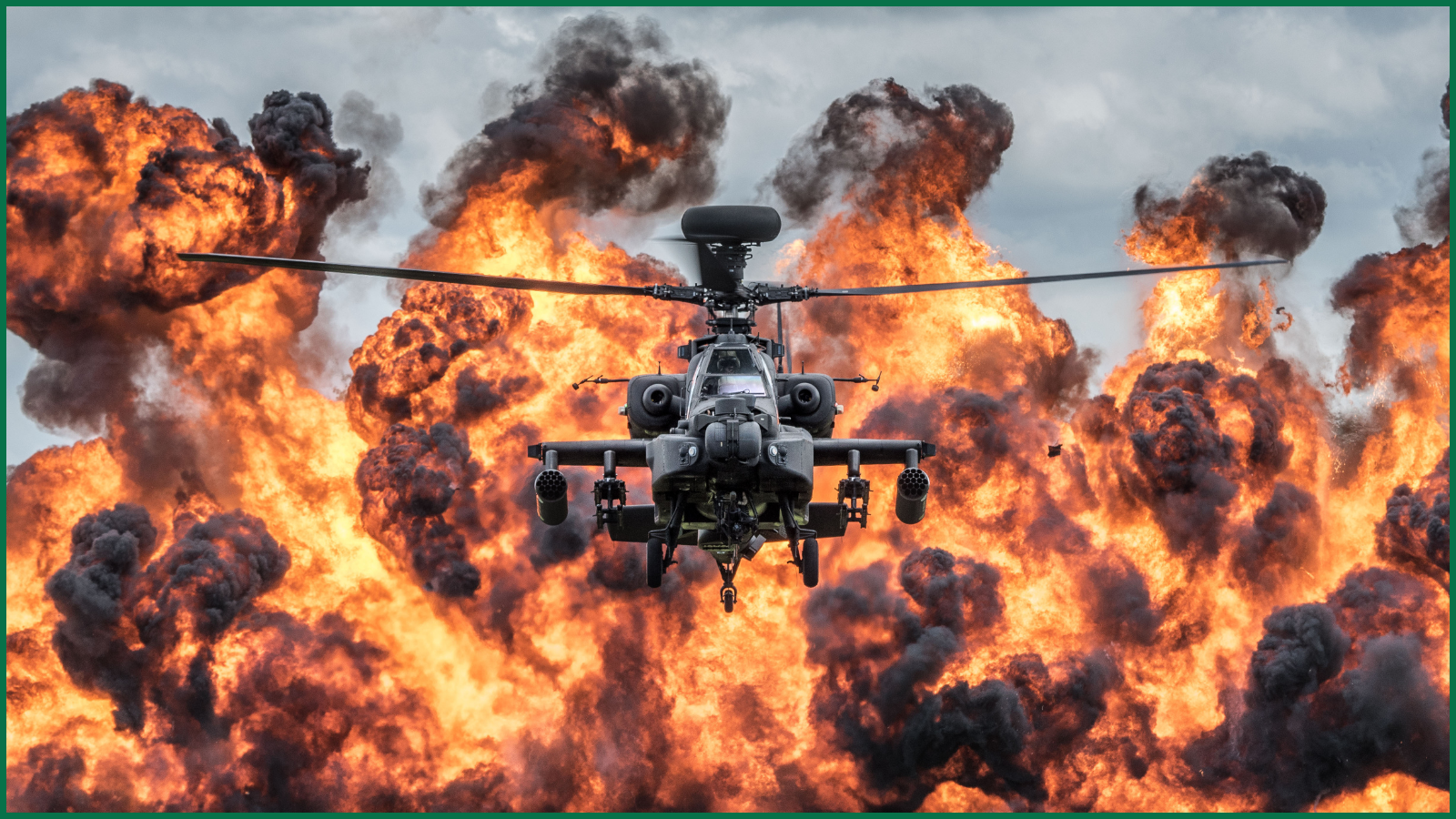
    Ask the Editor: The Demonic Nature of Global Rearmament

    To the editor,


    There are huge increases to military budgets around the world and a lot of talk about a wider war with Russia, conflict with China over Taiwan and the “Donroe Doctrine” in the Western Hemisphere. Are countries preparing for  World War III?

    Thank you,

    Kyle.

    [Sent by email]

    Hi Kyle,

    The situations in Ukraine, Venezuela and Iran demonstrate an aggressive push for hegemonic consolidation: the U.S. is determined to put all of Latin America into a stranglehold and knockout Israel’s last major stronghold of resistance in the Middle East, while Europe is now tasked with keeping Russia out of their sphere. Throw in the rise of China, and these developments have the world starting to resemble the European balance of power that collapsed into World War I.

    In a world balancing on the weight of military strength, countries are compelled to invest in armaments or be tossed from the scale. Japan has rubber stamped a record-setting military budget and Taiwan has done the same. Canada wants to triple its military spending; Australia is under pressure to raise theirs by 75%. India, Germany and France all have proposals to double their military spending, with Emmanuel Macron adding: “To be free in this world we must be feared. To be feared we must be powerful.” Without parsing what that means to the freedom of those cowering in fear, Trump seems to agree with Macron by proposing a 50% increase to America’s already-whopping $1 trillion military budget. His proposed $1.5 trillion military spend doesn’t sound like a peacetime budget—that’s a budget for war

    In this political context, worrying about World War III is not unreasonable. Against a similar arms race backdrop in 19th century Europe, Friedrich Engels predicted World War I:

    I imagine that the plan is not to push things to extremities, to more than a sham war. But once the first shot is fired, control ceases, the horse can take the bit between its teeth…Eight to ten million soldiers will massacre one another and in doing so devour the whole of Europe until they have stripped it barer than any swarm of locusts has ever done.1

    Bombing countries like Iran or kidnapping the presidents of countries like Venezuela might not get us there. But desensitization to this uptick of radical interventionism makes a miscalculation more likely, as happened between the Austro-Hungarian Empire and Serbia once upon a time.

    The timing of this global rearmament could not be worse, given the present state of the environment and the residue of an inflationary crisis already aggravated by global conflict. Marx held complex views about the role of the military within the broader capitalist economy, but in the Grundrisse he noted: “The impact of war is self-evident, since economically it is exactly the same as if the nation were to drop part of its capital into the ocean.”2 Warfare vanquishes the resources that could be used to build an economy of human flourishing into plumes of blood and fire. In a competitive world of amplified scarcity such as it is, the proliferation of advanced weaponry and nuclear bombs adhere to a quest for economic dominance—consequences to human survival be damned.

    The ominous parallels between the first world war and a possible third recall Freud’s compulsion to repeat: we live in a neurotic civilization containing “a demonic character” whereby repressed traumas override the pleasure principle and are revisited again and again and again in order to “re-encounter our identity.”3 Given the violent and domineering history of capitalism, revisiting past demons in a nuclear-armed multipolar world would be nothing short of biblical.

    In sols,

        Your editor.

    Send your questions to the Reclamationeditor@thereclamation.co

    Footnotes:


    1. There was an estimated 8.8 million military deaths during World War I, making Engels’ prediction exceptionally accurate. A further 6–13 million civilian casualties are estimated, resembling that “swarm of locusts” stripping Europe bare. ↩︎

    2. Karl Marx, Grundrisse (Penguin, 2005): 129. ↩︎

    3. Sigmund Freud, Beyond the Pleasure Principle (Broadview Press, 2011): 74-75. ↩︎