
Tag: Corruption

  • We Are Ruled by a Lord of the Flies

    We Are Ruled by a Lord of the Flies

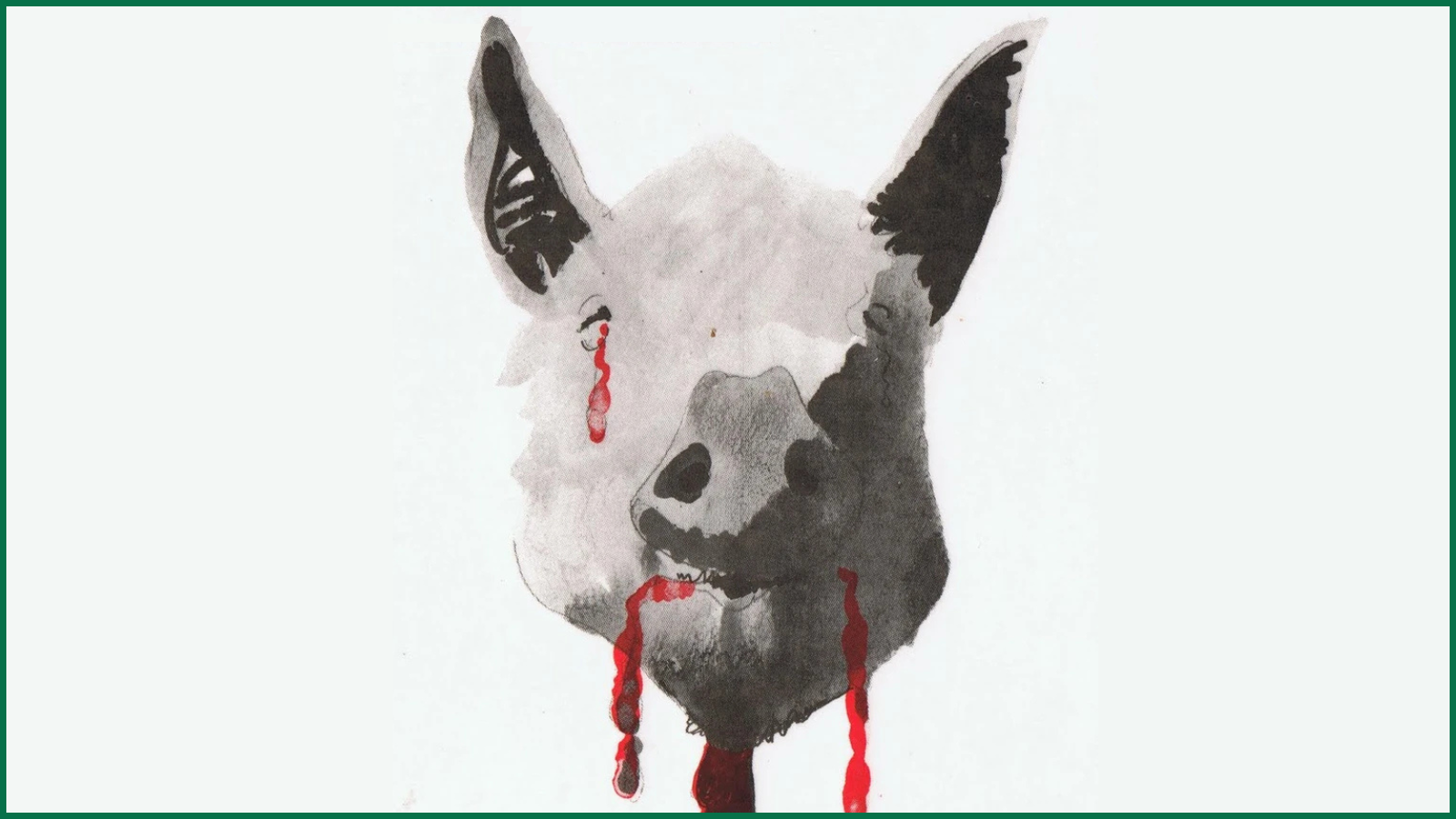
    “Fancy thinking the Beast was something you could hunt and kill! You knew, didn’t you? I’m part of you? Close, close! I’m the reason why things are what they are.”

    —William Golding, Lord of the Flies.

    For anyone thinking that Putin had overstepped boundaries when he invaded Ukraine, it turns out he was only ahead of the curve. Since that time we’ve had genocidal warfare visit Palestine, a president kidnapped from Venezuela, a starvation blockade imposed on Cuba and a criminal aerial bombardment come to Iran. Multiple crimes, in other words, and committed by successive presidential administrations of the West’s flagship state. No wonder the United Nations Secretary-General recently denounced international relations as a “law of the jungle.”

    The Jungle Book

    It must be a vestige of colonial history that conjures images of undulating spear tips and blood-stained fur whenever the jungle is invoked. This sort of iconography probably accounts for the jungle island setting of William Golding’s Lord of the Flies, the story about a group of schoolboys who get marooned during a military evacuation amidst a nuclear war. Initially, the boys are quite “civilized.” They elect a chief, hold orderly assemblies using a conch shell and maintain a signal fire to attract rescuers. But it doesn’t take long for these trappings of civilization to melt away under the tropical heat. Conflict divides the boys when the signal fire goes out and the hunting of a pig arouses primitive instincts, culminating in a spree of orgiastic violence. The aggressive faction of boys consumes the other by way of floggings and outright murder, and they eventually set the island on fire in an effort to flush out their first elected chief. 

    The great pre-Socratic philosopher Heraclitus wrote: “Fire of all things is the judge and ravisher.” We see this in Lord of the Flies, with the signal fire representing civilized order and the brush fire representing the desperate plunge into chaos and savagery. Golding possessed a cynical view of human nature that sees people animated by sadistic impulses in the service of selfish interests and power. This is a common position on human nature, also articulated by Chinese legalist philosophy and Thomas Hobbes’ “war of all against all” that characterizes life in a state of nature. Sigmund Freud adopted this position in his later writings as well, asserting the existence of a “primary mutual hostility of human beings” which civilization must tame by setting “limits to man’s aggressive instincts.”1

    One commonality between Golding, Hobbes, Freud and the Chinese legalists is that they were all heavily influenced by the demoniacal experience of warfare.2 Witnessing first-hand the human capacity for violence leaves scars on the human psyche that are well documented. Through allegory, Golding asserts that Satan’s captain, Beelzebub—the Lord of the Flies—is not an external supernatural force, but is actually a force inside us, a force within. Freud appeals to the death instinct in order to explain human aggression, similar to Hobbes and the legalists who view aggression as a simple fact of our nature. 

    Human Nature?

    Once that view of human nature is accepted, it is explained that human beings enter a social contract and form civilization as a refuge from our own terrifying base instincts. Violence and corruption in the world can be chalked up to inherently brutal instincts that inevitably infect all of our carefully designed social institutions and best laid plans. Although civilization can never be perfect, it remains the thin red line between orderly society and the violent anarchy of nature.

    The only problem with that argument is that it isn’t true. There is real world evidence that rejects the cynics and supports a view that humans are naturally cooperative rather than hostile: in 1965 a group of six teenage boys from Tonga found themselves stranded on a remote Pacific island. Far from descending into an orgy of violence, they built shelter and divided chores. They worked together and planted a garden, hunted feral chickens, collected rainwater in deadwood and rotated cooking duties. They maintained a fire and strummed a makeshift guitar and sang songs in the evenings to lift their mood. 

    The experience of the Tongan castaways gels with Raymond Kelly’s “Prehistoric warlessness” hypothesis, asserting that conflict and violence between human groups was virtually non-existent up until the Neolithic Revolution.3 That does not mean that there were no instances of homicide or executions within groups—nobody has that answer—but systematic warfare was simply not a feature of the Paleolithic economy that dominated human evolution for hundreds of thousands of years. This is because incredibly low population densities, combined with relatively high natural abundance, provided no incentive for humans to engage in inter-tribal violence.

    In our actual state of nature, warfare offered little gain in terms of resources but had the potential to destroy both warring parties with only a few casualties on both sides. It was therefore preferential to seek new territories on which to hunt and gather rather than fight over them. This is what explains human migrations out of Africa and our species’ rapid spread around the globe. 

    In a footnote, Karl Marx argues that philosophers “must first deal with human nature in general, and then with human nature as modified in each historical epoch.”4 Our human nature in general demands that we eat, drink, breathe, shelter, reproduce, etc. Modern human behaviour, such as language, art, music, abstract thought, planning and tool making arose to meet those needs. We can recognize that the universal behavioural traits of humans could not have been achievable in a Hobbesian “war of all against all” state of nature—every one of them required positive social intercourse in order to become characteristic of our species. It follows that cooperation in the context of low population density and relative natural abundance was the state of nature that defined our prehistoric evolution and are suggestive of “human nature in general.”

    Civilization of Corruption

    On the other side of the ledger is “human nature as modified in each historical epoch.” While our general characteristics concretized during the epoch of primitive communism, the expression of human behaviour began to vary wildly as environmental changes led to sedentary living, resource scarcity and class divisions that gradually permeating the social structure. The biological demands on human beings led us to developing a potential for many behavioural expressions—including turning our hunting spears on one another. But this potential for warfare and organized violence went unfulfilled until population growth and sedentism made it an economic necessity for one group to defend territory against another. From the Neolithic Revolution onward, a technological arms race and complex division of labour emerged to satisfy our biological needs. The resulting base and superstructure is history.

    Jean-Jacques Rousseau rightly scolded Hobbes for taking modern, “civilized” people and ascribing their flaws to nature.5 The philosophical question is this: does human nature corrupt civilization or does civilization corrupt human nature? Marx and Rousseau affirmed the latter, and that is also where the preponderance of anthropological evidence lies. It is not our nature that commands a world plagued by corruption, greed, ecological destruction and warfare. Indeed, our ability to recognize these things as defects affirms a natural revulsion towards them. Although we have the capacity for greed and violence, we also have instincts that lead us toward love, generosity and cooperation. 

    Resource scarcity has prodded human beings into unleashing some of their worst potentialities. The good news about our current capitalist mode of production is that scarcity has become largely artificial by way of tremendous leaps in productive technology. It is entirely possible to defeat scarcity with a new, cooperative mode of production that finally unleashes our best potentialities. Until then, we are ruled by a Lord of the Flies, but not in the way that Golding imagined. The Lord of the Flies is not an internal, but an external force; an alien process of capital accumulation and rigged market forces that determines our class standing and incentivizes our worst behaviours.

    Thanks for reading!

    Footnotes:

    1. Sigmund Freud, The Freud Reader edited by Peter Gay (W.W. Norton, 1989): 750. ↩︎

    2. Specifically World War II, the English Civil War, World War I and the Warring States period of China, respectively. ↩︎

    3. Raymond C. Kelly, “The evolution of lethal intergroup violence,” in PNASVol. 102, No. 43: 15294-15298. ↩︎

    4. Karl Marx, “Conversion of Surplus-Value into Capital” in Capital, Vol. One. He is specifically critical of utilitarians here, pointing out the utility of human behaviour can vary wildly depending on the mode of production available. ↩︎

    5. Jean-Jacques Rousseau, Discourse on the Origin and Basis of Inequality Among Men (Online Library, 2008): 23. ↩︎

  • US Aggression in Latin America: A History

    US Aggression in Latin America: A History

    When the U.S. government purchased Louisiana from France, they secured a land stretching from present-day Montana, through Oklahoma and terminating at the Gulf of Mexico. However a new dispute opened with Spain concerning the southwest boundary of the formerly French territory: Texas. The Americans felt that they had acquired the territory as part of their deal with France but Spain maintained that it was them who had control over that land. The Spanish sale of Florida to Washington was meant to settle the Texas issue and the U.S. government formally relinquished its claims as part of the transaction. But American settlers on the frontier had other ideas.

    Mexico gained independence from Spain in 1821 and was quickly recognized by the United States. Initially the two countries enjoyed friendly diplomatic relations, with the Treaty of Limits affirming Mexican sovereignty over Texas and other western territories, including present-day Arizona and California. Within this cordial political atmosphere, American homesteaders were invited to settle in Texas and help to stabilize a fragile Mexican economy. What they received was an unruly population with little respect for Mexican sovereignty, much less Mexican people or customs.1 Tensions came to a boil when Mexico abolished slavery in 1829. As many American settlers had brought slaves with them, they would have faced a loss of property if the Mexican law was enforced. Instead they took up arms, kicked out Mexican authorities and demanded to be annexed by the United States.

    Early Aggressions

    Mexico warned the U.S. that their border treaty would be nullified if they annexed Texas. The Mexicans undoubtedly misunderstood the expansionist spirit of manifest destiny, having been fooled by prior friendly relations with Washington. The resulting Mexican–American War dropped the full brutality of U.S. superiority down on Mexico like the hammer of Thor: boys were shot for sport; churches were desecrated and Catholics murdered; women and little girls were stripped naked and assaulted in unspeakable ways; entire villages were razed by fire.2 The barbarity only halted when the U.S. military occupation of Mexico City forced the surrender of 55% of Mexican territory.

    The Mexican–American War was not any kind of dark chapter in the history of U.S.–Latin America relations. On the contrary—it set the mould. With the conquest of new territory stretching to the Pacific, American commercial interests began to reach down the coastline and into Central America.

    The western appetite for bananas and other tropical commodities brought US capital into contact with a new swathe of Latino peoples—and it went about as well for them as it did for the Mexicans in years prior. The ravaging of Mexico proved to America, with its powerful industrial economy, that it could act with impunity toward its less-developed neighbours to the south. Their capital and guns afforded them enormous power over a region that lacked both.

    Warfare is defined as an “open and declared armed hostile conflict between nations.” The Banana Wars of the early 20th century carry an unfortunate title because they were not wars—they were repeated molestations of vulnerable populations by an imperial power.

    When Haiti and the Dominican Republic fell into debt, the US deployed artillery, machine guns and naval ships. They stole the national gold reserves, turned government finances over to New York banks and gave American corporations free access to land for sugar plantations run by forced labour. When a nationalist insurgency threatened foreign property in Nicaragua, marines arrived to quash the rebellion. They proceeded to take over government finances and established a military base to suppress future anti-American revolts. When Washington decided to build a canal across the Isthmus of Panama, they backed a secessionist movement that would pull the small, pliable country of Panama from the lands of Greater Colombia. When abhorrent working conditions on American-owned sugar plantations in Cuba sparked civil unrest, thousands of marines arrived to protect the harvest and suppress anti-American agitation.3 When plantation workers in Colombia protested payment in coupons rather than cash and demanded a six day work week, the United Fruit Company massacred the strikers. In Honduras, United Fruit kept workers’ movements at bay by paying off presidential candidates and funding right wing militias. This combination of efforts made the corporation the most powerful entity in the state.

    The Dictatorships

    The advent of the Cold War brought American hegemony over Latin America to new heights. With the US military in confrontation with communist forces in Asia and Europe, covert action and special operations were relied on in the Western Hemisphere. Across Latin America, torture chambers and CIA-trained death squads blossomed alongside a growing number of brutal right wing dictators aided by Washington. Argentina, Bolivia, Brazil, Chile, Cuba, Dominican Republic, El Salvador, Guatemala, Haiti, Nicaragua, Paraguay, Uruguay, and Venezuela all suffered visits from oppressive regimes that consolidated power and murdered their opposition under the cynical guise of “anticommunism.” Even modestly progressive and liberal-democratic movements were snuffed out in many of these countries, as elections were overturned and American corporate interest reigned supreme.

    This was the Latin America that confronted a young Che Guevara as he embarked on his notorious motorcycle journey across the continent. On his trip he witnessed the the cold and hungry conditions of mine workers in Chile and the faces of poverty in Peru, people who “go on living only because it’s a habit they cannot shake.”4

    Guevara correctly understood that the division of Latin America into “unstable and illusory nationalities” made the region ripe for exploitation and US domination.5 He saw this domination first-hand in 1954 when living in Guatemala, where an elected government proposed land reform for its farmers. Soon afterward, it was overthrown by American bombers in order to install a pro-United Fruit Company dictatorship headed by Castillo Armas, a CIA asset who murdered thousands of people. This experience proved the futility of representative democracy in the face of powerful corporate interests.

    Having been marked for execution by the homicidal U.S. puppet in Guatemala, Guevara fled to Mexico where he met Fidel Castro and joined the Cuban revolutionary struggle. Cuba was also ruled by a pro-US dictator at this time and he oversaw routine executions of political opponents and a Cuban economy where American corporations controlled approximately 40% of sugar production, 90% of mining concessions, 100% of cattle ranching, 80% of utilities and had a monopoly on imports. Additionally, the corruption of the Batista regime allowed the American Mafia transform Havana into a drunken cesspool of gambling and prostitution. 

    With striking lucidity President John F. Kennedy admitted

    I believe that there is no country in the world including any and all the countries under colonial domination, where economic colonization, humiliation and exploitation were worse than in Cuba, in part owing to my country’s policies during the Batista regime.

    The success of the Cuban revolution saw the re-appropriation of national property and the destruction of casinos by throngs of empowered Habaneros. The revolution went on to deliver universal housing, healthcare and education, restoring dignity to a despoiled country. However, the antagonism would re-emerge in the form of a suffocating economic blockade and countless coup attempts.

    The Debt Racket

    The end of the Cold War brought more liberal governance to Latin America but they were saddled with debts carried over from the era of military juntas. From this situation came America’s next racket: the “Washington Consensus,” which was little more than a set of neoliberal dictates devised by western financiers for nations held in debt bondage.

    Mass privatization, austerity budgets and easy American access to cheap labour and resources were the hallmarks of crisis financing in the 1980s and 1990s, pulling in countries such as Argentina, Chile, Honduras, Nicaragua, Mexico and Venezuela—resulting in La Década Perdida (the Lost Decade) of stagnant economies and soaring inequality. In other words, the Washington Consensus represented another hegemonic “push from the United States” for “trade agreements favourable to the United States…The free flow of capital that these trade agreements were designed to foster has only benefitted the rich nations and the wealthy classes.”6 Derivative of these neoliberal policy prescriptions is a migration crisis and the 21st century “pink tide” of elected progressive governments throughout Latin America.

    From the Banana Wars era to the present day, we can see that Che Guevara was proven right: liberal democracy in exploited countries is too weak to uplift the great majority and a lack of regional solidarity has made it easy for the United States to run roughshod over Latin America. In terms of real purchasing power, the region has been economically stagnant for 50 years, with examples of worsening poverty and shrinking middle incomes over that time. The pink tide movement was driven back by “soft” coups in Brazil and Bolivia, corporate pressure and repeated attacks from Washington on Latin American progressive heads of state. One pink tide country which resisted coup attempts and foreign subversion was Venezuela under Hugo Chavez

    In a span of 14 years Chavez was able to double school enrolment, make literacy and healthcare universal, raise access to safe drinking water from 82% to 95%, build 700,000 homes, return one million acres of land to indigenous people, reduce malnutrition from 21% to 3%, and cut unemployment and infant mortality in half. His government accomplished this through a program that forcefully eschewed liberalism in favour of participatory democracy at the neighbourhood level, worker-owned enterprises and nationalization of resources and services. For these successes, the United States delivered to Venezuela the same verdict that Cuba received decades ago: economic strangulation, with the harshest measures arriving in 2019.

    What Venezuela and Cuba represent is an expression of defiance in the face of 180 years of unbroken US hegemony in Latin America. For this reason, they are admired by a great many people who “personally suffered under US-sponsored military dictatorships that dominated much of the region” for decades.7 The kidnapping of Chavez’s successor, Nicolás Maduro, is an attempt to force compliance with the pillaging of Latino resources that American corporations feel entitled to. Cheering this move is fatally wrong, even for opponents of socialism: if Venezuela and Cuba are the backlash to United States interventionism, it follows that another intervention could make the situation much worse.  

    What the United States has done to Venezuela will perpetuate the familiar cycle of political violence and economic dependency—the breeding ground for anti-American resentment—serving nobody but the corporate lobby. The best moments in US–Latin America relations occurred when America expanded the realm of sovereignty rather than crushed it: the turnover of the Panama Canal to Panamanian authority and FDR’s short-lived Good Neighbour policy of non-interference in the region. As long as Latin American politics remains a reaction to American doctrine, the Western Hemisphere will not be free.

    Thanks for reading!

    Footnotes:

    1. The irony of this development in Texas compared to present-day complaints over immigration should not be lost on anyone. ↩︎

    2. See: Stephen Carney, The Occupation of Mexico (Government Printing Office, 2016): 20, 37, and Peter Guardino, “Gender, Soldiering, and Citizenship in the Mexican–American War of 1846-1848” in The American Historical Review, Vol. 119, No. 1: 43. ↩︎

    3. Louis A. Perez Jr., Intervention, Revolution, and Politics in Cuba (University of Pittsburgh Press, 2012): 98. ↩︎

    4. Che Guevara, The Motorcycle Diaries: Notes on a Latin American Journey (Ocean Press, 2003): 41.  ↩︎

    5. Ibid, 92. ↩︎

    6. Teresa A. Meade, A History of Modern Latin America: 1800 to the Present (John Wiley & Sons, 2022): 8. ↩︎

    7. Ibid, 10. ↩︎