Why does Trump like gunboat diplomacy and does it work?
Thank you,
Tyler.
[Sent via Bluesky]
Hi Tyler,
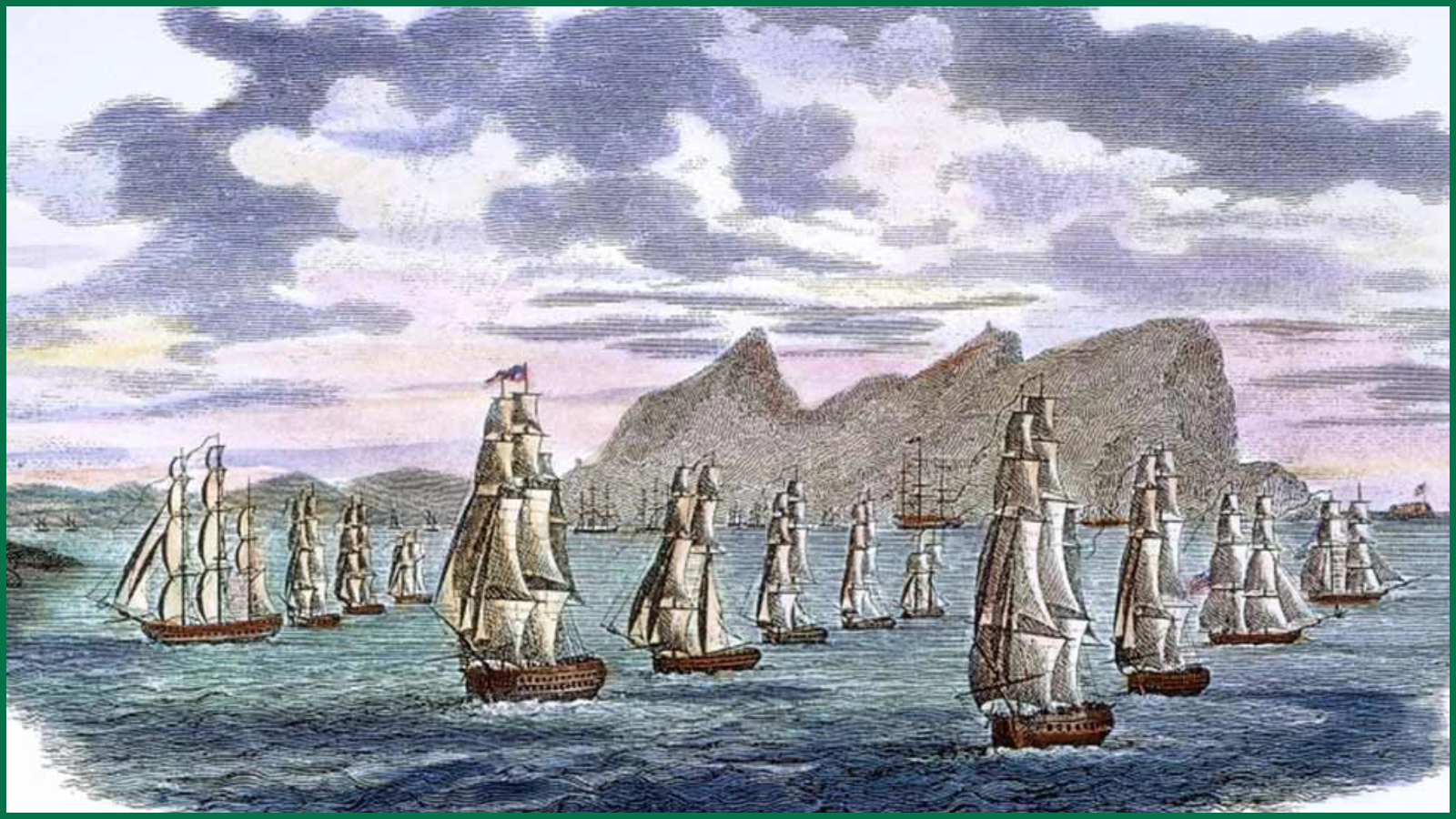
The shrewd imperialist planner, Henry Kissinger, once said that “an aircraft carrier is 100,000 tons of diplomacy.” Gunboat diplomacy is to international relations what “the stickup” is to people on the street: a violent robbery at gunpoint. No sane person would hand over their wallet just to anyone who asked for it, but a gun in the face will change that equation. Since the 1800s, imperial powers had similarly learned that other countries were a lot more agreeable to lopsided treaties when a naval armada was docked along their coastline and ready to open fire.
Gunboat diplomacy was used by the British against China during the Opium Wars, against Haiti when the U.S. stole their national gold reserves, against Japan and Korea for purposes of U.S. trade, by France against Thailand for the relinquishing of modern-day Laos to French Indochina and the U.S. against Colombia for the acquisition of the Panama Canal Zone—to name just a few examples in a very long list.1
The topic has gained new relevance in the age of Trump’s bulldozer approach to international relations. He has used a mix of tariffs and annexation threats against stalwart U.S. trading partners in order to browbeat them into accepting humiliating trade agreements. Meanwhile, explicit gunboat diplomacy has become Trump’s preferred tactic against countries under sanction and immune to tariffs. The first two months of 2026 have witnessed the U.S. navy kill and kidnap Venezuelans, impose a cruel blockade on Cuba and surround Iran with devastating weapons of war.
A robber committed to the threat of violent harm does not have to exchange anything of material value in order to receive a ransom. The asymmetry of this transaction is what incentivizes his crime. Trump engages in gunboat diplomacy for the same reason he applies tariffs with zeal—he believes that asymmetrical coercion is the backstop to favourable terms. Under the narrow horizon of short-term self-interest, this approach can appear to work. But robbers do catch blowback. And with history as our guide, we see that this strategy of imperialist aggression often does as well.
Japan acquiesced to American demands in the 1800s—but this sent it down a road of aggressive industrial expansion, fascist government, the colonization of Korea and the bombing of Pearl Harbour. The British did impose harsh treaties on China—but these fomented the Boxer Rebellion that laid the foundation for Mao’s decisive civil war victory and modern China’s Marxist outlook. The French did expand their colonial holdings in Southeast Asia—but this, too, boomeranged in the form of subsequent communist revolutions.
For every action there is an equal and opposite reaction. Capitalist powers have had the tendency to underestimate the agency of those that they dominate. Every war, tariff and threat introduces a new conflict, a new dialectical friction, into the tapestry of global relations. The United States has embarked on a strategy to leverage its economic and military supremacy in order to vassalize the world and extract surplus value without trading for it. On the surface, this may seem to work. But as global trade increasingly re-routes around the U.S., expect opposition to American hegemony to stiffen until it eventually comes undone.
See Karl Marx, “The Anglo-Chinese Treaty” in Dispatches for the New York Tribune: Selected Journalism of Karl Marx (Penguin, 2007): 31-36 for details of the opium trade imposed on China and unequal treaties pursuant to it. ↩︎
When the U.S. government purchased Louisiana from France, they secured a land stretching from present-day Montana, through Oklahoma and terminating at the Gulf of Mexico. However a new dispute opened with Spain concerning the southwest boundary of the formerly French territory: Texas. The Americans felt that they had acquired the territory as part of their deal with France but Spain maintained that it was them who had control over that land. The Spanish sale of Florida to Washington was meant to settle the Texas issue and the U.S. government formally relinquished its claims as part of the transaction. But American settlers on the frontier had other ideas.
Mexico gained independence from Spain in 1821 and was quickly recognized by the United States. Initially the two countries enjoyed friendly diplomatic relations, with the Treaty of Limits affirming Mexican sovereignty over Texas and other western territories, including present-day Arizona and California. Within this cordial political atmosphere, American homesteaders were invited to settle in Texas and help to stabilize a fragile Mexican economy. What they received was an unruly population with little respect for Mexican sovereignty, much less Mexican people or customs.1 Tensions came to a boil when Mexico abolished slavery in 1829. As many American settlers had brought slaves with them, they would have faced a loss of property if the Mexican law was enforced. Instead they took up arms, kicked out Mexican authorities and demanded to be annexed by the United States.
Early Aggressions
Mexico warned the U.S. that their border treaty would be nullified if they annexed Texas. The Mexicans undoubtedly misunderstood the expansionist spirit of manifest destiny, having been fooled by prior friendly relations with Washington. The resulting Mexican–American War dropped the full brutality of U.S. superiority down on Mexico like the hammer of Thor: boys were shot for sport; churches were desecrated and Catholics murdered; women and little girls were stripped naked and assaulted in unspeakable ways; entire villages were razed by fire.2 The barbarity only halted when the U.S. military occupation of Mexico City forced the surrender of 55% of Mexican territory.
The Mexican–American War was not any kind of dark chapter in the history of U.S.–Latin America relations. On the contrary—it set the mould. With the conquest of new territory stretching to the Pacific, American commercial interests began to reach down the coastline and into Central America.
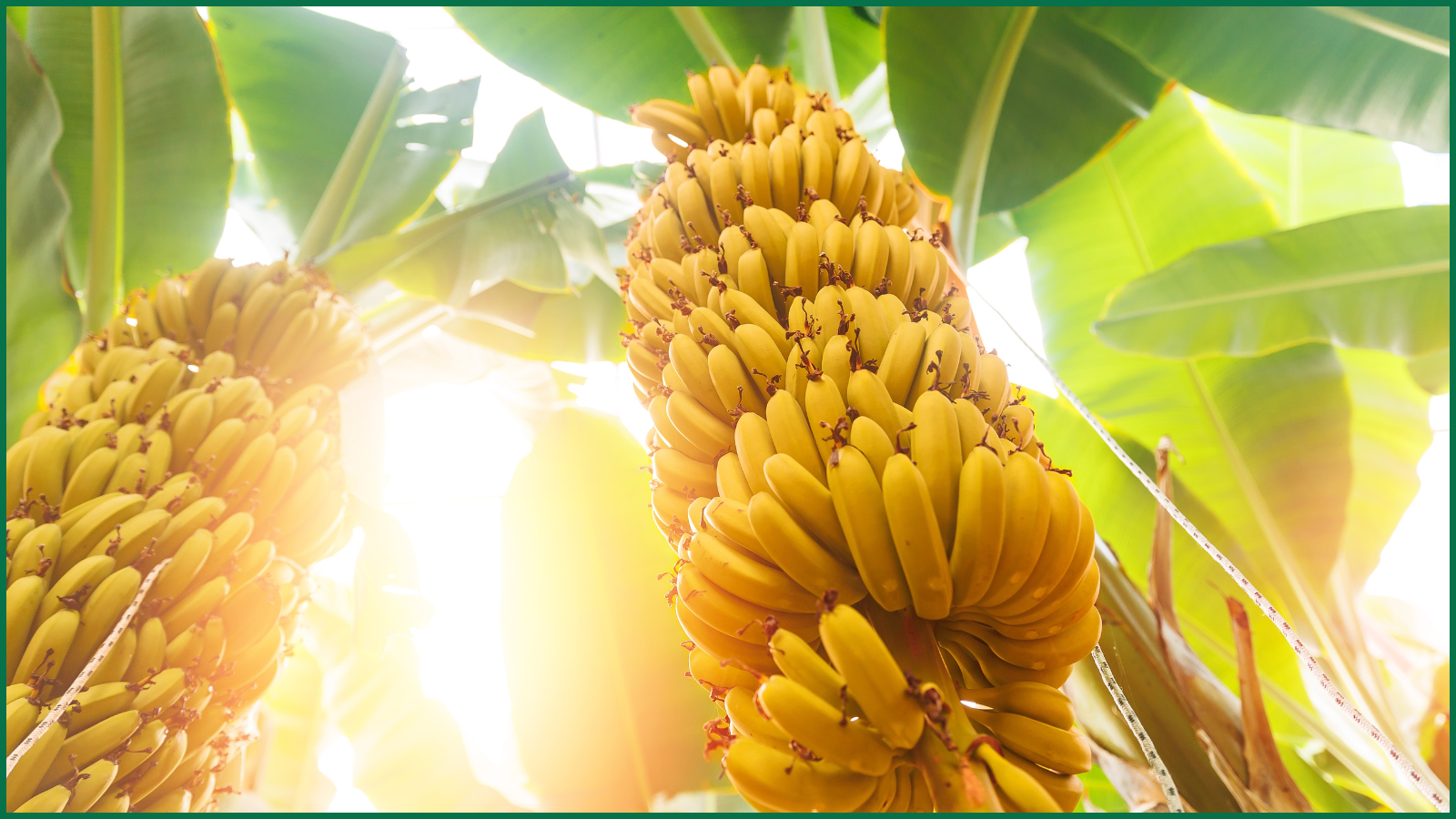
The western appetite for bananas and other tropical commodities brought US capital into contact with a new swathe of Latino peoples—and it went about as well for them as it did for the Mexicans in years prior. The ravaging of Mexico proved to America, with its powerful industrial economy, that it could act with impunity toward its less-developed neighbours to the south. Their capital and guns afforded them enormous power over a region that lacked both.
Warfare is defined as an “open and declared armed hostile conflict between nations.” The Banana Wars of the early 20th century carry an unfortunate title because they were not wars—they were repeated molestations of vulnerable populations by an imperial power.
When Haiti and the Dominican Republic fell into debt, the US deployed artillery, machine guns and naval ships. They stole the national gold reserves, turned government finances over to New York banks and gave American corporations free access to land for sugar plantations run by forced labour. When a nationalist insurgency threatened foreign property in Nicaragua, marines arrived to quash the rebellion. They proceeded to take over government finances and established a military base to suppress future anti-American revolts. When Washington decided to build a canal across the Isthmus of Panama, they backed a secessionist movement that would pull the small, pliable country of Panama from the lands of Greater Colombia. When abhorrent working conditions on American-owned sugar plantations in Cuba sparked civil unrest, thousands of marines arrived to protect the harvest and suppress anti-American agitation.3 When plantation workers in Colombia protested payment in coupons rather than cash and demanded a six day work week, the United Fruit Company massacred the strikers. In Honduras, United Fruit kept workers’ movements at bay by paying off presidential candidates and funding right wing militias. This combination of efforts made the corporation the most powerful entity in the state.
The Dictatorships
The advent of the Cold War brought American hegemony over Latin America to new heights. With the US military in confrontation with communist forces in Asia and Europe, covert action and special operations were relied on in the Western Hemisphere. Across Latin America, torture chambers and CIA-trained death squads blossomed alongside a growing number of brutal right wing dictators aided by Washington. Argentina, Bolivia, Brazil, Chile, Cuba, Dominican Republic, El Salvador, Guatemala, Haiti, Nicaragua, Paraguay, Uruguay, and Venezuela all suffered visits from oppressive regimes that consolidated power and murdered their opposition under the cynical guise of “anticommunism.” Even modestly progressive and liberal-democratic movements were snuffed out in many of these countries, as elections were overturned and American corporate interest reigned supreme.
This was the Latin America that confronted a young Che Guevara as he embarked on his notorious motorcycle journey across the continent. On his trip he witnessed the the cold and hungry conditions of mine workers in Chile and the faces of poverty in Peru, people who “go on living only because it’s a habit they cannot shake.”4
Guevara correctly understood that the division of Latin America into “unstable and illusory nationalities” made the region ripe for exploitation and US domination.5 He saw this domination first-hand in 1954 when living in Guatemala, where an elected government proposed land reform for its farmers. Soon afterward, it was overthrown by American bombers in order to install a pro-United Fruit Company dictatorship headed by Castillo Armas, a CIA asset who murdered thousands of people. This experience proved the futility of representative democracy in the face of powerful corporate interests.
Having been marked for execution by the homicidal U.S. puppet in Guatemala, Guevara fled to Mexico where he met Fidel Castro and joined the Cuban revolutionary struggle. Cuba was also ruled by a pro-US dictator at this time and he oversaw routine executions of political opponents and a Cuban economy where American corporations controlled approximately 40% of sugar production, 90% of mining concessions, 100% of cattle ranching, 80% of utilities and had a monopoly on imports. Additionally, the corruption of the Batista regime allowed the American Mafia transform Havana into a drunken cesspool of gambling and prostitution.
With striking lucidity President John F. Kennedy admitted:
I believe that there is no country in the world including any and all the countries under colonial domination, where economic colonization, humiliation and exploitation were worse than in Cuba, in part owing to my country’s policies during the Batista regime.
The success of the Cuban revolution saw the re-appropriation of national property and the destruction of casinos by throngs of empowered Habaneros. The revolution went on to deliver universal housing, healthcare and education, restoring dignity to a despoiled country. However, the antagonism would re-emerge in the form of a suffocating economic blockade and countless coup attempts.
The Debt Racket
The end of the Cold War brought more liberal governance to Latin America but they were saddled with debts carried over from the era of military juntas. From this situation came America’s next racket: the “Washington Consensus,” which was little more than a set of neoliberal dictates devised by western financiers for nations held in debt bondage.
Mass privatization, austerity budgets and easy American access to cheap labour and resources were the hallmarks of crisis financing in the 1980s and 1990s, pulling in countries such as Argentina, Chile, Honduras, Nicaragua, Mexico and Venezuela—resulting in La Década Perdida (the Lost Decade) of stagnant economies and soaring inequality. In other words, the Washington Consensus represented another hegemonic “push from the United States” for “trade agreements favourable to the United States…The free flow of capital that these trade agreements were designed to foster has only benefitted the rich nations and the wealthy classes.”6 Derivative of these neoliberal policy prescriptions is a migration crisis and the 21st century “pink tide” of elected progressive governments throughout Latin America.
From the Banana Wars era to the present day, we can see that Che Guevara was proven right: liberal democracy in exploited countries is too weak to uplift the great majority and a lack of regional solidarity has made it easy for the United States to run roughshod over Latin America. In terms of real purchasing power, the region has been economically stagnant for 50 years, with examples of worsening poverty and shrinking middle incomes over that time. The pink tide movement was driven back by “soft” coups in Brazil and Bolivia, corporate pressure and repeatedattacks from Washington on Latin American progressive heads of state. One pink tide country which resisted coup attempts and foreign subversion was Venezuela under Hugo Chavez.
In a span of 14 years Chavez was able to double school enrolment, make literacy and healthcare universal, raise access to safe drinking water from 82% to 95%, build 700,000 homes, return one million acres of land to indigenous people, reduce malnutrition from 21% to 3%, and cut unemployment and infant mortality in half. His government accomplished this through a program that forcefully eschewed liberalism in favour of participatory democracy at the neighbourhood level, worker-owned enterprises and nationalization of resources and services. For these successes, the United States delivered to Venezuela the same verdict that Cuba received decades ago: economic strangulation, with the harshest measures arriving in 2019.
What Venezuela and Cuba represent is an expression of defiance in the face of 180 years of unbroken US hegemony in Latin America. For this reason, they are admired by a great many people who “personally suffered under US-sponsored military dictatorships that dominated much of the region” for decades.7 The kidnapping of Chavez’s successor, Nicolás Maduro, is an attempt to force compliance with the pillaging of Latino resources that American corporations feel entitled to. Cheering this move is fatally wrong, even for opponents of socialism: if Venezuela and Cuba are the backlash to United States interventionism, it follows that another intervention could make the situation much worse.
What the United States has done to Venezuela will perpetuate the familiar cycle of political violence and economic dependency—the breeding ground for anti-American resentment—serving nobody but the corporate lobby. The best moments in US–Latin America relations occurred when America expanded the realm of sovereignty rather than crushed it: the turnover of the Panama Canal to Panamanian authority and FDR’s short-lived Good Neighbour policy of non-interference in the region. As long as Latin American politics remains a reaction to American doctrine, the Western Hemisphere will not be free.
Thanks for reading!
Footnotes:
The irony of this development in Texas compared to present-day complaints over immigration should not be lost on anyone. ↩︎
See: Stephen Carney, The Occupation of Mexico (Government Printing Office, 2016): 20, 37, and Peter Guardino, “Gender, Soldiering, and Citizenship in the Mexican–American War of 1846-1848” in The American Historical Review, Vol. 119, No. 1: 43. ↩︎
Louis A. Perez Jr., Intervention, Revolution, and Politics in Cuba (University of Pittsburgh Press, 2012): 98. ↩︎
Che Guevara, The Motorcycle Diaries: Notes on a Latin American Journey (Ocean Press, 2003): 41. ↩︎