
Tag: Erich Fromm

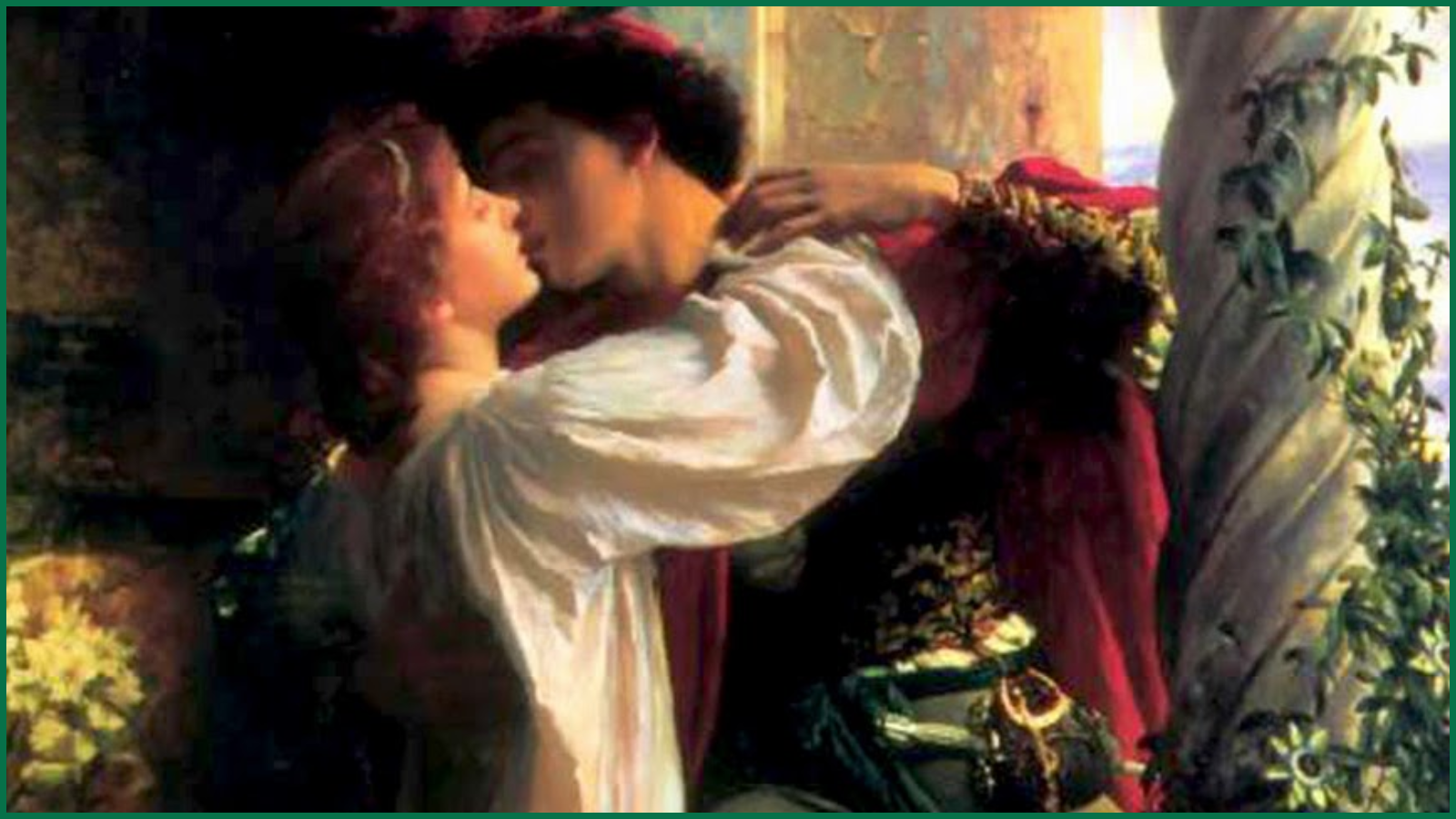
  • Marx and Shakespeare: The World of Romeo and Juliet

    Marx and Shakespeare: The World of Romeo and Juliet

    My only love sprung from my only hate,
    Too early seen unknown and known too late.
    Prodigious birth of love it is to me
    That I must love a loathed enemy.

    —Juliet, Act 1, Scene 5.

    The psychoanalyst Erich Fromm once described Karl Marx as the archetypal humanist, an embodiment of Enlightenment thought, “the man who every year read all the works of Aeschylus and Shakespeare, who brought to life in himself the greatest works of human thought.”1 Indeed, his daughter Eleanor Marx once said about her upbringing: “As to Shakespeare he was the Bible of our house, seldom out of our hands or mouths. By the time I was six I knew scene upon scene of Shakespeare by heart.”

    Both Alike in Genius

    Karl Marx himself had been introduced to Shakespeare at a young age by his father-in-law and cited the Bard no less than 176 times throughout his published work. This may seem curious, given that Shakespeare himself was no revolutionary or proto-socialist. He was ahead of his time in respect to his artistry but he nonetheless straddled the fence line of the 16th and 17th centuries as a product of the English Renaissance. Capitalism was only nascent here—in its “primitive accumulation” phase, as Marx described it.

    There were many social transformations underway by the time of Shakespeare and these changes followed in the wake of the discovery of the Americas and successive waves of the Black Death. Labour shortages combined with riches pillaged from far-away continents to elevate a commercial class into the chief coordinators of the economic base. The Renaissance was the cultural reflection of this new economy, appearing in an otherwise feudal superstructure. 

    The rich tapestry of Shakespearean dramas no doubt gave living colour to Marx’s theories of human history. Marx summarized his conception of social transformation as follows: 

    In studying such transformations it is always necessary to distinguish between the material transformation of the economic conditions of production, which can be determined with the precision of natural science, and the legal, political, religious, artistic or philosophic—in short, ideological forms in which men become conscious of this conflict and fight it out. Just as one does not judge an individual by what he thinks about himself, so one cannot judge such a period of transformation by its consciousness, but, on the contrary, this consciousness must be explained from the contradictions of material life, from the conflict existing between the social forces of production and the relations of production. No social order is ever destroyed before all the productive forces for which it is sufficient have been developed, and new superior relations of production never replace older ones before the material conditions for their existence have matured within the framework of the old society.2

    Marx was able to discover the base and superstructure of human society given his location in history, where the Industrial Revolution met Enlightenment philosophy. Likewise, Shakespeare was able to capture a wide spectrum of European society in the dramatic form given his placement at the historical intersection between mercantile proto-capitalism and Renaissance culture. While Marx could observe the society of his present, Shakespeare gave him a valuable glimpse into the past. Adjusting for creative license, the plays of Shakespeare allowed Marx to back-test his theory of history and dialectical method.

    In Fair Verona

    Explicit historical references and socio-economic details are left vague in Shakespeare’s Romeo and Juliet, a play which was sourced from an earlier Italian novella and English poem. Verona was a prominent city-state during the Italian Renaissance, ruled by the House of Della Scala before internal divisions led it to be folded into the Venetian Republic during the 1400s.

    In the play, it is Prince Escalus who stands in for Della Scala, and rules a Verona that is sharply divided by the feuding Montague and Capulet families. Even Escalus’ own House is not immune to this division, as his cousin Mercutio favours the Montagues while Count Paris is partial to the Capulets. The feud between the Montagues and Capulets is emblematic of the actual strife between elite factions and warring states of northern Italy between 1200 and 1500.

    The rediscovery of trade routes during the Crusades led to the commercial revolution that underpinned a Renaissance cultural transformation, enriched the merchant class and spurred the maritime activity that culminated in the European colonization of the Americas. Verona is a logical setting for Romeo and Juliet, given that northern Italy was ground-zero for the burgeoning mercantile economy.

    The Veronese setting suggests that the Montagues and Capulets belong to this newer wealthy merchant class and Shakespeare refrained from assigning them specific hereditary titles in his dramatis personae. References to members of either family as “lord” or “lady” are best understood as courtesy titles common to the Renaissance period, acknowledging a family’s high social standing despite lacking feudal lands or noble lineage. 

    The only characters in Romeo and Juliet with hereditary titles reign from the House of Escalus—the ruling house of Verona. The Prince is thus able to threaten the Montagues and Capulets with execution over their escalating violence, as the latter families enjoy wealth but are deprived of political power. This detail recalls Marx’s observation that revolutions in the political superstructure occur only after the economic transformation is complete.

    At the time of the Renaissance, feudal hierarchies were the political reality as the turn toward capitalism was only just gathering steam. The contradictions between the prevailing feudal order and rising capitalist one are therefore integral to the plot of Romeo and Juliet. Without this wealthy urban elite living under feudal auspices, the Montagues and Capulets would not have existed nor have entered a blood feud. The “ancient grudge” between the two households surely stemmed from economic competition over trade which was bloody and fierce in Renaissance Italy.3 

    Civil Blood and Civil Hands

    Competition between merchant families may have been especially violent in this era because they lacked hereditary nobility and relied solely on financial accumulation to claim status. Market competition can turn any investment or transaction sour—ruining in an instant a great merchant house that had taken decades to build its standing.

    Blood feuds and vendettas between families were a staple of justice in the feudal era owing to the lack of centralized secular authority. However, the uptake of the blood feud tradition by wealthy urban families was greatly disruptive to the commerce and social order of emergent Renaissance cities. This is why we see Prince Escalus attempt to suppress the feud between the Montagues and Capulets in Verona whereas a similar feud between rural families would not have drawn such condemnation at this period in time. 

    This brings us to another salient point of Marx’s thought; namely, the absence of any “universal ideal” of justice that exists outside of social relations. Justice is enmeshed within the web of social relations that form under a given mode of production.4 This view explains the historical acceptance and rejection of slavery, evolving marital relations and family law, the administration of justice between generations, the practice of usury, and the regulation of property from the Paleolithic period up to the present day—to name a few examples. In Renaissance Europe, social relations were very much in flux as the importance of commerce spurred urbanization and the merchant class climbed nearer in rank to the landed aristocracy, not in terms of political power, but in terms of wealth. 

    An interesting outcome of this social fluctuation was the rise of “disorderly conduct” in Renaissance Verona, characterized by gambling, street fights, ribaldrous music and festive dance parties. These debaucherous activities drew members of all classes into subversive contact with one another, as they were undertaken without regard for social rank or hereditary privilege. Chief among these disorderly gatherings was the unsanctioned masque party.5 At a masquerade with identities concealed, a knight could break bread with a porter, a noble could pour wine for a cobbler or a Montague could fall in love with a Capulet.6

    The masque party hosted by Capulet is the pivotal scene of the story: the moment when Romeo notices the young Juliet from across the ballroom is also when Tybalt becomes aware of Romeo’s presence and seeks to violently remove him from the party. Capulet interrupts Tybalt and prevents him from disturbing Romeo, demonstrating the patriarch Capulet’s commitment to the spirit of the masquerade—a suspension of social hierarchy and normative relations. 

    A Death-Marked Love

    Born of a subversive gathering, the romance between Romeo and Juliet is embedded with a seditious quality that threatens long-standing customs. Whereas the Count Paris pursues Juliet through a traditional courtship, negotiated between himself and Capulet, Romeo and Juliet consent to marry each other from a place of fiery passion for one another and without the approval of their parents. Love marriages would not become become a norm in the West until the 17th and 18th centuries but they were emergent as the Renaissance began sweeping through western Europe.

    The relationship between Romeo and Juliet represents early modernity. On the other hand, the relationship between Paris and Juliet represents the declining feudal order—just like his hereditary title of Count. The language Juliet uses with Count Paris is formal and terse; he mistakes gaining Capulet’s consent with gaining Juliet’s affection.7 For this mistake he pays with his life when Romeo kills him during a confrontation at the Capulet tomb—a place he had no business lingering.8

    The blood feud is the other declining feudal custom that clashes violently against the romance between Romeo and Juliet. In the play it is like a fire and it consumes the lives of Tybalt and Mercutio as when lend it fuel. Mercutio’s Queen Mab speech foreshadows the agony of modern aspirations against the ferocity of feudalism’s twilight: valiant soldiers toasting wine before they are soaked by the blood of slit throats; civic lawyers and honourable clergymen corrupted by the pursuit of money; the tender kiss between those in love becomes a scourge of venereal disease and swollen pregnant bellies. 

    There is a deep cynicism attached to the story of Romeo and Juliet, reflecting a Renaissance era draped over the coffins filled by victims of bubonic plague; when wealth was asserted by means of warfare in Europe and unspeakable colonial violence abroad. The blood feud between the Montagues and Capulets could never end peacefully. The modern aspiration represented by the marriage between Romeo and Juliet was ultimately shattered by the “ancient grudge” between their two families. But they destroy the old order when they refuse to acquiesce to it. In their joint-suicide, they bury not only themselves but also the blood feud that came between them. Modernity prevailed in Romeo and Juliet just like modernity prevailed in history—at a tremendous cost priced in blood. 

    Thanks for reading!


    1. Erich Fromm, “Marx’s Concept of Socialism” in Marx’s Concept of Man (Frederick Ungar Publishing, 1961). ↩︎

    2. Karl Marx, “Preface” to A Contribution to the Critique of Political Economy. ↩︎

    3. See Thomas F. Arnold, “Violence and Warfare in the Renaissance World” in A Companion to the Worlds of the Renaissance (Blackwell Publishing, 2007): 460–474,  for more on this subject.  ↩︎

    4. David Harvey, A Companion to Marx’s Capital Volume 2 (Verso, 2013): 189. ↩︎

    5. Zoe Farrell, “Connections and Community in Sixteenth-Century Verona” in Journal of Social History, Vol. 59, No. 4: 10-13. ↩︎

    6. In Freudian terms, they become each other’s object-cathexis, a conscious and unconscious register of libidinal energy. The “love at first sight” concept was accepted in Shakespeare’s day, as Cupid’s spell could be cast with mere eye contact. ↩︎

    7. See Act 4, Scene 1 of Romeo and Juliet for a good example of this. ↩︎

    8. This confrontation has been edited out of prominent screen adaptations of the play for the purpose of making Romeo appear more sympathetic. Both Baz Luhrman and Frank Zeffirelli removed it. ↩︎
  • Psychoanalyzing “Seinfeld”

    Psychoanalyzing “Seinfeld”

    Every second our senses send approximately 11 million bits of data to our brains for processing. To avoid overload, only a maximum of 120 bits is handled by our conscious selves at any one time. That means 99.9999% of the information that our brains receive is unconsciously filtered out in a process known as sensory gating. What information actually registers with our conscious minds is determined by a range of factors—our knowledge, passions, past experience and the immediate environment.

    There is no doubt that Larry David and Jerry Seinfeld mastered the art of observational humour. It works by dredging up universal experiences familiar to the audience—but only familiar at the level of the unconscious. Each episode bounces like a pinball against the bulk of overlooked perceptions, fleeting thoughts and petty nuisances that form the social unconscious. In this way the fabled “show about nothing” becomes “a show about everything.”

    Less Than Nothing

    Ever had to wait a while for a table at a restaurant? There’s a Seinfeld for that. Ever encountered a hostile service worker? There’s a Seinfeld for that. Ever had an encounter with a communist? There’s a Seinfeld for that. Ever had someone call you by the wrong name? There’s a Seinfeld for that. Ever been short of toilet paper when you needed it most? There’s a Seinfeld for that. Any and every petty occurrence of social life is picked up and taken to its extreme end in the world of Seinfeld, where exclamation points end relationships and lunchtime calzones make-or-break careers.

    The situations in the series may seem obvious at the surface but it is no easy feat to keep the stakes spinning so high on axes so small. Seinfeld accomplishes this by removing the frictions that rub against the grain of our lives in the West. The financial stress of mortgage payments or annual rent increases; the social pressure to start a family; the heartbreak of losing a relationship; the emotional complications of friendship; depression owing to unrequited dreams; the precarity of work in the neoliberal economy—the emotional toll of life is completely alien to the protagonists of Jerry Seinfeld, George Costanza, Elaine Benes and Cosmo Kramer.

    The worst financial disruption in the series occurs when an unemployed George is forced to move back into his childhood home for nearly two seasons. But this is only used as a narrative device to foreground the comically dysfunctional relationship of George’s parents. Outside of this setback for George, the characters all exist in vaguely middle class stations without need—even Kramer, who doesn’t have a job or clear means of support. 

    In the absence of economic pressures, the social world of these characters has the luxury of collapsing into the myopic. When Jerry’s girlfriend declines his invitation to a bite of his apple pie, he spends the episode investigating her behaviour and figures she is psychotic. When Kramer spots a former roommate at the airport who stiffed him on $240 two decades prior, he purchases an even more expensive flight ticket to confront the man. When Elaine realizes her apartment building is just outside of a Chinese restaurant’s delivery zone, she moves into a janitor’s closet across the street in order to get their flounder delivered. When George’s girlfriend passively receives a “thank you” for a salad that he purchased, his demand for recognition causes the dissolution of their relationship. 

    As director Tom Cherones flipped through early scripts of the show, he struggled to understand it. “This storyline all about Jerry buying a suede jacket and everyone flipping out about the lining being pink-and-white striped. Why was the lining of a jacket such a big deal? Who fucking cared?”1 Good question.

    By itself, the material comfort of the show’s protagonists does not explain their total fixation with the excruciating minutiae of everyday life. But these are people devoid of any lofty goals or long-term ambitions beyond the immediate situation before them. The Marxian psychoanalyst Erich Fromm warned “if man does not overcome his infantile strivings…he is torn between the desires of the child within himself and the claims which he makes as a grown-up person.”2

    Through the Looking-Glass

    The infantile tendencies of the characters are demonstrated throughout the series.  Jerry habitually eats kids cereal and idolizes Superman. George sobs during Home Alone and reveals his favourite drink is milk with Bosco chocolate syrup. Elaine chews Jujyfruits and likes the kid-friendly movie Sack Lunch while her more refined boyfriend, boss and friends insist on The English Patient. Kramer obsessively safeguards a game of Risk and rolls around the neighbourhood on a girls’ bike.

    The objects of the characters are torn between the social reality of adult human beings and those carried over from their childhoods. This is further reflected in their inability to form emotional attachments. The romantic relationships in the show resemble sibling rivalries more than affectionate bonds and the four friends themselves often treat one another callously unless they need something. The neuroses displayed in Seinfeld tilts toward what Sigmund Freud termed “primary narcissism,” wherein an individuals’ “only realities are his own bodily and mental experiences, and the world outside does not yet [emotionally] exist.”3 

    This neurotic presentation was fuelled by Larry David’s notorious “no hugging, no learning,” rule for the characters. These characters were condemned to be consumed by the socially unconscious “little things in life” and therefore had to be regressed themselves—their sensory gates open to a conscious mind that is less developed than the typical adult faculty.

    The universal relatability of Seinfeld thus has two layers: in the situations presented to the characters and the characters themselves. That is because primary narcissism is a psychological development stage that we all pass through en route to adolescence. This stage is shed as our personalities mature but it is embryonic and foundational to further development. Freud wrote: “The earlier phases of development are in no sense still preserved; they have been absorbed in the later phases, for which they provided the material…We can only be sure that the preservation of the past in mental life is more the rule than a strange exception.”4

    We do not approve of the characters’ actions in Seinfeld but we immediately recognize the situations that confront them and follow the logic of their response. This is because, for some period of our development, we were them. In Jokes and Their Relation to the Unconscious, Freud observes that peculiarities in the infantile way of thinking “are retained in the unconscious of adults” and that “any recovering of unconscious material of this kind strikes us in general as ‘comic.’” Suspension of disbelief is achieved whenever the characters’ actions or schemes result in failure and ostracism. The self-defeat of the characters is never-ending and it imputes just enough realism to a show that would otherwise slip off a fantastical cliff.

    While some cultural creations take many years before they are appreciated—Jane Austen’s Pride and Prejudice, David Lynch’s Twin Peaks and Orson Welles’ Citizen Kane are some examples— Seinfeld gained massive resonance with an audience during its run by ruthlessly pulling out those perceptions normally filtered by our consciousness and throwing them to our feet. It has maintained its popularity in the years since, if Netflix’s recent $500 million acquisition for streaming rights is any indication. But it is a product of its decade.

    The Freezer of Time

    Seinfeld could not be created today because the social unconscious has changed too radically in the years since facing disasters such as the “war on terror,” accelerating environmental ruination, destabilizing refugee crises,’ COVID-19 and western deindustrialization. It is not a coincidence that the first full season of Seinfeld aired in 1992—the very same year when Francis Fukuyama’s The End of History and The Last Man was released. The grand Cold War ideological debates were over, neoliberal capitalism had triumphed, history had ended and “the little things” were the only remainder. Seinfeld was the ultimate statement from the yuppie middle class of the 1990s on the irrelevance of politics, its ignorance of class conflict, their indifference toward collective aspirations and the futility of fretting over the future. Seinfeld is that head space containing everything that ever was and would be. 

    The continuing appeal of this postmodernist, ‘90s-era “show about nothing” is best explained by its striking quaintness and naïveté in the eyes of contemporary viewers. To continue with Freud, in Beyond the Pleasure Principle he describes instincts as “an urge inherent in living organic matter for the restoration of an earlier state.”5 What Seinfeld offers today is a dream-like return to the apparently simpler, more pleasant social unconscious of a bygone era. Thirty years ago Seinfeld was the zeitgeist; now, it is the palpable escape.

    Thanks for reading!

    Footnotes:

    1. Jennifer Keishin Armstrong, Seinfeldia (Simon and Schuster, 2016), 49. ↩︎

    2. Erich Fromm, Beyond the Chains of Illusion: My Encounter with Marx and Freud (Bloomsbury, 2020), 31. ↩︎

    3. Ibid, 46. ↩︎

    4. Sigmund Freud, Civilization and Its Discontents (Broadview Editions, 2016),51-2. ↩︎

    5. Sigmund Freud, Beyond the Pleasure Principle (Broadview Editions, 2011), 75-6. ↩︎
  • Alienation

    Alienation

    This article is part of a series on classical Marxism.

    In the typical western city, one does not have to search very hard to find the signs: derelict buildings, littered streets, homeless with pockmarked faces pushing carts filled with bottles. Across North America, opioid abuse and a cost of living crisis have sent homeless populations climbing against a backdrop of city blocks scorched by wildfire, ground tremors from fracking, mass flooding by storm surges and condos of glittering glass. In 2018, Chris Hedges published one of the most potent illustrations of capitalist alienation with America, The Farewell Tour.

    In the book, he sets the table early: “Hurricane after hurricane, monster storm after monster storm, flood after flood, wildfire after wildfire, drought after drought will gradually cripple the empire, draining its wealth and resources and creating swaths of territory defined by lawlessness and squalor.”1

    Hedges then introduces us to Christine Pagano, a woman who fell into drugs during high school after her stepfather was caught sleeping with her 16-year-old classmate and her home life imploded. Years after experimenting with heroin, she would turn to prostitution in order to feed a $500 heroin habit and sold her body in Jersey City to Wall Street traders, business executives and bankers “who were the prostitutes’ main customers.”2 She shares that this was preferable to Camden, New Jersey, where “‘the poverty is so bad. People rob you for $5, literally for $5. They would pull a gun on you for no money.’”3

    Then there is Robin Rivera, the product of a troubled home who later earned minimum wage at a hair salon in Los Angeles. She accepted a proposition from a talent agent in the pornography industry in the hope of making ends meet. “‘They tied me up and hung me from the ceiling,’ she said,” adding that she was also electrocuted with a cattle prod. “‘They put a hook in my ass’” and “‘tied my ponytail to it. They tied my arms to a barrel. They tied my legs to a barrel. He put a vibrator on me…Five hours is a long time. For $900.’”4

    Depravities of this kind are rarely discussed in the media. This could be due to the sheer numbers of those who indulge—up to one-quarter of web searches and one-third of downloads relate to pornography, after all. But it is corollary to the economic imbalances and deprivations of the economic sphere, the “rough neighbourhoods” on the other side of the tracks in our cities or the beggars encountered at home and abroad. As noted in “Ecology,” capitalism turns both land and people into commodities—“venal objects”—and this becomes the lived experience for all-too-many in rich and poor countries alike.5 

    When Marx discusses “alien capital” confronting “alien labour,” he is spotlighting two economic processes which move on their own momentum, as though independent of human agency.6 Human beings are creative by nature and we define ourselves by conscious, self-directed activity. Under capitalism, this is rarely the case. Individuality and self-expression is seldom found in production; work is transactional and conducted under authoritarian oversight for a wage on which to subsist. In his Economic and Philosophic Manuscripts, Marx writes that “the need for money is therefore the real need created by the modern economy, and the only need which it creates.” It is this need of money that elevates exchange-value to the highest priority, with use-value of only secondary consideration to a profitable exchange. Work is reduced to a pursuit of that universal commodity, money, and it is only in that cramped space of time off the job when we are free to express ourselves, largely as consumers. Due to the energy consumed by employment, leisure itself is distorted and becomes a site of excess and expense. Born of this common need for money, we see an extension of products which appeal to our base instincts, subservient only “to inhuman, depraved, unnatural and imaginary appetites”—of the sort highlighted in the above paragraphs.7

    As psychoanalyst Erich Fromm interpreted Marx, “alienation leads to the perversion of all values.” Because economic aims are “the supreme aim of life, man fails to develop any truly moral values,” and “the riches of a good conscience, of virtues, etc.” are impossible as they lack monetary impetus.8 The capitalist system of production severs society from the splendour of nature and turns individuals into replaceable parts—whether they be numbered employees and managers or prostitutes and johns. Freethinking and meditative contemplation is thus muzzled with individuals crippled by a pursuit of exploitation and libidinous excitations. Downstream from a mountain of emissions and cheap labour are resort vacations and cruises, restaurants serving high-priced cocktails and IMAX movies with sensory-melting special effects. This is what passes through the free time of conforming consumers under capitalism today.  

    Engels saw this “spiritual-barrenness” through all echelons of society. Corporate conglomerates are the fountainhead of prepackaged, empty pleasures but there is a social context to it. Everyone seeking to maintain or improve their standing within the capitalist hierarchy ultimately become slaves to their own employment—even elite financiers and CEOs become “slave of his own capital and his own profit-getting.”9 Even the ruling class beneficiaries of capitalism’s wealth find themselves with limited agency when it comes to maintaining their standing. If they do not open mass markets, pollute, debt-shark or shrewdly exploit, they will simply be overtaken by a more capable servant of capitalist expansion.

    The total alienation of the individual by the ever-complex and expanding process of capitalist production is the reason behind mental health epidemics. In the United States, 90% of people believe there is a crisis of mental health and 20% experience acute symptoms. In Canada, almost half the population is estimated to experience episodes of mental illness by age 40. In Britain, depression is the condition most commonly encountered by the National Health Service and the instructor Mark Fisher observed: “Many of the teenage students I encountered seemed to be in a state of what I would call depressive hedonia…an inability to do anything else except pursue pleasure. There is a sense that ‘something is missing’—but no appreciation that this mysterious, missing enjoyment can only be accessed beyond the pleasure principle.”10 Supporting the Marxist theory of alienation are the many studies concluding that the more a country is penetrated by capital relations, the worse the mental health becomes. Fisher explains: “When it actually arrives capitalism brings with it a massive desacralization of culture. It is a system which is no longer governed by any transcendent Law; on the contrary, it dismantles all such codes, only to re-install them on an ad hoc basis.”11 The implication is that less-developed countries contain communitarian cultures that are less eroded by capital and experience lower rates of mental illness when compared to the hyper-competitive, technologically advanced and socially isolating realms of wealthy capitalist nations.

    But the task of building an unalienated, harmonious society necessary to individual freedom and human flourishing will not be accomplished by sliding backward on the development scale. Marx did not advocate for an anti-capitalist world, but rather, a post-capitalist one. This means negating the liberal order by incorporating capitalism’s high economic productivity while removing its deleterious effects on the social fabric and natural environment. Capitalist productive forces have brought humanity an enormous capacity to produce but an incredibly inefficient and wasteful manner of allocation. By exerting a conscious, democratic control over the production process, a material output could be allocated according to need rather than payment. The pursuit of exchange-values creates an alienating and immoral world but the pursuit of use-values reverses this effect. Houses to live in rather than speculate with. Medicine to save lives rather than profit. Nature for its aesthetics and life-giving functions rather than plunder. Food grown for nutritional quality instead of an ultra-processed quantity.

    Use-values demand broad input from consumers and workers, they demand the elimination of noxious products and exploitative services from production, they demand positive, humanistic outcomes from artificial intelligence, they promote free time and activity that nurtures the latent talents within all individuals. In other words, they place moral virtue, community, family, mental tranquility and natural beauty into the heart of economic production. 

    A post-capitalist and unalienated free association is one where people are their own masters, liberated from state authority, irrational market fluctuations and corporate dictates. To quote Marx, “the associated producers regulate their interchange with Nature rationally, bring it under their common control, instead of being ruled by it as by some blind power; they accomplish their task with the least expenditure of energy and under conditions most adequate to their human nature and most worthy of it… Beyond it begins that development of human power, which is its own end, the true realm of freedom, which, however, can flourish only upon that realm of necessity as its basis.”12

    Further reading:

    Karl Marx, Economic and Philosophic Manuscripts of 1844.

    ———–


    1. Chris Hedges, America, The Farewell Tour (Simon & Schuster, 2018), 34. ↩︎

    2. Ibid, 62. ↩︎

    3. Ibid, 65. ↩︎

    4. Ibid, 129. ↩︎

    5. John Bellamy Foster, Marx’s Ecology: Materialism and Nature (Monthly Review Press, 2000), 74. ↩︎

    6. Karl Marx, Grundrisse (Penguin, 2005), 266. ↩︎

    7. Karl Marx, Economic and Philosophic Manuscripts of 1844. ↩︎

    8. Erich Fromm, “Alienation,” Marx’s Concept of Man. ↩︎

    9. Friedrich Engels, Anti-Dühring and Other Works (Graphyco Editions, 2021), 157. ↩︎

    10. Mark Fisher, Capitalist Realism: Is There No Alternative? (Zero Books, 2009), 21-22. ↩︎

    11. Ibid, 5-6. ↩︎

    12. Karl Marx, “Chapter 48,” Capital: Volume Three. ↩︎