Tag: Feudalism

  • Marx and Shakespeare: The World of Romeo and Juliet

    Marx and Shakespeare: The World of Romeo and Juliet

    My only love sprung from my only hate,
    Too early seen unknown and known too late.
    Prodigious birth of love it is to me
    That I must love a loathed enemy.

    —Juliet, Act 1, Scene 5.

    The psychoanalyst Erich Fromm once described Karl Marx as the archetypal humanist, an embodiment of Enlightenment thought, “the man who every year read all the works of Aeschylus and Shakespeare, who brought to life in himself the greatest works of human thought.”1 Indeed, his daughter Eleanor Marx once said about her upbringing: “As to Shakespeare he was the Bible of our house, seldom out of our hands or mouths. By the time I was six I knew scene upon scene of Shakespeare by heart.”

    Both Alike in Genius

    Karl Marx himself had been introduced to Shakespeare at a young age by his father-in-law and cited the Bard no less than 176 times throughout his published work. This may seem curious, given that Shakespeare himself was no revolutionary or proto-socialist. He was ahead of his time in respect to his artistry but he nonetheless straddled the fence line of the 16th and 17th centuries as a product of the English Renaissance. Capitalism was only nascent here—in its “primitive accumulation” phase, as Marx described it.

    There were many social transformations underway by the time of Shakespeare and these changes followed in the wake of the discovery of the Americas and successive waves of the Black Death. Labour shortages combined with riches pillaged from far-away continents to elevate a commercial class into the chief coordinators of the economic base. The Renaissance was the cultural reflection of this new economy, appearing in an otherwise feudal superstructure. 

    The rich tapestry of Shakespearean dramas no doubt gave living colour to Marx’s theories of human history. Marx summarized his conception of social transformation as follows: 

    In studying such transformations it is always necessary to distinguish between the material transformation of the economic conditions of production, which can be determined with the precision of natural science, and the legal, political, religious, artistic or philosophic—in short, ideological forms in which men become conscious of this conflict and fight it out. Just as one does not judge an individual by what he thinks about himself, so one cannot judge such a period of transformation by its consciousness, but, on the contrary, this consciousness must be explained from the contradictions of material life, from the conflict existing between the social forces of production and the relations of production. No social order is ever destroyed before all the productive forces for which it is sufficient have been developed, and new superior relations of production never replace older ones before the material conditions for their existence have matured within the framework of the old society.2

    Marx was able to discover the base and superstructure of human society given his location in history, where the Industrial Revolution met Enlightenment philosophy. Likewise, Shakespeare was able to capture a wide spectrum of European society in the dramatic form given his placement at the historical intersection between mercantile proto-capitalism and Renaissance culture. While Marx could observe the society of his present, Shakespeare gave him a valuable glimpse into the past. Adjusting for creative license, the plays of Shakespeare allowed Marx to back-test his theory of history and dialectical method.

    In Fair Verona

    Explicit historical references and socio-economic details are left vague in Shakespeare’s Romeo and Juliet, a play which was sourced from an earlier Italian novella and English poem. Verona was a prominent city-state during the Italian Renaissance, ruled by the House of Della Scala before internal divisions led it to be folded into the Venetian Republic during the 1400s.

    In the play, it is Prince Escalus who stands in for Della Scala, and rules a Verona that is sharply divided by the feuding Montague and Capulet families. Even Escalus’ own House is not immune to this division, as his cousin Mercutio favours the Montagues while Count Paris is partial to the Capulets. The feud between the Montagues and Capulets is emblematic of the actual strife between elite factions and warring states of northern Italy between 1200 and 1500.

    The rediscovery of trade routes during the Crusades led to the commercial revolution that underpinned a Renaissance cultural transformation, enriched the merchant class and spurred the maritime activity that culminated in the European colonization of the Americas. Verona is a logical setting for Romeo and Juliet, given that northern Italy was ground-zero for the burgeoning mercantile economy.

    The Veronese setting suggests that the Montagues and Capulets belong to this newer wealthy merchant class and Shakespeare refrained from assigning them specific hereditary titles in his dramatis personae. References to members of either family as “lord” or “lady” are best understood as courtesy titles common to the Renaissance period, acknowledging a family’s high social standing despite lacking feudal lands or noble lineage. 

    The only characters in Romeo and Juliet with hereditary titles reign from the House of Escalus—the ruling house of Verona. The Prince is thus able to threaten the Montagues and Capulets with execution over their escalating violence, as the latter families enjoy wealth but are deprived of political power. This detail recalls Marx’s observation that revolutions in the political superstructure occur only after the economic transformation is complete.

    At the time of the Renaissance, feudal hierarchies were the political reality as the turn toward capitalism was only just gathering steam. The contradictions between the prevailing feudal order and rising capitalist one are therefore integral to the plot of Romeo and Juliet. Without this wealthy urban elite living under feudal auspices, the Montagues and Capulets would not have existed nor have entered a blood feud. The “ancient grudge” between the two households surely stemmed from economic competition over trade which was bloody and fierce in Renaissance Italy.3 

    Civil Blood and Civil Hands

    Competition between merchant families may have been especially violent in this era because they lacked hereditary nobility and relied solely on financial accumulation to claim status. Market competition can turn any investment or transaction sour—ruining in an instant a great merchant house that had taken decades to build its standing.

    Blood feuds and vendettas between families were a staple of justice in the feudal era owing to the lack of centralized secular authority. However, the uptake of the blood feud tradition by wealthy urban families was greatly disruptive to the commerce and social order of emergent Renaissance cities. This is why we see Prince Escalus attempt to suppress the feud between the Montagues and Capulets in Verona whereas a similar feud between rural families would not have drawn such condemnation at this period in time. 

    This brings us to another salient point of Marx’s thought; namely, the absence of any “universal ideal” of justice that exists outside of social relations. Justice is enmeshed within the web of social relations that form under a given mode of production.4 This view explains the historical acceptance and rejection of slavery, evolving marital relations and family law, the administration of justice between generations, the practice of usury, and the regulation of property from the Paleolithic period up to the present day—to name a few examples. In Renaissance Europe, social relations were very much in flux as the importance of commerce spurred urbanization and the merchant class climbed nearer in rank to the landed aristocracy, not in terms of political power, but in terms of wealth. 

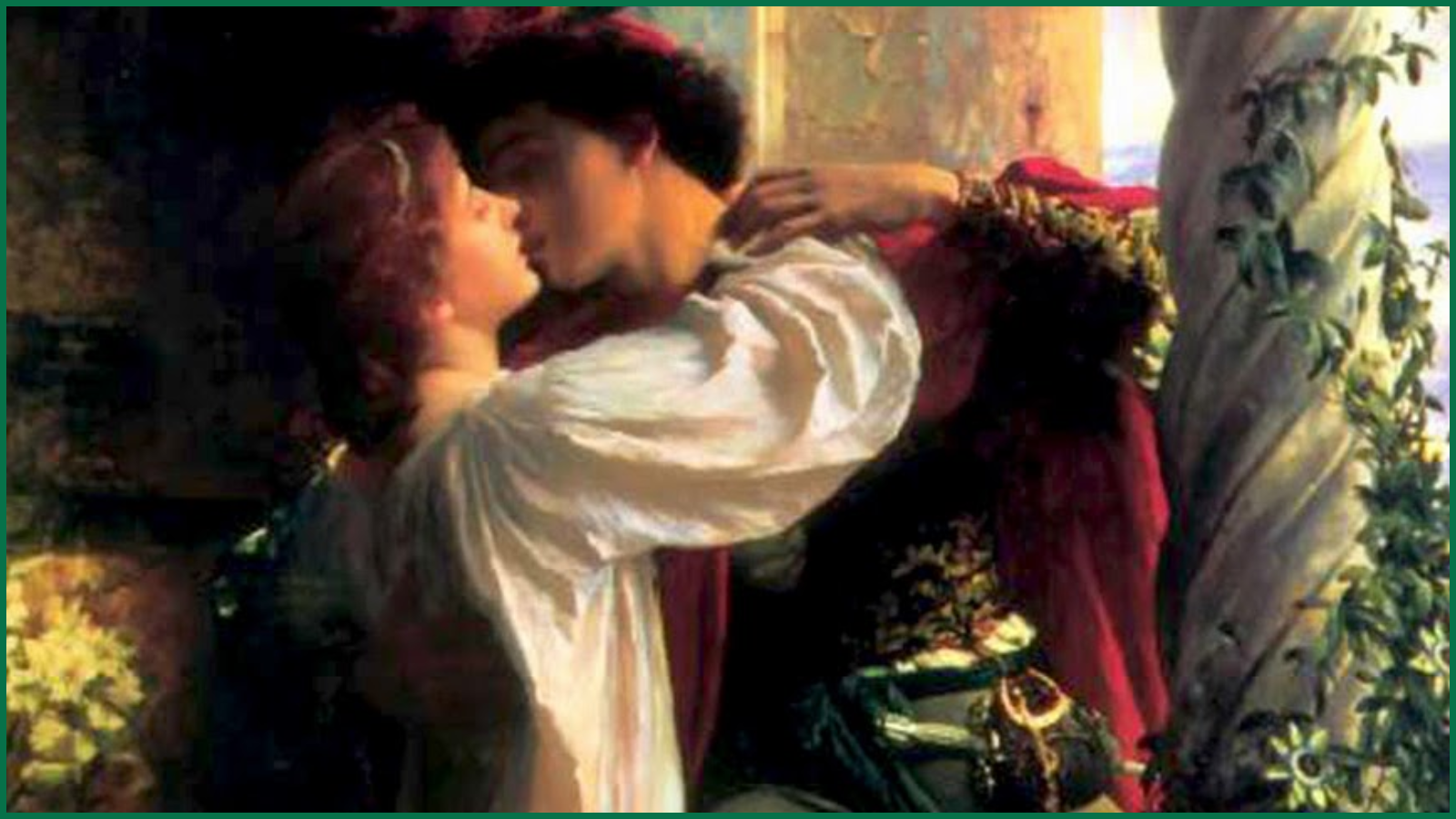
    An interesting outcome of this social fluctuation was the rise of “disorderly conduct” in Renaissance Verona, characterized by gambling, street fights, ribaldrous music and festive dance parties. These debaucherous activities drew members of all classes into subversive contact with one another, as they were undertaken without regard for social rank or hereditary privilege. Chief among these disorderly gatherings was the unsanctioned masque party.5 At a masquerade with identities concealed, a knight could break bread with a porter, a noble could pour wine for a cobbler or a Montague could fall in love with a Capulet.6

    The masque party hosted by Capulet is the pivotal scene of the story: the moment when Romeo notices the young Juliet from across the ballroom is also when Tybalt becomes aware of Romeo’s presence and seeks to violently remove him from the party. Capulet interrupts Tybalt and prevents him from disturbing Romeo, demonstrating the patriarch Capulet’s commitment to the spirit of the masquerade—a suspension of social hierarchy and normative relations. 

    A Death-Marked Love

    Born of a subversive gathering, the romance between Romeo and Juliet is embedded with a seditious quality that threatens long-standing customs. Whereas the Count Paris pursues Juliet through a traditional courtship, negotiated between himself and Capulet, Romeo and Juliet consent to marry each other from a place of fiery passion for one another and without the approval of their parents. Love marriages would not become become a norm in the West until the 17th and 18th centuries but they were emergent as the Renaissance began sweeping through western Europe.

    The relationship between Romeo and Juliet represents early modernity. On the other hand, the relationship between Paris and Juliet represents the declining feudal order—just like his hereditary title of Count. The language Juliet uses with Count Paris is formal and terse; he mistakes gaining Capulet’s consent with gaining Juliet’s affection.7 For this mistake he pays with his life when Romeo kills him during a confrontation at the Capulet tomb—a place he had no business lingering.8

    The blood feud is the other declining feudal custom that clashes violently against the romance between Romeo and Juliet. In the play it is like a fire and it consumes the lives of Tybalt and Mercutio as when lend it fuel. Mercutio’s Queen Mab speech foreshadows the agony of modern aspirations against the ferocity of feudalism’s twilight: valiant soldiers toasting wine before they are soaked by the blood of slit throats; civic lawyers and honourable clergymen corrupted by the pursuit of money; the tender kiss between those in love becomes a scourge of venereal disease and swollen pregnant bellies. 

    There is a deep cynicism attached to the story of Romeo and Juliet, reflecting a Renaissance era draped over the coffins filled by victims of bubonic plague; when wealth was asserted by means of warfare in Europe and unspeakable colonial violence abroad. The blood feud between the Montagues and Capulets could never end peacefully. The modern aspiration represented by the marriage between Romeo and Juliet was ultimately shattered by the “ancient grudge” between their two families. But they destroy the old order when they refuse to acquiesce to it. In their joint-suicide, they bury not only themselves but also the blood feud that came between them. Modernity prevailed in Romeo and Juliet just like modernity prevailed in history—at a tremendous cost priced in blood. 

    Thanks for reading!


    1. Erich Fromm, “Marx’s Concept of Socialism” in Marx’s Concept of Man (Frederick Ungar Publishing, 1961). ↩︎

    2. Karl Marx, “Preface” to A Contribution to the Critique of Political Economy. ↩︎

    3. See Thomas F. Arnold, “Violence and Warfare in the Renaissance World” in A Companion to the Worlds of the Renaissance (Blackwell Publishing, 2007): 460–474,  for more on this subject.  ↩︎

    4. David Harvey, A Companion to Marx’s Capital Volume 2 (Verso, 2013): 189. ↩︎

    5. Zoe Farrell, “Connections and Community in Sixteenth-Century Verona” in Journal of Social History, Vol. 59, No. 4: 10-13. ↩︎

    6. In Freudian terms, they become each other’s object-cathexis, a conscious and unconscious register of libidinal energy. The “love at first sight” concept was accepted in Shakespeare’s day, as Cupid’s spell could be cast with mere eye contact. ↩︎

    7. See Act 4, Scene 1 of Romeo and Juliet for a good example of this. ↩︎

    8. This confrontation has been edited out of prominent screen adaptations of the play for the purpose of making Romeo appear more sympathetic. Both Baz Luhrman and Frank Zeffirelli removed it. ↩︎
  • The Dialectics of Dune

    The Dialectics of Dune

    “Is the dialectic wicked, or just incomprehensible?”1 Fredric Jameson’s punchy interrogation of the dialectic could also be turned onto Denis Villeneuve’s adaptation of the classic space opera, Dune: is it wicked, or just incomprehensible? The answer is “both” and in the best possible way. It is “wicked” in the full double entendre, presenting a cruel universe lavished with gladiatorial death matches, atomic weapons, titanic sandworms—and it looks really fucking cool under Villeneuve’s masterful direction. Its incomprehensibility derives from a power structure that portends a stark future for humanity, even with flags planted across thousands of planets. But anything is possible in a sci-fi future and book author Frank Herbert took pains with his imaginary universe to have it all make narrative sense. What we should pay attention to is how he does this. The best science fiction is great because of what it says about our world in the present and Dune is no exception.

    Throughout the novels and film adaptations, much of Dune’s plot revolves around the desert planet of Arrakis. Arrakis was long ago a water world covered by oceans and its transformation into a vast desert of sand dunes expresses the tendency of things to change into their opposites. This tendency is a staple of Heraclitus’ ancient Greek philosophy, it is an ancient Chinese principle of the I Ching, of yin and yang and was popularized by the psychoanalyst Carl Jung who had a tremendous influence on Herbert. The transformation of things into their opposites is also articulated by concepts like “only the living may be dead” or “the Sun at its zenith must turn toward its setting.”2 These simple articulations are true but omit the key ingredient of dialectical conception which is the countervailing force, the contradiction. 

    Dialectics

    The unity of opposites is foundational to modern dialectical thinking but it is the strength of contradictory energies that determine the transformation. The living being will struggle against its environment and degenerating cellular metabolism before death comes, just as the force of a rotating Earth is what brings the Sun into view each day. On Arrakis, it was the introduction of sandworm larvae to the planet which made it a desert, as the spawning larvae enclosed the existing water in their bodies until it was all gone. With the larvae, this simple contradiction turned a water world into sand but, without it, the oceans would have remained forever. It is the contradiction which provides friction—the energy necessary to break up stasis, create change and propel matter. 

    Dialectical reversals leave their fingerprints all over the story of Dune. For example, when the Baron of the powerful House Harkonnen orders the annihilation of House Atreides and the genocide of Arrakis’ Fremen people, he sets in motion the forces which would destroy his own house and the imperial order writ large: the Fremen give shelter to the surviving Atreides’ son who then guides them on a violent quest to destroy the oppressive imperial order, beginning with the assassination of the Baron and his heir. In sequels, the Fremen army overruns the galactic Imperium and realize their long-standing ambition of terraforming Arrakis into a greener, more habitable planet. But their success is what renders them extinct; when they disperse and lose their customs attached to the desert planet, they cease to exist as a distinct people. The dialectical reversal occurs here at the moment of victory, when their success amounts to their demise.

    In Dune, as on Earth, “history puts its worst foot forward.”3 From an attempted genocide of the Fremen by House Harkonnen, both are ultimately destroyed—the Fremen being victims of success, the Harkonnens victims of failure. But Jameson reminds us that “these conditions of possibility are what you work back to, after the fact.” We cannot know in advance the consequences of an action taken, whether the existing conditions will lead to success or what contradictions remain to run us over in reverse.4 This is true whether we are talking about a fictional jihad in Dune, the legacy of the Treaty of Versailles or the genocide in Gaza. Temporality is an important aspect of dialectical thinking as the present represents yet another unity of opposites: that moment when knowledge of the past meets everything unknown about the future. 

    The Bene Gesserit are a matriarchal order whose ultimate goal is to obliterate this opposition of known past and unknown future by producing a superhuman who can presently know both at once. At the point where Villeneuve’s films pick up, their plan was to have the Harkonnen heir reproduce with Paul Atreides’ unborn sister after reaching an appropriate age, giving birth to an all-seeing messiah. This plan did not materialize because, despite their superior access to ancient memories, the future is shrouded to them as it is for anyone. 

    There is a caution to dialecticians here, that even the best-laid plans will always find complications and contradiction beyond the simple cause-and-effect equation. When evaluating the future state of things, such as the consequences of the Trump presidency or the social implications of environmental ruination, it is important to guard against the myopic scope that searches for the path to a preferred outcome. Rather, we must consider the prior contradictions brought us to the present momentum before considering the future oppositions which are inevitably aroused within a spiralling capitalist juggernaut. Every future is preceded by a past and the task of the dialectician is to try and locate these “future anteriors” before submitting a range of possible outcomes. 

    Implausibilities 

    Although the Bene Gesserit were unable to foresee the dramatic reversal of fortunes experienced by the Fremen people and great houses of Dune, their general goal of maintaining stability in the galaxy can be judged positively. In the universe of Dune, imperial dynasties last millennia, the Spacing Guild, Bene Gesserit and Mentats mirror medieval-style guilds and monastic orders, aristocratic bloodlines trace to prehistory and antique weaponry like swords experience revivals. While the political dramas and fight scenes make for a rapturous story, the “feudalism in space” that Dune showcases feels impossible for a few reasons. 

    Every social organization carries with it processes that both uphold and undermine the system simultaneously. These supporting and undermining processes are things like class division, use of resources, technology, environmental conditions, religious movements, political organization and so on. In Dance of the Dialectic, Bertell Ollman points out that “over time, it is the undermining aspects that prevail.”5

    For most of human existence, human beings organized along tribal lines, in hunter-gatherer societies that were primitive communist. The reason why this system endured for well over 100,000 years is because it embedded almost no undermining processes for much of its existence; low population density, strong communal cooperation, plenty of land to roam and natural resources to harvest. What undermined the communal system was a warming climate and the mass extinction of megafauna at the end of the ice age. The nomadic tribe then found itself at a material disadvantage to the permanent settlement and it was here when class society emerged, as both land and people became property. 

    The feudal system in the West appeared much later, a synthesis between monotheistic Christian religion, successive Germanic assaults on the Western Roman Empire and a collapse of the urban economy. It was a system sustained by the suppression of usury, the ideological monopoly of the Catholic Church, control of land by warlords and aristocrats and the extraction of rents from the peasantry. Since feudalism crumbled upon the discovery of the Americas and the exploitation of its vast landmass, it is difficult to imagine how such a system could assert itself in the context of a spacefaring, multi-planetary civilization. Socialists generally believe that unlocking the technological capability for cheap and efficient space travel would duplicate the conditions of primitive communism, in a higher form: low population density relative to the stars, abundant natural resources, strong communal cooperation amongst starship crews and the ability to relocate in the galaxy should undesirable circumstances arise. 

    Reconciliation

    Herbert understood the relationship between class-power and scarcity, with his character Liet-Kynes of the Fremen remarking, “beyond a critical point within finite space, freedom diminishes as numbers increase.” This is a matter of history on Earth, as the advent of nutrient-dense agriculture increased humanity’s numbers, shrank the quantity of available land and ripened the conditions needed for slavery, feudalism and then capitalism. The Fremen are oriented toward a more nomadic, communal society because the harsh conditions of Arrakis requires mutual cooperation and low population density in order for them to survive. 

    With the historical experience of Earth in mind, we must assume Arrakis is an outlier in the Imperium. Herbert gave his fictional universe a feudal structure which implies a few characteristics: that the planets of the Imperium became crowded over the centuries; there is little upward social mobility; the economic strength of the ruling houses derives from rents; technology is restricted; religion is uniform. This is explicitly evidenced in a few areas of the story. First, there is the Spacing Guild that holds a monopoly on interstellar space travel, effectively making it impossible for the average person in the Imperium to escape the tyrant ruling their planet. Second, there is the Bene Gesserit and a standardized “Orange Catholic Bible” which confers a degree of religious conformity to the galactic feudal empire. Third, there is a prohibition on certain technologies, including “thinking machines,” which may otherwise provide the basis for revolution.

    Because Dune focuses so closely on those at the top of the social pyramid, the processes that either support or undermine the centralized authority of the galactic empire are obscured. It isn’t the political intrigue or battles on the ramparts that make any human society tick; it is the people at the economic base with boring and ordinary lives. The ones who feel anxious during a commute and go to work for a living and play with their kids at home—they are the ones that make their rulers possible.

    Frank Herbert once described himself as a “techno-peasant” and since it is a peasantry that supports monastic orders and aristocratic titles, this label must apply to the average resident of the Imperium as well. It is incredibly pessimistic to think that humanity could achieve technological mastery over the stars only to replicate the oppression of the Dark Ages. But class systems are inherently unstable—as the existential problems which press us today attest. But if the Dark Ages lasted one thousand years on Earth there is no reason to think it could last tens of thousands of years across space. A fictional universe can send us to the stars and wave away class struggle with a pen stroke. But in the real universe we would have to abolish this primary contradiction long before taking such a grand evolutionary leap. 

    Thanks for reading!

    Footnotes:

    1. Fredric Jameson, Valences of the Dialectic (Verso, 2010), 102. ↩︎

    2. The first quotation is from Heraclitus, Fragments (Penguin, 2003), 49 and the second quotation from The I Ching or Book of Changes (Princeton University Press, 1967), 63. ↩︎

    3. Henri Lefebvre cited in Jameson, Valences, 287. ↩︎

    4. Ibid, 280. ↩︎

    5. Bertell Ollman, Dance of the Dialectic: Steps in Marx’s Method (University of Illinois Press, 2003), 163-4. ↩︎
  • Historical Materialism

    Historical Materialism

    This article is part of a series on classical Marxism.

    The chronological sequence of events leading to the present can be looked at in a number of ways. Sometimes it is mystified, a progression guided by the hand of God or a creator. This is generally what is taught in churches. To the more secular-minded, it can appear as a random sequence of events—one unfolding drama after another between the armies of warlords and conquerors, the avarice of kings and emperors, the bedrooms of aristocrats and financiers. This is the “great man theory” of history which supposes that social changes and historic events are mainly impacted by gifted individuals driving the realm of humans forward. Then there are the idealists, asserting the predominance of collective consciousness and content of the mind in determining events. This view holds that the best ideas will advance themselves through free and open communication, with the strongest ones rising to the top and shaping our government, laws, technologies, economic exchange and global institutions.

    The materialist conception of history grounds things differently. As humans are evolved from nature and are reliant on it to meet all of our basic needs, materialism places our history on the basis of our natural being. As most hominids and pre-modern humans existed without religious concepts, advanced cognition or complex language, mapping our history onto these things does not make much sense. While human society today may “feel” very much removed from the whims of nature, this is a fallacy since everything from computers, smartphones, houses, clothes and food are all ultimately derived from some natural extraction. Thus the true fault line between society and the world of nature is “the mediating realm of human labour and production.”1 As individuals must be nourished and fed before they can think or speak, so too must any collective of people be able to meet their biological needs before they are able to ponder philosophy, establish an oral history or develop an artistic culture: “The first historical act is thus the production of the means to satisfy these [biological] needs, the production of material life itself.”2

    Historical materialism is the assertion that the basis of all history starts with how people produce. Because we, as material beings, are required to first produce our physical bodies before we can produce ideas and individuals, the ideas and individuals that come thereafter will be a reflection of how we produce. Everything else—politics, art, culture, religion—derives secondarily from this basis in production. That is not to dismiss the existence of individual talents or the significance of ideas, but life’s first instances must be materially produced before any individual or collective expressions can be made. The latter depends on the former. Thus it is seen that great men, religion, political intrigue and ideas in general are corollary to the economic system and not the other way around. Human societies, as an outgrowth of nature, therefore emerge with a universal base-superstructure shape that Karl Marx summarized as follows:

    In the social production of their existence, men inevitably enter into definite relations, which are independent of their will, namely relations of production appropriate to a given stage in the development of their material forces of production. The totality of these relations of production constitutes the economic structure of society, the real foundation, on which arises a legal and political superstructure and to which correspond definite forms of social consciousness. The mode of production of material life conditions the general process of social, political and intellectual life. It is not the consciousness of men that determines their existence, but their social existence that determines their consciousness.3

    Image: Wikimedia Commons

    Labour and production are an “everlasting Nature-imposed condition of human existence” but the forms that production takes and the societies that it produces are variable and highly dependent on available technology, access to resources, received cultural values, etc.4 The social hierarchy of production plus the resources in use and the technologies deployed constitute the mode of production—the economic base. Politics, culture, social customs and intellectual products are the superstructure resting atop this base, shaping our individual and collective consciousness. If anybody imagines being born at a different time period than their own, what they are imagining is life within a different hierarchy of production and its corresponding customs and norms.

    In history, there has been a progression of four major modes of production that have been well-documented and studied, presented below. A fifth is theorized but has yet to fully emerge.

    1. Primitive communism. This is also known as a tribal or hunter-gatherer society, but it is regarded as a form of communism because they were classless. A classless society does not denote equality or absence of authority or any social hierarchy, however. Classlessness denotes individual autonomy over labour, as nobody has the means to seize the work of others. Surpluses, resources and positions of authority are managed democratically by the group, often by consensus. This mode of production was predominant during the Paleolithic Era when Earth was in an ice age. The economic base consisted of technology such as bows and arrows, early use of fire, rafts, hand axes, and big game resources like rhinoceros’ and woolly mammoths. This mode of production corresponded with a superstructure which found expressions in cave paintings, figurine carvings, flute-like instruments made of bone and animistic religions.
    1. Ancient mode of production. The transition to settlements and agriculture occurred after the ice age had ended and various megafauna species began going extinct. The warmer climate allowed for a transition to domesticated crops and livestock which resulted in much greater food production and increased population densities—even as life expectancy crashed due to higher rates of disease and less nutritious diets. The appearance of large grain surpluses also gave rise to humanity’s first class structures and violence over territory. As warrior-kings and armies developed, enslavement of other peoples became common. This mode of production is largely epitomized by the master–slave class relation seen in Ancient Greece, Rome, Persia and Asia. Humanity’s first cities were created under this mode and it developed technologies like wood ploughs and iron tools, utilizing a variety of resources through aqueducts, roads, mines and quarries. The existence of a slaveholding class resulted in a complex superstructure marked by polytheistic, harvest-based religions, early writing systems, political institutions, philosophy, pottery and astronomy.
    1. Feudal mode of production. Feudalism came into being as the western Roman Empire was gradually undermined by an exhaustion of the slave trade and conflict with Germanic tribes, until it was eventually negated by the tribes altogether. The result was a massive deconstruction of political authority, away from cities and empire and toward rural fiefdoms controlled by warlords-turned-aristocrats and hereditary royal monarchies. This mode of production is defined by the predominant lord–peasant class relation. While ownership of slave labour was diminished, the labour of serfs was captured by agricultural rents paid to the manor. Previously discovered technologies were mostly adapted to village life, including mills, clocktowers and blast furnaces. The superstructure at this time was largely characterized by the rise of monotheistic religion across the known world. In western Europe, this was crystallized in the Catholic Church which offered political legitimacy to rulers in the form of a “divine right to rule” ideology. The Church also dominated the musical, writing, art and social life of this time period.  
    1. Capitalist mode of production. As feudal Europe developed its productive forces and its aristocracy matured, a thirst developed for expanding trade routes. Existing routes had become monopolized by the Ottoman Empire and this is what motivated Christopher Columbus to set sail, eventually landing on the shores of what is now the Dominican Republic. Ensuing was an unprecedented wave of settler colonization, with all of the pillage of gold, silver, produce, furs and fish that came along with it. As whole continents cracked open to agriculture and trade, plantations developed and slavery was revived in a racialized form. This veritable rush of wealth led to immense capital accumulation by European powers, ushering in the capitalist era. Technological development began to rise exponentially with the Industrial Revolution of the 1700s, as steam power, cotton gins and telegraphs appeared. Additional crop varieties from the New World and improved plough technology led to enclosures of farmland, expulsions of peasants and the creation of a mass wage-labour force. The capitalist–wage labour, or employer–employee, class relation is dominant under capitalism, rendering both slavery and serfdom uneconomical due to huge increases in production and the need for mass-consumption. The superstructure under capitalism is marked by the rise of liberal representative democracy, a secular public life, the fracturing of the Christianity with Protestant strains, mass media and the commodification of culture and goods and services. With rapid technological change, capitalism has now placed us firmly into the digital age.
    1. Free association of producers. A theoretical system whereby the labouring classes under capitalism—almost 99% of the population—become the ruling ownership class over the economy and government. Systems of socialist ownership sprouted up during the 20th century in opposition to imperial capitalism, while others have found a footing within the global capitalist structure today. National parks, public education, health care services, co-operatively owned enterprises, public transportation and the post office are all examples. Durable forms of socialism have yet to supersede global capitalism in a meaningful way. The goal of a free association is a classless society which minimizes mandatory work and unleashes the creative potential of all individuals as they dedicate themselves to self-directed pursuits. The primary purpose of this economic base is to produce goods and services according to need rather than payment, with the realm of want and culture dictated by free and voluntary exchange between individuals. Calculated surpluses would be managed via direct democratic means and allocated according to the material interests of the liberated society. The superstructure of such a system is unknown, but would be determined organically from the bottom-up, with decentralized communication technology, such as the Internet, playing a central role.

    Further reading:

    Karl Marx and Friedrich Engels, The German Ideology: Chapter One.

    —————————–


    1. John Bellamy Foster, “The Return of the Dialectics of Nature: The Struggle for Freedom as Necessity,” Monthly Review, Vol. 74, No. 7: 6. ↩︎

    2. Karl Marx and Friedrich Engels, The German Ideology: On Feuerbach. ↩︎

    3. Karl Marx, “Preface” of A Contribution to the Critique of Political Economy. ↩︎

    4. Karl Marx, “Chapter 7: The Labour-Process and the Process of Producing Surplus Value” in Capital: Volume One. ↩︎