
Tag: John Bellamy Foster

  • AI Is Not A Bubble—It’s a Whirlpool

    AI Is Not A Bubble—It’s a Whirlpool

    There’s been a lot written about an inflating artificial intelligence bubble waiting to burst. The thing about bubbles is they are transparent and hard to see. When they pop, they disappear with only a residue of moisture left on the ground below. This is what happened to many publicly traded electric vehicle companies in the aftermath of the pandemic market boom and this is what happened to cannabis stocks after soaring between 2017 and 2019 as North American jurisdictions legalized the product.

    If AI is a bubble, it has risen like a blimp and blotted out the Sun. The bubble narrative has dominated financial headlines for two years now, even as the “Magnificent Seven” technology companies put up annual returns of 60% and 23% in that time. Market corrections aside, it appears this blimp will not fall without taking the global financial economy down to the ground with it.

    Cross Currents

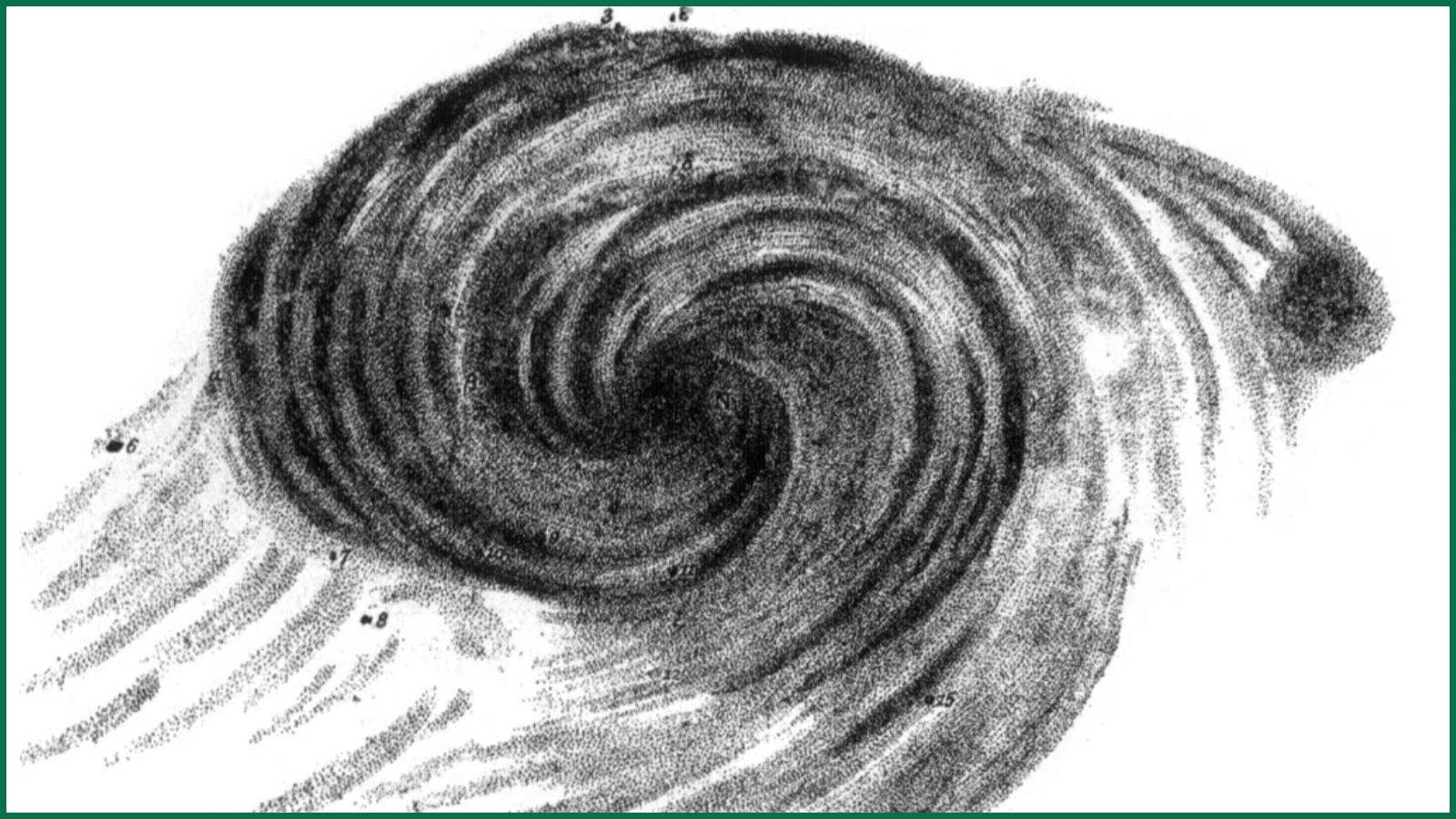
    A more apt analogy for the artificial intelligence market is a whirlpool; a high velocity vortex with a powerful downdraft. Multiple powerful currents have already collided: the firehose of financial capital, the revolutionary technology, the debt loads, the culture shock, the physical infrastructure, the mobilized labour and gobs of extracted resources.

    When the Clinton administration pulled the ripcord on the financial industry through a combination of capital gains tax cuts, banking deregulations, liberalized trade and social spending cuts, then-Treasury Secretary Larry Summers predicted that speculation would drive much higher growth than normal, with the trade-off being periodic crisis and volatility.1 And he was right. Since that time, there has already been a dot-com bubble, a housing bubble, a massive general inflation of all asset classes and now an AI whirlpool.

    Hedge fund manager George Noble has recently declared that artificial intelligence investment is “the greatest misallocation of capital in history.” His reasoning is simple to understand; the AI buildout is already $5 trillion short of paying for itself and the gap grows wider by the day. Given this massive differential between revenue and expenditure it is reasonable to question how this could happen in a “rational” capitalist market system.

    In the history of capitalism, any technology aiming to increase the productivity of labour has always promised the largest returns for the ruling class. The power loom, the railroad, the lathe, the automobile, the assembly line, the computer, the airplane, the bulldozer—businesses cannot afford to let their competitors gain an edge in the production process or they will fail. Artificial intelligence arrived with fanfare, promising to make redundant up to half of entry-level white collar jobs plus a slew of others across a broad range of fields, including education, legal services, software development and medicine.

    The labour-saving aspect of AI—whether real or imagined—was the first current set into motion, waiting to collide with the next. David Harvey likes to remind us that capital expands in a spiral pattern and “the only way the circle of capital accumulation can be converted into a spiral is by capital finding on the market…a source of effective demand greater than that incorporated in the normal production of capital.”2

    Unremarkably, AI computing has attracted an enormous amount of capital investment because we live under the overhang of an enormous global money supply fuelled by multiple rounds of quantitative easing. In a world saturated by capital, the labour-saving potential that the technology represents makes it the most marketable product available to investors.

    Spiralling Out

    In financialized economies with relatively slow growth, more and more money ends up chasing fewer and fewer commodities and investment opportunities. Legacy corporations and established industries cannot promise dazzling future returns if past performance is any guide. It is the novel industries without history that become targets of speculation and debt lending.

    With most corporations posting an underwhelming present rate of profit, imaginary potential returns generate much more exchange value for financial firms and traders than present-day actual returns do. Speculation is the practice of staking a present claim to imaginary future value, while debt lending lays a claim to the output of future labour.

    As the currents cross and the spiral begins to form, banking services and stock markets add velocity to the rotation. Grace Blakeley has done excellent work illustrating how financial underwriters, early institutional investors and founding shareholders clock their billions by merely providing access to these “future returns” for retail investors and wealth management funds. Like a Ponzi scheme, there is always a level high enough where real money is siphoned off and guaranteed. Everyone else risks holding the bag.

    As the spiral of capital, technology and infrastructure begins its rotation, the downdraft forms when AI-associated share prices rise on the stock market. The doors to superintelligence are swung wide open; everybody has a chance to rent a slice of the future and double even a paltry sum of money by throwing it into the new technological frontier. In a whirlpool such as this, everyone makes money until either the water runs out or the currents violently change direction. Only then does the vortex dissipate with a tread of salty tears and empty wallets. When this will happen is anyone’s guess.

    One Planet

    Much attention is paid to the human suffering and euphoria caused by economic gains and losses. But also swept up in the whirlpool are the psyches of end users and a collective culture degenerated by AI slop. The externalities unable to be incorporated into the capitalist system of value are enormous, and none more consequential than the biosphere itself.3

    John Bellamy Foster has collected data showing that 74 billion gallons of water will be needed for US data centres by 2028; that minerals taking billions of years to form in the Earth’s crust are being extracted for chips with a life-cycle of one or two years, while mining them expels huge amounts toxic effluent into our waterways; that power demand for data centres will triple, raising US emissions by a full 10%, scuttling any possibility that the world could meet 2050 net zero carbon targets.4

    Boosters of the technology will say that artificial intelligence is integral to solving social and environmental problems. Apparently it works by first blowing the lid off of every urgent problem it portends to one day solve. If you find this insulting to your natural intelligence, you are not alone.

    China has demonstrated useful applications of AI compute in the fields of medicine and transport and manufacturing.5 Dismissing the entire scope of the technology is not the objective. Real use values can be reached at a fraction of the current financial and environmental cost if slop is eliminated and large language models are tightly regulated.

    The problem is not posed by AI so much as it is posed by the web of economic relations in which it is being developed; one that raises stock prices and financial extraction above tangible use values. With common ownership and democratic oversight, the conditions could be set for AI to serve something recognizable as a social good. As it is, AI serves only the narrow interests of an oligarchic class that thinks nothing of sending everything else down the drain.

    Thanks for reading!


    1. For a more detailed discussion, see David Harvey, The Story of Capital (Verso, 2026): 303, 316. ↩︎

    2. Ibid, 223. David Harvey has developed this idea borrowing from Karl Marx’s treatment of capitalism’s expansionary nature in the Grundrisse. ↩︎

    3. We can assign a nominal dollar value to a pound of beef, a litre of gas or a data centre—but how do we measure the costs of air pollution, soil erosion and water expenditure associated with these products? ↩︎

    4. John Bellamy Foster, “Marxian Ecology & the Critique of AI Capital,” Monthly Review, Vol. 78, No. 5: 10. ↩︎

    5. Ibid, 12-15. ↩︎
  • Ecology

    Ecology

    This article is part of a series on classical Marxism.

    The relation of organic beings to their environment has always been one of give-and-take. While nature furnishes the conditions that organisms need to survive, it has also manufactured hazardous weather events, predators, diseases and landscapes that spell certain death. In concordance, a healthy ecosystem begins with the soil required for vegetation, which in turn supports a pyramid of animal and insect populations. All things living return, lifeless, to the soil and start the cycle anew. But this metabolism can be disturbed. Overpopulation of one species relative to others, tectonic shifts and volcanic explosions, atmospheric composition, hydrological changes and, infamously, asteroid strikes from outer space—any of these things open up a metabolic rift in the ecological cycle that result in mass extinctions and a phase transition of the environmental regime.

      Since the last ice age ended with the Younger Dryas, humanity has struggled to find metabolic concordance with its environment as new modes of production and class conflict arose. Friedrich Engels observed: 

    The people who, in Mesopotamia, Greece, Asia Minor and elsewhere, destroyed the forests to obtain cultivable land, never dreamed that by removing along with the forests the collecting centres and reservoirs of moisture they were laying the basis for the present forlorn state of those countries. When the Italians of the Alps used up the pine forests on the southern slopes, they had no inkling that by doing so they were cutting at the roots of the dairy industry of their region; they had still less inkling that they were thereby depriving their mountain springs of water for the greater part of the year and making possible for them to pour still more furious torrents on the plains during the rainy season. Thus at every step we are reminded that we by no means rule over nature like a conqueror over a foreign people, like someone standing outside nature—but that we with flesh, blood and brain, belong to nature, and exist in its midst and that all our mastery of it consist in the fact that we have the advantage of all other creatures of being able to learn its laws and apply them correctly.1

    We can recognize that classless hunter-gatherer societies had a mode of production that could have lasted forever as it was technologically-bound to the necessity of sustainable resource consumption and replenishment. But a metabolic rift emerges at the outset of settlement, private property and class division. The soil is tilled, the population proliferates, wildlife is suppressed, waste and nutrients become dislocated by urbanization. While the ancients are forgiven for their lack of foresight toward unintended environmental consequences, the present situation reveals a unique contradiction: while capitalism affords us the science to decode nature’s laws, its momentum denies us the ability to abide them in any rational way.

    The expansionary logic of capitalist production is driven by market competition, the quest for profits and the dominance of exchange-value over use-value in economic relations. As labour and nature are the source of all values in capitalism, they are squeezed mercilessly for the surplus that sweats from their pores.2 The result is an economic system of deeply deformed priorities. Because the use-value of something is only evaluated in terms of what it can exchanged for, the capitalist economic system is unable to price a breathable atmosphere, a healthy ocean, an intact rainforest or an endangered species. On the contrary, minimizing production costs for the sake of profit dictates active harm to the ecosystems that underpin our biological existence. The reason why microplastics float free in our bloodstreams and millions of Amazonian acres disappear annually is because there is no profitable exchange that restricts the use of plastic or spares billions of trees from cattle ranches and sugarcane plantations. While the use-value of a livable biosphere is obvious, within the confines capitalist production both nature and people become venal objects, subordinate and abused.3  

    The systemic nature of environmental challenges are important here, lest one chalk them up to moral failings or inadequate education. For example, it is a consequence of capitalist production that every year 54 billion tons of annual emissions enter the atmosphere and 20 million tons of plastic flow into oceans. But this does not represent “a moral deficit of individual capitalists. They are obliged to follow such behaviour due to competition with other capitalists if they want to survive as capitalists. The decision to act in accordance with that blind drive appears rational.”4 Any attempt from the civil society to legislate better practices will likewise be met with a well-funded wall of oligarchic political resistance, rendering so much effort futile. And the emissions spewed into the atmosphere and plastic dumped into the oceans accelerates, each year more than the last, expanding in lockstep with the capitalist system itself. This is to say nothing of the emptying of aquifers, global deforestation, the hole in the ozone layer, acidifying oceans and the mass extinction of species simultaneously in motion.

    While Marx identified extreme disturbances in the Earth’s ecological metabolism due to industrial production, he did not view the metabolic rift as something unique to the capitalist mode as it is a common feature of all class societies, including the feudal and ancient slave economies. What capitalism has done is elevate the rift to the level of existential threat and, through a process of technological advance, it poses an opportunity to resolve global class conflict altogether. Classlessness, he writes, 

    is the genuine resolution of the conflict between man and nature and between man and man—the true resolution of the strife between existence and essence, between objectification and self-confirmation, between freedom and necessity, between the individual and the species. Communism is the riddle of history solved, and it knows itself to be this solution.5

    To understand his conclusion, we can look to the long-simmering crisis of climate change as it relates to ruling class power. On the one hand, we have a faction of the ruling class which profits directly from fossil fuel combustion and has spent billions of dollars to propagandize the population into believing that there is no consequence to the 53 billion tons of nitrous oxide, methane and carbon dioxide emitted annually. This faction is seen prominently in the Koch Industries and ExxonMobils of the world.  Then there is the other faction of elites who ostensibly recognize the problem while hypocritically living lavish, emission-intensive lifestyles, pursuing egoistic conquests of outer space and contradictory public policy. Elon Musk, Jeff Bezos and Mark Zuckerberg fit into this category, with the latter repeatedly calling for action on climate change while treating himself to a 387-foot super yacht that spews 40 tons of carbon dioxide per hour at cruising speed. 

    Under the auspices of a ruling class engaged either in denialism or outright hypocrisy, what wisdom is the working public supposed to gather from any attempt to manage emissions? Emissions reduction is contextualized either as a outright conspiracy theory or an undue demand to sacrifice yet more of the economic pie—a pie which they produce and receive crumbs to eat.

    As it stands, “the emissions of the world’s millionaires alone would deplete 72 percent of the remaining carbon budget for staying with the 1.5°C [warming] limit,” but there is no talk of capping the individual emissions of the global elite.6 No action can be taken against an elite capitalist class at the helm of the political levers and in control of economic production. And still, 

    the consequences of not reducing emissions on the scale proposed by the IPCC would be calamitous. A 2°C increase could cause the Antarctic ice sheets to disintegrate resulting in up to a nine-meter rise in sea levels. A temperature increase of three degrees could raise sea levels by 25 meters, endangering world food production. This, as well as the melting of the Himalayan glaciers, could result in billions of climate refugees. An increase in carbon dioxide concentrations of 550 parts per million, a 4°C temperature increase, could raise sea levels by as much as seventy-five meters, inundating most coastal areas.7

    Imagine asking billions of working people and their progeny to risk all this disaster so that a meagre 1.5 percent of the world’s population may enjoy a plush existence, unfettered. This is the flex of ruling class power.

    It remains that a technologically advanced economy need not fly within the narrow horizon of commodified nature toward a ruthless pursuit of profit. New value forms can be discovered and asserted. The use-values of a liberated working class will include clean air and water, artistic and scientific progress, a free wild, medical discovery, creative innovation, automated production, leisure and abundance. Our 200,000-year history has shown that ecological ruin and ruling class power is not a feature of our species but an aberration to our story.

    Further reading: 

    Anita Waters, “Marx on the metabolic rift,” Monthly Review Online.

    —————


    1. Friedrich Engels quoted in John Bellamy Foster, Marx’s Ecology: Materialism and Nature (Monthly Review Press, 2000), 236. ↩︎

    2. Karl Marx, Critique of the Gotha Program. ↩︎

    3. Foster, Marx’s Ecology, 74. ↩︎

    4. Kohei Saito, Karl Marx’s Ecosocialism: Capital, Nature, and the Unfinished Critique of Political Economy (Monthly Review Press, 2017), 125. ↩︎

    5. Karl Marx, Economic and Philosophic Manuscripts of 1844. ↩︎

    6. Matthias Schmelzer and Elena Hofferberth, “Democratic Planning for Degrowth,” Monthly Review, Vol. 75, No.4: 149. ↩︎

    7. Kent Klitgaard, “Planning Degrowth,” Monthly Review, Vol. 75, No. 3: 87. ↩︎