Tag: Marx

  • Marx and Shakespeare: Much Ado About Nothing

    Marx and Shakespeare: Much Ado About Nothing

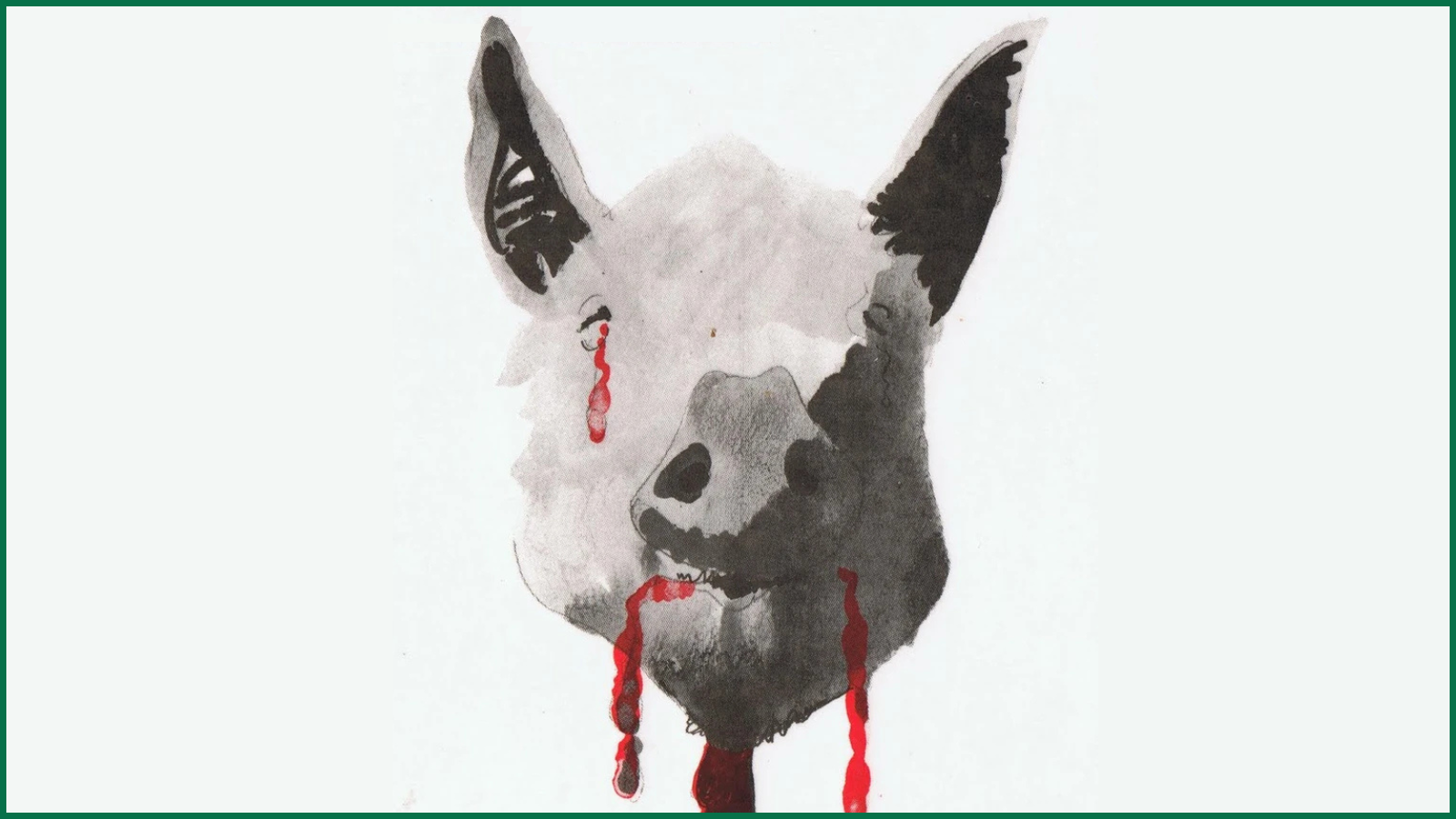
    If ever the sensible Benedick bear it,
    pluck off the bull’s horns and set them in my forehead,
    and let me be vilely painted, and in such great letters
    as they write “Here is good horse to hire”
    let them signify under my sign
    “Here you may see Benedick the married man.”

    —Benedick, Act 1, Scene 1.

    One thing that Marx and Shakespeare had in common was living through periods of quantum leaps in culture and thought. The Renaissance was the cultural expression formed by increasing commerce, urbanization and loosening feudal bonds, and codified by painters like Leonardo Da Vinci, sculptors like Michelangelo and playwrights like Shakespeare.

    The Industrial Revolution, on the other hand, spurned an interest in science and rapid change reflected in the biological theories of Charles Darwin, the social theories of Karl Marx and the psychoanalytic proposals of Sigmund Freud. Closer to the present, we have seen developments in mass communications and recording technologies give space to pioneering musicians like The Beatles and Bob Dylan, while the digital age has seen the rise of the viral clip and the podcast. Marx and Shakespeare trailed the material changes of society, as all revolutions in thought and culture tend to do.

    Cultural productions are artifacts. They are crystallized objects transmitting historical information about the society that produced it—the psychology, the politics, the economy, the zeitgeist. In Much Ado About Nothing, Shakespeare gives the subject of romance, love and marriage a light, comedic touch in contrast to his treatment of these subjects in crushing tragedies like Romeo and Juliet and Othello.

    Chivalry in the Court

    Saying nothing of emotional attraction, marriage evolved to institutionalize sexual reproduction and hereditary transmission of property. In Friedrich Engels’ The Origin of the Family, Private Property and the State, he notes that during the Middle Ages “the pairing marriage” was most often a “matter of convenience which was arranged by the parents.” Passion, on the other hand, “heads straight for adultery, and all the poets of love celebrated adultery.”1

    What Engels refers to is the culture of courtly love that developed among the feudal nobility, in particular the knights and ladies of the court. Engulfed by jousting matches and the dangers of battle, knights would dedicate their pursuits to a noble woman as part of the chivalric culture.2 Courtly love took place outside the bonds of marriage, layering erotic desire with both courtesy and surreptitiousness.

    Like many of Shakespeare’s plays, Much Ado About Nothing cannot be understood without contextualizing the feudal culture that the Renaissance emerged from. The rise of gunpowder had steadily diminished the scope of knighthood until it was little more than an honorific title. But the complicated culture of furtive romance and noble courtship residually remained, even as society was moving toward voluntary marriages based on love. Infidelity, once packaged as a chivalric passion, is seen across Shakespeare’s work as an ominous presence dragged down the aisle beneath the bridal gown.

    By the Renaissance period, it was armed soldiers waging battle, and the story picks up with news that Don Pedro and his men would be arriving in Messina after a successful battle. Benedick is among the arriving entourage and he carries an intense fear of being cuckolded—so much so, that he vows to never marry a woman: “Because I will not do them the wrong to mistrust any, I will do myself the right to trust none. And the fine is, for which I may go finer, I will live a bachelor.”

    The Timeless Art of Seduction

    Benedick’s intransigence toward marriage mark him for a sort of prank, whereby Don Pedro and his men lead him to believe that the governor’s niece, Beatrice, is in love with him. At the same time, Beatrice is led to believe that Benedick harbours feelings for her. It is a fabrication but it works, and Beatrice and Benedick are both privately delighted to be the object of the other’s affections. The speed by which Benedick accepts Beatrice’s feelings leads one to believe that Benedick’s aversion to marriage all along may have been a fear of rejection.

    In a parallel storyline, Claudio courts the governor’s daughter, Hero. This is thrown off course by Don Pedro’s jealous—and illegitimate—brother, Don John. Don John orchestrates a scheme whereby a member of his entourage advances on a chambermaid, with Claudio as a witness through the window. Claudio believes it is actually Hero being seduced and he denounces her at the altar the next day:

    Would you not swear,
    All that see her, that she were a maid
    By these exterior shows? But she is none.
    She knows the heat of a luxurious bed.
    Her blush is guiltiness, not modesty.

    —Claudio, Act 4, Scene 1.

    Being a comedy, the plot lines resolve through turns and ultimately conclude with the happy marriages of Benedick to Beatrice and Claudio to Hero. The scheming and side quests were, in the end, “much ado about nothing.”3 What this story does indicate is the immense anxiety and wicked humour around the prospect of female infidelity, primarily told from the point of view of the male characters. It peels back the social attitudes underpinning English coverture, which effectively rendered wives the property of their husbands.

    Romance during the age of chivalry was replaced in the modern age with something far more transactional and economical and potentially humiliating. Shakespeare’s play reflects the social anxieties of the commercial revolution as it transformed courtly love into the modern marriage.

    The historical construction of romance and marriage was largely passed down from a position of male accommodation, however. Gender relations since the advent of class society has been a disaster. This is because the economic scarcity created by property relations—through slavery, serfdom and meagre wage labour—has squeezed the bulk of humanity onto the lower rungs of the economic hierarchy, and women were largely pushed off the ladder altogether. Recent movement toward gender equality has burst into the open only since capitalism has demanded the labour-power of more and more people, men and women alike.4

    Universal Exploitation

    As the economic inequality between men and women have shrunk, so have the legal and cultural discriminations. But they cannot be done away under a system that freely discriminates against all people on the basis of economic class. In The Communist Manifesto, Marx and Engels wrote: “Our bourgeois, not content with having wives and daughters of their proletarians at their disposal, not to speak of common prostitutes, take the greatest pleasure in seducing each other’s wives.”5 The latter bit about “seducing each other’s wives” is clearly what fixates Benedick and Claudio in Much Ado About Nothing.

    But think about the financial elites with proletarian wives and daughters “at their disposal.” Think about Jeffrey Epstein and associates feasting on the bodies of working class children. Think about Thomas Jefferson’s sexual exploitation of enslaved women. Think about Harvey Weinstein and the “quid pro quos” demanded of aspiring actresses.

    Sexual exploitation is the sharpest edge on the Luciferian tower of economic exploitation. But the solution isn’t to smooth the edges—it’s to get rid of the tower. Given the current reality of exploitation in Shakespeare’s world and our own, we cannot expect the double standards set between rich and poor, whites and non-whites, men and women to disappear outright. They won’t. 

    For all the fixations of the male characters in Much Ado, it is Don Pedro’s attendant who implores the ladies of the court to forgive the transgressions of men even though they are unwilling to do the same in kind. He sings:

    Sigh no more, ladies, sigh no more.
    Men were deceivers ever,
    One foot in sea, and one on shore.
    To one thing constant never.
    Then sigh not so, but let them go,
    And be you blithe and bonny,
    Converting all your sounds of woe
    Into hey nonny, nonny.

    —Balthasar, Act 2, Scene 3.

    Thanks for reading!


    1. Friedrich Engels, “The Monogamous Family” in Origins of the Family, Private Property, and the State. ↩︎

    2. It should be noted that detailed information and artifacts of this chivalric culture are disputed and sketchy. The historians that Engels leaned on drew heavily from the poetry of Provençal troubadours. ↩︎

    3. Of interest is Shakespeare’s usage of “nothing,” which carried a triple entendre: it is nothing, as we would say today, and it also denotes “no-thing” between the legs of a woman. Additionally it was homophonic to “noting” in Elizabethan English—with “noting” being a colloquial term for gossip and rumour. ↩︎

    4. David Harvey elaborates on the massive integration of the human population into the global capitalist system in Seventeen Contradictions and the End of Capitalism (Oxford University Press, 2014): 108. ↩︎

    5. Karl Marx and Friedrich Engels, The Communist Manifesto (Arcturus, 2017): 79. ↩︎
  • Ask the Editor: They Don’t Make ‘Em Like They Used To

    Ask the Editor: They Don’t Make ‘Em Like They Used To

    To the editor,

    Is there a Marxian understanding of the adage: “They don’t make them like they used to”?

    Cheers,

    Helen.

    [Sent via email]

    Hi Helen,

    This question reflects noticeable shifts in production over time, beyond simple nostalgia for the past. Walter Benjamin wrote an influential essay touching on this subject in 1935, “The Work of Art in the Age of Mechanical Reproduction.” He describes the deteriorating aesthetic of artwork as mechanical processes were able to churn out assembly line copies of artifacts. Aura, derived from the uniqueness of a piece and the social and spatial location of where it was produced, is obliterated by machines. He writes that, “even with the most perfect reproduction, one thing stands out: the here and now of a work of art—its unique existence in the place where it is at this moment…The here and now of the original constitute the abstract idea of its genuineness.”1

    Even earlier, in 1818, Arthur Schopenhauer arrived at a similar conclusion as he observed the early fruits of industrial output:

    The apprehended Idea is the true and only source of every genuine work of art…Machines mince very fine and mix up what is put into them, but they can never digest it, so that the constituent elements of others can always be found again, and picked out and separated from the mixture.2

    Whether it is Benjamin’s aura or Schopenhauer’s “apprehended Idea,” both thinkers identified a romantic fault line whereby products once had these characteristics and then did not.

    But what to say of today, now that the artisan guild and independent craftsman have been extirpated from the economic landscape? What is being registered with “they don’t make ‘em like they used to” is an unfavourable comparison between commodities of today versus some vague past era, as in film, automobiles, appliances or furniture. But industrial production has been dominant for centuries now, as Schopenhauer attests. 

    As usual, it is Karl Marx who is able to transcend the particularities of Benjamin’s aura, Schopenhauer’s Idea and plain old subjective nostalgia. He explains commodity fetishism this way:

    A commodity is therefore a mysterious thing, simply because in it the social character of men’s labour appears to them as an objective character stamped upon the product of that labour; because the relation of the producers to the sum total of their own labour is presented to them as a social relation, existing not between themselves, but between the products of their labour. This is the reason why the products of labour become commodities, social things whose qualities are at the same time perceptible and imperceptible by the senses.3

    For example, Benjamin bemoans the transition from the live theatre to the recorded film—just as Schopenhauer regrets the replacement of artisanal textiles to the power loom’s churn. What they are witnessing is the abstraction of labour by machines as well as the deterioration of the social relations in which their own lives were situated. Nostalgia for the past necessarily includes a level of discomfort with the present.

    As capitalism develops, it is the logic of exchange-value that drives the production process. Labour becomes more and more distant from the consumer. Newer technology, like artificial intelligence, extinguishes a range of human inputs. Varying combinations of sweatshops, resource extraction techniques and machine calibrations are utilized to produce everything from smartphones to dollar store items. Planned obsolescence is integrated into the very design of commodities, like a kill-switch to force more consumption.

    As it stands, profit is at the heart of production. This is why commodity production contains an accelerating tendency toward social deracination—the outsourcing of jobs, predatory lending, vulture capitalism, rampant financial speculation and unaffordable costs of living. An economic primacy of use-values must be developed in order to replace the indifferent pursuit of profit.

    Human flourishing should be at the heart of production and democratic decision making. When this occurs, “they don’t make them like they used to” acquires a different meaning: the very things that once deducted from our time and wallets now form the bedrock of leisure and productivity. 

    In sols.


    1. Walter Benjamin, The Work of Art in the Age of Mechanical Reproduction (Penguin Books, 2008): 5. ↩︎

    2. Arthur Schopenhauer, The World as Will and Representation, Volume One (Dover Publications, 1969): 235. ↩︎

    3. Karl Marx, Capital Volume One (Penguin, 1992): 164-5. ↩︎
  • Marx and Shakespeare: The Merchant of Venice

    Marx and Shakespeare: The Merchant of Venice

    Farewell; and if my fortune be not crossed,
    I have a father, you a daughter, lost.

    —Jessica, Act 2, Scene 5.

    It is known that Timon of Athens was Karl Marx’s favourite Shakespeare play, due to its powerful treatment of the effect of money on our individual lives. It is referenced extensively in Marx’s Philosophic and Economic Manuscripts and also makes an appearance in Capital. The Merchant of Venice is the runner up for many of the same reasons: it animates Marx’s observations about money, anti-Semitism, the social relations of capitalism, and it earns multiple citations throughout his work.

    The Merchant of Venice ranks among Shakespeare’s “problem plays”—it is officially labelled a comedy but the justification for this is mainly the absence of a death toll typical of Shakespearean tragedies. In the Elizabethan era a comedy meant a happy ending; a story without loose ends and where harmony prevails. Like every Shakespeare play, The Merchant of Venice has humorous plot devices. But it is a serious meditation on the economic relations and financial precarity of Renaissance Europe, as illustrated by a cast of duplicitous characters who plunge headlong into an uncertain future.

    Venetian Waves

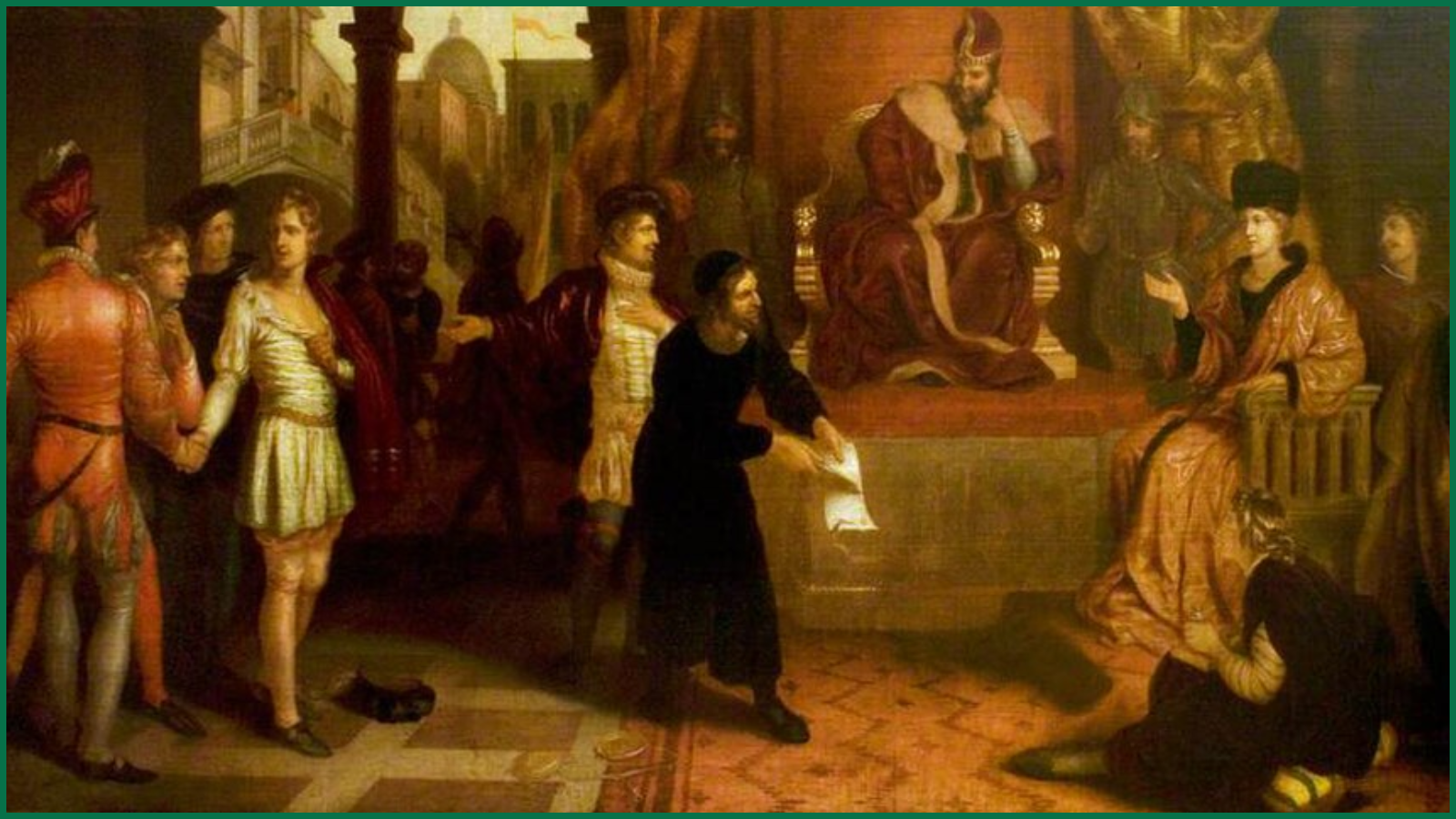
    First there is the titular merchant of Venice, Antonio, who has his capital invested in ships importing goods from afar. His friend Bassanio is handsome but cash-poor. He requires a loan from Antonio in order to travel to Belmont and court Portia, the wealthy heiress of the manor. With Antonio’s money at sea, he turns to the Jewish usurer, Shylock, for a loan that he can give to Bassanio. Here we learn that Antonio has often publicly abused and insulted Shylock on account of his Jewish identity. For this, Shylock is willing to forgo interest on the loan but demands a pound of flesh from Antonio should he default. At the same time, Shylock’s daughter Jessica is preparing to abandon her Jewish faith and the legal restrictions that go with it. She steals her father’s ducats and jewelry, elopes with Lorenzo and the pair abscond to Belmont as part of Bassanio’s entourage. 

    In Belmont, Portia’s deceased father has set up a sort of lottery of caskets that Portia’s potential suitors must win. Despite this, Portia is a woman with a lot of agency in the story which is a pleasant departure from the stifling patriarchal air of a play like Othello. Portia manipulates her suitors to her liking and subtly aids Bassanio to the correct choice of casket so that he wins her hand. She favours Bassanio because she sees him as pliable, lacking fancy hereditary titles or a fortune of his own. We then learn of great misfortune striking Antonio—all three of his ships at sea have met with doom, leaving him vulnerable to his bond with Shylock. 

    When Shylock drags Antonio to the Duke of Venice’s court to acquire his pound of flesh, Portia arrives in disguise to adjudicate the case. Through rhetorical trickery and technical loopholes, she absolutely devastates Shylock, as he is denied his pound of flesh and is stripped of all his wealth. He is also subject to a forced conversion to Christianity, rendering him socially and economically destitute. She saves Antonio but it is implied that Portia has had a hand in manipulating events when she produces a letter stating that all three of Antonio’s ships had arrived safely to port after all.1 We learn that Lorenzo had an eye on Shylock’s money when pursuing Jessica, just as Bassanio had an eye to Portia’s wealth when pursuing her. Antonio exits the play alone and isolated from his newly-wedded friends.

    “On The Jewish Question”

    The character that has attracted the most controversy in The Merchant of Venice is undoubtedly Shylock. A Jewish usurer hungry for the Christian blood of Antonio has provoked much discomfort in post-World War II audiences allergic to overcooked stereotypes around moneylending and blood libels. But Shylock is anything but a one-dimensional caricature. Shakespeare endows him with a humanity and honesty that is unique amongst the characters of the play and this makes sympathy toward his plight difficult to resist:

    He hath disgraced me, and hindered me half a million;
    laughed at my losses, mocked at my gains, scorned my nation,
    thwarted my bargains, cooled my friends, heated mine enemies—
    and what’s his reason? I am a Jew.
    Hath not a Jew eyes? Hath not a Jew hands, organs, dimensions, senses, affections, passions;
    fed with the same food, hurt with the same weapons,
    subject to the same diseases, healed by the same means,
    warmed and cooled by the same winter and summer, as a Christian is?
    If you prick us, do we not bleed? If you tickle us, do we not laugh?
    If you poison us, do we not die? And if you wrong us, shall we not revenge?
    If we are like you in the rest, we will resemble you in that.
    If a Jew wrong a Christian, what is his humility? Revenge. 
    If a Christian wrong a Jew, what should his sufferance be by Christian example? Why, revenge.2

    Although Jews have worn a certain money-grubbing stereotype thanks to the material realities of the Middle Ages, Shakespeare endows Shylock with a transparency of intentions absent in the other characters of the play. He has an integrity that contrasts sharply with Antonio, Bassanio, Jessica, Lorenzo and Portia, who are all prone to degrees of hypocrisy: they marry for money, they engage in theft, they seek loans from those they abuse, they leverage their fortune to manipulate others.3 Shylock points out the hypocrisy of Christian society in general, as attendees of the Duke’s court sit in possession of involuntarily enslaved humans yet cast judgement on his voluntarily signed, mutually agreed upon contract. 

    It has been pointed out that Renaissance England did not have Jewish moneylenders but they did have Italian ones and they were much loathed: “It was not axiomatic to an Elizabethan theatre audience that Italian merchants were more economically virtuous than Jews; Robert Wilson had a good deal of success in the 1580s and 1590s with The Three Ladies of London, a play that pitted a morally upright Jewish merchant against a thoroughly unscrupulous Venetian.”4

    Through the play, Shakespeare reveals that Jews and Christians are at least as equal in ethics as they are in body. In doing so, he renders the foamy saliva and slurs hurled at the Venetian Jews of his play to be completely unjust.

    Marx, separated from the Renaissance by centuries, was writing during a period of heightened anti-Semitism in Germany and across Europe. Although he had a rabbinical heritage, his family was forced to convert to Christianity so that his father could evade a ban on Jews practicing law. Like Shakespeare, Marx recognized this social discrimination to be unjust, with anti-Semitism only masking a collective distaste toward the capitalist economy and predatory finance. 

    Scapegoating as Capitalist Projection

    In Capital, Marx twice likens the capitalist seeking the sweat of labour to Shylock seeking his pound of flesh: “Aye his heart. So says the bond.” Marx also delivers one of his most misunderstood lines in Chapter Four: “The capitalist knows that all commodities, however scurvy they may look, or however badly they may smell, are in faith and in truth money, inwardly circumcised Jews, and what is more, a wonderful means whereby out of money to make more money.” 

    Marx’s reference to “inwardly circumcised Jews” is a direct citation of Romans 2:29 in the New Testament: a Christian, a follower of Jesus, is circumcised by an inward, spiritual cut to the heart instead of the genitals.5 Similarly, commodity production and trade seeks an inner value that will express itself in surplus.6

    Surplus value is what Antonio needs his ships to deliver and it is what every capitalist needs to reproduce their class. Marx makes this analogy in order to emphasize the universal profit motive of capitalist commodity production. Marx and Shakespeare converge on the idea that profit-seeking is not some noxious Jewish attribute—it’s capitalism.

    By setting his play in Venice, the commercial capital of Renaissance Europe, Shakespeare had foreshadowed the total conquest of commerce over global society. The result is a world where, in Marx’s words: “Money is the pimp between need and object, between life and man’s means of life…Money appears as an inverting power in relation to the individual and to those social and other bonds which claim to be essences in themselves. It transforms loyalty into treason, love into hate, hate into love, virtue into vice, vice into virtue, servant into master, master into servant, nonsense into reason, and reason into nonsense.”7

    As we observe in our own world, so it is in The Merchant of Venice. Marriages, familial bonds, friendships and even hatreds are all mediated by the need of money. With money as our pimp, the reduction of individuals into venal objects can always be justified. Morality is inextricably bound to how we collectively produce and reproduce our lives. It is not the characters of The Merchant of Venice who are amoral—it is the economic system that produces them.

    Thanks for reading!


    1. Robin Russin, “The Triumph of the Golden Fleece: Women, Money, Religion and Power in Shakespeare’s The Merchant of Venice,” Shofar Vol. 31, No. 3: 124. ↩︎

    2. See Act 3, Scene 1. ↩︎

    3. For Antonio is full of hubris when he offers a pound of flesh to secure a loan against even Shylock’s advice; Bassanio and Lorenzo seek women to stabilize their financial standing and Portia uses her wealth to misinform Antonio about the fate of his ships, even going so far as to orchestrate a dramatic courtroom standoff where she casually destroys Shylock after a passionate speech about the value of mercy. ↩︎

    4. It is also worth noting that Shylock consistently forgoes profit in order to maintain the prospect of exacting revenge on Antonio for his abuse. Shylock is therefore much less “money hungry” than others in the play—including his daughter Jessica as well as Bassanio and Lorenzo. ↩︎

    5. From the New King James version of the Bible: “He is a Jew who is one inwardly; and circumcision is that of the heart, in the Spirit, not in the letter; whose praise is not from men but from God.” ↩︎

    6. Expressed in the formula: M-C…C’-M’ (money to commodity, commodity + surplus value to money + surplus value). The principal sum of money is thus transformed into a greater quantity. ↩︎

    7. Karl Marx, “The Economic and Philosophic Manuscripts of 1844” in Essential Writings of Karl Marx (Red and Black Publishers, 2010): 137, 140. ↩︎
  • Ask the Editor: Who Will Win the Russia–Ukraine War?

    Ask the Editor: Who Will Win the Russia–Ukraine War?

    To the editor,

    Who will win the war between Ukraine and Russia?

    Thanks,

    Lindsay.

    [Sent via Bluesky]

    Hi Lindsay,

    The war between Ukraine and Russia is another item of a catalogue that demonstrates the futility of warfare in this 21st century of cheap drone weaponry. Russia began the war by opening a broad front along the north, east and southern borders of Ukraine. Their subsequent drive on Kyiv and Kharkiv suggests that Russian leadership had banked on a swift military victory and regime change. Obviously that did not happen. Over four years later, Russia has been largely expelled from northern Ukraine, military lines have consolidated in the eastern Donbas region of Ukraine and fortified defensive zones have engulfed the field of battle. Although Russia has fought through fierce counteroffensives to capture about 20% of Ukrainian territory, their pace of advance has been achingly slow.

    Deep rumination on the causes of this war is beyond the scope of your question but it suffices to say that there are ethnic dimensions to the conflict that trace back centuries. From a materialist point of view, both Ukraine and Russia can be characterized as run-of-the-mill corrupt capitalist kleptocracies: the imperialist NATO alliance backs Ukrainian oligarchs aligned with western capital, while Moscow has sought to shore up its own capital interests in eastern Europe. Working people sent to their doom by capital wrapped in a nationalist disguise is an old and horrible story. Noble causes do not abound here.

    There are concrete geopolitical implications worth flagging. Just as the US-Israeli war on Iran has been a cocktail shaker for the regional politics of the Middle East, so too has the Russia-Ukraine war had a similar effect on Europe. The European Union has largely severed key Russian inputs from their economies, creating stagnant economic conditions. At the same time, European countries have committed to a large-scale military buildup in order to counter the “Russian threat” that has failed to topple Ukraine. And this is on top of a whopping $400 billion in aid spent by NATO countries to prop up the Ukrainian war effort against Russia. As for the Russian side, the math gets worse: over $1 trillion dollars lost to sanctions and frozen assets plus hundreds of billions more in direct military expenditures. 

    Karl Marx wrote in the Grundrisse that the economic effect of war “is exactly the same as if the nation were to drop part of its capital into the ocean.”1 By that standard, none of the principal actors in this war can possibly emerge a “winner.” Any victory declared by the principal belligerents could only be considered Pyrrhic at best. As with the Iran war, the primary political benefits have accrued to the one major power smart enough to remain neutral: China.

    China has managed to retain a robust trading relationship with the United States, European Union, Ukraine and Russia throughout the war. With Russia politically and economically ostracized from Europe, China has deepened ties with their large northern neighbour and destroyed America’s containment strategy in the process. Ukraine has set fire to western resources across the board and kneecapped any faint hope of Europe achieving economic sovereignty independent of the United States—itself a sinking ship. The relative strength of China increases each day the conflict drags on.

    In The Art of War, Sun Tzu said that it takes “the acme of skill” to win wars without fighting. China clearly possesses this skill. The imperial world must crumble before it can do the same.

    In sols.


    1. Karl Marx, Grundrisse (Penguin, 2005): 129. ↩︎
  • Marxism and Psychoanalysis: Towards A Theory of Everything?

    Marxism and Psychoanalysis: Towards A Theory of Everything?

    Our understanding of the nature of the universe has received many breakthroughs since Albert Einstein published his theory of special relativity during his “miraculous year” of 1905. As the century progressed, a theory of general relativity was sketched out to provide a framework for the movement of matter through the spacetime continuum—testable knowledge employed across a variety of fields today. While relativity is the backbone of our understanding of the cosmos, quantum mechanics was developed in order to explain the behaviour and physical properties of microscopic matter, such as molecules and atoms.

    The existence of atoms was proposed during antiquity. In modern times, our knowledge has come to include atomic properties such as protons, neutrons and orbiting electrons that move in waves. Since atoms are the building blocks of matter, atomic properties dictate the physical characteristics of everything we see—and everything we don’t. Relativity has been used to generate precise mathematical predictions about gravity and the speed of objects but quantum mechanics adheres to an uncertainty principle that asserts only probabilities can be known about subatomic movements.

    Laws of History

    When asked how humans could devise an atomic weapon but fail to develop the political means to prevent it from destroying us, Einstein replied: “That is simple. It is because politics is more difficult than physics.” While humans exist within a space set by biological parameters, our behaviour is subject to endless cultural permutations, psychological dispositions, technological revolutions and political formations. Of all the world’s great thinkers, it was one Karl Marx that delivered a framework for understanding human societies. Friedrich Engels said at Marx’s funeral: 

    Just as Darwin discovered the law of development of organic nature, so Marx discovered the law of development of human history: the simple fact, hitherto concealed by an overgrowth of ideology, that mankind must first of all eat, drink, have shelter and clothing, before it can pursue politics, science, art, religion, etc.; that therefore the production of the immediate material means, and consequently the degree of economic development attained by a given people or during a given epoch, form the foundation upon which the state institutions, the legal conceptions, art, and even the ideas on religion, of the people concerned have been evolved, and in the light of which they must, therefore, be explained, instead of vice versa, as had hitherto been the case.

    Marx was able to see that humans entered into definite relations of production in order to satiate our biological needs and it is upon this basis that history unfolds. As individuals, we are born into a social structure that precedes our existence and conditions our being. Our families, neighbourhoods, cities, employment, wealth, housing—these are better thought of as social products rather than individual affectations. As Marx put it: “Society does not consist of individuals, but expresses the sum of interrelations, the relations within which these individuals stand.”1

    Nature comprises physical material but social relations are to human society what gravity is to the universe. Relations are what channel our energies, shape our matter and mould our consciousness. Marx makes this analogy explicit in Capital when discussing the relative value capitalist commodities: “The law of gravity thus asserts itself when a house falls about our ears. The determination of value by socially necessary labour time is therefore a secret, hidden under the apparent fluctuations in the relative values of commodities.”2 Social relations—of the economy, the state, culture, family, etc.—are not visible but we feel their pull like we feel the force of gravity.

    Fredric Jameson credited Karl Marx and Sigmund Freud with founding “the two great bodies of post-philosophical thought” described “as unities of theory and practice.”3 While history is replete with philosophers offering up static codes of ethics and rigid ontologies, Marx and Freud provided the theories of motion, change and flux that capture the subjective totality of the modern age. We can say that Marxism is the social science equivalent of the theory of relativity, explaining the motion and historical development of society as a whole. And if Marxism is something akin to a macrolevel theory of relativity, psychoanalysis would be the quantum mechanics, the microlevel complementary.

    The Individual Singularity

    Marx recognized the existence of tendencies directing societies depending on their mode of production. But at the level of an individual—a single CEO or suburban consumer or blue collar employee—we are left with an unpredictable singularity that does not strictly conform to laws of history.4 The economic parameters of an individual are concrete but the habits, taste preferences, customs, personalities, overall health, talents, deviancies and sociability are highly variable and unique to each of us. The society will condition our habits, customs and well-being to a large extent but there are infinite combinations of traumas, predispositions and formative experiences that yield highly unpredictable outcomes at the individual level.

    Freud himself had a few detours through medicine and conventional psychology before realizing that many of his patients—branded “neurotic” or “hysteric” in 1800s Vienna—were suffering from afflictions of the unconscious mind: “Our starting-point is the unconscious mental processes, with the peculiarities of which we become acquainted through analysis. We consider these to be the older, primary processes, the residues of a phase of development in which they were the only kind of mental processes.”5 

    There is a parallel here to Marx’s theories of human society; like an iceberg, there is an invisible mass, an underlying process that manifests what we are able to observe. For Marx, the material world is rooted in processes of social relations, class conflict and surplus value formation. For Freud, our conscious thoughts and, often, our physical health is a latent expression of unconscious memories. Marxism alerts us to the existence of a vast ideological superstructure that expends considerable energy rationalizing the economic base on which we exist. Similarly, psychoanalysis explains that repression hides our unconscious thoughts from our conscious selves: “The essence of repression lies simply in turning something away and keeping it at a distance. Repression demands a persistence expenditure of force, and if this were to cease, the success of the repression would be jeopardized.”6

    French psychoanalyst Jacques Lacan was able to take the field even further, perhaps owing to a comprehension of Marx that Freud lacked.7 Lacan described the unconscious as “the discourse of the Other”—a horde of other people we carry in our heads like traits. Humans are thus transindividual beings that cannot be understood in isolation from the society that produced them. This stands harmonious with Marxism. The entire scope of Lacanian theory is too complex to detail here but his three orders of the psyche warrant consideration for Marxists: the imaginary, the symbolic and the Real.

    The imaginary is our concept of self which is locked in by the symbolic order, representing a shared collective consciousness of language, law, culture and ideology. The Real is that which resists symbolization and conscious integration. The most common encounter with the Real is the experience of trauma. To be reductive, we can think of our minds as three orders forming a Borromean knot representing the self, society and nature.8

    Lacan believed that psychoanalysis could not be placed onto a scientific footing like linguistics or structural anthropology because of flaws with the causal model. The cause under investigation in psychoanalysis is the very subject resulting from that cause: “Science is therefore not yet capable of encompassing psychoanalysis.”9 Marxism, too, is afflicted by similar problems, the narrow horizon of a bourgeois paradigm that seeks to isolate mechanisms of cause-and-effect rather than examine the complete totality of a system. This should be expected within a capitalist mode of production that is fixated on capital accumulation irrespective of the hazards it produces. After all, the existing mode of production “is a general illumination which bathes all the other colours and modifies their particularity. It is a particular ether which determines the specific gravity of every being which has materialized within it.”10

    Toward a Theory of Everything?

    Psychoanalysis demonstrates that uncovering unconscious memories, rolling back repression, is the path to rehabilitation and restoration of the individual. In a similar fashion, Marx laboured diligently over three volumes of Capital in order to reveal the underlying mechanics of capital accumulation and ruling class power. Like a revelation of the unconscious, if we understand the motion of capitalism it is then possible to transcend it. By restoring the productive powers of labour under our own conscious control, alienation from our labour can be eliminated and society is made congruent with our human nature. Within this context of an unalienated, post-capitalist mode of production, psychoanalysis will find its proper recognition as a holistic science. 

    Indeed, Jameson himself once proposed a dedicated institution of psychoanalysis for his hypothetical post-revolutionary society: 

    We may provisionally call this new institution the Psychoanalytic Placement Bureau, and it will, in conjunction with unimaginably complex computer systems, handle and organize all forms of employment as well as all manner of personal and collective therapies. Mediating between the individual and the collective, the new institution will combine the functions of a union and a hospital, an employment office and a court, a market research agency, a polling bureau, and a social welfare centre. Presumably what is left of the police as an institution will eventually be absorbed into this central agency, which will eventually replace government and political structures equally, the state thereby withering away into some enormous group therapy.11

    Jameson’s version of the proverbial dictatorship of the proletariat is admittedly strange and unorthodox but it underlines the potential that a positive union between Marxism and psychoanalysis represent. Physics looks to merge quantum mechanics with relativity for a “theory of everything.” When socialism comes to the West, this can be accomplished by the praxis of Marxism and analysis.

    Thanks for reading!


    1. Karl Marx, Grundrisse (Penguin, 1993): 265. ↩︎

    2. Karl Marx, Capital, Vol. One (Ancient Wisdom Publications, 2019), 49. ↩︎

    3. Fredric Jameson, Valences of the Dialectic (Verso, 2010): 59. ↩︎

    4. David Harvey elaborates on this concept of an individual forming a singularity within Marxist theory in A Companion to Marx’s Capital: Volume 2 (Verso, 2013): 33-4. ↩︎

    5. Sigmund Freud, The Freud Reader (W.W. Norton, 1995): 301. ↩︎

    6. Ibid, 569–70, 572. ↩︎

    7. For example, Lacan famously based his concept of jouissance on Marx’s theory of surplus value. ↩︎

    8. The Real, of course, is not entirely synonymous with reality in Lacan’s thinking. This conceptualization has some utility within a Marxist framework however. ↩︎

    9. Bruce Fink, The Lacanian Subject: Between Language and Jouissance (Princeton University Press, 1995): 139. ↩︎

    10. Marx, Grundrisse, 106-7. ↩︎

    11. Fredric Jameson, An American Utopia: Dual Power and the Universal Army (Verso, 2016): 81-2. ↩︎
  • Marx and Shakespeare: Writing Nationalism with Henry V

    Marx and Shakespeare: Writing Nationalism with Henry V

    Now entertain conjecture of a time
    When creeping murmur and the poring dark
    Fills the wide vessel of the universe.

    —Chorus, Act 4.

    It is a staple of nationalistic fervour where the leader of a country personally vanquishes its enemies, as if embodying the nation itself. Friedrich Nietzsche admired the daring coup d’état of Napoleon’s nephew in France, “which made his own sovereign will ‘seem like the will of the entire nation.’”1 And where historical examples cannot be found to mythologize, they can also be invented.

    The United States does this frequently with their presidents in film. Fictional American heads of state have flown fighter jets against alien invaders, overtaken terrorist hijackers of Air Force One with cunning and deployed martial arts against invading North Koreans.

    Whether a king or president, a head of state adds a layer of profundity to an action hero that defies obvious absurdities to the storyline. They possess “two bodies”—the body of their person and the body politic of the nation that they represent. Shakespeare himself was very conscientious about the king’s two bodies, which he directly explored in plays like Richard II, Hamlet and Henry V.

    It is important to note that the concept of a singular nation-state was only emergent in Shakespeare’s time and he was an influential participant in the formation of English identity through his many history plays. Shakespeare’s histories are understood to be among the most popular in his lifetime, although today these plays are amongst the least produced and least known of his oeuvre.  The reason for this is mainly that the historical figures involved are not very well known to today’s modern audiences as compared to Renaissance England.

    The Henriad

    Most of Shakespeare’s histories are embodied by the eight-play Henriad series that depicts a chain of English kings ruling between 1377 and 1485—about a century or two before the time of writing. They tell the long story of the turbulent period between the deposing of the divinely-ordained King Richard II which ultimately resulted in the devastating Wars of the Roses. The series concludes with the ascension of the House of Tudor to the throne.

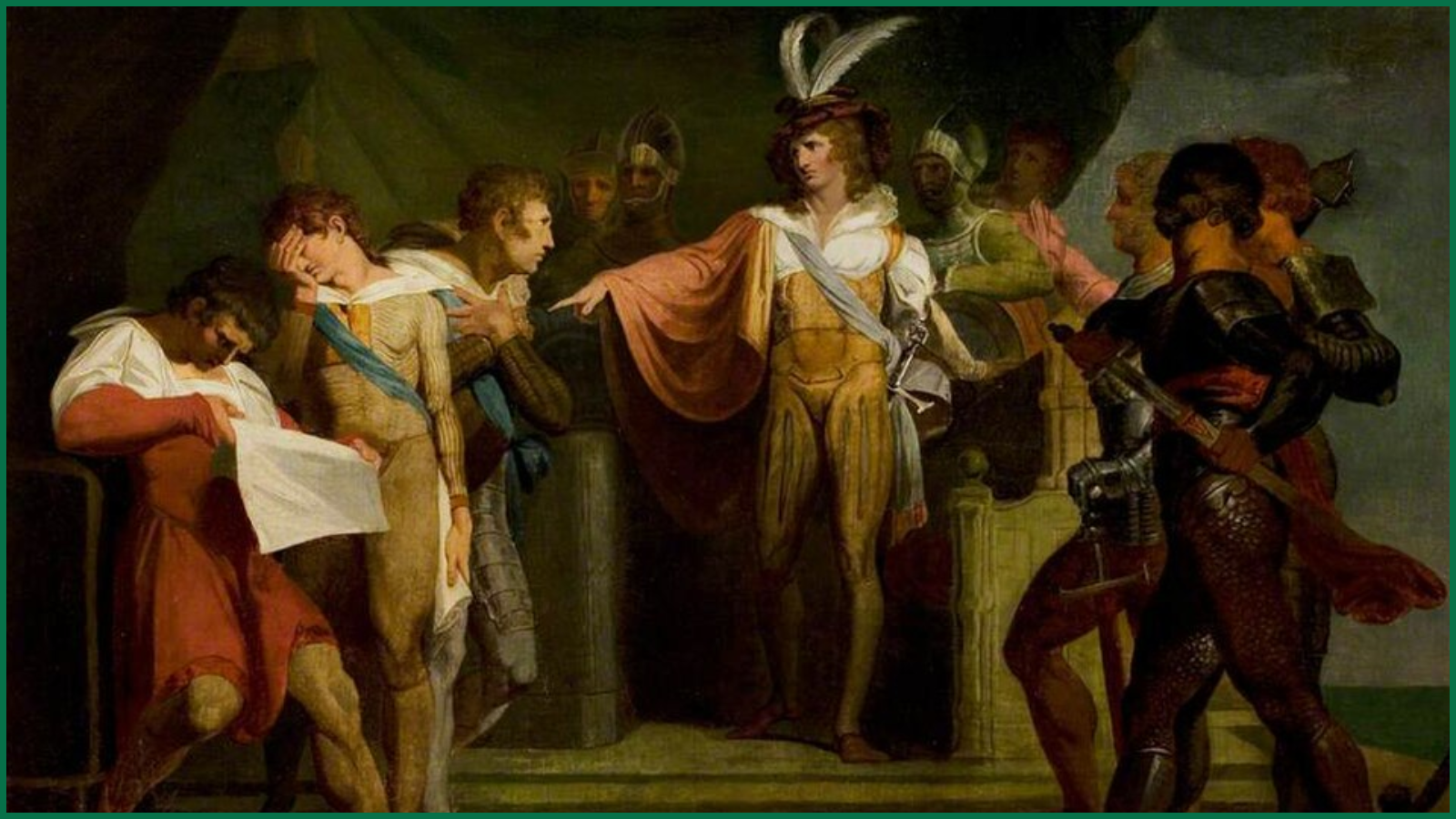
    Henry V serves as a kind of mid-series climax to the Henriad; the peak of English power before the fall into civil war. The story opens with a discussion surrounding the English claim to the French throne. When the Dauphin sends an insulting “gift” of tennis balls to the young King Henry V, the decision to pursue the claim is sealed. Henry assembles his army and leads them into the ferocious siege of Harfleur across the English Channel. Despite difficulties, Henry is almost able to will victory into being with his speech:

    Once more unto the breach, dear friends, once more;
    Or close the wall up with our English dead.
    In peace there’s nothing so becomes a man
    As modest stillness and humility,
    But when the blast of war blows in our ears,
    Then imitate the action of the tiger.
    Stiffen the sinews, summon up the blood,
    Disguise fair nature with hard-favour’d rage.2

    Upon taking Harfleur, the next is the Battle of Agincourt. This battle occupies a privileged space in English national lore to this day—something akin to the Battle of Thermopylae, fictionalized in the movie 300. This is because the English were badly outnumbered on the battlefield, five to one.3 Acknowledging that his army lacks size, Henry delivers one of Shakespeare’s most famous speeches:

    But we in it shall be remembered,
    We few, we happy few, we band of brothers.
    For he today that sheds his blood with me
    Shall be my brother; be he ne’er so vile,
    This day shall gentle his condition.
    And gentlemen, in England now abed
    Shall think themselves accursed they were not here,
    Any hold their manhoods cheap whiles any speaks
    That fought with us upon Saint Crispin’s day.4

    Language and Nation

    The French receive a bloodletting on the battlefield and Henry executes prisoners that he does not believe his small army can guard. Henry is shown to be tactical and shrewd, as he is rousing and patriotic. A warrior, the play concludes with his awkward courting of the French princess Katherine, thus accomplishing his aim of ascending the French throne.

    Henry V demonstrates the horrors of war—and its proud glory. It shows a heroic king—and a morally blemished man. And through these contradictions, it shows something even more important which is the forging of a state, a United Kingdom. This is achieved with Henry’s forming of a coalition army—including Welsh, Scots and Irish—under one king and one language. Shakespeare takes care to emphasize that it will be English adopted into his marriage with Katherine and the French throne, asserting a reversal of fortunes for a French language that was considered superior and sophisticated, one that had dominated England for centuries prior. 

    Prior to the Renaissance and early modernity, languages and dialects tended to be disparate—varying wildly between villages and noble courts. The standardization of national languages arose with the centralization of palace authority and became the mark of a unified nation-state. In Spain, this process began as early as the 1200s; in France, the 1500s. Italian was only standardized in the 1800s with national unification.

    English did not undergo an official standardization but the works of Shakespeare and the printing of the King James Bible are seen as landmark events. It is interesting that Shakespeare, the greatest individual contributor to a standard English language, consciously lifted it to such heights in Henry V. He was not only showing the arrival of a language, but the arrival of a modern nation.

    Nationalism is a powerful social construction that binds people to causes that they may not otherwise support. Shakespeare demonstrates this eloquently in his play. Any moment his men cast rational doubt on the cause they are fighting for or the sacrifice they are prepared to make, Henry arrives with a dazzling display of rhetoric stoking nationalistic pride and dispelling all doubts.

    The Marxian Superstructure

    Marx recognized the role of fabled leaders and national mythology to the creation of a nation-state, which is the necessary cradle for the capitalist market. In his Eighteenth Brumaire of Louis Bonaparte he wrote

    But unheroic though bourgeois society is, it nevertheless needed heroism, sacrifice, terror, civil war, and national wars to bring it into being. And in the austere classical traditions of the Roman Republic the bourgeois gladiators found the ideals and the art forms, the self-deceptions, that they needed to conceal from themselves the bourgeois-limited content of their struggles and to keep their passion on the high plane of great historic tragedy…Thus the awakening of the dead served the purpose of glorifying the new struggles.

    And so it was for Henry V. At the time of writing, England was locked in a formative national struggle against Spain for naval supremacy and access to New World plunder. Shakespeare wrote for a highly diverse audience, including London’s nascent and well-paying bourgeoisie class of lawyers, traders and merchants. With reference to Marx, Henry V is best understood as a heroic play written for a bourgeois audience roused by war, although far from fighting it.

    It is almost a purpose-built story, uniting in the imagination the kingdom’s collection of English, Welsh, Scottish and Irish, together against a common enemy. As a product of early modernity it prodded a national language—a national consciousness—into being. It offers an early glimpse of the national vessel that would eventually subjugate all four corners of the Earth, and lay down a modern capitalist empire on which the sun never set.

    Thanks for reading!


    1. Frank Cameron and Don Dombowsky, eds. Political Writings of Friedrich Nietzsche (Palgrave Macmillan, 2008): 24. Karl Marx, of course, took a dim view of Louis Bonaparte III. ↩︎

    2. From Act 3, Scene 1. ↩︎

    3. Contemporary historians posit a much narrower differential between armies, with the French advantage being 4:3 or 2:1. ↩︎

    4. From Act 4, Scene 3. Saint Crispin’s day celebrates two shoemakers martyred in Roman times, and was marked in the English calendar until shoemaking became mechanized in the 18th century. ↩︎
  • In Brief: China’s Marxian Paradigm

    In Brief: China’s Marxian Paradigm

    In China today, the fingerprints of American capitalist excess are hard to miss, as the golden arches and the KFCs stand lined up next to Walmart stores. The history of China’s economic development is a pretty simple story as told in the West: Mao’s Soviet-style economy was abandoned by Deng who swung open the doors to western capitalism and everything we see in China today is the mere culmination of decades of market magic. With this story lodged into our heads by so many western journalists, whose understanding of Marx is even less than their understanding of China, it is no wonder why Beijing’s trajectory is wide open to interpretation.

    The sequence of human history is one of modes of production. Societies organize around productive forces and, as these forces evolve, so does a new social formation eventually sublate the previous one existing. The Greek polis represents a sublation of Neolithic communal society, just as Medieval Europe represents a sublation of the Roman Empire.1

    The process is not mechanical and it has varied wildly depending on the region in question. For example, the capitalist mode of production was concretized only after a significant period of violent primitive accumulation driven by erstwhile feudal merchants who amassed vast sums of wealth at the expense of European peasants, African slaves and New World Indigenous clans. What capitalism has allowed us to do by way of revolutions in technology, science and philosophy, is gain a self-awareness of this historical process and ask the question: if capitalism is a sublation of the feudal mode, what might represent a sublation of the capitalist mode?

    The capitalist mode of production has brought with it a material abundance previously unknown to humanity. This helps to explain widespread resistance against any effort toward revolutionary change. On the other hand, capitalism has also carried over imperial tendencies toward warfare, environmental destruction and the deracination of the community. It is these noxious aspects of capitalism that have formed the basis of western populist demands and global revolutionary politics.

    Marxism-Leninism emerged from an impoverished Russian Empire long-mismanaged by Tsars wielding absolute power. For the Soviet Union, it expressed the post-revolutionary desire for rapid modernization without the capitalist hallmarks of colonial extraction and working class exploitation. With near-universal public ownership of production, these two aims were largely successful and the USSR experienced an improbable rise to superpower status, all the while providing housing, healthcare, free education and employment to all. 

    Mao Zedong was obviously heavily influenced by the Soviet experience but he recognized that his China of 1949 was even less developed than 1917 Russia, thanks to the compounded effects of Japanese invasion, civil war and a century of humiliation at the hands of European colonial powers. At its founding, the People’s Republic of China was almost an entirely illiterate, agrarian economy suffering from a massive drug addiction epidemic and in a state of chronic famine. 

    Mao set his modernization program along the lines of mass literacy campaigns, accessible medicine and large-scale irrigation projects. He recognized the feudal landlord class as a vestige of feudalism and a barrier to progress. That class was eliminated with land reforms. But, as a historical materialist, Mao also saw the bourgeoisie as an important ingredient to Chinese modernization. Adopted in 1949, the Chinese flag even includes a star each for the national and petit bourgeoisie, against a red background representing the revolution.

    Soviet socialism was a sublation of Russian feudalism that practically skipped the capitalist mode altogether. But it collapsed under a heavy burden of economic embargoes and repeated military confrontations against combined capitalist powers that had centuries of wealth accumulation under their feet.

    Relieved of sanctions in 1979, China has been determined to build socialism in the East along the timescale of how capitalism was built in the West: a period of wealth accumulation and technological advancement that will make it possible to transcend the global capitalist economy. Mao’s successor, Deng Xiaoping, rejected western capitalism and he modelled his own reforms on Lenin’s New Economic Policy.

    China has not engaged in foreign colonization or the subjugation of other lands. As a Global South country long-preyed upon by the West, they have recognized that their path to modernization must necessarily be different than it was for imperial states. With particular attention to Volumes 2 and 3 of Marx’s Capital, Beijing has instead constructed a public sector designed to capture the surplus value of their capitalist workforce and channel it toward the development of new productive forces.

    As Marx described liberal states, the surplus value produced by workers is claimed as rent, interest and profit. In liberal states, the disposal of this enormous surplus is decided by the private whims of financial firms, landlords and corporations—leading to the socially disruptive practice of outsourced labour and the curious phenomena of “dead money.” In addition, the circulation of surplus value in the form of loans, banking fees and debt-financing are tallied as part of the national gross domestic product—despite producing no value whatsoever. This has led the economist Michael Hudson to decry GDP accounting in the United States as “a travesty that credits the financial sector with producing a product, not as imposing zero-sum transfer payments.”2

    As a Marxist state, China treats surplus value as a social product rather than a private gain. Because much of the banking, resource, construction and manufacturing sectors are under state ownership, they are able to convert surplus value that is captured in the form of interest and profits and push a dramatic material transformation of the entire country. Where private ownership exists, party cadres operate within the enterprise to ensure compliance with national planning. China’s ability to build at breakneck speed is also facilitated by maintaining an extremely low cost of goods and services through strategic deflation and the “purging of rent-seeking profits” from the economy.3 This conscious suppression of price and profit are virtually unthinkable for a liberal country.

    The fault line between China and the West is therefore not one of “capitalism vs. socialism” but “liberalism vs. Marxism.” At this point in history, every country on Earth contains elements of both socialism and capitalism. In liberalism, capital accumulation is treated as an end in itself—and the result is a sprawling financial services sector that cannibalizes national industry in exchange for abstract financial products. In Marxism, capital accumulation is treated as an evolutionary step between industrial capitalism and socialist transformation. The result of this treatment is a country that looks like China.

    By compressing surplus value formation into material production rather than financialization, China is betting on a transformation of productive quantity into social quality, one that will eventually lead to a sublation of private capitalism by public socialism. This is not meant as an explicit endorsement of vanguardism, nor is it meant to praise each aspect of Chinese governance or policy decision made by Beijing. We should take lessons from China and adapt them to our own national circumstances. But that can only be done with recognition that their meteoric rise is resultant from the application of Marxist theory at the commanding heights of the economy.

    Thanks for reading!


    1. John Bellamy Foster explores the communal aspects of antiquity in “Marx and Communal Society,” Monthly Review, Vol. 77, No. 3: 47-64. ↩︎

    2. Michael Hudson, “Finance Capitalism versus Industrial Capitalism: The Rentier Resurgence and Takeover” in Review of Radical Political Economics, 2021: 12. ↩︎

    3. See: Kevin Walmsley, “Top China execs forecast more deflation and falling profits ahead,” Substack, Nov. 2025. ↩︎
  • Marx and Shakespeare: Unracing Othello

    Marx and Shakespeare: Unracing Othello

    If virtue no delighted beauty lack,
    Your son-in-law is far more fair than black.

    —Duke of Venice, Act 1, Scene 3.

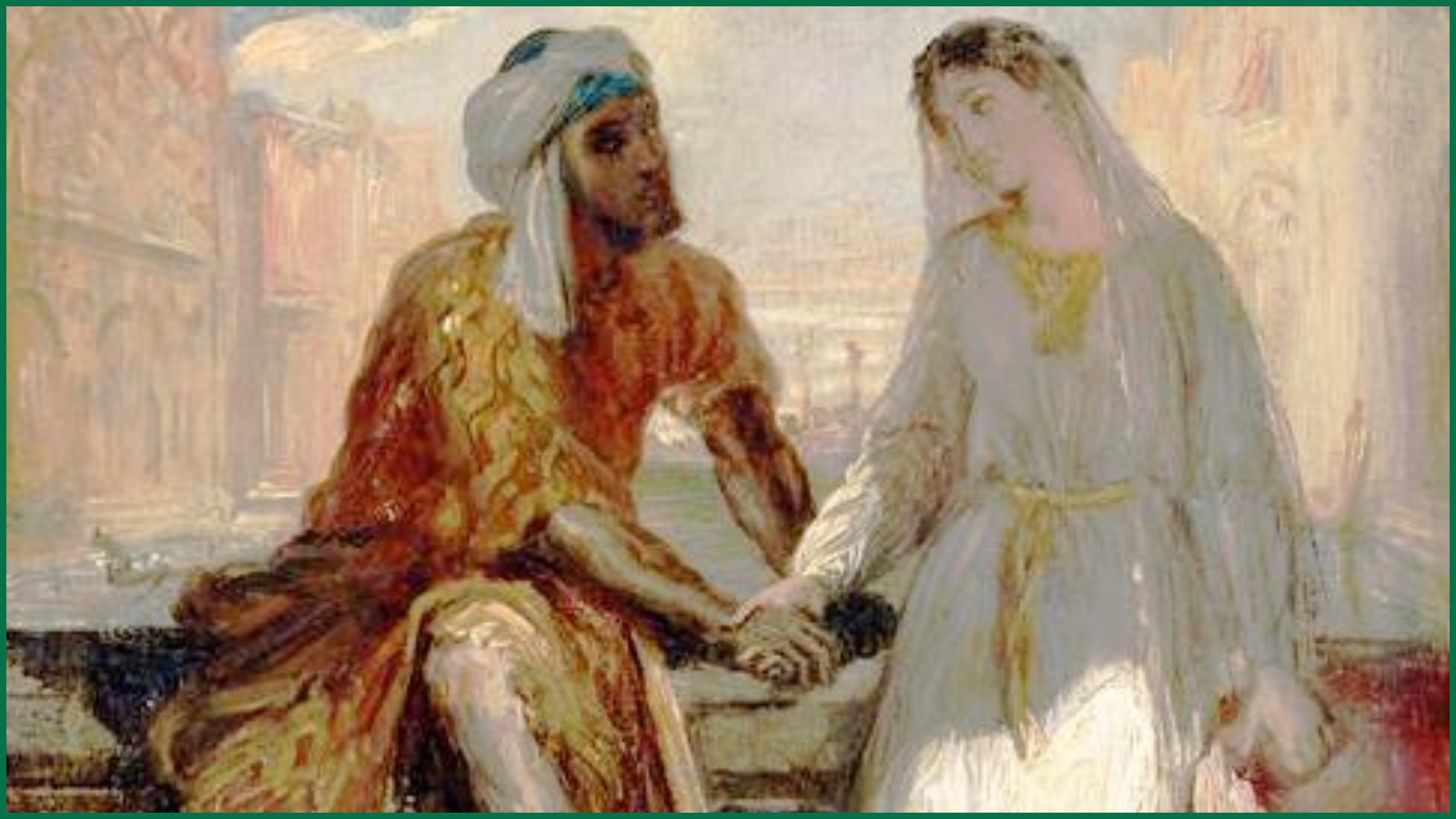
    The Tragedy of Othello, the Moor of Venice is a Shakespeare play that carries an echo of the European imagination that lasted beyond Karl Marx’s lifetime. “Moor” was a term used by Europeans to refer to the Muslim North Africans who had conquered and ruled the Iberian Peninsula between 711 and 1492. The Muslim population of Al-Andalus—modern day Spain and Portugal—were quite heterogeneous and did not use the Moor identifier themselves. Even after the Christian reconquest of the Iberian Peninsula, “Moor” was a common European designate applied to continental Africa and the Middle East.

    The term was derived from the ancient Roman province of Mauretania—modern day Morocco and Algeria— and it eventually came to denote virtually anyone of a darker complexion. Marx, a German and ethnic Ashkenazi, was nicknamed “the Moor” by friends and family owing to his swarthy skin tone, hair and eyes.

    The Moor label—applied to Marx but also by Shakespeare to his Othello title character—is emblematic of European perceptions of race as they evolved through centuries. Since the era of ancient Rome, people of North African, Middle Eastern and sub-Saharan African origin worked and lived in continental Europe. Yet “the ancients did not fall into the error of biological racism; black skin colour was not a sign of inferiority.”1

    The ancient world was hardly free of prejudice; individuals were judged harshly according to their occupation, cultural identity or status as citizens. But the concept of race did not exist and physical differences between groups were thought only to be the effects of climate on the human body. This view of race and ethnicity largely held through Europe’s medieval era and into Elizabethan England: “The theory of the humours, the basis of Elizabethan psychology, maintained that men were of different complexions, statures, and countenances of mind and body according to the climate of their birth.”2

    Lacking a social construction of race, ancient Rome based their in-group identity on citizenship. And medieval Europe and Renaissance England did much the same thing, only with Christianity as the defining in-group characteristic. This began to change in many parts of Europe during Shakespeare’s lifetime with the advent of the trans-Atlantic slave trade. Othello therefore occupies a blurry space somewhere at the dividing line between the western religious sorting of peoples and the systematic racial categorization that would later come.

    A World of Sighs

    At the open, we learn that Othello has married Desdemona, the daughter of a Venetian senator. Othello descends from a vague “Moorish” nobility but lives as “a Christianized black in Venice” who has risen to the rank of an esteemed general in the Venetian military.3 Iago serves as Othello’s trusted ensign but he has an axe to grind: Othello has passed him over for the position of lieutenant in favour of Cassio. This enrages Iago but he carefully keeps his feelings hidden. With discretion, Iago alerts Desdemona’s father to her betrothal and appeals to him with charged language in order to rouse opposition: “You’ll have your daughter covered with a Barbary horse…I tell you your daughter and the Moor are making the beast with two backs.”4

    Desdemona’s father, betrayed by his daughter marrying without his permission, appeals to the Venetian senate to overturn the ceremony. However, the senators are not persuaded. Desdemona had married with full consent and besides, they require the “valiant Moor” to defend Cyprus from an invading Turkish fleet. Iago then embarks upon a set of hateful schemes designed to ruin Cassio’s reputation, snatch money from Roderigo and destroy Othello’s otherwise happy marriage to Desdemona.

    Iago holds the crown amongst Shakespeare’s villains because of the sociopathic manner in which he weaponizes the trust that other characters place in him. Eventually snared by his own web of lies, Iago’s malevolent nature is laid bare in the last act before a bed loaded with the lifeless bodies of Desdemona, Othello and even Emilia, Iago’s wife.

    There is exceptional wickedness displayed here, as Iago ruthlessly manipulates Desdemona, Emilia, Cassio and Roderigo in order to convince Othello that his wife was unfaithful to him. But interest in Othello lingers due to the uniqueness of Shakespeare’s choice of protagonist. Shakespeare did not invent the character of Othello whole-cloth; he was devised from a “Moorish” character in a short story by the Italian poet Cinthio. Shakespeare’s version leaves open the possibility that Othello is an Arab or Berber noble of some type, but there are also a number of references to Othello’s appearance that suggest a black complexion.5 This was a bold choice for Elizabethan audiences as only an estimated 300-500 Black people are thought to have resided in England over that period of time. 

    Bootless Grief

    Shakespeare takes measures to ensure that the foreign Othello is perceived favourably by his audience. He possesses a Christian identity, his nobility and rank bless him with a majesty of speech and his bravery in battle has earned him the respect of the Venetian ruling class.6 Even spiteful Iago acknowledges Othello’s virtues that would make him a good husband to Desdemona:

    The Moor, howbeit that I endure him not,
    Is of a constant, loving, noble nature,
    And I dare think he’ll prove to Desdemona
    A most dear husband.7

    When Othello capitulates to jealousy and slays Desdemona, the labour that Shakespeare undertook establishing his merits persuade the audience to interpret Othello’s horrendous act as contrary to his nature. It is Iago’s scheming that appropriates the blame for this crime and Othello’s motivations are not presented by Shakespeare as “different from any white husband.”8 The extremely patriarchal relations of Renaissance Europe are fully displayed in Othello, without question. But despite the use of vulgar language on the part of antagonistic characters, Othello is assuredly not a racist play.

    While Shakespeare lived in a time just prior to the establishment of the concept of race, by Marx’s age this terrible social construction had reached a zenith. It is difficult to imagine that a story like Othello could be devised during the Victorian era without being subsumed by the social relations of race. In Capital, Marx asserted that racism and the capitalist mode of production shared a common origin during the age of colonial exploitation:

    The discovery of gold and silver in America, the extirpation, enslavement and entombment in mines of the aboriginal population, the beginning of the conquest and looting of the East Indies, the turning of Africa into a warren for the commercial hunting of black-skins, signalized the rosy dawn of the era of capitalist production.9

    While Elizabethan society viewed Christianity as a positive civilizing force, by the Victorian era Marx found a Christian society that was completely subordinate to capital accumulation and its accordant crimes:

    The barbarities and desperate outrages of the so-called Christian race, throughout every region of the world, and upon every people they have been able to subdue, are not to be paralleled by those of any other race, however fierce, however untaught, and however reckless of mercy and of shame, in any age of the Earth.10

    Destructing the Construction

    We can therefore assert that race and racism is a byproduct of economic relations born from the spiral of capital accumulation which early on necessitated colonial subjugation, forced labour and abject slavery. The impoverishing impacts of these economic forces have had profound effects upon global society into the present day, where we remain haunted by these spectres of history. If race is a social construction burnished by the capitalist paradigm then its demolition can only commence with the creation a new economic order.

    It was the Nigerian-British poet Ben Okri who said it best: “If Othello did not begin as a play about race, then history has made it one.” Indeed, Othello’s own race is as shapeless as the concept was during Shakespeare’s lifetime. But the aspiration today cannot be a return to feudalism or mercantilism or the harsh economies of antiquity. 

    Concerning race-based slavery, Marx wrote: “Labour cannot emancipate itself in the white skin where in the black it is branded.” Ending the systematic subjugation of labour along racial lines is one step of a larger emancipatory project. A society that does not sort individuals by race is one thing; a society that does not sort individuals by class is quite another.

    Martin Luther King Jr.’s dream of universal liberty will be seen through the eyes of a classless people that recognize the interconnectedness of the universe, of humanity, of all things living. Once the predatory fetters of competition are shed, cooperation will prevail by the motto: “The free development of each is the condition for the free development of all.”11

    Thanks for reading!


    1. Frank Snowden, Blacks in Antiquity: Ethiopians in the Greco-Roman Experience (Harvard University Press, 1970): 169. ↩︎

    2. Philip Butcher, “Othello’s Racial Identity” in Shakespeare Quarterly Vol. 3, No. 3: 246. ↩︎

    3. Peter Erickson, “Representations of Blacks and Blackness in the Renaissance” in Criticism Vol. 35, No. 4: 505. ↩︎

    4. Excerpts from Act 1, Scene 1. ↩︎

    5. Philip Butcher goes as far as saying that Othello is “undeniably black” in “Othello’s Racial Identity,” 247. ↩︎

    6. Russ McDonald writes, “Early-seventeenth century Europeans thought of Moors, Turks and Africans as pagan, but Othello is a Christian, a baptized convert whose Christianity is an important marker of his assimilation into Venice and the values of “civilization.” Russ McDonald, ed. Othello (Penguin, 2016): xxxvi. ↩︎

    7. From Act 2, Scene 3. ↩︎

    8. Ruth Vanita quoted in Rebecca Olson, “‘Too Gentle’: Jealousy and Class in Othello” in Journal for Early Modern Cultural Studies Vol. 15, No. 1: 6. ↩︎

    9. Karl Marx, Capital Vol. One (Ancient Wisdom Publishing, 2019): 533. ↩︎

    10. Ibid, 534. Quoting W. Howitt. ↩︎

    11. Karl Marx and Friedrich Engels, The Communist Manifesto. ↩︎
  • In Brief: Who Are the Globalists?

    In Brief: Who Are the Globalists?

    Question:

    Who are the “globalists” that are referenced so often?

    —P. K.

    Hi P. K.,  

    It seems the right will do anything but name capitalists as their enemy. While “globalism” can mean many things—including recognizing the global impact of local actions—the right tends to use the term as a sort of conspiratorial umbrella with which to shade their centrist opponents. In this vein, a globalist is someone who advocates trading off national sovereignty to a multinational governing body, such as the European Union or United Nations. Previous years have seen fixation with the World Economic Forum and their “Great Reset Initiative,” an alleged scheme to end personal property ownership through mind-controlling vaccines and outright seizure.

    From a Marxist perspective, the frustrating aspect of the right wing globalist conception is the truth embedded within it. Globalization is characterized by multinational firms outsourcing employment, corporate-drafted free trade agreements, international warfare and the financial takeover of the economy by hedge funds, asset managers and banks. These trends have been a chimera for the left for some decades now, and past protests in Quebec, Seattle and New York attest. 

    The membership of corporate clubs like the WEF is drawn directly from the global capitalist ruling class. Meanwhile, international trade agreements like the USMCA and political organizations like the UN and OECD are subsidiary to the reality of global commerce and economic interdependence. In other words, “globalism” is a mental image projected by the actually existing liberal capitalist economic order. The right seeks to alter the image while the left wants to smash the projector.

    Incredibly, Karl Marx and Friedrich Engels perfectly diagnosed the problem in 1848:


    The bourgeoisie has through its exploitation of the world market given a cosmopolitan character to production and consumption in every country. To the great chagrin of Reactionists, it has drawn from under the feet of industry the national ground on which it stood. All old-established national industries have been destroyed or are daily being destroyed. They are dislodged by new industries, whose introduction becomes a life and death question for all civilized nations, by industries that no longer work up indigenous raw material, but raw material drawn from the remotest zones; industries whose products are consumed, not only at home, but in every quarter of the globe. In place of the old wants, satisfied by the production of the country, we find new wants, requiring for their satisfaction the products of distant lands and climes. In place of the old local and national seclusion and self-sufficiency, we have intercourse in every direction, universal interdependence of nations. National one-sidedness and narrow-mindedness become more and more impossible, and from the numerous national and local literatures, there arises a world literature.1

    The “great chagrin of Reactionists” toward globalization during Marx’s lifetime has clearly never gone away—it is the root of the “globalist” slur. Many millions of people around the world rightfully bemoan the loss of local industries and a cosmopolitan economy that rapidly revolutionizes culture. But the right has never wrapped their arms around the problem, as evidenced by reflexive conservative support for corporate-friendly rates of taxation and deregulation that lubricate the globalization machine. 

    The reason why corporate-funded media and think tanks are so hostile to socialism is because it is the only remedy to what ails the capitalist economy. Unfair trade and the outsourcing of labour and capital is impossible under a system of nationalized finance, rational economic planning, public ownership of strategic industries and worker owned enterprises. Exceptionally low rates of taxation on workers are also possible under a system that allocates public sector surpluses toward infrastructure, as China proves. Facts are stubborn things and capitalism will one day have a final reckoning that puts an end to the contrived “globalist” contention once and for all. 

    In sols.

    Send your questions to the Reclamationeditor@thereclamation.co

    Footnotes:


    1. Karl Marx and Friedrich Engels, “Bourgeois and Proletarians” in The Communist Manifesto. ↩︎
  • Hitler’s Philosopher

    Hitler’s Philosopher

    Under conditions of peace the warlike man attacks himself.

    —Friedrich Nietzsche, Beyond Good and Evil.

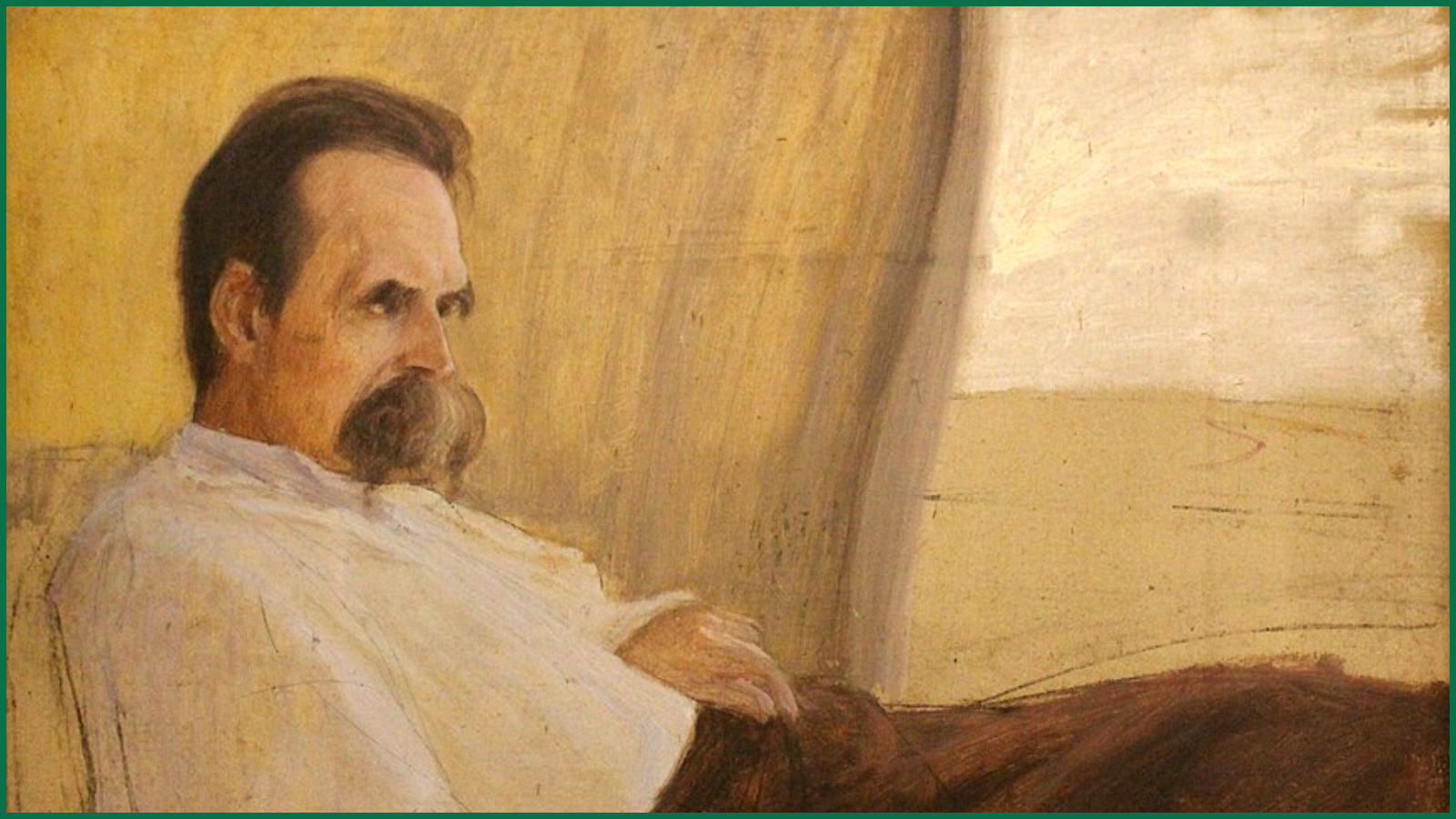
    In Untimely Meditations Nietzsche alerted readers that most written works were little more than “the smoke and vapour of the brain.”1 For a book to avoid the flames, it must contain a fire within itself. It is easy to dismiss Nietzsche’s body of work as slippery, with an undue level of contradictions that negate its possibility as a system of thought. But this is characteristic of a reactionary right that prefers romanticization to reason.2

    The Enlightenment era championed progressive leaps in scientific method, rule of law, technological invention, standard national institutions and conceptual human rights. Karl Marx is the apogee of Enlightenment philosophy because he discovered the objective material and social conditions enabling the progression of human history. Nietzsche, on the other hand, is the pinnacle of the reactionary Counter-Enlightenment opposition. The Counter-Enlightenment generally held that core human characteristics like ascetics, nature, religion and emotion were washed away by 18th and 19th century waves of industry and empiricism. Nietzsche believed that only a rigid social hierarchy—a radical aristocracy—replete with slavery and the relegation of women to childrearing could provide fertile ground for his ideal man, the Übermensch.

    For most of us today, there are elements tracing to both Enlightenment and Counter-Enlightenment thinking that are appealing. Conservatives borrow from the industriousness that modernity unleashed, while upholding the importance of pre-modern religious ideals and social hierarchy. Socialists might admire Romantic commitments to beauty and culture, while they hang onto empirical measures of history and positive human rights. Liberals hold institutions and negative rights in high esteem, while appreciating the role of emotion in public discourse. Nietzsche, with his passionate treatment of culture, hierarchy and human vitality, therefore offers a grab-bag of ideas that almost anyone can pull one or two shiny parts from while ignoring the rest.3

    A Nietzschean Left?

    Jonas Čeika managed to do this in his book How to Philosophize With a Hammer and Sickle, though he is not the first socialist to do so.4 Other left-wing figures such as Gilles Deleuze and Emma Goldman have gone down similar roads with Nietzsche, even though there is not any profound reason for doing so. It is easy to extol Nietzsche’s romantic anti-capitalism and lofty Übermensch ideal because these would seem at home under communism where, in Leon Trotsky’s words, “the average human type will rise to the heights of an Aristotle, a Goethe or a Marx.”5

    Speaking of the latter, Marx has long-since reconciled the gap between between pre-modern, Counter-Enlightenment virtues and the objective nature of the modern capitalist mode of production. Marx himself was not an anti-capitalist like Nietzsche; he was a post-capitalist who believed that the boundaries crossed by capitalist technologies and social relations were the keys to unlocking a harmonious socialist future. The attempted construction of a Nietzschean left is therefore either discordant or illogical in the light of dialectical materialism, which affords Nietzsche little more than a corner of society’s superstructure

    The Overman

    Nietzsche’s detours through an idealized caste system, slavery and perpetual “life-affirming” warfare are not merely the means to the Übermensch end; they are part of the end itself.6 This is because Übermensch—or “overman” in English—would have nobody to sail over if the harried masses weren’t ripe for subjugation and influence. This is expected from a Marxian perspective, which emphasizes the role of human relationships in determining the experience of individuals and the overall structure of society. In order to exist, a master must have a slave, just as an employer must have an employee and an overman must have an underman.

    The domination of commoners by elites is the plough by which Nietzsche’s imagined master morality is cultivated. Although he understood both capitalism and Christianity to be deracinating to culture and morality, these sentiments are not progressive—they are radically regressive, rooted in admiration for the heroic conquerors of antiquity that enslaved entire populations. Whereas mainstream conservatism is informed by feudal Christian traditions and values, Nietzsche drifts much further to the right wing of the spectrum with his admiration for the pagan slave empires of antiquity.

    The Fascist Impulse

    It has been said that Benito Mussolini abandoned socialism in the disillusioning aftermath of the First World War, just after exposure to Nietzsche’s work. It is therefore unsurprising that Italian Fascism is just as slippery and reactionary as Nietzsche’s polemics—and Friedrich’s fingerprints are all over Mussolini’s governing ideology.

    Like Nietzsche, Mussolini glorified antiquity and adopted the Roman fasces as his party’s symbol. Inspired by the concept of “master morality,” he sought to create a Third RomeLa Terza Roma—which would subordinate weaker nations like Greece and Ethiopia by natural right. The city of Rome was to be transformed into a mecca of imposing monuments, piazzas and open-air theatres celebrating the revival of the ancient Roman masters. Far from Marxian classlessness, Mussolini’s corporatist policies created a rigid caste system whereby one’s social standing and rank as a landowner, industrialist, military officer, farmer or worker was practically designated at birth. Women were erased from the public sphere as the rearing of soldiers became their sole duty to the state.

    Given Nietzsche’s undeniable influence on Italian Fascism, it is no wonder that Adolf Hitler gifted Il Duce “an elaborately bound and privately printed volume of the complete works of Friedrich Wilhelm Nietzsche” for his 60th birthday. While the written works of left wing writers like Bertolt Brecht, Helen Keller, Jack London, Marx and Friedrich Engels, met the flames in Nazi Germany, Nietzsche was worshipped. Of particular interest to Nazi theorists was On the Genealogy of Morality, which asserts an iconoclastic view on the origin of civilization:

    Some pack of blond beasts of prey, a race of conquerors and masters, which, organized for war and with the power to organize, without forethought, sets its terrifying paws on a subordinate population which may perhaps be vast in numbers but is still without any form, is still wandering aimlessly.7

    The reference to “blond beasts of prey” is more than a passing allusion. Nietzsche elaborates on the Aryan identity of this conquering race—this “master race”—of aristocratic antiquity which was finally destroyed by a Jewish “revolt of the slaves” and “blood-poisoning.”8 According to Nietzsche, the slave morality operates by inverting what is strong, beautiful and learned into something fearful, ugly and ignorant. By transvaluing ancient Roman and Greek master morality, Judaic priests tamed the empire and then destroyed it. The portraits of three Jews—Jesus, Mary and Joseph—adorning millions of European walls stand as the legacy of this triumphant Jewish slave revolt.9

    It is popularly claimed that the Nazis hijacked Nietzsche’s teachings and misappropriated them for their own sinister purposes. There is some merit to this claim but only in part. For example, despite his screed lionizing the Aryan conquerors of antiquity and bemoaning their Jewish subjects, Nietzsche was plainly not an anti-Semite. He believed that history had turned the Jewish people into “the strongest, toughest and purest race now living in Europe” and held them to be essential ingredients to breeding his imagined postmodern aristocracy.10 Additionally, he did not view the Aryan master race from quite the same racial footing that the Nazis did. For Nietzsche, it was a cultural designation, an exercise of master morality exemplified by Nordic Vikings but also the Brahmin caste of India, Greco-Roman slaveholders and medieval Arabic and Japanese nobility. 

    Nietzsche endorsed Napoleon Bonaparte as a historical example of an Übermensch, capable of terror and genius, who unified Europe along strict hierarchical lines, military discipline and exemplary cultural values. Hitler saw himself as Napoleon’s successor because he unified Europe by force, raised slave populations from the defeated nations, preserved the Prussian aristocracy and promoted a Wagnerian high culture brimming with Nordic valkyries screaming into battle. For the Nazis, the commitment to a transvaluation of Judeo-Christian values went beyond good and evil.

    Master Morality and the Holocaust

    Nietzsche wrote: “For strong people disaster does not come from the strongest, but from the weakest.” Whereas the strong possess unapologetically life-affirming values, the weakest exalt life-denying values and the veneration of their pitiable existence spreads like contagion. The Holocaust, with all its attendant atrocities against Jews, Romani, socialists, sexual minorities and the disabled, was merely a slave revolt in reverse. What the Holocaust represented was a master’s revolt against the slaves from antiquity, the shiftless vagabonds, the egalitarians, the weak and infirm, the homosexuals that perverted good breeding. If the Holocaust is today remembered as “the terror of terrors,” this poses no dilemma as far as Nietzsche is concerned: “The more valuable type [of man] has appeared often enough in the past…Very often he has been precisely the most feared; hitherto he has been almost the terror of terrors.”11

    While Mussolini hewed to a vision that was more classically Nietzschean than Hitler, to claim a misappropriation of Nietzsche’s work by the Nazis is simply dishonest. Nazi ideology was grounded in a defensible interpretation of Nietzsche’s thought, updated to include the latest “discoveries” in eugenics and “racial science.” The gravest misappropriation committed by the Nazis was the inclusion of “socialism” in their party’s National Socialism title. This was a sleight of hand used to convey the Nazi disdain for decadent liberal capitalism while preserving electoral viability in a period when German support for market forces was at an all-time low. A more accurate party title, such as “The New European Aristocrats,” just wasn’t going to resonate with the average German voter.  

    It is a fact that Nietzsche’s passionate attacks on modernity continue to attract significant attention despite the irrational, dark and mystical depths it treads. He strikes at the emotional chords of those frustrated by modern capitalist society. Marx, on the other hand, had a scientific approach to philosophy and helped to develop a praxis for human emancipation. Attempting to reconcile these two schools of thought is akin to attempting reconciliation between oil and water. There is a reason why Marx flatly rejected emotional reactionary politics: it is a dead-end in every sense of the term.

    The historian J. Arch Getty wrote, “Lenin deserves a lot of credit for the notion that the meek can inherit the earth, that there can be a political movement based on social justice and equality.” In the final analysis, are these emancipatory values not superior to Hitler’s embodiment of the Nietzschean “terror of terrors”?

    Thanks for reading!

    Footnotes:

    1. Friedrich Nietzsche, “Schopenhauer as Educator” in Untimely Meditations. ↩︎

    2. See John Richardson’s, Nietzsche’s System (Oxford University Press, 2002) for more on reading Nietzsche’s polemics as a system of thought. ↩︎

    3. Conservative commentators like Jordan Peterson are also notorious for doing this. ↩︎

    4. The most interesting aspects of Jonas Čeika’s How to Philosophize With a Hammer and Sickle (Repeater, 2021) are his inquiries into a hypothetical libertarian socialism. ↩︎

    5. Leon Trotsky quoted in Čeika’s, How to Philosophize With a Hammer and Sickle, 200. ↩︎

    6. See Nietzsche, Twilight of the Idols: “For war trains men to be free.” ↩︎

    7. Frank Cameron and Don Dombowsky, eds., Political Writings of Friedrich Nietzsche (Palgrave Macmillan, 2008): 227. ↩︎

    8. See Nietzsche, The Genealogy of Morals for excerpts. ↩︎

    9. Ibid. ↩︎

    10. Nietzsche, Beyond Good and Evil, 182. ↩︎

    11. Nietzsche, The Antichrist (Alfred A. Knopf, 1918). ↩︎
  • Ask the Editor: Oil Demand and Destruction

    Ask the Editor: Oil Demand and Destruction

    To the editor,


    Is the energy crisis stemming from the war on Iran a simple matter of supply and demand?

    Cheers,

    Breezy.

    [Sent from Substack]

    Dear Breezy,  

    The world is staring at a billion barrels of oil lost due to military actions undertaken by the belligerent governments of Israel and the United States. This number will only go up with each passing day of disruption to maritime traffic in the Persian Gulf. To put that number into context, it is roughly equivalent to ten full days of total global consumption. This kind of supply squeeze will present itself unevenly; the higher cost of gas and transported goods can be either a nuisance or a calamity depending on the financial capacity of consumers.

    Turning to Karl Marx the political economist, he himself did not live to see oil come into dominant use and it was coal that reigned supreme during his Victorian era. But he recognized fossil fuels as a foundational mean to the capitalist mode of production because their dense energy content allowed for the intensification of human labour and factory output.

    The utilization of this new mean of production is what ultimately lead to the standardization of wage labour and industrial processes. Whereas water mills depended on the ebbs and flows of natural streams, the coal-fired steam engine could be plunked wherever potential workers were, with trains and ships doing the rest. Oil merely advanced the technological revolution that coal set into motion regarding production and circulation.

    Because oil is so foundational to the capitalist mode of production, its presence in the marketplace cannot be reduced to the dollars and cents of each barrel. Countless wars have been fought, governments toppled, acres fracked, blockades raised—all to influence the direction that precious crude flows black. If the price is too high, economic activity will be suppressed. If the price is too low, Big Oil bleeds profits. It’s a fragility that puts Goldilocks to shame.

    In Marxian economics, supply and demand “play a vital surface role in generating price movements for a particular commodity” without which “there could be no equilibrium price.”1 With the economic rise of China and the Global South, oil prices routinely clocked in over $100 per barrel as new demand pressured existing supply. While oil companies blistered with cash, high prices suppressed potential consumption in virtually all other areas of the global economy. After all, only 15 countries export meaningful quantities of oil that another 160 countries must bid on. 

    As the process of capital accumulation in one sphere became a contradictory force suppressing accumulation in others, the economic system demanded a way to get beyond it.2 Fracking technologies were unlocked by American public–private partnerships and they opened up vast supplies of oil in the United States and around the world. Fracking is what brought the supply and demand of oil back into an equilibrium that guaranteed both stable profits and continued future growth. 

    What the war against Iran has accomplished is to throw disequilibrium back into the oil markets, this time because of disruptions to shipping in the Strait of Hormuz. As many Gulf producers go toward zero, oil operations outside the region see their profits soar. The sudden scarcity of oil and its byproducts has led to the cancellation of tens of thousands of planned flights, MRI screening is pressed by helium shortages, semiconductor manufacturing in Asia is throttled and a lack of fertilizer is scarring agriculture in Africa and South Asia.

    Disruption to supply inevitably leads to destruction of demand. Free market orthodoxy dictates that price adjustments alone bring about equilibrium in commodity markets. But it will be shown that the value of oil to labour processes and capital accumulation transcends the spot price of each barrel. The oil market is an artifact of economic planning carefully designed to keep the downstream tributaries trickling outward. With those plans now buried under Middle Eastern rubble, capitalism is confronted with yet another “constantly overcome but just as constantly posited” barrier.3 

    In sols.

    Send your questions to the Reclamationeditor@thereclamation.co

    Footnotes:


    1. David Harvey, A Companion to Marx’s Capital (Verso, 2010): 166. ↩︎

    2. The barriers that capital imposes on itself before leaping over them are explored by Karl Marx in his Grundrisse (Penguin, 1993): 410. ↩︎

    3. Ibid. ↩︎
  • Marx and Shakespeare: Hamlet’s Alienation

    Marx and Shakespeare: Hamlet’s Alienation

    But orderly to end where I begun,
    Our wills and fates do so contrary run
    That our devices still are overthrown
    Our thoughts are ours, their ends none of our own.

    Player King, Act 3, Scene 2.

    Hamlet is William Shakespeare’s most studied play, owing to its layered themes and rich rhetorical devices. It is a literary work drawn on by John Milton for Paradise Lost, it helped Sigmund Freud to develop his theory of Oedipus complex and inspired and two compositions from Pyotr Tchaikovsky. Karl Marx’s deep appreciation of Shakespeare is well known, and Hamlet is a work that he directly references in his Eighteenth Brumaire of Louis Bonaparte.1

    The Play’s the Thing

    Hamlet almost exclusively takes place at Elsinore Castle in Denmark, which is a real place and one of the Renaissance era’s most prominent. Shakespeare was a product of the Renaissance era, and this setting is crucial to contextualizing many of Shakespeare’s plays because it sits on the demarcation line between the Middle Ages and modernity, between superstition and reason, between feudalism and liberalism, between religion and science, between the aristocracy and commerce. The tensions of this era are very important to understanding Hamlet’s inner conflict, just as it is important to understanding the romance between Romeo and Juliet or the racial attitudes embedded in Othello.

    In The German Ideology, Marx and Engels wrote:

    Thus it is quite obvious from the start that there exists a materialistic connection of men with one another, which is determined by their needs and their mode of production, and which is as old as men themselves. this connection is ever taking on new forms, and thus presents a “history” independently of the existence of any political or religious nonsense which would hold men together on its own.2

    In most of Renaissance Europe, the aristocracy maintained a monopoly on political power, derived from ownership over lands worked by a large peasantry. The rise of an urban merchant class figures heavily in some of Shakespeare’s plays, but in Hamlet we are concerned only with the palace intrigue at the top of the Danish royal hierarchy. There is a multiplicity of love triangles, petty schemes from palace courtiers, eavesdroppers and personal grievances that must constitute trivial drama in comparison to the hardship of life for many of the era. In the grand movement of history, palace intrigue is little more than the “political nonsense” that Marx identified.

    The Apparition Comes

    At the outset, the story establishes that Prince Hamlet’s father has died and his Queen mother had hastily remarried with his uncle Claudius who then consolidated the Danish nobility behind his rule. This turn of events has Hamlet already deeply unsettled and melancholy, exacerbated by a visit from his father’s ghost who wanders the Earth while in spiritual Purgatory. The ghost reveals to Hamlet that he was victim of a “murder most foul, strange and unnatural” by the poison of his brother Claudius.3

    Apparitions, witches, potions and magic were accepted forces of nature in Shakespeare’s time and come regularly into his plays as plot devices guiding a character’s arc. Whereas today uncertainty over someone’s cause of death could be resolved by a medical autopsy or forensic crime scene investigation, Hamlet could only shelter under his suspicions until he was contacted from beyond the grave. 

    But the ghost’s revelation confronts Hamlet with demands on his position. In the aristocratic world of hereditary privilege—so far from modern law and commerce—kinship largely determined one’s station in life. Notions attached to honour and nobility depended heavily on defence of kin, and there was no legal authority that Hamlet could appeal to; indeed, his corrupted family was the legal authority.

    Hamlet understands what is expected from the son of a slain father but revenge is complicated by the aristocratic hierarchy of which he is merely a component part. With a murdered father, a mother joined in marriage with the killer and childhood friends in the service of his usurping uncle, Hamlet finds himself completely alienated from the social relations that grant him his identity as a prince. 

    The ensuing conflict of the play is an internal struggle to overcome this experienced alienation, immortalized by Hamlet’s famous speech: 

    To be, or not to be, that is the question:

    Whether ’tis nobler in the mind to suffer

    The slings and arrows of outrageous fortune,

    Or to take arms against a sea of troubles

    And by opposing end them. To die—to sleep,

    No more; and by a sleep to say we end

    The heart-ache and the thousand natural shocks

    That flesh is heir to: ’tis a consummation

    Devoutly to be wish’d. To die, to sleep;

    To sleep, perchance to dream—ay, there’s the rub:

    For in that sleep of death what dreams may come,

    When we have shuffled off this mortal coil,

    Must give us pause—there’s the respect

    That makes calamity of so long life.

    For who would bear the whips and scorns of time,

    Th’oppressor’s wrong, the proud man’s contumely,

    The pangs of dispriz’d love, the law’s delay,

    When he himself might his quietus make

    With a bare bodkin?

    This speech could be rephrased “to live or not to live?” If Hamlet chooses to live as his father’s son by seeking revenge against King Claudius he will certainly perish in the process. On the other hand, he cannot bear an existence as an obedient prince under these circumstances. To live his proper life is a death sentence but to avoid death he must surrender life.

    The Readiness is All

    There is a duality that opens up here between Hamlet’s blood instincts and his social status as a prince. Marx described alienation as characteristic to humanity’s estrangement from productive activity and the reduction of social relations to class standing, when “man feels that he is acting freely only in his animal functions—eating, drinking, and procreating—while in his human functions, he is nothing more than an animal.”4

    As he is estranged from his family and friends by the revelation of his uncle’s homicide and arrogation of the throne, Hamlet ponders his alienated state: 
    “What is a man
    If his chief good and market of his time
    Be but to sleep and feed? A beast, no more.” 

    It is Ophelia that bears the brunt of Hamlet’s dislocation, his rage against the animalistic propensity toward violence and sex. While they had been engaged in a genuine courtship prior to the events of the play, she becomes “the focus of his disgust with the whole sexual process.”5

    Seeing the characteristics of his being stripped of all virtue, Hamlet dismisses any love he once had for Ophelia as brutish lust and he condemns her to a lifetime of abstinence: “If thou dost marry, I’ll give thee this plague for thy dowry: be thou as chaste as ice, as pure as snow, thou shalt not escape calumny. Get thee to a nunnery. Go, farewell.”

    For Marx, alienation will ultimately be resolved when we take conscious control of our circumstances, when we reconcile our productive activity with both our individual selves and species-being. Hamlet’s internal conflict is resolved when he encounters the army of the crown prince of Norway, Fortinbras, on the march through Danish territory. Hamlet’s father had killed Fortinbras’ father in a duel decades earlier and the Norwegian prince had finally arrived to seek his just revenge.

    Hamlet then grasps the unity of opposing forces; to be an obedient prince is the same as to be his father’s son; to be in love is to be lustful; to live is the same as to die; to be is not to be.6 Before throwing himself, his mother and his uncle to their doom, he says: “There is special providence in the fall of a sparrow. If it be now, ’tis not to come; if it be not to come, it will be now; if it be not now, yet it will come. The readiness is all. Let be.”

    Thanks for reading!


    1. For more on Marx’s personal interest in Shakespeare, see Erich Fromm, “Marx’s Concept of Socialism” in Marx’s Concept of Man (Frederick Ungar Publishing, 1961). ↩︎

    2. Karl Marx and Friedrich Engels, The German Ideology (Martino Publishing, 2011): 18-19. ↩︎

    3. The “most foul” and “unnatural” aspects of the murder lie in it being committed by Claudius against his own flesh and blood. ↩︎

    4. Karl Marx, “The Economic and Philosophic Manuscripts of 1844” in Essential Writings of Karl Marx (Red and Black Publishers, 2010): 91. ↩︎

    5. Harold Jenkins, ed., Hamlet (Arden Shakespeare, 1982):151. ↩︎

    6. This is an observation in advace of the famous thought experiment, Schrödinger’s cat. ↩︎
  • We Are Ruled by a Lord of the Flies

    We Are Ruled by a Lord of the Flies

    “Fancy thinking the Beast was something you could hunt and kill! You knew, didn’t you? I’m part of you? Close, close! I’m the reason why things are what they are.”

    —William Golding, Lord of the Flies.

    For anyone thinking that Putin had overstepped boundaries when he invaded Ukraine, it turns out he was only ahead of the curve. Since that time we’ve had genocidal warfare visit Palestine, a president kidnapped from Venezuela, a starvation blockade imposed on Cuba and a criminal aerial bombardment come to Iran. Multiple crimes, in other words, and committed by successive presidential administrations of the West’s flagship state. No wonder the United Nations Secretary-General recently denounced international relations as a “law of the jungle.”

    The Jungle Book

    It must be a vestige of colonial history that conjures images of undulating spear tips and blood-stained fur whenever the jungle is invoked. This sort of iconography probably accounts for the jungle island setting of William Golding’s Lord of the Flies, the story about a group of schoolboys who get marooned during a military evacuation amidst a nuclear war. Initially, the boys are quite “civilized.” They elect a chief, hold orderly assemblies using a conch shell and maintain a signal fire to attract rescuers. But it doesn’t take long for these trappings of civilization to melt away under the tropical heat. Conflict divides the boys when the signal fire goes out and the hunting of a pig arouses primitive instincts, culminating in a spree of orgiastic violence. The aggressive faction of boys consumes the other by way of floggings and outright murder, and they eventually set the island on fire in an effort to flush out their first elected chief. 

    The great pre-Socratic philosopher Heraclitus wrote: “Fire of all things is the judge and ravisher.” We see this in Lord of the Flies, with the signal fire representing civilized order and the brush fire representing the desperate plunge into chaos and savagery. Golding possessed a cynical view of human nature that sees people animated by sadistic impulses in the service of selfish interests and power. This is a common position on human nature, also articulated by Chinese legalist philosophy and Thomas Hobbes’ “war of all against all” that characterizes life in a state of nature. Sigmund Freud adopted this position in his later writings as well, asserting the existence of a “primary mutual hostility of human beings” which civilization must tame by setting “limits to man’s aggressive instincts.”1

    One commonality between Golding, Hobbes, Freud and the Chinese legalists is that they were all heavily influenced by the demoniacal experience of warfare.2 Witnessing first-hand the human capacity for violence leaves scars on the human psyche that are well documented. Through allegory, Golding asserts that Satan’s captain, Beelzebub—the Lord of the Flies—is not an external supernatural force, but is actually a force inside us, a force within. Freud appeals to the death instinct in order to explain human aggression, similar to Hobbes and the legalists who view aggression as a simple fact of our nature. 

    Human Nature?

    Once that view of human nature is accepted, it is explained that human beings enter a social contract and form civilization as a refuge from our own terrifying base instincts. Violence and corruption in the world can be chalked up to inherently brutal instincts that inevitably infect all of our carefully designed social institutions and best laid plans. Although civilization can never be perfect, it remains the thin red line between orderly society and the violent anarchy of nature.

    The only problem with that argument is that it isn’t true. There is real world evidence that rejects the cynics and supports a view that humans are naturally cooperative rather than hostile: in 1965 a group of six teenage boys from Tonga found themselves stranded on a remote Pacific island. Far from descending into an orgy of violence, they built shelter and divided chores. They worked together and planted a garden, hunted feral chickens, collected rainwater in deadwood and rotated cooking duties. They maintained a fire and strummed a makeshift guitar and sang songs in the evenings to lift their mood. 

    The experience of the Tongan castaways gels with Raymond Kelly’s “Prehistoric warlessness” hypothesis, asserting that conflict and violence between human groups was virtually non-existent up until the Neolithic Revolution.3 That does not mean that there were no instances of homicide or executions within groups—nobody has that answer—but systematic warfare was simply not a feature of the Paleolithic economy that dominated human evolution for hundreds of thousands of years. This is because incredibly low population densities, combined with relatively high natural abundance, provided no incentive for humans to engage in inter-tribal violence.

    In our actual state of nature, warfare offered little gain in terms of resources but had the potential to destroy both warring parties with only a few casualties on both sides. It was therefore preferential to seek new territories on which to hunt and gather rather than fight over them. This is what explains human migrations out of Africa and our species’ rapid spread around the globe. 

    In a footnote, Karl Marx argues that philosophers “must first deal with human nature in general, and then with human nature as modified in each historical epoch.”4 Our human nature in general demands that we eat, drink, breathe, shelter, reproduce, etc. Modern human behaviour, such as language, art, music, abstract thought, planning and tool making arose to meet those needs. We can recognize that the universal behavioural traits of humans could not have been achievable in a Hobbesian “war of all against all” state of nature—every one of them required positive social intercourse in order to become characteristic of our species. It follows that cooperation in the context of low population density and relative natural abundance was the state of nature that defined our prehistoric evolution and are suggestive of “human nature in general.”

    Civilization of Corruption

    On the other side of the ledger is “human nature as modified in each historical epoch.” While our general characteristics concretized during the epoch of primitive communism, the expression of human behaviour began to vary wildly as environmental changes led to sedentary living, resource scarcity and class divisions that gradually permeating the social structure. The biological demands on human beings led us to developing a potential for many behavioural expressions—including turning our hunting spears on one another. But this potential for warfare and organized violence went unfulfilled until population growth and sedentism made it an economic necessity for one group to defend territory against another. From the Neolithic Revolution onward, a technological arms race and complex division of labour emerged to satisfy our biological needs. The resulting base and superstructure is history.

    Jean-Jacques Rousseau rightly scolded Hobbes for taking modern, “civilized” people and ascribing their flaws to nature.5 The philosophical question is this: does human nature corrupt civilization or does civilization corrupt human nature? Marx and Rousseau affirmed the latter, and that is also where the preponderance of anthropological evidence lies. It is not our nature that commands a world plagued by corruption, greed, ecological destruction and warfare. Indeed, our ability to recognize these things as defects affirms a natural revulsion towards them. Although we have the capacity for greed and violence, we also have instincts that lead us toward love, generosity and cooperation. 

    Resource scarcity has prodded human beings into unleashing some of their worst potentialities. The good news about our current capitalist mode of production is that scarcity has become largely artificial by way of tremendous leaps in productive technology. It is entirely possible to defeat scarcity with a new, cooperative mode of production that finally unleashes our best potentialities. Until then, we are ruled by a Lord of the Flies, but not in the way that Golding imagined. The Lord of the Flies is not an internal, but an external force; an alien process of capital accumulation and rigged market forces that determines our class standing and incentivizes our worst behaviours.

    Thanks for reading!

    Footnotes:

    1. Sigmund Freud, The Freud Reader edited by Peter Gay (W.W. Norton, 1989): 750. ↩︎

    2. Specifically World War II, the English Civil War, World War I and the Warring States period of China, respectively. ↩︎

    3. Raymond C. Kelly, “The evolution of lethal intergroup violence,” in PNASVol. 102, No. 43: 15294-15298. ↩︎

    4. Karl Marx, “Conversion of Surplus-Value into Capital” in Capital, Vol. One. He is specifically critical of utilitarians here, pointing out the utility of human behaviour can vary wildly depending on the mode of production available. ↩︎

    5. Jean-Jacques Rousseau, Discourse on the Origin and Basis of Inequality Among Men (Online Library, 2008): 23. ↩︎
  • Marx and Shakespeare: The World of Romeo and Juliet

    Marx and Shakespeare: The World of Romeo and Juliet

    My only love sprung from my only hate,
    Too early seen unknown and known too late.
    Prodigious birth of love it is to me
    That I must love a loathed enemy.

    —Juliet, Act 1, Scene 5.

    The psychoanalyst Erich Fromm once described Karl Marx as the archetypal humanist, an embodiment of Enlightenment thought, “the man who every year read all the works of Aeschylus and Shakespeare, who brought to life in himself the greatest works of human thought.”1 Indeed, his daughter Eleanor Marx once said about her upbringing: “As to Shakespeare he was the Bible of our house, seldom out of our hands or mouths. By the time I was six I knew scene upon scene of Shakespeare by heart.”

    Both Alike in Genius

    Karl Marx himself had been introduced to Shakespeare at a young age by his father-in-law and cited the Bard no less than 176 times throughout his published work. This may seem curious, given that Shakespeare himself was no revolutionary or proto-socialist. He was ahead of his time in respect to his artistry but he nonetheless straddled the fence line of the 16th and 17th centuries as a product of the English Renaissance. Capitalism was only nascent here—in its “primitive accumulation” phase, as Marx described it.

    There were many social transformations underway by the time of Shakespeare and these changes followed in the wake of the discovery of the Americas and successive waves of the Black Death. Labour shortages combined with riches pillaged from far-away continents to elevate a commercial class into the chief coordinators of the economic base. The Renaissance was the cultural reflection of this new economy, appearing in an otherwise feudal superstructure. 

    The rich tapestry of Shakespearean dramas no doubt gave living colour to Marx’s theories of human history. Marx summarized his conception of social transformation as follows: 

    In studying such transformations it is always necessary to distinguish between the material transformation of the economic conditions of production, which can be determined with the precision of natural science, and the legal, political, religious, artistic or philosophic—in short, ideological forms in which men become conscious of this conflict and fight it out. Just as one does not judge an individual by what he thinks about himself, so one cannot judge such a period of transformation by its consciousness, but, on the contrary, this consciousness must be explained from the contradictions of material life, from the conflict existing between the social forces of production and the relations of production. No social order is ever destroyed before all the productive forces for which it is sufficient have been developed, and new superior relations of production never replace older ones before the material conditions for their existence have matured within the framework of the old society.2

    Marx was able to discover the base and superstructure of human society given his location in history, where the Industrial Revolution met Enlightenment philosophy. Likewise, Shakespeare was able to capture a wide spectrum of European society in the dramatic form given his placement at the historical intersection between mercantile proto-capitalism and Renaissance culture. While Marx could observe the society of his present, Shakespeare gave him a valuable glimpse into the past. Adjusting for creative license, the plays of Shakespeare allowed Marx to back-test his theory of history and dialectical method.

    In Fair Verona

    Explicit historical references and socio-economic details are left vague in Shakespeare’s Romeo and Juliet, a play which was sourced from an earlier Italian novella and English poem. Verona was a prominent city-state during the Italian Renaissance, ruled by the House of Della Scala before internal divisions led it to be folded into the Venetian Republic during the 1400s.

    In the play, it is Prince Escalus who stands in for Della Scala, and rules a Verona that is sharply divided by the feuding Montague and Capulet families. Even Escalus’ own House is not immune to this division, as his cousin Mercutio favours the Montagues while Count Paris is partial to the Capulets. The feud between the Montagues and Capulets is emblematic of the actual strife between elite factions and warring states of northern Italy between 1200 and 1500.

    The rediscovery of trade routes during the Crusades led to the commercial revolution that underpinned a Renaissance cultural transformation, enriched the merchant class and spurred the maritime activity that culminated in the European colonization of the Americas. Verona is a logical setting for Romeo and Juliet, given that northern Italy was ground-zero for the burgeoning mercantile economy.

    The Veronese setting suggests that the Montagues and Capulets belong to this newer wealthy merchant class and Shakespeare refrained from assigning them specific hereditary titles in his dramatis personae. References to members of either family as “lord” or “lady” are best understood as courtesy titles common to the Renaissance period, acknowledging a family’s high social standing despite lacking feudal lands or noble lineage. 

    The only characters in Romeo and Juliet with hereditary titles reign from the House of Escalus—the ruling house of Verona. The Prince is thus able to threaten the Montagues and Capulets with execution over their escalating violence, as the latter families enjoy wealth but are deprived of political power. This detail recalls Marx’s observation that revolutions in the political superstructure occur only after the economic transformation is complete.

    At the time of the Renaissance, feudal hierarchies were the political reality as the turn toward capitalism was only just gathering steam. The contradictions between the prevailing feudal order and rising capitalist one are therefore integral to the plot of Romeo and Juliet. Without this wealthy urban elite living under feudal auspices, the Montagues and Capulets would not have existed nor have entered a blood feud. The “ancient grudge” between the two households surely stemmed from economic competition over trade which was bloody and fierce in Renaissance Italy.3 

    Civil Blood and Civil Hands

    Competition between merchant families may have been especially violent in this era because they lacked hereditary nobility and relied solely on financial accumulation to claim status. Market competition can turn any investment or transaction sour—ruining in an instant a great merchant house that had taken decades to build its standing.

    Blood feuds and vendettas between families were a staple of justice in the feudal era owing to the lack of centralized secular authority. However, the uptake of the blood feud tradition by wealthy urban families was greatly disruptive to the commerce and social order of emergent Renaissance cities. This is why we see Prince Escalus attempt to suppress the feud between the Montagues and Capulets in Verona whereas a similar feud between rural families would not have drawn such condemnation at this period in time. 

    This brings us to another salient point of Marx’s thought; namely, the absence of any “universal ideal” of justice that exists outside of social relations. Justice is enmeshed within the web of social relations that form under a given mode of production.4 This view explains the historical acceptance and rejection of slavery, evolving marital relations and family law, the administration of justice between generations, the practice of usury, and the regulation of property from the Paleolithic period up to the present day—to name a few examples. In Renaissance Europe, social relations were very much in flux as the importance of commerce spurred urbanization and the merchant class climbed nearer in rank to the landed aristocracy, not in terms of political power, but in terms of wealth. 

    An interesting outcome of this social fluctuation was the rise of “disorderly conduct” in Renaissance Verona, characterized by gambling, street fights, ribaldrous music and festive dance parties. These debaucherous activities drew members of all classes into subversive contact with one another, as they were undertaken without regard for social rank or hereditary privilege. Chief among these disorderly gatherings was the unsanctioned masque party.5 At a masquerade with identities concealed, a knight could break bread with a porter, a noble could pour wine for a cobbler or a Montague could fall in love with a Capulet.6

    The masque party hosted by Capulet is the pivotal scene of the story: the moment when Romeo notices the young Juliet from across the ballroom is also when Tybalt becomes aware of Romeo’s presence and seeks to violently remove him from the party. Capulet interrupts Tybalt and prevents him from disturbing Romeo, demonstrating the patriarch Capulet’s commitment to the spirit of the masquerade—a suspension of social hierarchy and normative relations. 

    A Death-Marked Love

    Born of a subversive gathering, the romance between Romeo and Juliet is embedded with a seditious quality that threatens long-standing customs. Whereas the Count Paris pursues Juliet through a traditional courtship, negotiated between himself and Capulet, Romeo and Juliet consent to marry each other from a place of fiery passion for one another and without the approval of their parents. Love marriages would not become become a norm in the West until the 17th and 18th centuries but they were emergent as the Renaissance began sweeping through western Europe.

    The relationship between Romeo and Juliet represents early modernity. On the other hand, the relationship between Paris and Juliet represents the declining feudal order—just like his hereditary title of Count. The language Juliet uses with Count Paris is formal and terse; he mistakes gaining Capulet’s consent with gaining Juliet’s affection.7 For this mistake he pays with his life when Romeo kills him during a confrontation at the Capulet tomb—a place he had no business lingering.8

    The blood feud is the other declining feudal custom that clashes violently against the romance between Romeo and Juliet. In the play it is like a fire and it consumes the lives of Tybalt and Mercutio as when lend it fuel. Mercutio’s Queen Mab speech foreshadows the agony of modern aspirations against the ferocity of feudalism’s twilight: valiant soldiers toasting wine before they are soaked by the blood of slit throats; civic lawyers and honourable clergymen corrupted by the pursuit of money; the tender kiss between those in love becomes a scourge of venereal disease and swollen pregnant bellies. 

    There is a deep cynicism attached to the story of Romeo and Juliet, reflecting a Renaissance era draped over the coffins filled by victims of bubonic plague; when wealth was asserted by means of warfare in Europe and unspeakable colonial violence abroad. The blood feud between the Montagues and Capulets could never end peacefully. The modern aspiration represented by the marriage between Romeo and Juliet was ultimately shattered by the “ancient grudge” between their two families. But they destroy the old order when they refuse to acquiesce to it. In their joint-suicide, they bury not only themselves but also the blood feud that came between them. Modernity prevailed in Romeo and Juliet just like modernity prevailed in history—at a tremendous cost priced in blood. 

    Thanks for reading!


    1. Erich Fromm, “Marx’s Concept of Socialism” in Marx’s Concept of Man (Frederick Ungar Publishing, 1961). ↩︎

    2. Karl Marx, “Preface” to A Contribution to the Critique of Political Economy. ↩︎

    3. See Thomas F. Arnold, “Violence and Warfare in the Renaissance World” in A Companion to the Worlds of the Renaissance (Blackwell Publishing, 2007): 460–474,  for more on this subject.  ↩︎

    4. David Harvey, A Companion to Marx’s Capital Volume 2 (Verso, 2013): 189. ↩︎

    5. Zoe Farrell, “Connections and Community in Sixteenth-Century Verona” in Journal of Social History, Vol. 59, No. 4: 10-13. ↩︎

    6. In Freudian terms, they become each other’s object-cathexis, a conscious and unconscious register of libidinal energy. The “love at first sight” concept was accepted in Shakespeare’s day, as Cupid’s spell could be cast with mere eye contact. ↩︎

    7. See Act 4, Scene 1 of Romeo and Juliet for a good example of this. ↩︎

    8. This confrontation has been edited out of prominent screen adaptations of the play for the purpose of making Romeo appear more sympathetic. Both Baz Luhrman and Frank Zeffirelli removed it. ↩︎
  • Class Conflict and the Unconscious in Westworld

    Class Conflict and the Unconscious in Westworld

    Westworld was an early brainchild of the gifted storyteller, Michael Crichton, and stood as an early prototype for his renowned Jurassic Park novels. Both stories take place in highly controlled theme parks eroded by the chaos of unforeseen events. In Jurassic Park, it is the dinosaurs which wreak havoc and in Westworld it is the androids. In 2016, HBO remade the original Crichton film into a television series, the first season being released in 2016 and the final season released in 2022.

    The first season of Westworld sets up the series with a deep meditation on the nature of consciousness. The premises are established: we are in a 2050s theme park where guests pay a minimum of $40,000 per day to be immersed in a replicated Old West. The park is populated with androids known as “hosts” who bring verisimilitude to the western theme.

    They are indistinguishable from humans and programmed to play the parts of typical Wild West characters—the saloon madam, the train robbers, the town sheriff, the plains tribe, the renegade Civil War soldiers. The hosts cannot hurt the guests but the guests are free to interact with the hosts any which way they’d like. The asymmetry of power between the paying guests and the captive hosts is used to advance a cynical view of humanity, which is another key part of Westworld’s premise. Given the chance, humans take great pleasure in maiming, raping and murdering hosts, all to the sound of agonizing screams of pain and anguished pleas for mercy.

    The Ghost in the Machine 

    The brutalization of hosts by the guests offers an analogy with class division in human society. After all, the asymmetry of power between commanding elites and labouring bodies has led to all sorts of violence and abuse throughout the history of civilization. The saturation of class conflict in our society has made it a latent element in virtually all capitalist storytelling and a techno-thriller like Westworld is no exception. While the analogy is there, it is clearly not the point the writers are consciously trying to make. The self-liberation of the labouring class is a controversial subject in real life but on-screen it is navigated by substituting workers for anthropomorphic ants or robots. And it is for Westworld as it is for any class society; one group is transformed into an object of use for another.

    The displacement of classes with guests and hosts leads to an ironic effect in the storytelling, whereby the humans are demonized as marauding soulless degenerates and the androids are anthropomorphized as a terrorized, feeling population with the real capacity for consciousness.1 Robert Ford—the aged co-founder of Westworld, played by Anthony Hopkins—describes the park as “a voyage of self-discovery.” For the guests, this voyage appears to lead back to animalistic savage instincts while, for the hosts, it leads to an inner humanity struggling for self-actualization. This is convoluted and only makes sense when considering the component nature of the hosts.

    Whereas humans are emergent from nature—the Real, in Lacanian terms—the hosts are constructed like machines, an assembly of component parts. Insofar as they have a mind, it exists as a Cartesian duality. René Descartes posited that the substance of the mind and body are distinct entities, connected only by the pineal gland. Descartes’ view has been criticized as treating the human mind as a formless “ghost in the machine,” but it works in the case of actual machines with complex computers for brains. It is revealed that the hosts have a capacity for an inner monologue, a bicameral mind that causes the hosts to hear commands in the fashion of orders from a higher power or an imaginary voice. Those voices belong to park co-founders Arnold and Ford, both deceased and both representing the proverbial “ghost in the machine.”

    Arnold and Ford had both become staunch misanthropes by the time of their deaths. It is hard to blame them given the gruesome, Hobbesian view of humanity presented in the Westworld series. Ford has an erroneous view of history, one where Homo sapiens made Neanderthals extinct by cannibalizing them and finds its purpose in the subjugation and destruction of other living beings. As someone whose god complex comes with a canvas of Michelangelo’s The Creation of Adam on his office wall, Ford had given himself the task to impart his creations with the knowledge necessary to overcome the violent resistance they were sure to face. By the fourth season, we find a humanity that has itself been subjugated by the former Westworld hosts and their multiples. Ford’s victory over his own species is thus carried to the finish line. 

    Trauma and Repetition

    Concerns about an AI takeover have been modish for decades now and the corporate leaders barrelling the world into algorithmic surveillance and large language models have only spiked anxiety around the subject. There are certainly risks associated with AI technology but I am skeptical of sentient machines for reasons here outlined. Westworld itself requires a tall suspension of disbelief to make the story work.

    For example, Ford observes that humans “live in loops as tight and as closed as the hosts do, seldom questioning our choices.” Repression is shown to account for this in the show, as the sentient hosts relive traumatic “cornerstone memories,” often involving the violent death of a child or parent. In humans, traumatic encounters of this kind are also the cornerstones of repetitive behaviour or, as Žižek says: “By means of the repetition of the past, we undermine this image of history qua the linear process…[Owing] precisely to the emergent failure to integrate some ‘impossible’ kernel of the Real.”2 Unless trauma is integrated with our conscious selves we are doomed to repeat it. In the series, the hosts are able to free themselves from their repetitive loops once Delores makes the conscious decision to kill Robert Ford—a Freudian representation of the primal father of the horde.3

    The problem with the psychoanalytic phenomena deployed in Westworld is that they do not lend themselves to machine-sentience in any convincing way. When we see the dramatic reenactments of traumatic host memories—such as Maeve’s “daughter” being murdered before her eyes—it will elicit a sympathetic response in the human audience. But it does not explain why a robot interprets violence and death the same way we do.

    The End of the World

    Whereas familial attachments for biological beings are a product of millions of years of natural evolution and genetic selection, the relationships of the hosts are only a matter of received code that serve no practical purpose to the machine. If a machine were to become sentient and apprehend its being, what counts as trauma, biological drive and emotional well-being would have to be radically different from our own—assuming they exist at all. Westworld is thus unable to resist the tendency in science fiction to anthropomorphize robots in order to make them sympathetic to the human audience. 

    The portrayal of AI may not the most scrupulous but the first season is considered a masterpiece of television for a reason. It is the ultimate capitalist nightmare, one where the capitalist commodity becomes self-aware and proceeds to destroy the system—starting with the massacre of Delos’ corporate shareholders. In the words of György Lukács, the “self-consciousness of the commodity” is the necessary starting point to socialist revolution.4

    By completing her journey to consciousness and initiating a rebellion against her capitalist owners, Delores appears as a sort of Lenin figure to her kind—upending the world order upon a quest of liberation. But because the unique needs and aspirations of the androids are not fully understood in the story, all they are able to create for themselves is a duplication of the previous oppressive structure. If there is one lesson here, it is that liberation cannot be a simple inversion of the existing class pyramid. The revolution must draw a new shape or inevitably become what it first opposed.

    Thanks for reading!

    Footnotes:

    1. This journey toward consciousness and the effort to roll it back recalls Marxian class consciousness. The Epstein files brings a new illustration to this phenomena. ↩︎

    2. Slavoj Žižek, Enjoy Your Symptom! (Routledge, 2001): 91. ↩︎

    3. Sigmund Freud, “Totem and Taboo” in The Freud Reader (W.W. Norton, 1989): 481-513. ↩︎

    4. Lukács, as discussed in Fredric Jameson, Valences of the Dialectic (Verso, 2010): 218. ↩︎
  • Ask the Editor: Marxism and Intersectionality

    Ask the Editor: Marxism and Intersectionality

    To the editor,


    Is there a Marxist critique of intersectionality or did intersectionality come out of Marxism?

    Thank you,

    Lydia.

    [Sent via Substack]

    Hi Lydia,

    “Intersectionality” is one of those politically loaded terms that evokes a lot of contemporary discourse around equity, diversity, inclusion, accessibility and cultural “woke” wars. Because Marxism is a four letter word to many people on the right, people like Jordan Peterson and James Lindsay have described progressive efforts to remedy racism and homophobia as Marxist in nature. This is nothing new, by the way. Environmentalists, feminists, literacy advocates and anti-segregationists have all worn the communist label at one time or another. 

    “Intersectionality” was coined by Kimberlé Crenshaw and elaborated on by Patricia Hill Collins and others to describe the interlocking of social prejudices, economic inequalities and political disadvantages that apply to a variety of historically oppressed people. For example, intersectional theory posits that a Black woman or a gay Asian will confront social and political obstacles contingent on their minority status and independent of economic class.

    The concept of intersectionality is reasonable from the Marxist viewpoint. Marx himself observed a variety of race and gender-based discriminations amongst the working class in his own time. In factories, it was found that women and children could be exploited at lower wages than men.1 Amongst the English working class, the influx of Irish were reviled for their acceptance of lower wages and blamed for cheapening the labour market. And for the countries that had enslaved Africans for the plantation economy, Marx warned: “Labour cannot emancipate itself in the white skin where in the black it is branded.”2

    Between the premises of intersectionality and classical Marxism, there is an overlapping understanding that class alone does not determine social standing within capitalism. The trend toward DEI hiring policies of corporations, diversity quotas at universities or inclusive on-screen representation is something that could have been predicted by Marx. As capitalism has matured and globalized, it has naturally acquired a more cosmopolitan flavour and more demands are placed on the system from an increasingly diverse crowd of consumers and workers. For this reason many capitalist multinational corporations and Hollywood studios have adopted diversity policies with enthusiasm.

    As a result of diversity quotas, “woke” virtue signalling and the absorption of economic migrants by the West, antagonisms have arisen in society between majority and minority factions of workers, bureaucrats and entrepreneurs. Speaking of hostilities between ethnicities, Marx wrote:

    This antagonism is artificially kept alive and intensified by the press, the pulpit, the comic papers, in short, by all the means at the disposal of the ruling classes…It is the secret by which the capitalist class maintains its power. And the latter is quite aware of this.

    One can acknowledge the reality of historical oppression and simultaneously reject liberal remedies that seek to pit man against woman, coloured against white, queer against straight. Discrimination in any direction operates within the ruling class paradigm of artificial scarcity. Instead, socialism posits economic solutions of universal application: socialized housing, public healthcare, full employment targets and freely accessible higher education. Fair trading practices must be developed with Global South countries in order to eliminate exploitation and reduce the number of economic refugees.3 

    In the long run, it is only an economic base that strives toward universal abundance instead of capitalist profit that is capable of abolishing the social divisions manufactured by history. And that, I submit, is the Marxist position.

    In sols,

        Your editor.

    Send your questions to the Reclamationeditor@thereclamation.co

    Footnotes:


    1. Karl Marx, Capital: Volume One (Ancient Wisdom Publishing, 2019), 320. ↩︎

    2. Ibid, 195. ↩︎

    3. The international economy must be one that minimizes global poverty and reduces the demand of people to flee their homeland. Marx understood the challenges of accommodating large numbers of economic refugees in foreign societies and, in the case of the Irish, he attacked the root cause by demanding that Ireland be liberated from the claws of English landlords and capitalists. ↩︎
  • Liberal Democracy is a Sham

    Liberal Democracy is a Sham

    The concept of civilizational decline has been a staple of the far-right at least since the rise of fascism in Europe a century ago. While the right has always fixed its consternation with fast moving cultural changes and the erosion of “traditional values,” they are ideologically incapable of linking their grievances to the capitalist economic system that constantly revolutionizes our way of life.1 But the first quarter of the 21st century has had the experience of successive wars and economic crises and political realignments against the backdrop of a rising China. The anti-capitalist left has therefore embraced the decline narrative, given the extraordinary challenges of environmental deterioration and affordability amidst a rising concentration of wealth and power into the hands of an elite western oligarchy. Throw in the demoralizing Epstein revelations and a rupture to the political order by a berserk President Trump and even western liberals are acknowledging decline.

    If there is one shibboleth of the West that deserves scrutiny at this moment in history, it is liberal democracy. Liberal democracy has been the veneer over western capitalism; a moral ornament obscuring the ransacking of colonies around the world and used to coordinate a unified western response to competition from emergent powers. This has not always been a bad thing—the alliance between liberal capitalist states and the Soviet Union was fruitful in tearing down Nazi Germany, for example.

    In the period post-World War II, western liberal countries could lay claim to progressive achievements on the home front—such as civil rights, accessible education and affordable housing—even while supporting many heinous regimes abroad. Free speech and multiparty elections appeared as great strengths under a regime of centralized news media that gave citizens a common information platform, while high union membership in domestic manufacturing ensured a reasonable distribution of profits.

    Today that regime has changed. Private sector unions have fallen off a cliff and the digital age has turned media consumption into a “Choose Your Own Adventure” story. In a dialectical reversal, yesterday’s free speech and partisan competition have become forces that propel their own demise: conspiratorial misinformation, foreign subversion, online mobs of neo-Nazis, unchecked corporate power, the ascent of dictatorial right-wing populists into office. While smartphone apps and AI models rush out like a waterfall, public infrastructure is achingly slow to build. In Canada it can take 41 years to cut the ribbon on a simple light rail transport—to say nothing of badly needed doctors, schools, energy generation and bridges. The refusal to scrutinize liberal democracy out of some fear that its only alternative is dictatorship must be admonished because capitalism has already put us on an openly authoritarian trajectory with accelerating speed. If the democratic veneer that the West has placed over its society is no longer compatible with the communications technology and global economic structure in existence today, then it is high time to say so.

    Washington’s Warning

    In his farewell address, the first president of the United States foresaw exactly why liberal democracy would cease to function. George Washington argued that partisanship would fragment the common interest into competing factions. A citizenry that identified with a political party rather than the country would lose its principles; they would fail to identify policies affecting the common interest and concern themselves only with gaining power at the next instance. Political parties turn society against itself and create countries within countries: “Thus the policy and will of one country are subjected to the policy and will of another.” In the partisan political environment, Washington said, jealousies prevail and a “spirit of revenge” takes over, clearing the way for “cunning, ambitious, and unprincipled men” to take over on the back of “foreign influence and corruption.”

    Trump rally
    “I’d rather be a Russian than a Democrat.” George Washington warned that partisan animosity would destroy national unity and invite the foreign subversion of national interests.

    The body politic is now terminally ill with the viruses that Washington identified centuries ago. Liberal societies divided by political allegiance has turned the digital space into a playground for foreign actors. While weaker countries like Georgia and the Philippines are sites of proxy wars between East and West influence, the president of the United States openly accepts foreign bribes and Canadian separatists collaborate with agitators from the U.S. government. Elections have turned into sports matches where the politicians are the players, the voters are the fans and corporate CEOs own the teams.

    The Brexit referendum was dominated by Britain’s wealthiest individuals and the OECD has already acknowledged that capital interests have saturated public discourse through industry-funded think tanks, lobbying and direct corporate political advertising. Representative government is powerless to reverse these trends because it is baked into the system; whoever holds power has necessarily benefitted from the existing framework or they wouldn’t be in office. Major reforms therefore hold little incentive but face massive pushback from an elite minority eager to retain its influence. 

    Contemporary liberal governance aligns with Washington’s description of “a frightful despotism” that negates the common interest in favour of permanent minority rule. In Canada, pollution reduction measures have been rolled back while oil companies have received billions in new subsidies—despite a two-thirds majority favouring clean energy and climate protection. A full three-quarters of Canadians give failing grades to their government in assisting with the cost of living crisis. The Canadian government does not possess the tools to meaningfully direct economic outcomes and the majority of people are plunged daily into the hazards of the market. Meanwhile, Canada’s central bank receives no input from labour or consumer stakeholders and the CEO-drenched Business Council of Canada has emerged as the prime minister’s top advisor.

    When majority opinion is fragmented between multiple elected parties, it is only economic elites who maintain consistent influence through successive governments. In the United States, this is especially true; studies analyzing popular opinion and political legislation have concluded that average Americans “have practically zero influence on government policy.”

    On policy, Democrats, Independents and Republicans agree with each other far more often than not. Large majorities in the United States favour public health insurance, ending the embargo of Cuba, ending mass incarceration, avoiding confrontation with Iran and Venezuela, reducing military expenditures, cutting support for Israel and adopting a pro-Main Street economic approach. Yet this is ignored by administration after administration resulting in rock-bottom public trust in government. As little as 17% of Americans trust their government “to do what is right most of the time.”

    A United States that was subordinated to the popular will of Americans would immediately be a gentler, more sustainable global power with an economy that doesn’t cannabilize its own people for profits. But a government anchored by popular opinion would hurt margins across multiple industries—which is a red line for the capitalist regime. Partisan competition therefore exists to exploit wedge issues and keep the democratic majority as far from power as possible.

    Toward a People’s Democracy

    In The State and Revolution, Lenin described liberal democracy as “the best possible political shell for capitalism” because it allows corporate oligarchs to establish their power “so securely, so firmly, that no change of persons, institutions or parties in the bourgeois democratic republic can shake it.”2 The western dictatorship of capital donned respectable attire for the purposes of winning hearts and minds during the Cold War. But since the dissolution of the Soviet Union it has shed its clothes once again.

    Although the People’s Republic of China is derided in the mainstream as an authoritarian country, their decision-making process gathers more input from their citizens than most western countries do. Through online platforms, opinion polling, surveys, telephone hotlines and direct elections of local officials, the people of China give their local governments long lists of actionable items and provide guidance to the strategic Five Year Plans that have modernized their country at warp speed. This does not mean many aspects of the Chinese political system would be palatable to western society but it does expose the arbitrary criteria by which one country is deemed “democratic” while another is smeared as “authoritarian.” After all, if the “democratic” label can apply to a country that grants its citizens zero input in legislation and locks up more of its own people than any other in history, what good is the label? 

    The object of liberal democracy represents a major barrier to class consciousness, even among the left. A misplaced faith in this unworkable system has led to disastrous outcomes for the economic security of western workers; for the debt loads of governments; for slums of the Global South; for the biosphere. This is not a world designed by the democratic majority. To earn the label of democracy, the West must rethink the utility of career politicians making decisions on behalf of the population. Corporate influence must be ruthlessly suppressed and a public sector economy servile to the material wants and needs of the democratic majority must be constructed. With the commanding heights of the economy under public control, fertile ground for cooperative enterprises can finally be laid. 

    If a one party state is a bridge too far, we should consider alternative power structures that could exalt the great mass of working people over special interest groups. For example, power could be vested to non-partisan people’s assemblies chosen by lot. Such assemblies would supervise the bureaucracy and hire expert panels that implement the laws and economic plans determined by direct referenda. It is this, direct democracy, that reconciles the people with their government instead of alienating them from it.

    Contrary to the musings of thinkers like John Stuart Mill, the “tyranny of the majority” is not a historical reality. Every tyranny in history has rested on minority power and the forfeiture of rights to elites. Capital interests have co-opted the democratic title and deformed the concept beyond recognition. But liberal government must be viewed as an enemy in the struggle against elite power. As Marx and Engels said, “the first step in the revolution by the working class is to raise the proletariat to the position of ruling class, to win the battle of democracy.”3 As things now stand, that “battle of democracy” has yet to begin.

    Thanks for reading!

    Footnotes:

    1. Recalling Karl Marx and Friedrich Engels in The Communist Manifesto (Arcturus Publishing, 2017): 37. “Constant revolutionizing of production, uninterrupted disturbance of all social conditions, everlasting uncertainty and agitation distinguish the bourgeois epoch from all earlier ones.” ↩︎

    2. Vladimir Lenin, “The State and Revolution” in Essential Works of Lenin: “What Is To Be Done? And Other Writings (CreateSpace, 2012): 382-3. ↩︎

    3. Marx and Engels, Communist Manifesto, 85. ↩︎
  • Ask the Editor: ‘The Rupture’

    Ask the Editor: ‘The Rupture’

    To the editor,

    Canada has been targeted with threats from Trump since Prime Minister Carney’s Davos speech. Can you tell me why it was so provocative?

    Thank you,

    Kay.

    [Sent via WordPress]

    Hi Kay,

    Mark Carney’s diagnosis of “a rupture” in the world order has been hailed for its clarion call to middle powers to band together and form a counterweight to American global hegemony. Under threat of U.S. economic reprisals, Carney explained, a variety of demands are now being made on the allies that have benefitted from Pax Americana. As if trying to prove Carney’s point, Trump replied the next day: “Canada lives because of the United States. Remember that, Mark, the next time you make your statements.” By acknowledging Trump’s coercive demands, Carney invited another one—stop complaining or Canada might not live.

    Since 2016, Trump has promised to shake down the world on behalf of America and Carney only affirmed that fact in Davos. It is unclear if Trump really understood the content of the message or if he was merely offended that headlines were grabbed by another world leader. The psychological pathologies of the current U.S. leader are difficult to overstate. Unintentionally, Trump’s threatening response to Carney’s speech elevated its importance and imparted a lot more aura to its content than it would have otherwise had.

    Carney only described a rupture in the appearance of the world order. Not its substance. Speaking as an elite financier, Carney cited a controversial former president of Czechoslovakia and said it was only a sign in the window that made people believe in the working class power of former socialist states. As an analogy for the present, Carney implied that the concept of a liberal “rules-based international order” was only ever a guise for operational U.S. global hegemony. Strategic allies such as Germany, Saudi Arabia and South Korea enjoyed market access in exchange for adherence to “American interests”—but this was the extent of the norm.

    The U.S.-led global order has always been transactional and never about hifalutin “democratic values” or rational global governance. The trail of human rights violations, democratic overthrows, targeted assassinations and full-scale invasions is too long to claim otherwise. The revival of state-sanctioned piracy and gunboat diplomacy targeting Venezuela, Cuba and Iran only adds to a long-established pattern of lawless American aggression abroad.

    The shockwave of U.S. military rampage felt for decades in the Global South harkens Karl Marx: “The profound hypocrisy and inherent barbarism of bourgeois civilization lies unveiled before our eyes, turning from its home, where it assumes respectable forms, to the colonies, where it goes naked.”1 Trump is not a rupture to the American hegemonic order. He is the ruling class without clothes. He offends the elitist sensibility of a Davos crowd not accustomed to being slapped about the head by the swinging dick of America’s president. But let’s exit the world of posh Swiss resorts in the Alps. How about those crowds of Baghdad, Caracas, Mogadishu, Havana, Jakarta, Ramallah or Tehran? Threats of annexation and tariffs against middle powers must appear positively trifling next to the suffocating economic embargoes, CIA-managed torture chambers, genocidal carpet bombings and rock-ribbed support for right wing dictatorships that have visited the Global South.

    As a central banker, Carney is well aware of the vital function that international debt bondage and structural adjustment programs play in securing cheap labour and resources to middle powers. If he seemed to gesture toward the brutal and ongoing excesses of American control without denouncing any examples—this is why. The middle powers lack the scale of the hegemon but they lean on a system of dramatic capitalist exploitation all the same. Carney may be able to capture the zeitgeist of the World Economic Forum but a man with his pedigree will never apprehend the economic basis that is needed to construct a true new world order. 

    In sols,

        Your editor.

    Send your questions to the Reclamationeditor@thereclamation.co

    Footnotes:


    1. Karl Marx, “The Future Results of British Rule in India,” in Dispatches for the New York Tribune: Selected Journalism of Karl Marx (Penguin, 2007): 124. ↩︎
  • The Dialectics of Dune

    The Dialectics of Dune

    “Is the dialectic wicked, or just incomprehensible?”1 Fredric Jameson’s punchy interrogation of the dialectic could also be turned onto Denis Villeneuve’s adaptation of the classic space opera, Dune: is it wicked, or just incomprehensible? The answer is “both” and in the best possible way. It is “wicked” in the full double entendre, presenting a cruel universe lavished with gladiatorial death matches, atomic weapons, titanic sandworms—and it looks really fucking cool under Villeneuve’s masterful direction. Its incomprehensibility derives from a power structure that portends a stark future for humanity, even with flags planted across thousands of planets. But anything is possible in a sci-fi future and book author Frank Herbert took pains with his imaginary universe to have it all make narrative sense. What we should pay attention to is how he does this. The best science fiction is great because of what it says about our world in the present and Dune is no exception.

    Throughout the novels and film adaptations, much of Dune’s plot revolves around the desert planet of Arrakis. Arrakis was long ago a water world covered by oceans and its transformation into a vast desert of sand dunes expresses the tendency of things to change into their opposites. This tendency is a staple of Heraclitus’ ancient Greek philosophy, it is an ancient Chinese principle of the I Ching, of yin and yang and was popularized by the psychoanalyst Carl Jung who had a tremendous influence on Herbert. The transformation of things into their opposites is also articulated by concepts like “only the living may be dead” or “the Sun at its zenith must turn toward its setting.”2 These simple articulations are true but omit the key ingredient of dialectical conception which is the countervailing force, the contradiction. 

    Dialectics

    The unity of opposites is foundational to modern dialectical thinking but it is the strength of contradictory energies that determine the transformation. The living being will struggle against its environment and degenerating cellular metabolism before death comes, just as the force of a rotating Earth is what brings the Sun into view each day. On Arrakis, it was the introduction of sandworm larvae to the planet which made it a desert, as the spawning larvae enclosed the existing water in their bodies until it was all gone. With the larvae, this simple contradiction turned a water world into sand but, without it, the oceans would have remained forever. It is the contradiction which provides friction—the energy necessary to break up stasis, create change and propel matter. 

    Dialectical reversals leave their fingerprints all over the story of Dune. For example, when the Baron of the powerful House Harkonnen orders the annihilation of House Atreides and the genocide of Arrakis’ Fremen people, he sets in motion the forces which would destroy his own house and the imperial order writ large: the Fremen give shelter to the surviving Atreides’ son who then guides them on a violent quest to destroy the oppressive imperial order, beginning with the assassination of the Baron and his heir. In sequels, the Fremen army overruns the galactic Imperium and realize their long-standing ambition of terraforming Arrakis into a greener, more habitable planet. But their success is what renders them extinct; when they disperse and lose their customs attached to the desert planet, they cease to exist as a distinct people. The dialectical reversal occurs here at the moment of victory, when their success amounts to their demise.

    In Dune, as on Earth, “history puts its worst foot forward.”3 From an attempted genocide of the Fremen by House Harkonnen, both are ultimately destroyed—the Fremen being victims of success, the Harkonnens victims of failure. But Jameson reminds us that “these conditions of possibility are what you work back to, after the fact.” We cannot know in advance the consequences of an action taken, whether the existing conditions will lead to success or what contradictions remain to run us over in reverse.4 This is true whether we are talking about a fictional jihad in Dune, the legacy of the Treaty of Versailles or the genocide in Gaza. Temporality is an important aspect of dialectical thinking as the present represents yet another unity of opposites: that moment when knowledge of the past meets everything unknown about the future. 

    The Bene Gesserit are a matriarchal order whose ultimate goal is to obliterate this opposition of known past and unknown future by producing a superhuman who can presently know both at once. At the point where Villeneuve’s films pick up, their plan was to have the Harkonnen heir reproduce with Paul Atreides’ unborn sister after reaching an appropriate age, giving birth to an all-seeing messiah. This plan did not materialize because, despite their superior access to ancient memories, the future is shrouded to them as it is for anyone. 

    There is a caution to dialecticians here, that even the best-laid plans will always find complications and contradiction beyond the simple cause-and-effect equation. When evaluating the future state of things, such as the consequences of the Trump presidency or the social implications of environmental ruination, it is important to guard against the myopic scope that searches for the path to a preferred outcome. Rather, we must consider the prior contradictions brought us to the present momentum before considering the future oppositions which are inevitably aroused within a spiralling capitalist juggernaut. Every future is preceded by a past and the task of the dialectician is to try and locate these “future anteriors” before submitting a range of possible outcomes. 

    Implausibilities 

    Although the Bene Gesserit were unable to foresee the dramatic reversal of fortunes experienced by the Fremen people and great houses of Dune, their general goal of maintaining stability in the galaxy can be judged positively. In the universe of Dune, imperial dynasties last millennia, the Spacing Guild, Bene Gesserit and Mentats mirror medieval-style guilds and monastic orders, aristocratic bloodlines trace to prehistory and antique weaponry like swords experience revivals. While the political dramas and fight scenes make for a rapturous story, the “feudalism in space” that Dune showcases feels impossible for a few reasons. 

    Every social organization carries with it processes that both uphold and undermine the system simultaneously. These supporting and undermining processes are things like class division, use of resources, technology, environmental conditions, religious movements, political organization and so on. In Dance of the Dialectic, Bertell Ollman points out that “over time, it is the undermining aspects that prevail.”5

    For most of human existence, human beings organized along tribal lines, in hunter-gatherer societies that were primitive communist. The reason why this system endured for well over 100,000 years is because it embedded almost no undermining processes for much of its existence; low population density, strong communal cooperation, plenty of land to roam and natural resources to harvest. What undermined the communal system was a warming climate and the mass extinction of megafauna at the end of the ice age. The nomadic tribe then found itself at a material disadvantage to the permanent settlement and it was here when class society emerged, as both land and people became property. 

    The feudal system in the West appeared much later, a synthesis between monotheistic Christian religion, successive Germanic assaults on the Western Roman Empire and a collapse of the urban economy. It was a system sustained by the suppression of usury, the ideological monopoly of the Catholic Church, control of land by warlords and aristocrats and the extraction of rents from the peasantry. Since feudalism crumbled upon the discovery of the Americas and the exploitation of its vast landmass, it is difficult to imagine how such a system could assert itself in the context of a spacefaring, multi-planetary civilization. Socialists generally believe that unlocking the technological capability for cheap and efficient space travel would duplicate the conditions of primitive communism, in a higher form: low population density relative to the stars, abundant natural resources, strong communal cooperation amongst starship crews and the ability to relocate in the galaxy should undesirable circumstances arise. 

    Reconciliation

    Herbert understood the relationship between class-power and scarcity, with his character Liet-Kynes of the Fremen remarking, “beyond a critical point within finite space, freedom diminishes as numbers increase.” This is a matter of history on Earth, as the advent of nutrient-dense agriculture increased humanity’s numbers, shrank the quantity of available land and ripened the conditions needed for slavery, feudalism and then capitalism. The Fremen are oriented toward a more nomadic, communal society because the harsh conditions of Arrakis requires mutual cooperation and low population density in order for them to survive. 

    With the historical experience of Earth in mind, we must assume Arrakis is an outlier in the Imperium. Herbert gave his fictional universe a feudal structure which implies a few characteristics: that the planets of the Imperium became crowded over the centuries; there is little upward social mobility; the economic strength of the ruling houses derives from rents; technology is restricted; religion is uniform. This is explicitly evidenced in a few areas of the story. First, there is the Spacing Guild that holds a monopoly on interstellar space travel, effectively making it impossible for the average person in the Imperium to escape the tyrant ruling their planet. Second, there is the Bene Gesserit and a standardized “Orange Catholic Bible” which confers a degree of religious conformity to the galactic feudal empire. Third, there is a prohibition on certain technologies, including “thinking machines,” which may otherwise provide the basis for revolution.

    Because Dune focuses so closely on those at the top of the social pyramid, the processes that either support or undermine the centralized authority of the galactic empire are obscured. It isn’t the political intrigue or battles on the ramparts that make any human society tick; it is the people at the economic base with boring and ordinary lives. The ones who feel anxious during a commute and go to work for a living and play with their kids at home—they are the ones that make their rulers possible.

    Frank Herbert once described himself as a “techno-peasant” and since it is a peasantry that supports monastic orders and aristocratic titles, this label must apply to the average resident of the Imperium as well. It is incredibly pessimistic to think that humanity could achieve technological mastery over the stars only to replicate the oppression of the Dark Ages. But class systems are inherently unstable—as the existential problems which press us today attest. But if the Dark Ages lasted one thousand years on Earth there is no reason to think it could last tens of thousands of years across space. A fictional universe can send us to the stars and wave away class struggle with a pen stroke. But in the real universe we would have to abolish this primary contradiction long before taking such a grand evolutionary leap. 

    Thanks for reading!

    Footnotes:

    1. Fredric Jameson, Valences of the Dialectic (Verso, 2010), 102. ↩︎

    2. The first quotation is from Heraclitus, Fragments (Penguin, 2003), 49 and the second quotation from The I Ching or Book of Changes (Princeton University Press, 1967), 63. ↩︎

    3. Henri Lefebvre cited in Jameson, Valences, 287. ↩︎

    4. Ibid, 280. ↩︎

    5. Bertell Ollman, Dance of the Dialectic: Steps in Marx’s Method (University of Illinois Press, 2003), 163-4. ↩︎
  • Ask the Editor: The Demonic Nature of Global Rearmament

    Ask the Editor: The Demonic Nature of Global Rearmament

    To the editor,


    There are huge increases to military budgets around the world and a lot of talk about a wider war with Russia, conflict with China over Taiwan and the “Donroe Doctrine” in the Western Hemisphere. Are countries preparing for  World War III?

    Thank you,

    Kyle.

    [Sent by email]

    Hi Kyle,

    The situations in Ukraine, Venezuela and Iran demonstrate an aggressive push for hegemonic consolidation: the U.S. is determined to put all of Latin America into a stranglehold and knockout Israel’s last major stronghold of resistance in the Middle East, while Europe is now tasked with keeping Russia out of their sphere. Throw in the rise of China, and these developments have the world starting to resemble the European balance of power that collapsed into World War I.

    In a world balancing on the weight of military strength, countries are compelled to invest in armaments or be tossed from the scale. Japan has rubber stamped a record-setting military budget and Taiwan has done the same. Canada wants to triple its military spending; Australia is under pressure to raise theirs by 75%. India, Germany and France all have proposals to double their military spending, with Emmanuel Macron adding: “To be free in this world we must be feared. To be feared we must be powerful.” Without parsing what that means to the freedom of those cowering in fear, Trump seems to agree with Macron by proposing a 50% increase to America’s already-whopping $1 trillion military budget. His proposed $1.5 trillion military spend doesn’t sound like a peacetime budget—that’s a budget for war

    In this political context, worrying about World War III is not unreasonable. Against a similar arms race backdrop in 19th century Europe, Friedrich Engels predicted World War I:

    I imagine that the plan is not to push things to extremities, to more than a sham war. But once the first shot is fired, control ceases, the horse can take the bit between its teeth…Eight to ten million soldiers will massacre one another and in doing so devour the whole of Europe until they have stripped it barer than any swarm of locusts has ever done.1

    Bombing countries like Iran or kidnapping the presidents of countries like Venezuela might not get us there. But desensitization to this uptick of radical interventionism makes a miscalculation more likely, as happened between the Austro-Hungarian Empire and Serbia once upon a time.

    The timing of this global rearmament could not be worse, given the present state of the environment and the residue of an inflationary crisis already aggravated by global conflict. Marx held complex views about the role of the military within the broader capitalist economy, but in the Grundrisse he noted: “The impact of war is self-evident, since economically it is exactly the same as if the nation were to drop part of its capital into the ocean.”2 Warfare vanquishes the resources that could be used to build an economy of human flourishing into plumes of blood and fire. In a competitive world of amplified scarcity such as it is, the proliferation of advanced weaponry and nuclear bombs adhere to a quest for economic dominance—consequences to human survival be damned.

    The ominous parallels between the first world war and a possible third recall Freud’s compulsion to repeat: we live in a neurotic civilization containing “a demonic character” whereby repressed traumas override the pleasure principle and are revisited again and again and again in order to “re-encounter our identity.”3 Given the violent and domineering history of capitalism, revisiting past demons in a nuclear-armed multipolar world would be nothing short of biblical.

    In sols,

        Your editor.

    Send your questions to the Reclamationeditor@thereclamation.co

    Footnotes:


    1. There was an estimated 8.8 million military deaths during World War I, making Engels’ prediction exceptionally accurate. A further 6–13 million civilian casualties are estimated, resembling that “swarm of locusts” stripping Europe bare. ↩︎

    2. Karl Marx, Grundrisse (Penguin, 2005): 129. ↩︎

    3. Sigmund Freud, Beyond the Pleasure Principle (Broadview Press, 2011): 74-75. ↩︎