
The first thing to understand about Canada is that it is a company turned into a country.1 It is from this kernel that all else sprouted. First Nations across the country are the keystone to Canadian history. And the settlement of New France, with its importation of the seigneurial system along the St. Lawrence river, must be acknowledged. But the process of state formation in North America’s most expansive territory begins with a British-chartered monopoly, a fur trading outfit called the Hudson’s Bay Company.
Crazy as it sounds, there was a time when beaver hats in Europe were so fashionable that it drove grizzled trappers deep into the boreal forest in search of pelts. Solitary months drifting in canoes, scavenging off the land, marrying into First Nations communities—everything to get in on the beaver trade.
The Hudson’s Bay Company streamlined the pelt procurement process by establishing trading posts along the great Arctic gateway to the Atlantic. Métis and Indigenous trappers would trade pelts for Made Beavers, a unit of currency that could be exchanged for European goods at the post. These included axes, flintlock muskets, kettles and the iconic HBC point blanket.
Canada thus entered the global commodity market as a repository of raw materials to be shovelled into the global furnace of production in exchange for high-value finished products. The fur trade leveraged a claim to nearly four million square kilometres of land—Rupert’s Land—named after the Hudson’s Bay Company’s first governor, a man who never set foot on the territory. Of course, those who had occupied the land for thousands of years were never considered to have claim to it. That is because their traditional economy did not produce commodities and was therefore considered unproductive in Lockean terms. HBC’s claim was premised on their exclusive ability to monetize the land.
When Canada became a country, it was as a British check on American expansion. Beaver money had to be converted into something more stately and Rupert’s Land had to be purchased from HBC’s British board of governors. Hudson’s Bay Company continued to own and operate trading posts on the land they occupied.

The history of Hudson’s Bay is emblematic of the country that it kickstarted. Commodity production creates and destroys. Monopoly capital works like a zombie contagion, converting pristine nature into undead objects for sale and human bodies into lurching agents of accumulation. Beavers were turned into hats and Cree into commercial trappers. When the resource ran dry, nations of people lost their commercial utility and suddenly became barriers to novel means of settler commerce.
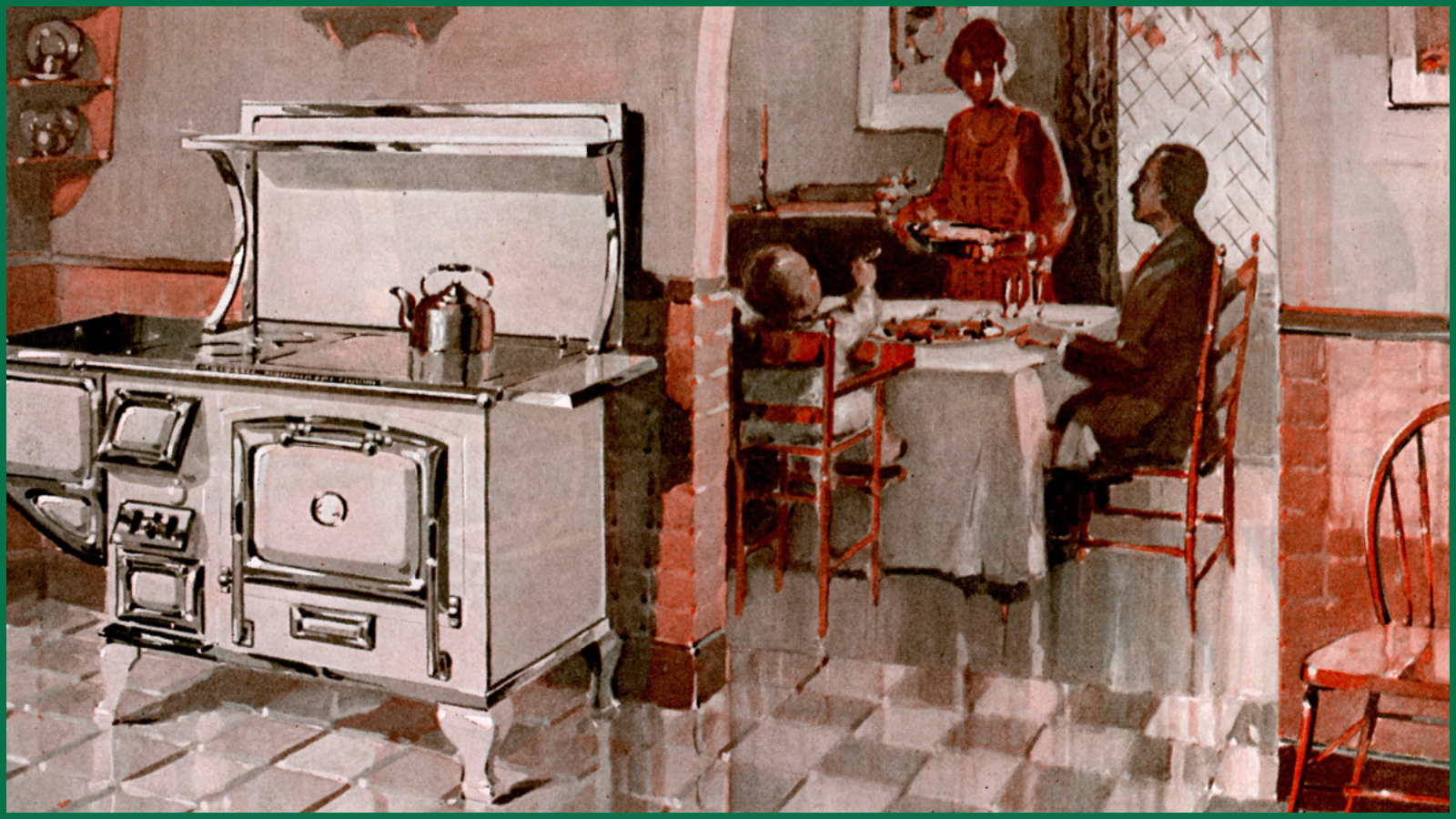
Reflecting the shift from the fur trade to settler commerce, HBC trading posts rapidly transitioned to general merchandise stores servicing the influx of European farmers, loggers and merchants. As cities grew and banks became more prominent, these merchandise shops became voguish department stores luxuriating in downtown Beaux-Arts constructs.
The British company was only acquired by Canadian billionaire owners in 1979; coincidentally this was about the time that the national constitution was patriated from London. Throughout the 20th century, The Bay was the crown adorning Canada’s golden age of brick and mortar retail, and millions of HBC point blankets draped over Canadian beds are a visible legacy of this era.
Sold to American financiers in 2006, The Bay abandoned any ambitions of serving a useful function in the age of Big Tech and financial oligopoly. By 2008, the company made its final transition from department store to “holding company that owns many billions of dollars of real estate.”2 Being taken over by financiers is always the harbinger of a “last stop” before liquidation, which occurred unceremoniously in 2025.
In Manitoba, the Southern Chiefs Organization was gifted Winnipeg’s flagship HBC department store and are right now transforming it into a mixed-use facility that includes a First Nations cultural centre, residential complex and independent shops. They have seized a limb of the once-zombifying monopoly and are turning it into an institution to support the living.
Manitoba First Nations offered a roadmap for resolving historic colonial contradictions and seizing national identity from the clutches of foreign capital. Predictably, political leadership took nothing from this experience. They stood idle as The Bay’s 95 other locations shuttered and 355 years of history—4,400 artworks and artifacts—were auctioned off to the highest bidder.

The enslaving logic of profit destroyed The Bay; it is destroying the country. Canada’s Big Six banks control 93% of banking assets. In unison, these same banks walked out on commitments to curb pollution almost the moment Donald Trump won the US presidency, irrespective of domestic opinion. The country is embroiled in a housing crisis culminating in $2.4 trillion worth of mortgages and the highest household debt in the G7. Manufacturing has been in decline since World War II, and tariffs pressure what’s left to move south of the border. Professional ice hockey was once a communitarian experience hosted by the public broadcaster in English, French and Punjabi. Since 2026, the national pastime has disappeared from public airwaves, stowed behind the paywall of a price-gouging telecom monopoly.
The economy is extractivist; it exports cheap natural resources and imports expensive finished goods. This has created a climate of persistent low wages and unbearably high costs on everything from basic foodstuffs to energy to housing. Over the last five years, homelessness and lethal drug addiction have created apocalyptic conditions in cities and towns alike. 28% of the country is at poverty-level. Owing to economic distress, 43% of people under 35 are outwardly in favour of American annexation.
As these very serious crises mount, the latest brainwaves from Canada’s Goldman Sachs-trained prime minister include privatizing airports and putting hundreds of billions of dollars on the national credit card for obsolete weapons of war. A zombie corporation is defined as an unviable business that generates just enough cash flow to pay the interest on its debts and cover basic operating costs, but cannot pay back the principal debt or fund new growth. This now defines the entire country.
With so much attention paid to American hegemonic decline, the sorry state of countries that uncritically hitched their wagons to the fortune of US power is often overlooked. The decades-long political and economic dependency of the American satellite states is now backfiring as the Trump administration attempts to vassalize allies.
This should not have been an entirely unforeseen outcome, as accumulation by dispossession driven by finance capital has been in full swing across the world since at least the 1980s, economically ruining many countries en route.3 For Canada, Hudson’s Bay was only the canary in the coal mine, the acid test for the neoliberal crises that now surround us. Although there are proven socialist fixes to the economic trade wars and social decay confronting Canada, the capture of the national elite by private capital will doubtless prevent their implementation.
Thanks for reading!

Paraphrasing Cody Caetano in Rollie Pemberton, “Is It Offensive to Wear the Hudson’s Bay Point Coat?” The Walrus, March 5, 2026. ↩︎
Richard Baker quoted in Don Gillmor, “The End of Hudson’s Bay,” The Walrus, March 26, 2025. ↩︎
One notable exception to this global trend is China. ↩︎