
Tag: Slavery

  • Historical Materialism

    Historical Materialism

    This article is part of a series on classical Marxism.

    The chronological sequence of events leading to the present can be looked at in a number of ways. Sometimes it is mystified, a progression guided by the hand of God or a creator. This is generally what is taught in churches. To the more secular-minded, it can appear as a random sequence of events—one unfolding drama after another between the armies of warlords and conquerors, the avarice of kings and emperors, the bedrooms of aristocrats and financiers. This is the “great man theory” of history which supposes that social changes and historic events are mainly impacted by gifted individuals driving the realm of humans forward. Then there are the idealists, asserting the predominance of collective consciousness and content of the mind in determining events. This view holds that the best ideas will advance themselves through free and open communication, with the strongest ones rising to the top and shaping our government, laws, technologies, economic exchange and global institutions.

    The materialist conception of history grounds things differently. As humans are evolved from nature and are reliant on it to meet all of our basic needs, materialism places our history on the basis of our natural being. As most hominids and pre-modern humans existed without religious concepts, advanced cognition or complex language, mapping our history onto these things does not make much sense. While human society today may “feel” very much removed from the whims of nature, this is a fallacy since everything from computers, smartphones, houses, clothes and food are all ultimately derived from some natural extraction. Thus the true fault line between society and the world of nature is “the mediating realm of human labour and production.”1 As individuals must be nourished and fed before they can think or speak, so too must any collective of people be able to meet their biological needs before they are able to ponder philosophy, establish an oral history or develop an artistic culture: “The first historical act is thus the production of the means to satisfy these [biological] needs, the production of material life itself.”2

    Historical materialism is the assertion that the basis of all history starts with how people produce. Because we, as material beings, are required to first produce our physical bodies before we can produce ideas and individuals, the ideas and individuals that come thereafter will be a reflection of how we produce. Everything else—politics, art, culture, religion—derives secondarily from this basis in production. That is not to dismiss the existence of individual talents or the significance of ideas, but life’s first instances must be materially produced before any individual or collective expressions can be made. The latter depends on the former. Thus it is seen that great men, religion, political intrigue and ideas in general are corollary to the economic system and not the other way around. Human societies, as an outgrowth of nature, therefore emerge with a universal base-superstructure shape that Karl Marx summarized as follows:

    In the social production of their existence, men inevitably enter into definite relations, which are independent of their will, namely relations of production appropriate to a given stage in the development of their material forces of production. The totality of these relations of production constitutes the economic structure of society, the real foundation, on which arises a legal and political superstructure and to which correspond definite forms of social consciousness. The mode of production of material life conditions the general process of social, political and intellectual life. It is not the consciousness of men that determines their existence, but their social existence that determines their consciousness.3

    Image: Wikimedia Commons

    Labour and production are an “everlasting Nature-imposed condition of human existence” but the forms that production takes and the societies that it produces are variable and highly dependent on available technology, access to resources, received cultural values, etc.4 The social hierarchy of production plus the resources in use and the technologies deployed constitute the mode of production—the economic base. Politics, culture, social customs and intellectual products are the superstructure resting atop this base, shaping our individual and collective consciousness. If anybody imagines being born at a different time period than their own, what they are imagining is life within a different hierarchy of production and its corresponding customs and norms.

    In history, there has been a progression of four major modes of production that have been well-documented and studied, presented below. A fifth is theorized but has yet to fully emerge.

    1. Primitive communism. This is also known as a tribal or hunter-gatherer society, but it is regarded as a form of communism because they were classless. A classless society does not denote equality or absence of authority or any social hierarchy, however. Classlessness denotes individual autonomy over labour, as nobody has the means to seize the work of others. Surpluses, resources and positions of authority are managed democratically by the group, often by consensus. This mode of production was predominant during the Paleolithic Era when Earth was in an ice age. The economic base consisted of technology such as bows and arrows, early use of fire, rafts, hand axes, and big game resources like rhinoceros’ and woolly mammoths. This mode of production corresponded with a superstructure which found expressions in cave paintings, figurine carvings, flute-like instruments made of bone and animistic religions.
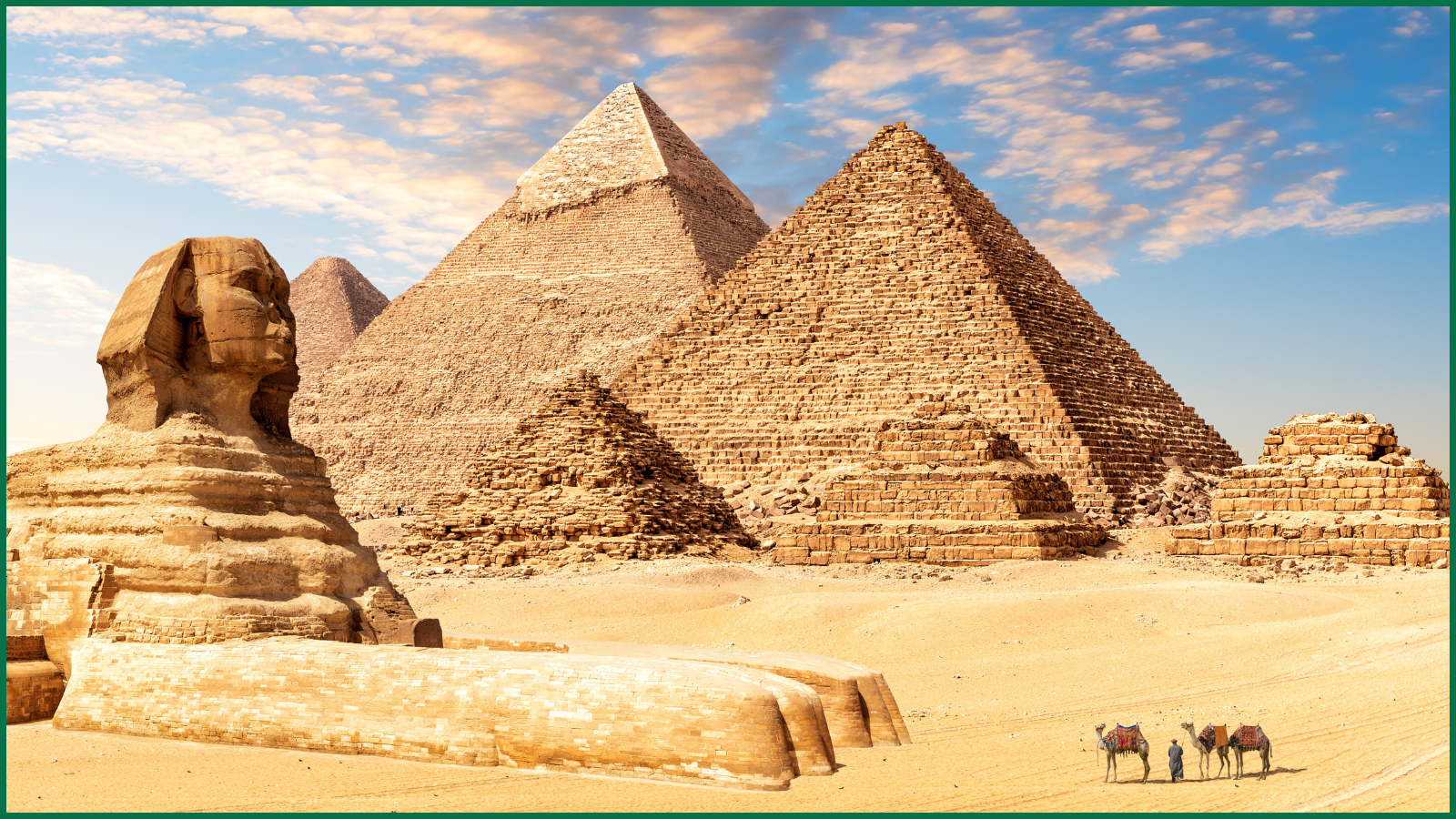
    1. Ancient mode of production. The transition to settlements and agriculture occurred after the ice age had ended and various megafauna species began going extinct. The warmer climate allowed for a transition to domesticated crops and livestock which resulted in much greater food production and increased population densities—even as life expectancy crashed due to higher rates of disease and less nutritious diets. The appearance of large grain surpluses also gave rise to humanity’s first class structures and violence over territory. As warrior-kings and armies developed, enslavement of other peoples became common. This mode of production is largely epitomized by the master–slave class relation seen in Ancient Greece, Rome, Persia and Asia. Humanity’s first cities were created under this mode and it developed technologies like wood ploughs and iron tools, utilizing a variety of resources through aqueducts, roads, mines and quarries. The existence of a slaveholding class resulted in a complex superstructure marked by polytheistic, harvest-based religions, early writing systems, political institutions, philosophy, pottery and astronomy.
    1. Feudal mode of production. Feudalism came into being as the western Roman Empire was gradually undermined by an exhaustion of the slave trade and conflict with Germanic tribes, until it was eventually negated by the tribes altogether. The result was a massive deconstruction of political authority, away from cities and empire and toward rural fiefdoms controlled by warlords-turned-aristocrats and hereditary royal monarchies. This mode of production is defined by the predominant lord–peasant class relation. While ownership of slave labour was diminished, the labour of serfs was captured by agricultural rents paid to the manor. Previously discovered technologies were mostly adapted to village life, including mills, clocktowers and blast furnaces. The superstructure at this time was largely characterized by the rise of monotheistic religion across the known world. In western Europe, this was crystallized in the Catholic Church which offered political legitimacy to rulers in the form of a “divine right to rule” ideology. The Church also dominated the musical, writing, art and social life of this time period.  
    1. Capitalist mode of production. As feudal Europe developed its productive forces and its aristocracy matured, a thirst developed for expanding trade routes. Existing routes had become monopolized by the Ottoman Empire and this is what motivated Christopher Columbus to set sail, eventually landing on the shores of what is now the Dominican Republic. Ensuing was an unprecedented wave of settler colonization, with all of the pillage of gold, silver, produce, furs and fish that came along with it. As whole continents cracked open to agriculture and trade, plantations developed and slavery was revived in a racialized form. This veritable rush of wealth led to immense capital accumulation by European powers, ushering in the capitalist era. Technological development began to rise exponentially with the Industrial Revolution of the 1700s, as steam power, cotton gins and telegraphs appeared. Additional crop varieties from the New World and improved plough technology led to enclosures of farmland, expulsions of peasants and the creation of a mass wage-labour force. The capitalist–wage labour, or employer–employee, class relation is dominant under capitalism, rendering both slavery and serfdom uneconomical due to huge increases in production and the need for mass-consumption. The superstructure under capitalism is marked by the rise of liberal representative democracy, a secular public life, the fracturing of the Christianity with Protestant strains, mass media and the commodification of culture and goods and services. With rapid technological change, capitalism has now placed us firmly into the digital age.
    1. Free association of producers. A theoretical system whereby the labouring classes under capitalism—almost 99% of the population—become the ruling ownership class over the economy and government. Systems of socialist ownership sprouted up during the 20th century in opposition to imperial capitalism, while others have found a footing within the global capitalist structure today. National parks, public education, health care services, co-operatively owned enterprises, public transportation and the post office are all examples. Durable forms of socialism have yet to supersede global capitalism in a meaningful way. The goal of a free association is a classless society which minimizes mandatory work and unleashes the creative potential of all individuals as they dedicate themselves to self-directed pursuits. The primary purpose of this economic base is to produce goods and services according to need rather than payment, with the realm of want and culture dictated by free and voluntary exchange between individuals. Calculated surpluses would be managed via direct democratic means and allocated according to the material interests of the liberated society. The superstructure of such a system is unknown, but would be determined organically from the bottom-up, with decentralized communication technology, such as the Internet, playing a central role.

    Further reading:

    Karl Marx and Friedrich Engels, The German Ideology: Chapter One.

    —————————–


    1. John Bellamy Foster, “The Return of the Dialectics of Nature: The Struggle for Freedom as Necessity,” Monthly Review, Vol. 74, No. 7: 6. ↩︎

    2. Karl Marx and Friedrich Engels, The German Ideology: On Feuerbach. ↩︎

    3. Karl Marx, “Preface” of A Contribution to the Critique of Political Economy. ↩︎

    4. Karl Marx, “Chapter 7: The Labour-Process and the Process of Producing Surplus Value” in Capital: Volume One. ↩︎
  • Capitalism

    Capitalism

    This article is part of a series on classical Marxism.

    There is a claim that capitalism is defined by free trade and markets but this is an obscurity. Capitalism utilizes both markets and economic planning where beneficial, just like every other economic system has done—including hunter-gatherers, ancient Rome and feudal Japan. The definition of capitalism is actually very simple and specific: private ownership of production and wage labour. These characteristics may seem unimpressive from today’s vantage point but their fruition conceals a long and shady history.

    In Capitalist Realism, Mark Fisher points out the prevailing sentiment of 21st century disempowerment: “It is easier to imagine the end of the world than the end of capitalism.”1 As recent movies and television series indicate, there is a fascination with the apocalypse and barren moral landscapes that burn on our consciousness. Now that capitalism is concretized as the social reality in most of the world, the mind’s eye has tunnel vision regarding it. However, this anguish is not a distinct capitalist phenomena. Eschatology is an ancient subject. Generations of medieval peasants saw little change, despite the shifting boundaries of feudal fiefdoms and principalities. The Roman Empire and Ancient Egypt were supposed to last forever. And the Paleolithic era nearly did. For so many who lived and died in the past, it must have also been easier to imagine the end of the world than the end of their own way of life.

    That would not be true of every single generation—after all, there are active periods of revolution where artifacts and norms are torn down within the lifetime of individuals. And if anything distinguishes capitalism from what has preceded it, it must be the fixed quality of hectic upheavals. Karl Marx observed: “Constant revolutionizing of production, uninterrupted disturbance of all soil conditions, everlasting uncertainty and agitation distinguish the [capitalist] epoch from all earlier ones.”2 And again: “Modern industry never views or treats the existing form of a productive process as the definitive one. Its technical basis is therefore revolutionary, whereas all earlier modes of production were essentially conservative.”3 The nature of capitalism is therefore paradoxical—its end is unimaginable but so too is any status quo within it. Revolutionary change—in consumer goods, living costs, warfare, culture, nature and demographics—are always descending upon us under capitalism.

    Primitive communism, ancient slave societies and feudalism all arose gradually. The phase transitions triggered by natural human evolution, a warming Neolithic climate and the supplanting of Rome’s slave economy with feudalism all took place over centuries. Not so with capitalism. If capitalism is a spinning-hot mess of instability, conflict, technological invention and brutal exploitation, it’s because it was born in a frenzy of looting, genocidal violence, biological contagion and piracy. Feudal Europe was a pressure cooker of mounting debts, stifled trade routes, Catholic Inquisitions, bubonic plague and a bridled merchant class. Capitalism did not really emerge in the world—it exploded onto it the moment Columbus made landfall on Caribbean shores. Observing the golden adornments and timid nature of the Arawak people he encountered, Columbus salivated: “With fifty men we could subjugate them all and make them do whatever we want.”

    In a short matter of decades the indigenous societies, mired in less-advanced modes of production like primitive communism and slave economies, were broken to the thunder of Old World disease, technology and thirst for lucre. Gold and silver deposits in the Americas were drained by indigenous labour toiling under the swords of conquistadors, oceans were mercilessly exploited, vast tracts of land were cleared for plantations of sugar, tobacco and cotton, the African slave trade was engaged.4 From the European perspective, wealth seemed to amass from thin air, as all debts were paid far from home in the form of blood and environmental ruination. In a preview of what would later become the stock market, expeditions dedicated to pillaging native kingdoms were funded by investors risking capital for shares on future spoils. It was the ransacking of the Americas, the mass-utilization of African slaves and gunboat diplomacy in Asia that marked capitalism’s primitive accumulation stage. To follow still was the Industrial Revolution and formal colonization of South Asia, the Middle East and continental Africa.

    The concept of phase transition is also described as “the transformation of quantity into quality.” The pillaging of the Americas illustrates this, as a massive rupture to the feudal mode of production burst open once the natural and social wealth of two continents was exposed to those with armaments and the backing of mercantile investors. European land—the primary source of life and wealth through the feudal age—diminished in its preciousness, and the fortunes of the landed aristocracy diminished along with it. The massive surplus of inputs—precious metals, sugar, cotton, forced labour, etc.—was absorbed by the relatively small population of western Europe and forced a phase transition from a relatively closed and stable feudal system into a rabidly expansionary global capitalism.

    As land in Europe lost its importance in a rapidly evolving mode of production, pressure was applied to agriculture to squeeze more out of the lands. New rotation methods were implemented, new American crops like potatoes and corn were planted, new ploughs were deployed, peasants that had worked lands for generations were evicted by force. The separation of peasants from their livelihood on the land is how wage labour emerged. The collision between the masses of peasants dispossessed of their ancestral lands and a new class of capital owners is what gave birth to the modern system: 

    The historical conditions of [capitalism] are by no means given with the mere circulation of money and commodities. It can spring to life only when the owner of the means of production and subsistence meets in the market with the free labourer selling his labour-power. And this one historical condition comprises a world’s history. Capitalism, therefore, announces from its first appearance a new epoch in the process of social production.5

    Feudalism was being negated fast, especially in Britain where the Industrial Revolution began. The overwhelming amounts of resources flooding Europe spurred productive innovation in order to process it all. New forms of capital were merged into a fledgling factory system, such as steam power, milling machines, blast furnaces and power looms. But now the capital owner was faced with a unique problem posed by this new web of economic relations: overproduction. Too many goods could be produced for the domestic market to possibly absorb at a profit.

    Typical in the history of capitalism, the solution was found at the end of a gun. Leveraging their technological advantages, European states in the service of financial capital laid siege to India and China, the great powers of Asia. China became a dumping ground for opium and the Indian domestic economy collapsed as their market was flooded with cheap European textiles and manufactures. Much of South Asia and Africa were formally colonized, transformed into outlets for excess European production and becoming sites of resource extraction under systems of forced labour.

    It was these three broad motions that resulted in a world under capitalist domination. First, the pillaging of North and South America and genocidal exploitation of enslaved Africans and indigenous peoples. Second, the creation of a mass of wage labourers drawn from the European peasantry through enclosures that separated them from their land. Finally, the establishment of extractive colonies across almost the entirety of Asia and Africa. While these processes have continued to evolve rapidly over the 20th century to the present, the mechanism whereby one class extracts profit at the expense of another has not changed—it is baked into the logic of capitalism. The geographer, David Harvey, sums up capitalist history thus: 

    The transformation of labour, land and money into commodities rested on violence, cheating robbery, swindling and the like. The common lands were enclosed, divided and put up for sale as private property. The gold and silver that formed the initial money commodities were stolen from the Americas. The labour was forced off the land into the status of a “free” wage labourer who could be freely exploited by capital when not outright enslaved or indentured. Such forms of dispossession were foundational to the creation of capital. But even more importantly, they never disappeared.6

    It is difficult not to recognize capitalism as a zero-sum game when considering its history and present-day unfolding. Over a billion people in less-developed capitalist countries live in slums—a number projected to double by 2050. Over 700 “dead zones” without oxygen have formed in the ocean as a byproduct of heavy shipping traffic, plastic waste, overfishing and the acidification of waters by carbon emissions. Over 187 million people have died from wars involving capitalist competition over resources since the last century—and that number is climbing. Even in the core capitalist countries of the West, an increasing number of crises and epidemics are building—the mental health crisis, climate crisis, housing crisis, inflation crisis, drug epidemic, refugee crisis—with more to come. While its productive capacity is unquestionable, an enormous surplus is amassed by a small number of elite capital owners—close to 0.1% of the population—and arrives by a process of destabilizing exploitation, including international military coercion, imbalanced trade treaties and unmitigated pollution of the biosphere.

    It is the contention of classical Marxist philosophy that a positive-sum economy working for all is only possible along the lines of a democratic, classless economy that puts wealth creation and scientific discovery at the disposal of the working class. On progress under capitalism, Marx states:

    When a great social revolution shall have mastered the results of the bourgeois epoch, the markets of the world and the modern powers of production and subjected them to the common control of the most advanced peoples, then only will human progress cease to resemble that hideous pagan idol who would not drink the nectar but from the skulls of the slain.7

    Further Reading:

    Karl Marx, “The Future Results of British Rule in India.”

    ———–


    1. Mark Fisher, Capitalist Realism: Is There No Alternative? (Zero Books, 2009), 17. ↩︎

    2. Karl Marx and Friedrich Engels, The Communist Manifesto. ↩︎

    3. Karl Marx, Capital: Volume One (Ancient Wisdom Publishing, 2019), 318. ↩︎

    4. Ian Angus, “The Fishing Revolution and the Origins of Capitalism,” Monthly Review, Vol. 74, No. 10. ↩︎

    5. Karl Marx, Capital: Volume One (Ancient Wisdom Publishing, 2019), 120. ↩︎

    6. David Harvey, Seventeen Contradictions and the End of Capitalism (Oxford University Press, 2014), 57. ↩︎

    7. Karl Marx, “The Future Results of British Rule in India,” in Dispatches for the New York Tribune: Selected Journalism of Karl Marx (Penguin, 2007), 125. ↩︎