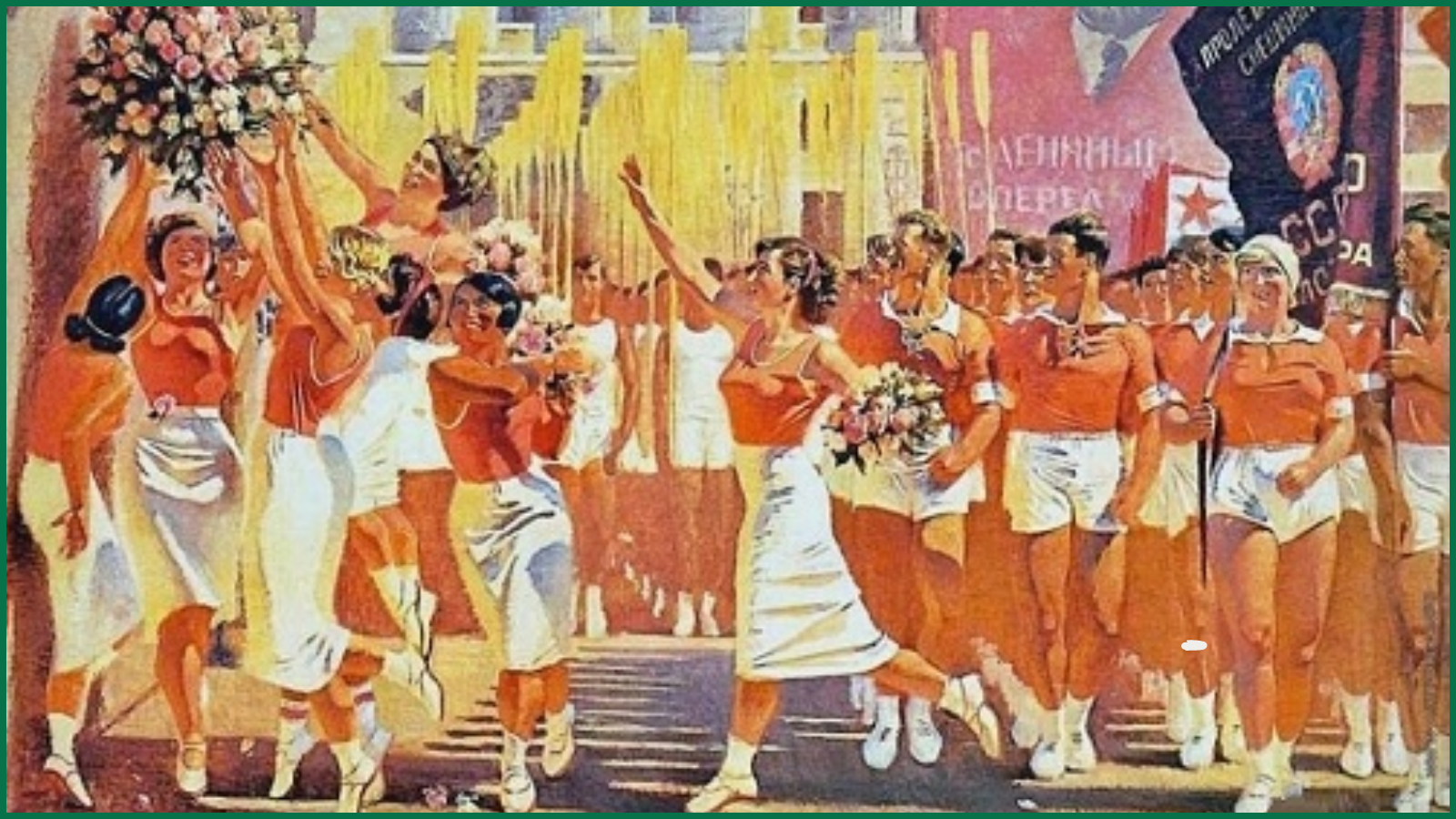
The experience of the Soviet Union is bound to confront every Marxist at some time or another. If Marxism is able to see further than liberalism, and socialism is superior to capitalism, shouldn’t the first Marxist state still be with us today? Unfortunately for many, the failure of the USSR to win the Cold War is proof enough of socialism’s inferiority and the story ends. But human history is one of trial and error, and the sheer force of the Russian revolution and the magnitude of change it rained down on the world speak volumes to its power.
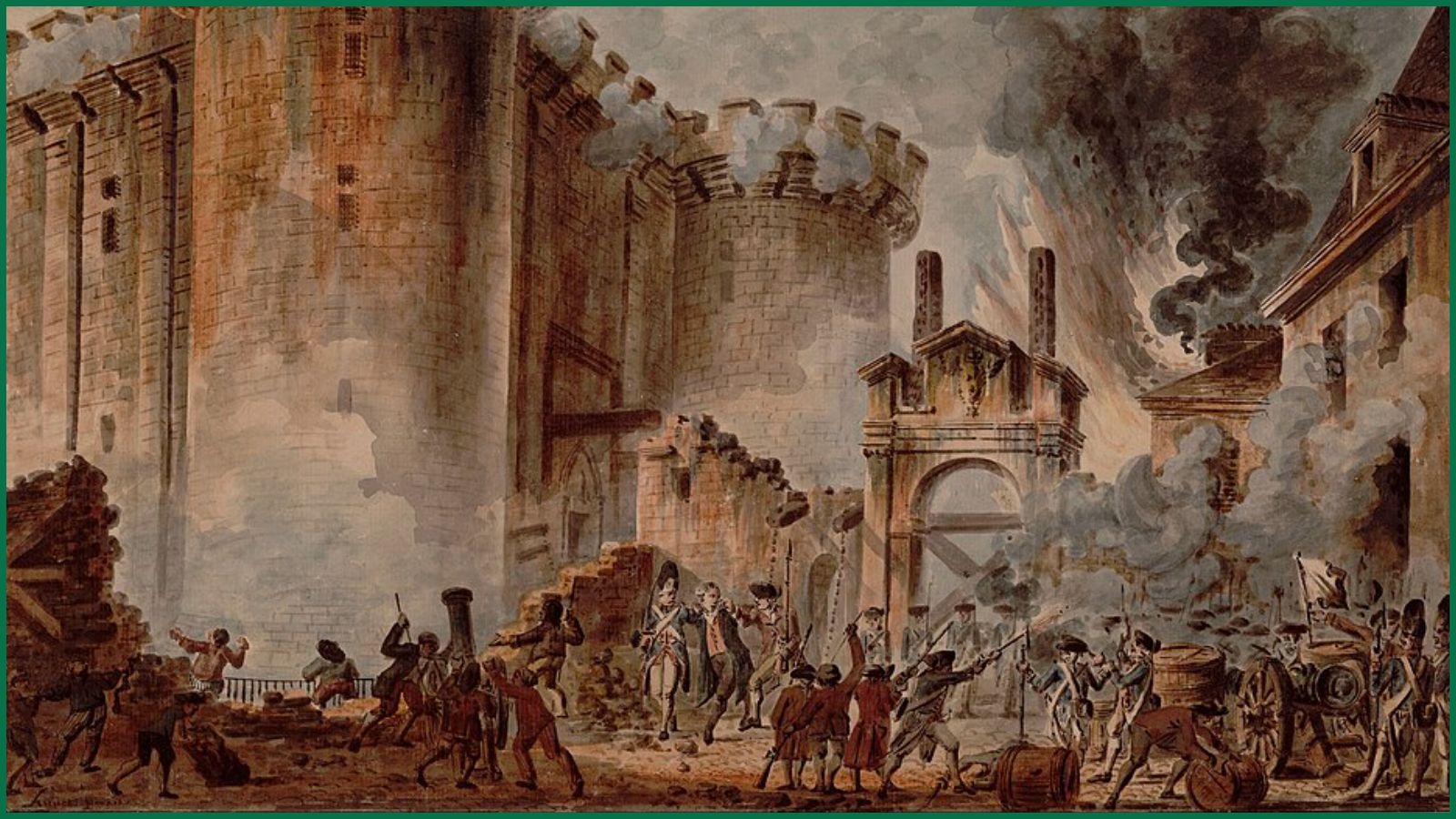
The American Revolution of 1776 was successful. The United States did not carry the heavy baggage of inherited feudal institutions and the ambition of revolutionaries was relatively limited, motivated by slaveowners demanding tax breaks. Bourgeois attempts at revolutionary republics in England in 1649 and France in 1789 were quickly overturned. The Soviet Union, by contrast, lasted for 70 years. It faced powerful external hostility every day of its existence, it inspired Keynesian economics and the welfare state, it spurred millions of revolutionaries around the world to take up arms for national liberation.
Wealth and Power
For the Soviet Union, any conceivable path to Cold War victory was narrow. The Tsarist Russian Empire was an incredibly impoverished and economically backward state at the time of the revolution. The vast majority of the country was comprised of an illiterate peasantry and Tsar Nicholas had steered the country into one disaster after another, including ill-fated wars against Japan and Germany. After the Bolsheviks took power, they were immediately plunged into a brutal civil war supported by a multinational invasion force, provoking famine and terror. Anticipating another invasion from the West, Stalin aggressively pushed rapid industrialization upon his country. There was a human cost that paid for this policy but the USSR did prevail over the largest invasion force in history and Stalin is regarded as a national hero in Russia to this day.
Although they basked in the glory of victory after World War II, the Soviets had lost 27 million lives to war and Holocaust and eastern Europe was in ruins. The loss of human life and infrastructure in the war set them at a much lower pole position relative to the United States. The USSR clocked impressive achievements in space exploration, military technology and human development programs, but they were unable to break through their inherited disadvantages against western economies despite their status as a leading global power.
Witnessing first-hand the violence of imperial governments towards workers’ movements, Karl Marx did not believe that the construction of socialism was feasible without access to the most advanced capitalist technologies at the outset.1 The Soviet Union had hoped to make up for these deficiencies by finding a tipping point in the global balance of power. If just enough countries had Marxist-Leninist revolutions, then the capitalist world would be starved of global markets, their economies would violently contract and liberal governance would wither. The Soviets devoted such large quantities of resources toward affecting this outcome that the entire Soviet project effectively became one big bet on global revolution.2
Despite rapid advancements under socialism in one country, there was a core problem with the structure of the Soviet Union post-World War II, summed up here by Zhang Xiaotong:
The main reason why over-expansion undermines national security and interests is the inefficient conversion between wealth and power, wasting too much wealth without acquiring the expected power. The collapse of the Soviet Union was largely due to its insufficient economic base to support diplomatic, strategic, and military expansion. It was a failure of Soviet economic statecraft and a triumph of American economic statecraft.3
For every ally that the Soviet Union acquired, there were expenditures attached in the form of military and economic aid. Almost every Marxist-Leninist state had emerged from conditions of chronic underdevelopment and, often, vicious civil war. Newfound Soviet allies required assistance just to become viable trading partners.4 On the other hand, the United States made money from its clients. Although frontline states of the Cold War in Europe and Asia received copious amounts of aid in the years following World War II, this was easily offset by the rapid expansion of US capital into global markets under the Bretton Woods system.
Structural Imperialism
Across Latin America, US corporations expanded profitable mining operations and fruit plantations. In Africa, decolonization on the part of Britain and France opened vast territories to American capital and new opportunities for resource extraction and arms sales. But the real prize for the United States was their partnership with countries of the Persian Gulf. The British had been heavily involved in the Gulf during the colonial era, pioneering oil projects in Iran and the United Arab Emirates, holding a mandate on Iraq and establishing protectorates over Bahrain and Kuwait. British power gave way seamlessly to American influence after World War II, as fledgling monarchies in the region found common cause with the United States opposing atheistic Soviet-style socialism.
The relationship between the United States and Gulf countries experienced episodic setbacks, such as the 1973 oil embargo against Israeli allies and the 1979 Islamic revolution in Iran. However in the 1970s agreements were struck between the United States, Saudi Arabia and other fossil fuel-rich Gulf states that created the “petrodollar system” as we know it today. The United States would provide security guarantees to the Gulf in exchange for their pricing oil in US dollars—and only US dollars. Profits from the oil trade would be used by these states to accumulate American bonds, inflate sovereign wealth funds and purchase securities from New York exchanges.
The petrodollar system put a money pump right into the veins of American finance. With this system, Washington managed to secure a reliable supply of energy while guaranteeing that profits from all Gulf customers flowed back to the United States through stock and bond sales. Because oil is the bedrock resource of the industrial economy, the petrodollar system has secured the global reserve status of the US dollar for decades.5 In turn, this has allowed the US government to exert obscene levels of power over global financial markets, including the ability to sell near-limitless government debt and isolate sovereign-seeking nations from the world economy. No other country in history has had anything like it—and certainly not the USSR.
In sum, the United States was able to convert their wealth into power, and their power into still more wealth. Between 1960 and 2020, $152 trillion in value has been transferred to western countries from developing nations in the Global South—with the United States grabbing the largest slice of the pie. In contrast, the Soviet Union had the inverse arrangement; as they acquired more allies, their annual cost in subsidies ballooned from $1.7 billion per year in 1970 to $23 billion in 1980 (84.5 billion in today’s dollars). The US grew richer with their client states while the Soviets became poorer with allies.
Since every Marxist-Leninist country during the Cold War was primarily running a nationalized economy, the Soviets had no mechanism to exploit the labour or resources of allied nations. The more allies they converted, the more subsidies they paid out. Their pursuit of allies, their quest for an anti-imperial tipping point, led to military expenditures dragging heavily on Moscow’s economy. The final straw for the Soviet Union was a military intervention supporting the communist government of Afghanistan. This operation was made incredibly expensive by the CIA who funded the Islamic mujahideen that fiercely opposed Red Army forces. Yet again, the Soviets found themselves exchanging a large quantity of resources for nothing.
The Rise of Nationalism
By the 1980s, the Soviet economy was exhausted by serious imbalances between civilian and defence production. For decades, military budgets had eaten up half of government expenditures and swiped double-digit percentages from the gross national product. In contrast, the United States had a money pump valued in the trillions of dollars plus the global reserve currency status that came with it.6 This is what enabled the United States to recover quickly from the Vietnam War. The US could go dollar-for-dollar with the USSR, they could wreak havoc on socialist economies through sanctions and they could meet them with proxy militias in any field of battle—all this, at a fraction of the cost to their economy.7
Although 78% of Soviet citizens had voted to preserve the union, the leadership understood that they were on the losing end of a multi-decade bet on international expansion.8 Their entire economy was ordered around it. Instead of a serious reassessment of Soviet spending priorities, nationalists from the Soviet Union’s 15 republics blamed stagnation on their union with the others. Boris Yeltsin, for his part, sincerely believed that Russia’s economy was burdened by the other 14, exclaiming in 1990: “Enough feeding the other republics!”9
The nationalists were, of course, wildly off-base because the actual cause of Soviet inefficiencies was its incredibly taxing wealth–power conversion and the futility of direct competition with the United States. With a nuclear deterrent in place, there needed to be a tactical retreat from the arms race, socialist autonomy for Warsaw Pact countries, reimplementation of Lenin’s New Economic Policy, greater direct democratic experimentation and cadre accountability, construction of a vibrant worker cooperative sector and revitalized public infrastructure at home.10 The Soviet Union held immense global power and influence—too much— without an adequate civilian economy to hold it up. Serendipitously, the United States now finds itself following in the footsteps of its former Soviet foe.
The failure to locate the economic contradiction between wealth and power ultimately led to an irruption of nationalist causes that burst into the upper echelons of the ruling Communist Party by the late 1980s. A nationalist political class combined with an empowered bureaucracy to restore capitalism. Seeking personal profit by looting state assets, corrupt Soviet bureaucrats sold off the union to the highest bidder and plunged eastern Europe into catastrophic economic turmoil.
The Soviet Union was a pioneer that charted waters never sailed before or since. Its transformation of a feudal backwater state into a spacefaring nuclear superpower in the span of three decades is a historic achievement. They made catastrophic mistakes by allowing themselves to become embroiled in a dollar-for-dollar arms race with a colossal imperial power and moving too confidently into a system of absolute state ownership and central planning. Their victory over Nazi Germany likely led the Soviet Union to overestimate their strengths at a time of material weakness relative to the United States.
What China learned from the Soviet experience is that socialism is not a light switch to be be flipped on. The task of socialism is not only to fight capitalism but to make it obsolete—to go beyond it. To do this requires access to the most advanced capitalist technologies and putting them to use in ways that serve human flourishing rather than profit. Only then can socialism predictably outperform hostile imperial countries and become a self-sustaining reproductive system.
We leave the world of capitalism only once the notion of selling ourselves for a wage becomes as unthinkable as selling ourselves into slavery. In this multigenerational struggle toward capitalist obsolescence, the Soviet experiment is at once a heroic inspiration and a cautionary tale. As Deng Xiaoping said on his Southern Tour:
I am convinced that more and more people will come to believe in Marxism, because it is a science. Using historical materialism, it has uncovered the laws governing the development of human society. Feudal society replaced slave society, capitalism supplanted feudalism, and, after a long time, socialism will necessarily supersede capitalism. This is an irreversible general trend of historical development, but the road has many twists and turns. Over the several centuries that it took for capitalism to replace feudalism, how many times were monarchies restored? So, in a sense, temporary restorations are usual and can hardly be avoided. Some countries have suffered major setbacks, and socialism appears to have been weakened. But the people have been tempered by the setbacks and have drawn lessons from them, and that will make socialism develop in a healthier direction. So don’t panic, don’t think that Marxism has disappeared, that it’s not useful anymore and that it has been defeated. Nothing of the sort!
Thanks for reading!

In “The Future Results of British Rule in India,” New-York Daily Tribune, July 22, 1853, Marx wrote: “Bourgeois industry and commerce create these material conditions of a new world in the same way as geological revolutions have created the surface of the earth. When a great social revolution shall have mastered the results of the bourgeois epoch, the market of the world and the modern powers of production, and subjected them to the common control of the most advanced peoples, then only will human progress cease to resemble that hideous, pagan idol, who would not drink the nectar but from the skulls of the slain.” ↩︎
A comparison between US and USSR military expenditures makes the unsustainability of Soviet spending clear: the Soviets consistently spent more than double the United States as a percentage of GNP. From World Military Expenditures and Arms Transfers, U.S. Arms Control and Disarmament Agency, 1994, in Norman Schofield, “Power, prosperity and social choice: a review,” Social Choice and Welfare Vol. 20, No. 1: 97. For more on the Soviet strategy and Brezhnev Doctrine, see “The Soviet Union’s Global Strategy” published by Santa Clara University. ↩︎
Zhang Xiaotong, China’s Modern Economic Statecraft: A Wealth-Power Dialectic (Routledge, 2025): 8. ↩︎
For a snapshot of Soviet subsidies through the 1970s see: U.S. Central Intelligence Agency, USSR: The Cost of Aid to Communist States, June 1, 1981. The public-facing information dispersed by the CIA is obviously horrible propaganda, but their internal documents tend to be reliable. ↩︎
Arya Joshi draws a straight line from the original petrodollar agreement brokered with Riyadh by Henry Kissinger in 1973 and sustained American global hegemony: “How has the US maintained hegemony in the international oil trade through its control of the Middle East?” Journal of Global Faultlines, Vol. 10, No. 2: 136-140. ↩︎
The per annum value of the petrodollar is difficult to ascertain, as it is an economic force multiplier. But it has led to a situation whereby trillions of dollars of US assets are held by Gulf sovereign wealth funds, plus tens of billions in annual arms sales. See: Andrew Mills, “Gulf trio review sovereign wealth investments to offset Iran war impact,”Reuters, March 11, 2026 and Vijay Prashad, “A Primer on the Petrodollar and the War on Iran,” Tricontinental: Institute for Social Research, April 16, 2026. ↩︎
Schofield, “Power, prosperity and social choice,” 97. ↩︎
The chasm between leadership and the citizenry is highlighted in Mark Kramer, “The Unintended Revolution,” Journal of Modern European History, Vol. 10, No. 1: 6. ↩︎
The disastrous years in Russia following Soviet dissolution discredit the idea of a Russian economy shackled by the union. In fact, regional economic integration was one of the few efficiencies of the Soviet system that allowed it to industrialize and persist as a major power for decades. ↩︎
With one of his few good ideas, Mikhail Gorbachev implemented the Law on Cooperatives in 1988, but by then it was too little, too late. ↩︎