Tag: Trump

  • Ask the Editor: Iran, and America’s Doomsday Scenario

    Ask the Editor: Iran, and America’s Doomsday Scenario

    To the editor,


    What is the outcome of the U.S.–Israeli attack on Iran?

    Thanks!

    Kora.

    [Sent via Bluesky]

    Hi Kora,


    By many accounts Americans and Israelis approached this military attack with different objectives. For the Americans led by Trump, the objective after the decapitation strike was the quick emergence of a compliant leader that would submit to Washington’s demands on the state. Israel no doubt knew that this outcome was unrealistic but nonetheless were elated to have American assistance with their ultimate goal, which is the total destruction of Iran as a functioning country.

    Alas, nothing has rationalized Iran’s notorious slogan of “Death to America! Death to Israel!” more than this joint U.S.–Israeli attack, which has already blown up children at a school in Minab and brought calamity to the entire population of Tehran. Assassinations and aerial bombardment have led Iranians to rally around the flag and this alone has frustrated American and Israeli designs. Even further, Iran has demonstrated the ability to hold the Strait of Hormuz and Gulf states hostage, while simultaneously inflicting heavy damage to Israeli infrastructure and American bases in the region.

    Iran has a strong hand to play as they try to end this war on their terms: war reparations from the U.S. and Israel, along with international security guarantees against future strikes. Ultimately, this war is one of attrition between Iranian missiles and regional interceptors. Whichever side runs out first will lose.

    If the United States and Israel neutralize Iranian weapons and prevail, the global status quo will remain depressingly the same. Trump will continue to mark more and more countries for imperialist expansion and Israel will solidify itself as the undisputed Middle Eastern military power without any counterweight.

    But the spectre of an Iranian victory against the West’s flagship militaries should not be taken lightly. In the Middle East, perceived strength matters more than anything else. This is how Israel and the United States have managed to expand their influence over Arab politics during the past few decades, despite those countries being massively unpopular amongst the Muslim populace.

    An Iranian victory replete with reparations would shatter the myth of Israeli invincibility and demonstrate U.S. military presence to be a security liability rather than an asset. The net effect would be a much smaller military footprint for the U.S. in the region as they lose control control over the Persian Gulf. Meanwhile, the prestige of Iran’s theocratic government in the Islamic world would soar to new heights.

    The Iranian conflict has already become a black hole for critical global energy supplies and western investment in the Gulf. This will weaken the ability of European capitals to aid Ukraine at a moment when Russia expects a windfall from its oil exports. If there is a U.S. defeat by Iran, don’t be surprised if Ukraine is the next western ally to settle a conflict on unfavourable terms.

    The Europeans have been on the receiving end of continuous insults and threats from Trump regarding tariffs and territorial annexation. Having witnessed the limits of U.S. military capability overseas, the next crop of European leaders should pursue a new security regime for their continent that includes a durable peace and trading relationship with Russia.1

    In Asia, the story is much the same. Their energy costs and stock markets have been hit hard by Trump’s decision to illegally attack Iran. They have also been subject to Washington’s erratic tariff policy. But luckily for Asians, they share their continent with a burgeoning superpower that has routinely demonstrated stability and restraint—and has invested in all the right places. China has weathered the oil shock with relative ease, thanks to long-term planning and allocations in green energy and battery technology. For Asia, the increasingly obvious limitations of American security only underline the benefits of deepening economic relations with Beijing.

    The stakes are obviously a lot higher than Trump realized when he decided to take a ride to Tehran with the genocidal prime minister of Israel. Israel, by the way, will be lucky to survive an Iran war loss over the medium term; war-addicted and Spartan countries only function so long as they win the conflicts they start. Across the world, we can expect the Middle East to lurch toward Iran, Asia to lurch toward China and Europe to lurch toward Russia. American military prestige will take a massive hit and the oil shocks this war has caused will do immense harm to Trump’s fossil fuel-driven economic agenda.

    The war is not yet over. But if the zenith of American hegemony passed over the sands of Iraq and Afghanistan, it may be Iran where the nadir is found.

    In sols,

        Your editor.

    Send your questions to the Reclamationeditor@thereclamation.co

    Footnotes:


    1. Polls show European views of the United States in free-fall over their treatment and future elections should reflect this mistrust. ↩︎
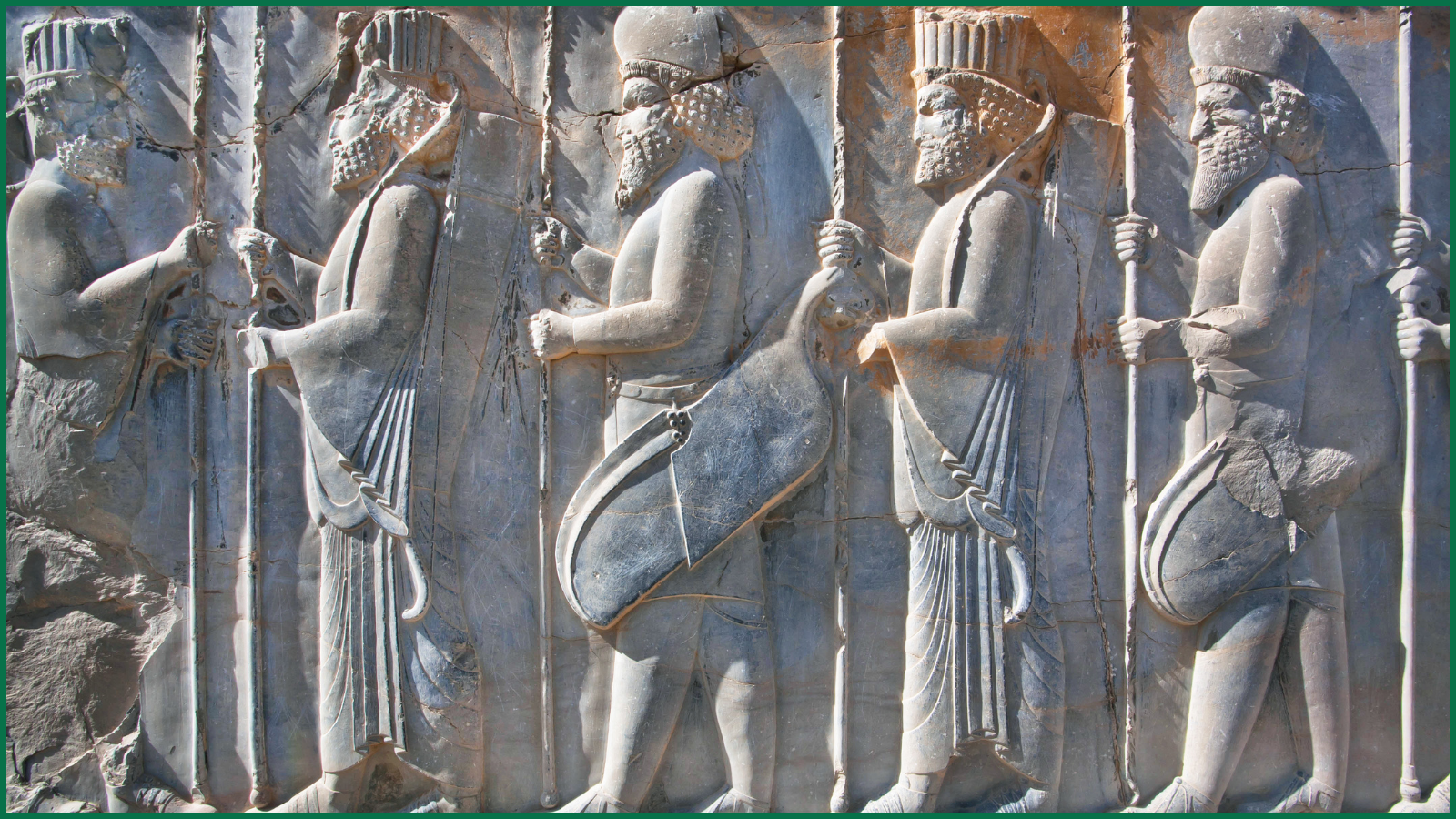
  • How Iran Can Win, According to Sun Tzu

    How Iran Can Win, According to Sun Tzu

    “Under heaven thunder rolls.” 

    I Ching

    Donald Trump once commissioned a ghostwriter to put his name to a book called The Art of the Deal—but he’s clearly never read Sun Tzu’s The Art of War. Consider a staple teaching from Master Sun: “So it is said that if you know others and know yourself, you will not be imperilled in a hundred battles; if you do not know others but know yourself, you win one and lose one; if you do not know others and do not know yourself, you will be imperilled in every single battle.”1 Doubtless, the Pentagon has very capable military commanders, tacticians and a massive arsenal of weapons at their disposal. In matters of war, the balance of power heavily favours America’s legions of imperial soldiers. But with Trump as their commander-in-chief, they fly blind in terms of strategy.

    In his political career, Trump has branded himself as an “America First” isolationist, allergic to “forever wars” that divert resources from the homeland. He has boasted about ending eight wars, a Nobel Peace Prize-worthy effort. When he did not receive said prize, he declared himself to be untethered from thinking about peace. After Venezuela amassed a citizens militia to deter American invasion, Trump opted to kidnap the president and threatened to kill his successor unless she complied with U.S. demands. The revolution in Venezuela is now in tactical retreat but the ink is not yet dry on the results of Trump’s acts of violence. Before even knowing what he had accomplished in Venezuela, aircraft carriers were positioned in the Middle East to set about duplicating the Venezuela operation all over again. This time it was in partnership with Israel and against the much more formidable opponent of Iran.

    He Who Wishes to Fight

    They began with a familiar decapitation strategy, taking the more audacious step of murdering Iran’s head of state rather than merely kidnapping him. They hit 500 targets and launched cyberattacks to encourage a domestic uprising against the government in Tehran. From interviews, Trump evidently believed that the combined external and internal pressure on Iran would bring a compliant leader to the foreground—an Iranian Delcy Rodríguez. But Trump confusingly oscillates between stated objectives in Iran, his motivations for attacking the country are unclear and he has struggled to define his relationship with war in general. In short, this is a man who does not know himself. And he does not know his enemy either.

    Although the Venezuela operation was a tactical success for U.S. planners, the hardcore Chavista apparatus remains in place to live another day. Assassinating the Ayatollah Khamanei, on the other hand, galvanized grief and anger across the Shia world. It was an abrasive action that could not be interpreted as a “limited strike” by Iran’s theocratic government—much to Trump’s chagrin. The Iranians responded by setting in motion a battle plan that they had transcribed for weeks beforehand: regional conflict targeting the energy infrastructure of Gulf countries and closing the Strait of Hormuz. This plan was no secret, yet Trump astonishingly went on the record stating that the Gulf escalation was the “biggest surprise” of the conflict. Which brings us to another valuable lesson from The Art of War: “If you don’t know their strategy, you should avoid battle with them.”2

    Iran’s escalation was clearly not accounted for by U.S. strategic planning. Only afterward did Trump realize he’d need a mass evacuation of American citizens, a British base for operational support, Ukrainian assistance to counter Shahed drones and more arms production to prosecute the war effort. His “big wave” aerial bombardment appears to be only an ad hoc response to the failure of a domestic rebellion to materialize and Iran’s refusal to capitulate to illegal U.S. and Israeli aggression. 

    Since Trump does not know his enemy, he may not be aware that Iran is fighting from “deadly ground”—a place where death is assured unless it can be fought out from. By constantly reneging on diplomatic agreements, assassinating leaders at will, surrounding their country with military bases and demanding the forfeiture of missiles, the United States has given Iran no choice but to fight in order to achieve deterrence against their enemy: “When you cannot press forward, cannot retreat backward and cannot run to the sides, you have no choice but to fight right away.”3 And so they have.

    Iran is surrounded by American bases.
    Opportunity in Chaos

    Iran has adopted the sort of high-risk strategy to be expected from an army on deadly ground. But it is logical according to The Art of War: when outnumbered by a massive opponent “first deprive him of what he likes” and focus strikes on “what is weak.”4 The disabling of the Gulf state infrastructure and the Strait of Hormuz satisfy both criteria, as Iran is able to strangle the oil and gas supply from small countries that form the weak underbelly of the Persian Gulf. These countries are within range of Iran’s abundant store of short range range missiles, creating outsized pain for a fossil fuel-addicted world.

    Iran’s strategy going forward will be to “find out where [the enemy is] sufficient and where they are lacking.”5 They will accomplish this by testing Israeli and American defences with low intensity but consistent missile and drone barrages in order to deplete interceptor inventories and conceal Iranian launch sites as much as possible. Expect Iran to refrain from ineffectual large attacks unless U.S.–Israeli defensive gaps appear. Only if missile defences are diminished will they be able to strike for a maximum psychological impact—like the Tet Offensive of the Vietnam War. 

    Karl Marx observed that “men make their own history, but they do not make it as they please; they do not make it under self-selected circumstances, but under circumstances existing already, given and transmitted from the past.”6 Iran is at an extreme disadvantage with their heavily sanctioned economy now pitted against the military might of much wealthier opponents. The only reason they are in this fight is because of the deficiencies of current U.S. leadership. Of the eight types of decadence that compromise commanders according to The Art of War, Trump suffers from no less than five of them: insatiable greed, jealousy of the wise and able, making friends with the treacherous, a liar with a cowardly heart and talking wildly without courtesy.7 

    Iran’s path to victory is narrow but existent. It relies on their ability to absorb cruel and punishing aerial bombardment with clever military decoys and camouflage; to achieve critical depletion of the enemy’s missile interceptors; to inflict unsustainable economic pain on the West. All three criteria will have to be met before a strategic victory and future deterrence becomes a possibility. Failing to meet these goals will either result in the destruction of Iran’s 2,600 year old civilization by civil war or the bare survival of a weakened Islamic Republic that is sure to be in conflict again soon against bloodthirsty enemies. Regardless of the outcome in Iran, The Art of War has this to say about the fate of the United States: “Even if a country is large, if it is militaristic it will eventually perish.”8

    Thanks for reading!

    Footnotes:

    1. Sun Tzu, The Art of War (Shambhala, 2003): 85. ↩︎

    2. Ibid, 121. ↩︎

    3. Ibid, 158-9. ↩︎

    4. Ibid, 451. ↩︎

    5. Ibid, 116. ↩︎

    6. Karl Marx, The Eighteenth Brumaire of Louis Bonaparte. ↩︎

    7. Tzu, Art of War, 224. ↩︎

    8. Ibid, 254. ↩︎
  • Ask the Editor: Does Gunboat Diplomacy Work?

    Ask the Editor: Does Gunboat Diplomacy Work?

    To the editor,


    Why does Trump like gunboat diplomacy and does it work?

    Thank you,

    Tyler.

    [Sent via Bluesky]

    Hi Tyler,


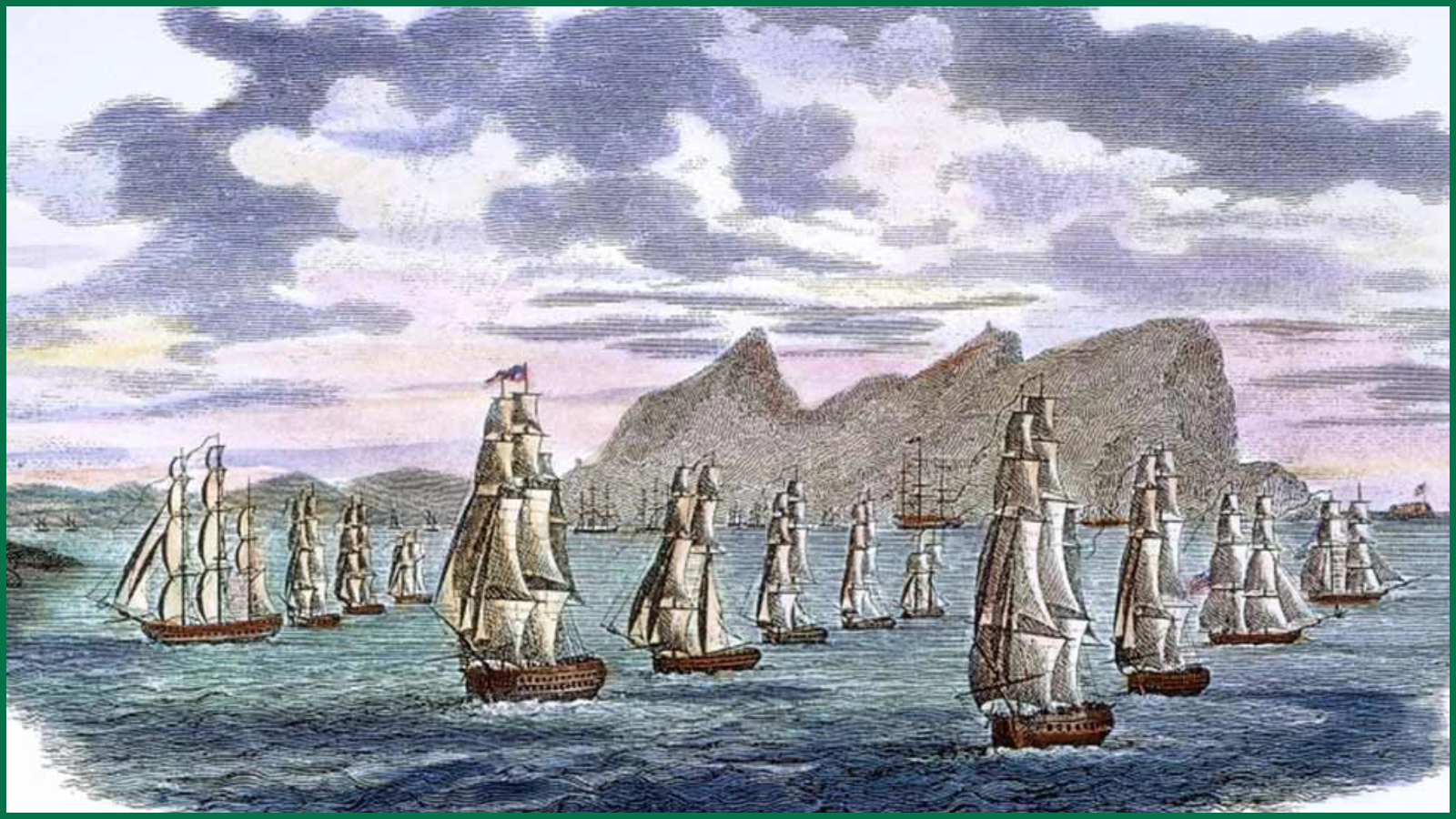
    The shrewd imperialist planner, Henry Kissinger, once said that “an aircraft carrier is 100,000 tons of diplomacy.” Gunboat diplomacy is to international relations what “the stickup” is to people on the street: a violent robbery at gunpoint. No sane person would hand over their wallet just to anyone who asked for it, but a gun in the face will change that equation. Since the 1800s, imperial powers had similarly learned that other countries were a lot more agreeable to lopsided treaties when a naval armada was docked along their coastline and ready to open fire. 

    Gunboat diplomacy was used by the British against China during the Opium Wars, against Haiti when the U.S. stole their national gold reserves, against Japan and Korea for purposes of U.S. trade, by France against Thailand for the relinquishing of modern-day Laos to French Indochina and the U.S. against Colombia for the acquisition of the Panama Canal Zone—to name just a few examples in a very long list.1

    The topic has gained new relevance in the age of Trump’s bulldozer approach to international relations. He has used a mix of tariffs and annexation threats against stalwart U.S. trading partners in order to browbeat them into accepting humiliating trade agreements. Meanwhile, explicit gunboat diplomacy has become Trump’s preferred tactic against countries under sanction and immune to tariffs. The first two months of 2026 have witnessed the U.S. navy kill and kidnap Venezuelans, impose a cruel blockade on Cuba and surround Iran with devastating weapons of war.

    A robber committed to the threat of violent harm does not have to exchange anything of material value in order to receive a ransom. The asymmetry of this transaction is what incentivizes his crime. Trump engages in gunboat diplomacy for the same reason he applies tariffs with zeal—he believes that asymmetrical coercion is the backstop to favourable terms. Under the narrow horizon of short-term self-interest, this approach can appear to work. But robbers do catch blowback. And with history as our guide, we see that this strategy of imperialist aggression often does as well. 

    Japan acquiesced to American demands in the 1800s—but this sent it down a road of aggressive industrial expansion, fascist government, the colonization of Korea and the bombing of Pearl Harbour. The British did impose harsh treaties on China—but these fomented the Boxer Rebellion that laid the foundation for Mao’s decisive civil war victory and modern China’s Marxist outlook. The French did expand their colonial holdings in Southeast Asia—but this, too, boomeranged in the form of subsequent communist revolutions.

    For every action there is an equal and opposite reaction. Capitalist powers have had the tendency to underestimate the agency of those that they dominate. Every war, tariff and threat introduces a new conflict, a new dialectical friction, into the tapestry of global relations. The United States has embarked on a strategy to leverage its economic and military supremacy in order to vassalize the world and extract surplus value without trading for it. On the surface, this may seem to work. But as global trade increasingly re-routes around the U.S., expect opposition to American hegemony to stiffen until it eventually comes undone.

    In sols,

        Your editor.

    Send your questions to the Reclamationeditor@thereclamation.co

    Footnotes:


    1. See Karl Marx, “The Anglo-Chinese Treaty” in Dispatches for the New York Tribune: Selected Journalism of Karl Marx (Penguin, 2007): 31-36 for details of the opium trade imposed on China and unequal treaties pursuant to it. ↩︎
  • Ask the Editor: ‘The Rupture’

    Ask the Editor: ‘The Rupture’

    To the editor,

    Canada has been targeted with threats from Trump since Prime Minister Carney’s Davos speech. Can you tell me why it was so provocative?

    Thank you,

    Kay.

    [Sent via WordPress]

    Hi Kay,

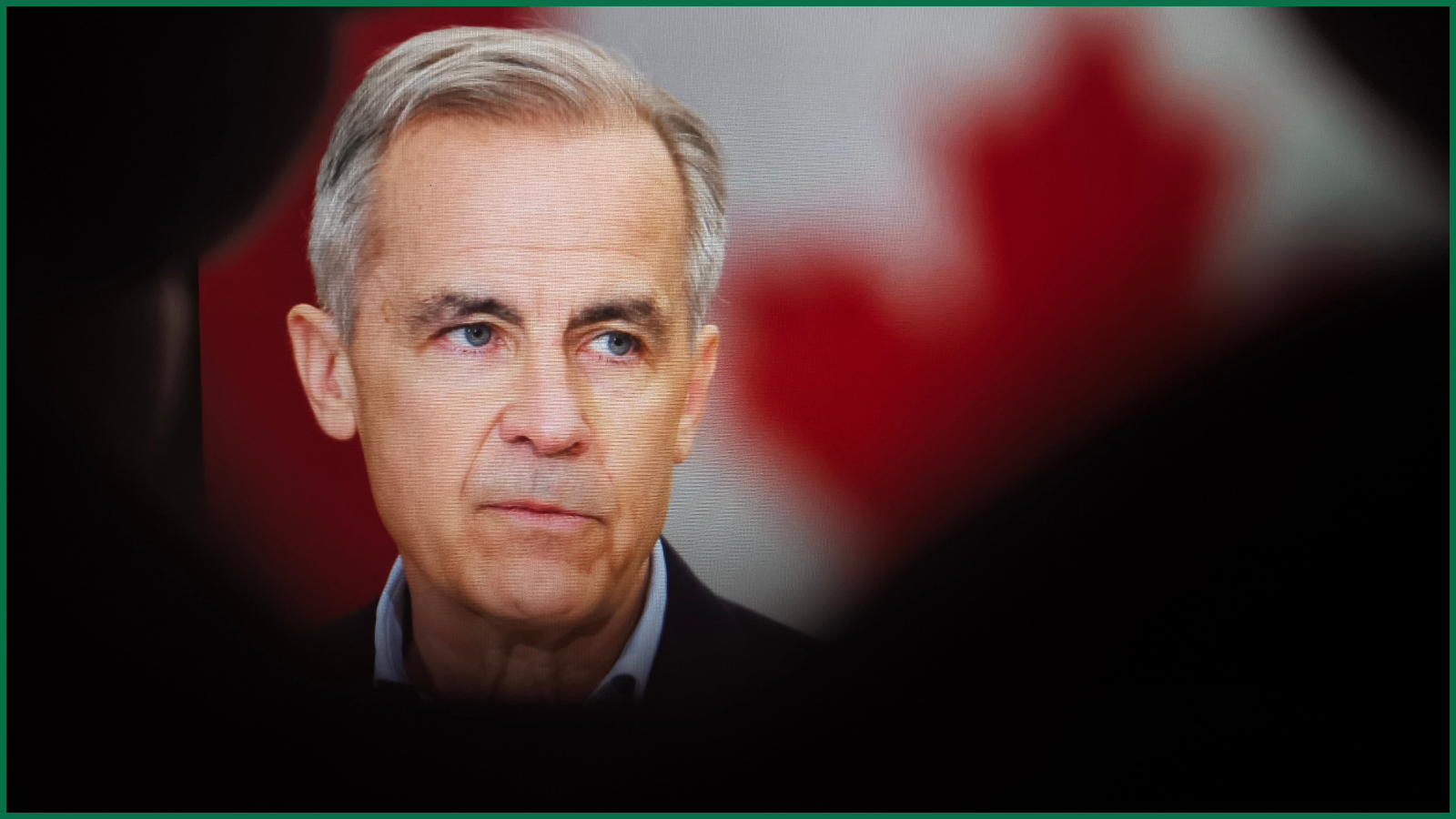
    Mark Carney’s diagnosis of “a rupture” in the world order has been hailed for its clarion call to middle powers to band together and form a counterweight to American global hegemony. Under threat of U.S. economic reprisals, Carney explained, a variety of demands are now being made on the allies that have benefitted from Pax Americana. As if trying to prove Carney’s point, Trump replied the next day: “Canada lives because of the United States. Remember that, Mark, the next time you make your statements.” By acknowledging Trump’s coercive demands, Carney invited another one—stop complaining or Canada might not live.

    Since 2016, Trump has promised to shake down the world on behalf of America and Carney only affirmed that fact in Davos. It is unclear if Trump really understood the content of the message or if he was merely offended that headlines were grabbed by another world leader. The psychological pathologies of the current U.S. leader are difficult to overstate. Unintentionally, Trump’s threatening response to Carney’s speech elevated its importance and imparted a lot more aura to its content than it would have otherwise had.

    Carney only described a rupture in the appearance of the world order. Not its substance. Speaking as an elite financier, Carney cited a controversial former president of Czechoslovakia and said it was only a sign in the window that made people believe in the working class power of former socialist states. As an analogy for the present, Carney implied that the concept of a liberal “rules-based international order” was only ever a guise for operational U.S. global hegemony. Strategic allies such as Germany, Saudi Arabia and South Korea enjoyed market access in exchange for adherence to “American interests”—but this was the extent of the norm.

    The U.S.-led global order has always been transactional and never about hifalutin “democratic values” or rational global governance. The trail of human rights violations, democratic overthrows, targeted assassinations and full-scale invasions is too long to claim otherwise. The revival of state-sanctioned piracy and gunboat diplomacy targeting Venezuela, Cuba and Iran only adds to a long-established pattern of lawless American aggression abroad.

    The shockwave of U.S. military rampage felt for decades in the Global South harkens Karl Marx: “The profound hypocrisy and inherent barbarism of bourgeois civilization lies unveiled before our eyes, turning from its home, where it assumes respectable forms, to the colonies, where it goes naked.”1 Trump is not a rupture to the American hegemonic order. He is the ruling class without clothes. He offends the elitist sensibility of a Davos crowd not accustomed to being slapped about the head by the swinging dick of America’s president. But let’s exit the world of posh Swiss resorts in the Alps. How about those crowds of Baghdad, Caracas, Mogadishu, Havana, Jakarta, Ramallah or Tehran? Threats of annexation and tariffs against middle powers must appear positively trifling next to the suffocating economic embargoes, CIA-managed torture chambers, genocidal carpet bombings and rock-ribbed support for right wing dictatorships that have visited the Global South.

    As a central banker, Carney is well aware of the vital function that international debt bondage and structural adjustment programs play in securing cheap labour and resources to middle powers. If he seemed to gesture toward the brutal and ongoing excesses of American control without denouncing any examples—this is why. The middle powers lack the scale of the hegemon but they lean on a system of dramatic capitalist exploitation all the same. Carney may be able to capture the zeitgeist of the World Economic Forum but a man with his pedigree will never apprehend the economic basis that is needed to construct a true new world order. 

    In sols,

        Your editor.

    Send your questions to the Reclamationeditor@thereclamation.co

    Footnotes:


    1. Karl Marx, “The Future Results of British Rule in India,” in Dispatches for the New York Tribune: Selected Journalism of Karl Marx (Penguin, 2007): 124. ↩︎
  • Ask the Editor: Predicting 2026

    Ask the Editor: Predicting 2026

    To the editor,


    What do you expect in the year ahead?

    Happy New Year,

    Teela.

    [Sent from Bluesky]

    Happy New Year!

    Predictions may be a fool’s errand but there is always some low-hanging fruit. Democrats will sweep midterm elections, Canada’s prime minister likely obtains his coveted majority government and plastic pollution continues to worsen. Marxists understand the relatively low stakes of these surface-level tendencies. The world we are living in is one where power has long been consolidated by an elite corporate class; yawning economic inequalities and corrupted liberal democracies are only symptoms of this fact. I do not foresee any challenge to ruling class power in the near term, which means that the direction of 2026 has already been set.  

    For all its Trump-related pandemonium, 2025 did not really move the needle away from trajectories previously established. Inflation continued to eat away at pocketbooks around the world. Russia and Israel aggressively redrew the maps of their respective neighbourhoods. China held on to its massive gains in global exports and new technologies. The Western world, including Canada and the European Union, have once again proven politically adrift without the tide of American leadership. The artificial intelligence economy—buoying the world’s stock markets by hype—has turned flat without reaching any clear tipping point. Venezuela has invited condemnable aggression from Washington and this is the fate of any Latin American country daring to exercise sovereignty over their national resources.

    With the big stories of 2025, you’ll notice there was not a lot that was new; events have all unfolded around past momentum. Even an objective change, like US tariff polilcy, has only accelerated the existing trend of Western decline relative to a rising East. Populist movements demonstrate a world clamouring for catharsis but 2026 won’t be the year to deliver it. That is because the economic forces at play tell a story of near-term easing rather than escalation. Inflation is slowing down. AI investors have begun to exercise caution amidst talk of a bubble. The prospect of a Russia–Ukraine ceasefire signal the willingness of both to prioritize economic repair over military objectives. And the erraticism of the Trump White House has only spurred China to stay its course while the West begrudgingly flounders. The fate of Venezuela’s Maduro government may be an open question but, whatever happens, it will be a movie we have seen before.

    The tense stability which looms over the globe this January does not portend any major improvement. Financial strain, environmental deterioration, warfare, oligarchic power, political impulsivity and social unrest will all continue to simmer under the heat of the recent past. The ancient Greek philosopher Anaxagoras said that to “separate off” elements from one another takes a revolution.1 Likewise, the West will need to “separate off” its current ruling class in order to realize a change to its set trajectory. History shows us that revolutions do not occur unless class conflict reaches a raging boil. Although we will be waiting past the new year for that, let’s raise a glass to 2026 and try our best to enjoy the simmer.

    In sols,

        Your editor.

    Send your questions to the Reclamationeditor@thereclamation.co

    Footnotes:


    1. Early Greek Philosophy, trans. Jonathan Barnes (Penguin, 2002): 196. Anaxagoras here was referencing the nature of matter in the universe. ↩︎
  • Ask the Editor: Carney No Match For Trump’s Gutpolitik

    Ask the Editor: Carney No Match For Trump’s Gutpolitik

    To the editor,


    Why is Canada getting hit so hard with American tariffs? It’s among the top five nations in terms of the relative tariff rate. Canada’s new prime minister, Mark Carney, had taken a tough tone toward Washington during the spring election, but he’s been very agreeable since taking office and eager to get a trade deal behind him. What is holding up the US side?

    Thanks,

    Ian.

    Hi Ian,

    For all the oceans Canada touches with its long borderlines drawn out over maps, there is one geographical disadvantage that has come with the northern territory: there is only one neighbour, and it’s a juggernaut of economic and military proportions. Trump sees a geographic dependency and is determined to use it as a cudgel to extract concessions from Canada.

    However lopsided the relationship may appear on paper, it is a mistake for any resource-rich country to play the pauper and beg to be relieved of their abundance. Yet that is exactly what Carney has done. When the US raised tariffs over laughable fentanyl export allegations, Canadian Liberals responded with a multi-billion dollar border security package. When Trump threatened a halt to trade negotiations over the digital service tax—applied to the harvest and sale of personal data by tech giants—Ottawa scrapped it. When the Ontario government ran an anti-tariff ad that Trump didn’t like, it was immediately pulled from the airwaves with a profuse apology from Carney. Despite this, Washington has suspended negotiations with its northern neighbour, preferring to leave the full brunt of tariffs intact.

    Epictetus said that bullies may mock your principles but, “if you let these people dissuade you from your choice, you will earn their derision twice over.”1 Trump, no doubt, sensed an opportunity the moment that Carney put his elbows down and went hat-in-hand to the White House shortly after winning his election. In that moment he had dutifully earned Trump’s derision—and it has been Carney dancing to Trump’s tune ever since. Why should the US negotiate tariffs when so much can be extracted with them in place? 

    The tariffs may be disastrous policy but that is unseen in Washington. Although the Business Council of Canada has tasked Carney with having the American president see the light, the opposite has occurred. As a global banker, Carney is powerless to look beyond the facts and figures of the neoliberal order. Meanwhile, Trump has invented a new genre of politik somewhere between the real and ideal—gutpolitikand Carney is squirming within its sweaty fold. 

    It is unlikely he’s going to slither out. Ottawa should be leveraging the public appetite for a hardline on trade negotiations in order to open up a new relationship with China, including Belt-and-Road participation. Ottawa should be rescuing its environmental commitments and stabilizing unemployment with a worker owned enterprise program. Ottawa should be minting crown corporations in order to expand the national manufacturing of cars, homes and military equipment for domestic use. Instead automobile factories will shutter, knowledge will go to waste, corporate bailouts will accumulate, and billions will be shed abroad on arms purchases. 

    The neoliberal era is over. Trump is only a sign of the times. Until the public understands this, the slide into the abyss is irresistible.

    In sols,

        Your editor.

    Send your questions to the Reclamationeditor@thereclamation.co

    Footnotes:


    1. Epictetus, Discourses and Selected Writings (Penguin, 2008): 229. ↩︎
  • Ask the Editor: “What is Postmodernism?”

    Ask the Editor: “What is Postmodernism?”

    Dear editor,


    Here’s something I’ve heard applied to Donald Trump, woke liberal activists and everyone Jordan Peterson doesn’t like: postmodern. It’s also a label placed onto some of my favourite films, buildings and artwork, like Eternal Sunshine of the Spotless Mind, the Petronas Towers in Kuala Lumpur and Andy Warhol prints.


    What is postmodernism? Is it good or bad?

    Cheers,

    Sora.

    Dear Sora,


    In his 1991 book Postmodernism, or, the Cultural Logic of Late Capitalism, Fredric Jameson argued presciently that the radical structural changes to the economy underway in the 1980s created a western culture disillusioned by progress, marking a break with modernity in the process.1 33 years later, the disillusionment has deepened and postmodernism rules the public sphere


    After the medieval period was destroyed by the riches of exploited labour and resources from the Americas, modernity followed in its wake. Modernity is characterized by Enlightenment philosophy, secularization and science, liberal democracy, romantic and realist artwork and International Style architecture. It is debatable whether we have truly exited modernity but postmodernism can at least describe its latest evolution. 


    The most consequential casualty of the postmodern turn is the belief in progress. This has given space for right wing populists around the world to lash out at the previous order and ruling institutions. Lacking any philosophical grounding, there has been a tidal wave of contradictory political expressions coming in from the right: nostalgia for past glory while undermining the institutions that facilitated it; trickle down tax policies and trade protectionism; conspiracy theories and “alternative facts;” religious affirmations and hedonistic menageries of drugs and sex. Anything goes, and this is the hallmark of postmodernism. Because there is no grand narrative of history or final destination for humanity, nothing has to make sense beyond the present moment. Postmodernism did not produce identity politics; on the contrary, identity politics relied on the modernist narrative of a society gradually abolishing social prejudices. The triumphalism of postmodern politics has destroyed the “woke” idea, and liberals abandon it as rats flee a sinking ship.


    Many of the postmodern elements seen lately in politics have existed for years in the realm of culture. The parade of cinematic reboots and remakes, nonlinear story structures, imitation of past styles without context and a fusion of high and low art are a few postmodern characteristics that Jameson identified. Postmodernist culture like film, music, artwork or architecture, relies on extensive reference to the past because of an inability to apprehend the future.


    Postmodernism isn’t good or bad. It is simply the cultural analog to our current economic structure and material life. Finding resonance with postmodern culture is expected as we, too, are products of late capitalism.  Just as we see postmodernism dominate the society of a nihilistic West, futurism dominates the society of an optimistic China. Only when the West has consciously apprehended its economic levers will it be able to determine its future and set foot to a new era yet again.

    In sols,

        Your editor.

    Send your questions to the Reclamationeditor@thereclamation.co

    Footnotes:


    1. Fredric Jameson, Postmodernism, or, the Cultural Logic of Late Capitalism (Duke University Press, 1991). ↩︎
  • How Trump’s Tariffs Cement A New World Order

    How Trump’s Tariffs Cement A New World Order

    There must be no doubt that the transformation of constitutional conservatism into a politics of populist reaction is attributable to the rapid societal changes of the past two decades. The ubiquitousness of smart phones, the totality of social media information, the sharp visibility of immigrant and LGBT populations, cultural backlash against perceived “woke” authoritarianism and the economic tumult of subprime mortgages and COVID have all contributed to this transformation. Throw in several years of historic inflation and the world now sits in the barrel of a second Trump presidency, much more aggressive than the last.

    For the Marxist school, Trump’s re-ascendance was mighty predictable. Within the milieu of the aforementioned social changes, we have artificial intelligence revaluing labour and China revolutionizing global trade and renewable energy and “people seem to be occupied with revolutionizing themselves and things, creating something that did not exist before.” According to Marx, it is in times like these when many people “anxiously conjure up the spirits of the past to their service, in order to present this new scene in world history [with] time-honoured disguise and borrowed language.”1

    The early returns of the second Trump administration have given us time-honoured symbolism in spades—military parades, the return of Mount McKinley and the freshly minted Gulf of America. The mass deportation orders are an echo of Eisenhower’s cringily-named “Operation Wetback” and Trump’s economic policy rests on an antiquated foundation of import duties, also known as tariffs.

    Past and Present

    American tariffs on imports now reach heights not seen in a century and this is very on-brand with Trump’s glorification of the past. 100 years ago, tariffs were a staple of independent governments looking to do two things at once: efficiently collect tax revenues at shipping ports while sheltering burgeoning industries from outside competition. Generally speaking, items that could be supplied domestically were subject to a tariff, while important raw materials supporting other industries might be exempt. Then came the Smoot-Hawley Act of 1930 that blanketed imports with an effective tariff rate of 47%. This sparked a global retaliation that froze international trade just as the West entered the Great Depression. The presidential administration of Franklin Delano Roosevelt began winding down many of these tariffs through bilateral deals shortly after taking office—but with so little capital circulating after a period of deflation, the harmful effects did not really reverse until the conclusion of World War II. From that point onward, the United States promoted a low-tariff, liberalized trade regime between capitalist countries.

    The American posture on liberal trade was upheld through successive administrations but the current Trump White House has folded it in dramatic fashion. But how do these tariffs stack against the historical record?

    We can see that the earliest application of tariffs were used to efficiently gather taxes at ports without the need for a sophisticated bureaucracy capable of calculating sales and income taxes. These tariffs do not appear to have had any disastrous consequences for the economy at the time—bearing in mind that this economy was much more simple and agrarian compared to today. Under the Smoot-Hawley Act, the American economy was much more industrialized and complex compared to years prior, and the tariffs were much steeper. It is seen as disastrous but only in hindsight; during the desperation of economic depression, throwing up a barrier to the outflow of capital made intuitive sense.

    Trump’s rapidly evolving tariff regime does not overlay neatly on either of these historical examples. On the one hand, the effective tariff rate at the time of writing is 18.6%—quite mild compared to the Smoot-Hawley rate of 47%. On the other hand, the American economy is more complex than ever, with commodity production and financial capital often crossing dozens of borders before valorization. In the simple, low-tax colonial economies that were developing in the Americas over a century ago, tariffs were not so imposing. But dropping duties onto supply chains that were established during an era of liberalized trade is bound to cause blockages to the existing circulation of productive and financial capital. This will suppress consumption but the full extent remains to be seen. 

    A novelty between past tariff regimes and the Trump tariffs is the strategy inherent to each. Trump’s tariffs do not seem to amount to any sort of regime or logic—there is clearly an impulse to apply them universally, but the rates are up and down on a whim. Canada is threatened with tariffs over plans to recognize a Palestinian state. Brazil gets slammed with a 50% rate for court proceedings against the former president. India, likewise, is slapped with an identical 50% rate for buying Russian oil—while Russia’s other customers in Europe and China receive no consequences. Resulting is a geopolitical shot string, and the consequences to American hegemony will take years to reckon with. Suffice to say, the only constancy to Trump’s approach is uncertainty itself—and that’s the one thing multinational conglomerates and their army of lobbyists loathe.

    Why Tariffs?

    But Trump, consummate capitalist that he is, would not maximize market uncertainty or collapse American hegemony or create capital blockages and suppress consumption intentionally. In fact, the Trump White House believes that tariffs will have the opposite effects from those listed here: capital will consolidate at home, jobs and domestic consumption will boom and American hegemony will rejuvenate, the world dancing to Washington’s ultimatums, the market nurtured under the eagle’s wing. So how does this play out?

    As with most everything concerning the motion of capitalism, Marx and Engels addressed this question of duties back in the Victorian era. Engels: 


    Protection is at best an endless screw, and you never know when you have done with it. By protecting one industry, you directly or indirectly hurt all others, and have therefore to protect them too…By taxing raw materials, it raises the price of the articles manufactured from them; by taxing food, it raises the price of labour. In both ways, it places the manufacturer at a disadvantage compared to his foreign competitor.

    We see this observation playing out in real time. Food costs are up over the early months of the Trump administration and will increase further with tariffs. Producer inflation is soaring as the cost of economic inputs rise. Automakers are shedding billions, largely due to tariffs on necessary steel and aluminum. For the crown jewel in American capitalism’s catalogue of death—the F-35 stealth fighter—prices have rocketed upward thanks to the higher cost of raw materials. No sooner does Trump clamour for weapons sales and he raises the price of everything across the entire defence industry!

    Marx, likewise, saw free trade as hastening a country’s “accumulation and concentration of capital” with workers being hurt by  “greater use of machinery” in production. What this has meant for the United States is a bloated credit and debt system, a largely automated manufacturing sector and an abundance of monopolistic financial firms and multinational conglomerates that export their capital around the world looking to realize profits in the American market. It’s as if Trump’s tariffs are meant to throw wrenches into the wheels of the economy that are turning well, while doing nothing to jumpstart the others. The motivation for American protectionism is similar to what Engels described in England in 1888: “She is relatively losing ground, while her rivals are making progress.” America is losing its sole superpower status and “it is to stave off this impending fate that Protection, scarcely disguised under the veil of ‘fair trade’ and retaliatory tariffs, is now invoked with such fervour.”

    Wither the Empire?

    When Trump opened a trade war against China during his first term, the Chinese looked outward. Since U.S. tariffs came into effect in 2018, the value of Chinese exports has increased by 50%, they became the top automotive seller in the world and they are the top trading partner to 150 countries.  Now that Trump has launched a trade war against the entire world, China sees an even greater opportunity.  They have unilaterally implemented a zero-tariff policy for all of the world’s least developed countries plus the entire continent of Africa. As students of Marxian economics, China has taken steps to suppress the financial capital system that has ravaged the American Main Street, instead directing investments into the productive sectors of their economy and expanding its global Belt-and-Road Initiative. China has made moves to bolster trade with India, Vietnam, the European Union and Britain, while strengthening relations with Latin America and the rest of the Global South. Renewable energy and automation technologies—key pillars of a future socialist economy—are progressing at rapid speed. China is almost single-handedly lowering global emissions while the West languishes under the shock of American protectionism. 

    What are the future results of Trump’s tariffs? We will not know in the near term. Trump may not even live long enough to find out. But he probably won’t like the answer.

    Thanks for reading!

    Footnotes:

    1. Karl Marx, The Eighteenth Brumaire of Louis Bonaparte. ↩︎