Tag: United States

  • In Brief: The Myth of Chinese Authoritarianism

    In Brief: The Myth of Chinese Authoritarianism

    The negative media coverage of China has risen almost in perfect correlation with their economic development and relative power. A cynic might say the two are related.

    China conjures up the thesis from Chomsky and Herman’s book Manufacturing Consent; repeat anything often enough and it becomes assumed truth without question. Xi Jinping is an autocrat. China has no freedom and especially not freedom of speech. No right to choose leaders. Uyghurs are experiencing genocide. Constant surveillance by the state. Dissent crushed instantly. Beijing is an oppressive regime—and any country the West doesn’t like automatically has a “regime” instead of a government.

    The first thing to untangle with China is the nature of a one-party system. The ruling party of a Marxist-Leninist state does not operate like a party in a liberal state. The Communist Party of China is a mass party with 101 million members. 31% are women, roughly a third of members are farmers or workers and another third comprise of professionals and public administrators. There are about eight million cadres working to carry out national programming, implement anti-poverty measures and run community services centres. From this membership base, delegates are elected who, in turn, elect members to higher leadership posts.

    State power in China is decentralized, with municipal and provincial governments holding considerable autonomy. There are local, direct elections of representatives who then choose the governors or mayors or congresspeople for the next level up. Aside from local elections, consultative democracy is employed through online government feedback portals, continuous surveying of the population and hot topics of social media discussion.

    The data collected from the citizen body are used to define issues that need improving, set a government agenda and establish key performance indicators that politicians must reach in order to hold onto their jobs. Because the main levers of the economy are under public ownership—including banking, resource extraction and construction—the government actually has the necessary tools to fix quality of life issues for those in their jurisdiction.

    China does not have multiparty national elections factionalizing society. They have a system of steady citizen input and government redress. The major advantage of this system is the continuity of government; long-term development plans can be seen through rather than getting thrown out the window every four years.

    The adherence to long-term economic planning under continuous government is the reason why China was able to eliminate absolute poverty within their borders, guarantee housing and utilities and basic needs for 1.4 billion people, dominate global rare earths production, vertically integrate their strategic industries, and pivot to constructing the world’s first ecological civilization.

    With all of these great things the West can’t have under current management, here comes the copium: “China won’t let you speak your mind!” Well, that’s not really true either. Speaking your mind is encouraged to set the government agenda and there are tens of thousands of protests each year in China that result in activists obtaining most or all of their demands. 

    Western media routinely blames their new favourite boogeyman, the CPC, for very typical Asian norms and legal customs. Asia, and the East in general, approaches politics from radically different philosophical lineages than the West does. Eastern religions along with Confucianism, Legalism and Daoism place heavy emphasis on collective well-being over individualistic impulses. One must also consider that eastern countries including China bear deep collective scars from a past era of brutal colonial subjugation. Additionally, the security threats and military tensions in Asia are far more difficult than anything Western Europe or North America currently faces. 

    Once the existence of a different social reality is accepted, we can see that the civil liberties and political priorities of Asia are the popular byproduct of unique ancient histories and cultural sensitivities rather than government oppression.

    In Thailand, it is a 3–50 year sentence for disparaging the king. In South Korea, it is prison for praising any element of the North’s society and it is prison for questioning painful historical memories. India, likewise, has strict laws against depreciating national heroes. Publicly insulting Indian political leaders or cracking jokes about religion on stage will lead to arrest. Japan, plagued by political apathy, is a de facto one party state largely run by unelected bureaucrats. Political messaging is highly restricted and insulting language is banned from the digital and public sphere. Singapore notoriously punishes offenders with “judicial caning” for everything from bullying to theft to violent crime. They also run one of the strictest censorship regimes in the world against content deemed contrary to the public interest. Taiwan has laboured to silence pro-unification voices like CUPP and CTi and Indonesia has outright bans on a wide range of political activity deemed subversive. These are just a few examples of illiberal policies in nominally liberal Asian states but the list could go on and on.

    Whether these laws offend our western sensibilities or not is irrelevant to the sovereignty of these countries. They enforce laws to maintain social harmony and balance individual rights with collective well-being and security. In this regard, China is no different from any government in Asia.

    China even compares favourably to the freedom-loving United States on many issues for which they are criticized. For example, surveillance in China holds an 82% approval rating because it has virtually eliminated the petty thefts and scams that were once rampant in cities. By contrast, in the heavily-surveilled United States, only 38% of Americans support community surveillance while 46% oppose it. Both countries have it but only one wants it. Which is more democratic?

    Separately, China stands accused in western media of detaining up to one million ethnic Uyghurs after a spate of lethal terrorist attacks over the course of the Xinjiang conflict.1 While many western claims about Xinjiang are questionable propaganda, China’s Islamic deradicalization program has been wound down. Long-term solutions have been found with poverty reduction efforts in Xinjiang and the successful implementation of regional development strategies. Compared with western actions in Gaza, it is clear where moral authority lies. 

    Meanwhile, mass incarceration in the United States persists. There is no poverty reduction effort. Many times more Black and Hispanic people face arrest and imprisonment each year in America than Uyghurs ever have. The same is true of Romani in Europe or First Nations in Canada. Furthermore, the per capita prison population of the United States is almost five times larger than the prison population of China. Being arrested in China is a rare occurrence; a Chinese citizen is far less likely to be arrested in their lifetime than a British, American or Australian is.

    One could make a defensible argument that any state government is an inherently authoritarian institution. But to claim that China’s popular socialist system is authoritarian relative to liberal countries in Asia or the West falls apart upon scrutiny.

    It’s been said that, in Asia, “many citizens prioritize stability, economic growth and effective leadership over individual freedoms.”2 Still, let’s not forget the pernicious fact that liberal tenets in the West are frequently only promoted by capitalist oligarchs as a means to divide public opinion and smuggle corporate dictates into our governing system, much to the detriment of ordinary people and workers. 

    The East is rising while the West declines. Given the divergent trajectories between the two civilizations, the West should find out what it can learn from other systems instead of fixating on what it can criticize.

    Thanks for reading!


    1. Carlos Martinez describes the economic motivations behind western propaganda narratives about Xinjiang in chapter five of his book, The East is Still Red: Chinese Socialism in the 21st Century (Praxis Press, 2023): 109–126. ↩︎

    2. Diego Fossati, “Beyond the liberal model in East and Southeast Asia,” East Asia Forum, May 26, 2025. ↩︎
  • Ask the Editor: Who Will Win the Russia–Ukraine War?

    Ask the Editor: Who Will Win the Russia–Ukraine War?

    To the editor,

    Who will win the war between Ukraine and Russia?

    Thanks,

    Lindsay.

    [Sent via Bluesky]

    Hi Lindsay,

    The war between Ukraine and Russia is another item of a catalogue that demonstrates the futility of warfare in this 21st century of cheap drone weaponry. Russia began the war by opening a broad front along the north, east and southern borders of Ukraine. Their subsequent drive on Kyiv and Kharkiv suggests that Russian leadership had banked on a swift military victory and regime change. Obviously that did not happen. Over four years later, Russia has been largely expelled from northern Ukraine, military lines have consolidated in the eastern Donbas region of Ukraine and fortified defensive zones have engulfed the field of battle. Although Russia has fought through fierce counteroffensives to capture about 20% of Ukrainian territory, their pace of advance has been achingly slow.

    Deep rumination on the causes of this war is beyond the scope of your question but it suffices to say that there are ethnic dimensions to the conflict that trace back centuries. From a materialist point of view, both Ukraine and Russia can be characterized as run-of-the-mill corrupt capitalist kleptocracies: the imperialist NATO alliance backs Ukrainian oligarchs aligned with western capital, while Moscow has sought to shore up its own capital interests in eastern Europe. Working people sent to their doom by capital wrapped in a nationalist disguise is an old and horrible story. Noble causes do not abound here.

    There are concrete geopolitical implications worth flagging. Just as the US-Israeli war on Iran has been a cocktail shaker for the regional politics of the Middle East, so too has the Russia-Ukraine war had a similar effect on Europe. The European Union has largely severed key Russian inputs from their economies, creating stagnant economic conditions. At the same time, European countries have committed to a large-scale military buildup in order to counter the “Russian threat” that has failed to topple Ukraine. And this is on top of a whopping $400 billion in aid spent by NATO countries to prop up the Ukrainian war effort against Russia. As for the Russian side, the math gets worse: over $1 trillion dollars lost to sanctions and frozen assets plus hundreds of billions more in direct military expenditures. 

    Karl Marx wrote in the Grundrisse that the economic effect of war “is exactly the same as if the nation were to drop part of its capital into the ocean.”1 By that standard, none of the principal actors in this war can possibly emerge a “winner.” Any victory declared by the principal belligerents could only be considered Pyrrhic at best. As with the Iran war, the primary political benefits have accrued to the one major power smart enough to remain neutral: China.

    China has managed to retain a robust trading relationship with the United States, European Union, Ukraine and Russia throughout the war. With Russia politically and economically ostracized from Europe, China has deepened ties with their large northern neighbour and destroyed America’s containment strategy in the process. Ukraine has set fire to western resources across the board and kneecapped any faint hope of Europe achieving economic sovereignty independent of the United States—itself a sinking ship. The relative strength of China increases each day the conflict drags on.

    In The Art of War, Sun Tzu said that it takes “the acme of skill” to win wars without fighting. China clearly possesses this skill. The imperial world must crumble before it can do the same.

    In sols.


    1. Karl Marx, Grundrisse (Penguin, 2005): 129. ↩︎
  • Ask the Editor: A Silver Lining to the Clouds

    Ask the Editor: A Silver Lining to the Clouds

    Dear editor,

    Amidst the flurry of travel disruptions, high costs and global conflict, it is hard to see any positives. Is there anything to look forward to in these bleak times?

    Sincerely,

    Helen.

    [Sent via email]

    Hi Helen,

    In Marx’s materialist conception of history, particular attention is paid to the “objective conditions” of individual life and social being.1 These conditions include available technologies, resources, level of accessible material comfort and productive employment that shape our governing ideologies, happiness and culture. In the present economy we are heavily dependent on oil and gas for energy, fertilizer and plastic byproducts.

    This fossil fuel dependency has transformed the resource-rich Middle East into a site of economic competition between great powers. The result is a raging boil of oil money, ethnic strife and a vast quantity of weapons propping up systems of repression, resistance and neo-colonial extraction. What is happening in Iran right now is what happens when the pot boils over, just as it has previously boiled over in Yemen, Iraq, Afghanistan, Palestine, Sudan, Libya, Lebanon and Syria.

    It is important for those of us in the West to appreciate just how much of our perceived progress has relied on managing the conflicts and resources of other nations. The capitalist world order was largely cemented by accident, when Old World European technologies collided with New World resources and societies. But its persistence is consciously maintained by way of corporate exploitation of capital starved countries and military containment of economic rivals. In other words, there is an intrinsic relationship between the riches of one country and the poverty of another.

    Having survived the U.S. proxy war with Iraq, Iran became one of those rivals earmarked for “containment.”2 They were systematically marginalized from the global economy with sanctions and surrounded by American military bases. From the American point of view, this containment strategy was largely successful for decades and culminated with massive Iranian protests against the economic conditions of their country. The resulting crackdown only exposed the unsustainability of Iran’s trajectory.

    Luckily for the IRGC, Trump’s decision to go to war with Iran allowed them to unleash the full force of their asymmetric power and they exploded out from the box that had previously contained them. Trump is now confronted with the stark reality that he won’t be able to contain them economically or militarily again. He’ll have to either destroy the country entirely or watch it become dramatically strengthened.

    The bleak circumstances of war are a heavy burden to bear for this geopolitical competition over economic dominance. But if there is a silver lining to these clouds, Iran has plucked it from the sky and laid it at our feet. They have weaponized the global dependency on oil and wielded it to their great advantage; they have exacted a toll from the genocidal state of Israel; they have exposed limits to American militarism, inspiring defiance from tormented nations like Cuba. 

    Since the belligerent and cowardly attack on Iran, the world has turned to greener fertilizers, electric vehicles and renewable solar and wind power generation for energy needs. A helium shortage will put the brakes on a runaway tech sector and military-industrial complex. From the ashes of war, we may find the objective conditions of mankind gradually change for the better. Since a hegemonic power cannot sanction the Sun or go to war over wind, the foundation of a post-capitalist cooperative economy slowly becomes concretized.

    Henri Lefebvre once said, “History puts its worst foot forward.”3 There is a duality to history, a tendency for progress to be paid up-front in coins forged by blood and fire. Iran is paying that price now in opposition to the oil-thirsty American establishment and Zionist lobby.  As allies for a better world, we can always hope that Tehran is the rock where the wave of western imperialism breaks. 

    In sols.

    Send your questions to the Reclamation: editor@thereclamation.co

    Footnotes:


    1. Erich Fromm, Escape From Freedom (Holt, 1969): 293. ↩︎

    2. China, Russia/the former Soviet Union and Iran have all found themselves surrounded by American bases at one time or another. ↩︎

    3. Henri Lefebvre cited in Jameson, Valences of the Dialectic (Verso, 2010): 287. ↩︎
  • How Iran Can Win, According to Sun Tzu

    How Iran Can Win, According to Sun Tzu

    “Under heaven thunder rolls.” 

    —I Ching

    Donald Trump once commissioned a ghostwriter to put his name to a book called The Art of the Deal—but he’s clearly never read Sun Tzu’s The Art of War. Consider a staple teaching from Master Sun: “So it is said that if you know others and know yourself, you will not be imperilled in a hundred battles; if you do not know others but know yourself, you win one and lose one; if you do not know others and do not know yourself, you will be imperilled in every single battle.”1 Doubtless, the Pentagon has very capable military commanders, tacticians and a massive arsenal of weapons at their disposal. In matters of war, the balance of power heavily favours America’s legions of imperial soldiers. But with Trump as their commander-in-chief, they fly blind in terms of strategy.

    In his political career, Trump has branded himself as an “America First” isolationist, allergic to “forever wars” that divert resources from the homeland. He has boasted about ending eight wars, a Nobel Peace Prize-worthy effort. When he did not receive said prize, he declared himself to be untethered from thinking about peace. After Venezuela amassed a citizens militia to deter American invasion, Trump opted to kidnap the president and threatened to kill his successor unless she complied with U.S. demands. The revolution in Venezuela is now in tactical retreat but the ink is not yet dry on the results of Trump’s acts of violence. Before even knowing what he had accomplished in Venezuela, aircraft carriers were positioned in the Middle East to set about duplicating the Venezuela operation all over again. This time it was in partnership with Israel and against the much more formidable opponent of Iran.

    He Who Wishes to Fight

    They began with a familiar decapitation strategy, taking the more audacious step of murdering Iran’s head of state rather than merely kidnapping him. They hit 500 targets and launched cyberattacks to encourage a domestic uprising against the government in Tehran. From interviews, Trump evidently believed that the combined external and internal pressure on Iran would bring a compliant leader to the foreground—an Iranian Delcy Rodríguez. But Trump confusingly oscillates between stated objectives in Iran, his motivations for attacking the country are unclear and he has struggled to define his relationship with war in general. In short, this is a man who does not know himself. And he does not know his enemy either.

    Although the Venezuela operation was a tactical success for U.S. planners, the hardcore Chavista apparatus remains in place to live another day. Assassinating the Ayatollah Khamanei, on the other hand, galvanized grief and anger across the Shia world. It was an abrasive action that could not be interpreted as a “limited strike” by Iran’s theocratic government—much to Trump’s chagrin. The Iranians responded by setting in motion a battle plan that they had transcribed for weeks beforehand: regional conflict targeting the energy infrastructure of Gulf countries and closing the Strait of Hormuz. This plan was no secret, yet Trump astonishingly went on the record stating that the Gulf escalation was the “biggest surprise” of the conflict. Which brings us to another valuable lesson from The Art of War: “If you don’t know their strategy, you should avoid battle with them.”2

    Iran’s escalation was clearly not accounted for by U.S. strategic planning. Only afterward did Trump realize he’d need a mass evacuation of American citizens, a British base for operational support, Ukrainian assistance to counter Shahed drones and more arms production to prosecute the war effort. His “big wave” aerial bombardment appears to be only an ad hoc response to the failure of a domestic rebellion to materialize and Iran’s refusal to capitulate to illegal U.S. and Israeli aggression. 

    Since Trump does not know his enemy, he may not be aware that Iran is fighting from “deadly ground”—a place where death is assured unless it can be fought out from. By constantly reneging on diplomatic agreements, assassinating leaders at will, surrounding their country with military bases and demanding the forfeiture of missiles, the United States has given Iran no choice but to fight in order to achieve deterrence against their enemy: “When you cannot press forward, cannot retreat backward and cannot run to the sides, you have no choice but to fight right away.”3 And so they have.

    Iran is surrounded by American bases.
    Opportunity in Chaos

    Iran has adopted the sort of high-risk strategy to be expected from an army on deadly ground. But it is logical according to The Art of War: when outnumbered by a massive opponent “first deprive him of what he likes” and focus strikes on “what is weak.”4 The disabling of the Gulf state infrastructure and the Strait of Hormuz satisfy both criteria, as Iran is able to strangle the oil and gas supply from small countries that form the weak underbelly of the Persian Gulf. These countries are within range of Iran’s abundant store of short range range missiles, creating outsized pain for a fossil fuel-addicted world.

    Iran’s strategy going forward will be to “find out where [the enemy is] sufficient and where they are lacking.”5 They will accomplish this by testing Israeli and American defences with low intensity but consistent missile and drone barrages in order to deplete interceptor inventories and conceal Iranian launch sites as much as possible. Expect Iran to refrain from ineffectual large attacks unless U.S.–Israeli defensive gaps appear. Only if missile defences are diminished will they be able to strike for a maximum psychological impact—like the Tet Offensive of the Vietnam War. 

    Karl Marx observed that “men make their own history, but they do not make it as they please; they do not make it under self-selected circumstances, but under circumstances existing already, given and transmitted from the past.”6 Iran is at an extreme disadvantage with their heavily sanctioned economy now pitted against the military might of much wealthier opponents. The only reason they are in this fight is because of the deficiencies of current U.S. leadership. Of the eight types of decadence that compromise commanders according to The Art of War, Trump suffers from no less than five of them: insatiable greed, jealousy of the wise and able, making friends with the treacherous, a liar with a cowardly heart and talking wildly without courtesy.7 

    Iran’s path to victory is narrow but existent. It relies on their ability to absorb cruel and punishing aerial bombardment with clever military decoys and camouflage; to achieve critical depletion of the enemy’s missile interceptors; to inflict unsustainable economic pain on the West. All three criteria will have to be met before a strategic victory and future deterrence becomes a possibility. Failing to meet these goals will either result in the destruction of Iran’s 2,600 year old civilization by civil war or the bare survival of a weakened Islamic Republic that is sure to be in conflict again soon against bloodthirsty enemies. Regardless of the outcome in Iran, The Art of War has this to say about the fate of the United States: “Even if a country is large, if it is militaristic it will eventually perish.”8

    Thanks for reading!

    Footnotes:

    1. Sun Tzu, The Art of War (Shambhala, 2003): 85. ↩︎

    2. Ibid, 121. ↩︎

    3. Ibid, 158-9. ↩︎

    4. Ibid, 451. ↩︎

    5. Ibid, 116. ↩︎

    6. Karl Marx, The Eighteenth Brumaire of Louis Bonaparte. ↩︎

    7. Tzu, Art of War, 224. ↩︎

    8. Ibid, 254. ↩︎
  • Liberal Democracy is a Sham

    Liberal Democracy is a Sham

    The concept of civilizational decline has been a staple of the far-right at least since the rise of fascism in Europe a century ago. While the right has always fixed its consternation with fast moving cultural changes and the erosion of “traditional values,” they are ideologically incapable of linking their grievances to the capitalist economic system that constantly revolutionizes our way of life.1 But the first quarter of the 21st century has had the experience of successive wars and economic crises and political realignments against the backdrop of a rising China. The anti-capitalist left has therefore embraced the decline narrative, given the extraordinary challenges of environmental deterioration and affordability amidst a rising concentration of wealth and power into the hands of an elite western oligarchy. Throw in the demoralizing Epstein revelations and a rupture to the political order by a berserk President Trump and even western liberals are acknowledging decline.

    If there is one shibboleth of the West that deserves scrutiny at this moment in history, it is liberal democracy. Liberal democracy has been the veneer over western capitalism; a moral ornament obscuring the ransacking of colonies around the world and used to coordinate a unified western response to competition from emergent powers. This has not always been a bad thing—the alliance between liberal capitalist states and the Soviet Union was fruitful in tearing down Nazi Germany, for example.

    In the period post-World War II, western liberal countries could lay claim to progressive achievements on the home front—such as civil rights, accessible education and affordable housing—even while supporting many heinous regimes abroad. Free speech and multiparty elections appeared as great strengths under a regime of centralized news media that gave citizens a common information platform, while high union membership in domestic manufacturing ensured a reasonable distribution of profits.

    Today that regime has changed. Private sector unions have fallen off a cliff and the digital age has turned media consumption into a “Choose Your Own Adventure” story. In a dialectical reversal, yesterday’s free speech and partisan competition have become forces that propel their own demise: conspiratorial misinformation, foreign subversion, online mobs of neo-Nazis, unchecked corporate power, the ascent of dictatorial right-wing populists into office. While smartphone apps and AI models rush out like a waterfall, public infrastructure is achingly slow to build. In Canada it can take 41 years to cut the ribbon on a simple light rail transport—to say nothing of badly needed doctors, schools, energy generation and bridges. The refusal to scrutinize liberal democracy out of some fear that its only alternative is dictatorship must be admonished because capitalism has already put us on an openly authoritarian trajectory with accelerating speed. If the democratic veneer that the West has placed over its society is no longer compatible with the communications technology and global economic structure in existence today, then it is high time to say so.

    Washington’s Warning

    In his farewell address, the first president of the United States foresaw exactly why liberal democracy would cease to function. George Washington argued that partisanship would fragment the common interest into competing factions. A citizenry that identified with a political party rather than the country would lose its principles; they would fail to identify policies affecting the common interest and concern themselves only with gaining power at the next instance. Political parties turn society against itself and create countries within countries: “Thus the policy and will of one country are subjected to the policy and will of another.” In the partisan political environment, Washington said, jealousies prevail and a “spirit of revenge” takes over, clearing the way for “cunning, ambitious, and unprincipled men” to take over on the back of “foreign influence and corruption.”

    Trump rally
    “I’d rather be a Russian than a Democrat.” George Washington warned that partisan animosity would destroy national unity and invite the foreign subversion of national interests.

    The body politic is now terminally ill with the viruses that Washington identified centuries ago. Liberal societies divided by political allegiance has turned the digital space into a playground for foreign actors. While weaker countries like Georgia and the Philippines are sites of proxy wars between East and West influence, the president of the United States openly accepts foreign bribes and Canadian separatists collaborate with agitators from the U.S. government. Elections have turned into sports matches where the politicians are the players, the voters are the fans and corporate CEOs own the teams.

    The Brexit referendum was dominated by Britain’s wealthiest individuals and the OECD has already acknowledged that capital interests have saturated public discourse through industry-funded think tanks, lobbying and direct corporate political advertising. Representative government is powerless to reverse these trends because it is baked into the system; whoever holds power has necessarily benefitted from the existing framework or they wouldn’t be in office. Major reforms therefore hold little incentive but face massive pushback from an elite minority eager to retain its influence. 

    Contemporary liberal governance aligns with Washington’s description of “a frightful despotism” that negates the common interest in favour of permanent minority rule. In Canada, pollution reduction measures have been rolled back while oil companies have received billions in new subsidies—despite a two-thirds majority favouring clean energy and climate protection. A full three-quarters of Canadians give failing grades to their government in assisting with the cost of living crisis. The Canadian government does not possess the tools to meaningfully direct economic outcomes and the majority of people are plunged daily into the hazards of the market. Meanwhile, Canada’s central bank receives no input from labour or consumer stakeholders and the CEO-drenched Business Council of Canada has emerged as the prime minister’s top advisor.

    When majority opinion is fragmented between multiple elected parties, it is only economic elites who maintain consistent influence through successive governments. In the United States, this is especially true; studies analyzing popular opinion and political legislation have concluded that average Americans “have practically zero influence on government policy.”

    On policy, Democrats, Independents and Republicans agree with each other far more often than not. Large majorities in the United States favour public health insurance, ending the embargo of Cuba, ending mass incarceration, avoiding confrontation with Iran and Venezuela, reducing military expenditures, cutting support for Israel and adopting a pro-Main Street economic approach. Yet this is ignored by administration after administration resulting in rock-bottom public trust in government. As little as 17% of Americans trust their government “to do what is right most of the time.”

    A United States that was subordinated to the popular will of Americans would immediately be a gentler, more sustainable global power with an economy that doesn’t cannabilize its own people for profits. But a government anchored by popular opinion would hurt margins across multiple industries—which is a red line for the capitalist regime. Partisan competition therefore exists to exploit wedge issues and keep the democratic majority as far from power as possible.

    Toward a People’s Democracy

    In The State and Revolution, Lenin described liberal democracy as “the best possible political shell for capitalism” because it allows corporate oligarchs to establish their power “so securely, so firmly, that no change of persons, institutions or parties in the bourgeois democratic republic can shake it.”2 The western dictatorship of capital donned respectable attire for the purposes of winning hearts and minds during the Cold War. But since the dissolution of the Soviet Union it has shed its clothes once again.

    Although the People’s Republic of China is derided in the mainstream as an authoritarian country, their decision-making process gathers more input from their citizens than most western countries do. Through online platforms, opinion polling, surveys, telephone hotlines and direct elections of local officials, the people of China give their local governments long lists of actionable items and provide guidance to the strategic Five Year Plans that have modernized their country at warp speed. This does not mean many aspects of the Chinese political system would be palatable to western society but it does expose the arbitrary criteria by which one country is deemed “democratic” while another is smeared as “authoritarian.” After all, if the “democratic” label can apply to a country that grants its citizens zero input in legislation and locks up more of its own people than any other in history, what good is the label? 

    The object of liberal democracy represents a major barrier to class consciousness, even among the left. A misplaced faith in this unworkable system has led to disastrous outcomes for the economic security of western workers; for the debt loads of governments; for slums of the Global South; for the biosphere. This is not a world designed by the democratic majority. To earn the label of democracy, the West must rethink the utility of career politicians making decisions on behalf of the population. Corporate influence must be ruthlessly suppressed and a public sector economy servile to the material wants and needs of the democratic majority must be constructed. With the commanding heights of the economy under public control, fertile ground for cooperative enterprises can finally be laid. 

    If a one party state is a bridge too far, we should consider alternative power structures that could exalt the great mass of working people over special interest groups. For example, power could be vested to non-partisan people’s assemblies chosen by lot. Such assemblies would supervise the bureaucracy and hire expert panels that implement the laws and economic plans determined by direct referenda. It is this, direct democracy, that reconciles the people with their government instead of alienating them from it.

    Contrary to the musings of thinkers like John Stuart Mill, the “tyranny of the majority” is not a historical reality. Every tyranny in history has rested on minority power and the forfeiture of rights to elites. Capital interests have co-opted the democratic title and deformed the concept beyond recognition. But liberal government must be viewed as an enemy in the struggle against elite power. As Marx and Engels said, “the first step in the revolution by the working class is to raise the proletariat to the position of ruling class, to win the battle of democracy.”3 As things now stand, that “battle of democracy” has yet to begin.

    Thanks for reading!

    Footnotes:

    1. Recalling Karl Marx and Friedrich Engels in The Communist Manifesto (Arcturus Publishing, 2017): 37. “Constant revolutionizing of production, uninterrupted disturbance of all social conditions, everlasting uncertainty and agitation distinguish the bourgeois epoch from all earlier ones.” ↩︎

    2. Vladimir Lenin, “The State and Revolution” in Essential Works of Lenin: “What Is To Be Done? And Other Writings (CreateSpace, 2012): 382-3. ↩︎

    3. Marx and Engels, Communist Manifesto, 85. ↩︎
  • US Aggression in Latin America: A History

    US Aggression in Latin America: A History

    When the U.S. government purchased Louisiana from France, they secured a land stretching from present-day Montana, through Oklahoma and terminating at the Gulf of Mexico. However a new dispute opened with Spain concerning the southwest boundary of the formerly French territory: Texas. The Americans felt that they had acquired the territory as part of their deal with France but Spain maintained that it was them who had control over that land. The Spanish sale of Florida to Washington was meant to settle the Texas issue and the U.S. government formally relinquished its claims as part of the transaction. But American settlers on the frontier had other ideas.

    Mexico gained independence from Spain in 1821 and was quickly recognized by the United States. Initially the two countries enjoyed friendly diplomatic relations, with the Treaty of Limits affirming Mexican sovereignty over Texas and other western territories, including present-day Arizona and California. Within this cordial political atmosphere, American homesteaders were invited to settle in Texas and help to stabilize a fragile Mexican economy. What they received was an unruly population with little respect for Mexican sovereignty, much less Mexican people or customs.1 Tensions came to a boil when Mexico abolished slavery in 1829. As many American settlers had brought slaves with them, they would have faced a loss of property if the Mexican law was enforced. Instead they took up arms, kicked out Mexican authorities and demanded to be annexed by the United States.

    Early Aggressions

    Mexico warned the U.S. that their border treaty would be nullified if they annexed Texas. The Mexicans undoubtedly misunderstood the expansionist spirit of manifest destiny, having been fooled by prior friendly relations with Washington. The resulting Mexican–American War dropped the full brutality of U.S. superiority down on Mexico like the hammer of Thor: boys were shot for sport; churches were desecrated and Catholics murdered; women and little girls were stripped naked and assaulted in unspeakable ways; entire villages were razed by fire.2 The barbarity only halted when the U.S. military occupation of Mexico City forced the surrender of 55% of Mexican territory.

    The Mexican–American War was not any kind of dark chapter in the history of U.S.–Latin America relations. On the contrary—it set the mould. With the conquest of new territory stretching to the Pacific, American commercial interests began to reach down the coastline and into Central America.

    The western appetite for bananas and other tropical commodities brought US capital into contact with a new swathe of Latino peoples—and it went about as well for them as it did for the Mexicans in years prior. The ravaging of Mexico proved to America, with its powerful industrial economy, that it could act with impunity toward its less-developed neighbours to the south. Their capital and guns afforded them enormous power over a region that lacked both.

    Warfare is defined as an “open and declared armed hostile conflict between nations.” The Banana Wars of the early 20th century carry an unfortunate title because they were not wars—they were repeated molestations of vulnerable populations by an imperial power.

    When Haiti and the Dominican Republic fell into debt, the US deployed artillery, machine guns and naval ships. They stole the national gold reserves, turned government finances over to New York banks and gave American corporations free access to land for sugar plantations run by forced labour. When a nationalist insurgency threatened foreign property in Nicaragua, marines arrived to quash the rebellion. They proceeded to take over government finances and established a military base to suppress future anti-American revolts. When Washington decided to build a canal across the Isthmus of Panama, they backed a secessionist movement that would pull the small, pliable country of Panama from the lands of Greater Colombia. When abhorrent working conditions on American-owned sugar plantations in Cuba sparked civil unrest, thousands of marines arrived to protect the harvest and suppress anti-American agitation.3 When plantation workers in Colombia protested payment in coupons rather than cash and demanded a six day work week, the United Fruit Company massacred the strikers. In Honduras, United Fruit kept workers’ movements at bay by paying off presidential candidates and funding right wing militias. This combination of efforts made the corporation the most powerful entity in the state.

    The Dictatorships

    The advent of the Cold War brought American hegemony over Latin America to new heights. With the US military in confrontation with communist forces in Asia and Europe, covert action and special operations were relied on in the Western Hemisphere. Across Latin America, torture chambers and CIA-trained death squads blossomed alongside a growing number of brutal right wing dictators aided by Washington. Argentina, Bolivia, Brazil, Chile, Cuba, Dominican Republic, El Salvador, Guatemala, Haiti, Nicaragua, Paraguay, Uruguay, and Venezuela all suffered visits from oppressive regimes that consolidated power and murdered their opposition under the cynical guise of “anticommunism.” Even modestly progressive and liberal-democratic movements were snuffed out in many of these countries, as elections were overturned and American corporate interest reigned supreme.

    This was the Latin America that confronted a young Che Guevara as he embarked on his notorious motorcycle journey across the continent. On his trip he witnessed the the cold and hungry conditions of mine workers in Chile and the faces of poverty in Peru, people who “go on living only because it’s a habit they cannot shake.”4

    Guevara correctly understood that the division of Latin America into “unstable and illusory nationalities” made the region ripe for exploitation and US domination.5 He saw this domination first-hand in 1954 when living in Guatemala, where an elected government proposed land reform for its farmers. Soon afterward, it was overthrown by American bombers in order to install a pro-United Fruit Company dictatorship headed by Castillo Armas, a CIA asset who murdered thousands of people. This experience proved the futility of representative democracy in the face of powerful corporate interests.

    Having been marked for execution by the homicidal U.S. puppet in Guatemala, Guevara fled to Mexico where he met Fidel Castro and joined the Cuban revolutionary struggle. Cuba was also ruled by a pro-US dictator at this time and he oversaw routine executions of political opponents and a Cuban economy where American corporations controlled approximately 40% of sugar production, 90% of mining concessions, 100% of cattle ranching, 80% of utilities and had a monopoly on imports. Additionally, the corruption of the Batista regime allowed the American Mafia transform Havana into a drunken cesspool of gambling and prostitution. 

    With striking lucidity President John F. Kennedy admitted: 

    I believe that there is no country in the world including any and all the countries under colonial domination, where economic colonization, humiliation and exploitation were worse than in Cuba, in part owing to my country’s policies during the Batista regime.

    The success of the Cuban revolution saw the re-appropriation of national property and the destruction of casinos by throngs of empowered Habaneros. The revolution went on to deliver universal housing, healthcare and education, restoring dignity to a despoiled country. However, the antagonism would re-emerge in the form of a suffocating economic blockade and countless coup attempts.

    The Debt Racket

    The end of the Cold War brought more liberal governance to Latin America but they were saddled with debts carried over from the era of military juntas. From this situation came America’s next racket: the “Washington Consensus,” which was little more than a set of neoliberal dictates devised by western financiers for nations held in debt bondage.

    Mass privatization, austerity budgets and easy American access to cheap labour and resources were the hallmarks of crisis financing in the 1980s and 1990s, pulling in countries such as Argentina, Chile, Honduras, Nicaragua, Mexico and Venezuela—resulting in La Década Perdida (the Lost Decade) of stagnant economies and soaring inequality. In other words, the Washington Consensus represented another hegemonic “push from the United States” for “trade agreements favourable to the United States…The free flow of capital that these trade agreements were designed to foster has only benefitted the rich nations and the wealthy classes.”6 Derivative of these neoliberal policy prescriptions is a migration crisis and the 21st century “pink tide” of elected progressive governments throughout Latin America.

    From the Banana Wars era to the present day, we can see that Che Guevara was proven right: liberal democracy in exploited countries is too weak to uplift the great majority and a lack of regional solidarity has made it easy for the United States to run roughshod over Latin America. In terms of real purchasing power, the region has been economically stagnant for 50 years, with examples of worsening poverty and shrinking middle incomes over that time. The pink tide movement was driven back by “soft” coups in Brazil and Bolivia, corporate pressure and repeated attacks from Washington on Latin American progressive heads of state. One pink tide country which resisted coup attempts and foreign subversion was Venezuela under Hugo Chavez. 

    In a span of 14 years Chavez was able to double school enrolment, make literacy and healthcare universal, raise access to safe drinking water from 82% to 95%, build 700,000 homes, return one million acres of land to indigenous people, reduce malnutrition from 21% to 3%, and cut unemployment and infant mortality in half. His government accomplished this through a program that forcefully eschewed liberalism in favour of participatory democracy at the neighbourhood level, worker-owned enterprises and nationalization of resources and services. For these successes, the United States delivered to Venezuela the same verdict that Cuba received decades ago: economic strangulation, with the harshest measures arriving in 2019.

    What Venezuela and Cuba represent is an expression of defiance in the face of 180 years of unbroken US hegemony in Latin America. For this reason, they are admired by a great many people who “personally suffered under US-sponsored military dictatorships that dominated much of the region” for decades.7 The kidnapping of Chavez’s successor, Nicolás Maduro, is an attempt to force compliance with the pillaging of Latino resources that American corporations feel entitled to. Cheering this move is fatally wrong, even for opponents of socialism: if Venezuela and Cuba are the backlash to United States interventionism, it follows that another intervention could make the situation much worse.  

    What the United States has done to Venezuela will perpetuate the familiar cycle of political violence and economic dependency—the breeding ground for anti-American resentment—serving nobody but the corporate lobby. The best moments in US–Latin America relations occurred when America expanded the realm of sovereignty rather than crushed it: the turnover of the Panama Canal to Panamanian authority and FDR’s short-lived Good Neighbour policy of non-interference in the region. As long as Latin American politics remains a reaction to American doctrine, the Western Hemisphere will not be free.

    Thanks for reading!

    Footnotes:

    1. The irony of this development in Texas compared to present-day complaints over immigration should not be lost on anyone. ↩︎

    2. See: Stephen Carney, The Occupation of Mexico (Government Printing Office, 2016): 20, 37, and Peter Guardino, “Gender, Soldiering, and Citizenship in the Mexican–American War of 1846-1848” in The American Historical Review, Vol. 119, No. 1: 43. ↩︎

    3. Louis A. Perez Jr., Intervention, Revolution, and Politics in Cuba (University of Pittsburgh Press, 2012): 98. ↩︎

    4. Che Guevara, The Motorcycle Diaries: Notes on a Latin American Journey (Ocean Press, 2003): 41.  ↩︎

    5. Ibid, 92. ↩︎

    6. Teresa A. Meade, A History of Modern Latin America: 1800 to the Present (John Wiley & Sons, 2022): 8. ↩︎

    7. Ibid, 10. ↩︎
  • Ask the Editor: Carney No Match For Trump’s Gutpolitik

    Ask the Editor: Carney No Match For Trump’s Gutpolitik

    To the editor,


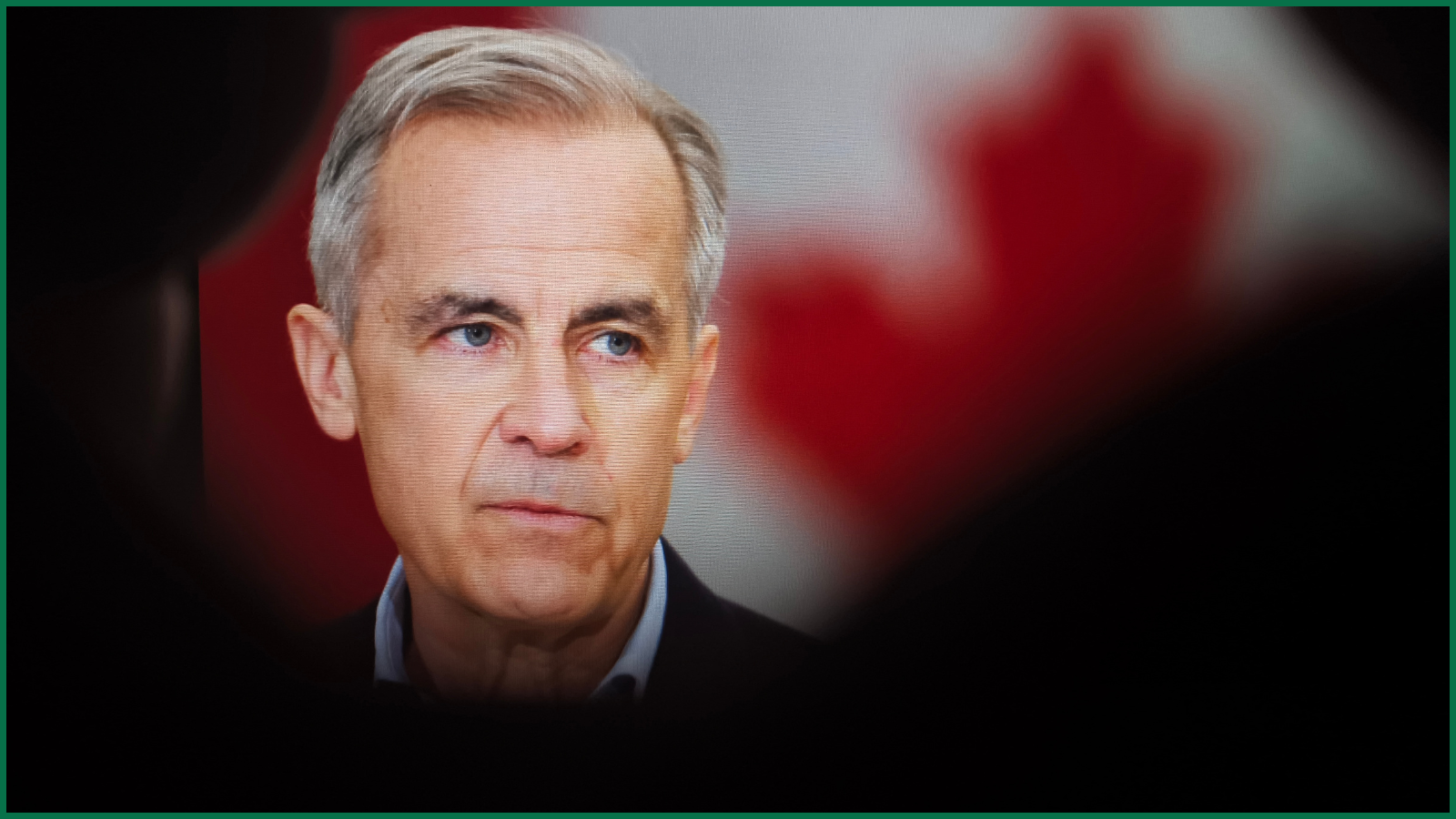
    Why is Canada getting hit so hard with American tariffs? It’s among the top five nations in terms of the relative tariff rate. Canada’s new prime minister, Mark Carney, had taken a tough tone toward Washington during the spring election, but he’s been very agreeable since taking office and eager to get a trade deal behind him. What is holding up the US side?

    Thanks,

    Ian.

    Hi Ian,

    For all the oceans Canada touches with its long borderlines drawn out over maps, there is one geographical disadvantage that has come with the northern territory: there is only one neighbour, and it’s a juggernaut of economic and military proportions. Trump sees a geographic dependency and is determined to use it as a cudgel to extract concessions from Canada.

    However lopsided the relationship may appear on paper, it is a mistake for any resource-rich country to play the pauper and beg to be relieved of their abundance. Yet that is exactly what Carney has done. When the US raised tariffs over laughable fentanyl export allegations, Canadian Liberals responded with a multi-billion dollar border security package. When Trump threatened a halt to trade negotiations over the digital service tax—applied to the harvest and sale of personal data by tech giants—Ottawa scrapped it. When the Ontario government ran an anti-tariff ad that Trump didn’t like, it was immediately pulled from the airwaves with a profuse apology from Carney. Despite this, Washington has suspended negotiations with its northern neighbour, preferring to leave the full brunt of tariffs intact.

    Epictetus said that bullies may mock your principles but, “if you let these people dissuade you from your choice, you will earn their derision twice over.”1 Trump, no doubt, sensed an opportunity the moment that Carney put his elbows down and went hat-in-hand to the White House shortly after winning his election. In that moment he had dutifully earned Trump’s derision—and it has been Carney dancing to Trump’s tune ever since. Why should the US negotiate tariffs when so much can be extracted with them in place? 

    The tariffs may be disastrous policy but that is unseen in Washington. Although the Business Council of Canada has tasked Carney with having the American president see the light, the opposite has occurred. As a global banker, Carney is powerless to look beyond the facts and figures of the neoliberal order. Meanwhile, Trump has invented a new genre of politik somewhere between the real and ideal—gutpolitik—and Carney is squirming within its sweaty fold. 

    It is unlikely he’s going to slither out. Ottawa should be leveraging the public appetite for a hardline on trade negotiations in order to open up a new relationship with China, including Belt-and-Road participation. Ottawa should be rescuing its environmental commitments and stabilizing unemployment with a worker owned enterprise program. Ottawa should be minting crown corporations in order to expand the national manufacturing of cars, homes and military equipment for domestic use. Instead automobile factories will shutter, knowledge will go to waste, corporate bailouts will accumulate, and billions will be shed abroad on arms purchases. 

    The neoliberal era is over. Trump is only a sign of the times. Until the public understands this, the slide into the abyss is irresistible.

    In sols,

        Your editor.

    Send your questions to the Reclamation: editor@thereclamation.co

    Footnotes:


    1. Epictetus, Discourses and Selected Writings (Penguin, 2008): 229. ↩︎