Category: Questions

  • Ask the Editor: A Silver Lining to the Clouds

    Ask the Editor: A Silver Lining to the Clouds

    Dear editor,

    Amidst the flurry of travel disruptions, high costs and global conflict, it is hard to see any positives. Is there anything to look forward to in these bleak times?

    Sincerely,

    Helen.

    [Sent via email]

    Hi Helen,

    In Marx’s materialist conception of history, particular attention is paid to the “objective conditions” of individual life and social being.1 These conditions include available technologies, resources, level of accessible material comfort and productive employment that shape our governing ideologies, happiness and culture. In the present economy we are heavily dependent on oil and gas for energy, fertilizer and plastic byproducts.

    This fossil fuel dependency has transformed the resource-rich Middle East into a site of economic competition between great powers. The result is a raging boil of oil money, ethnic strife and a vast quantity of weapons propping up systems of repression, resistance and neo-colonial extraction. What is happening in Iran right now is what happens when the pot boils over, just as it has previously boiled over in Yemen, Iraq, Afghanistan, Palestine, Sudan, Libya, Lebanon and Syria.

    It is important for those of us in the West to appreciate just how much of our perceived progress has relied on managing the conflicts and resources of other nations. The capitalist world order was largely cemented by accident, when Old World European technologies collided with New World resources and societies. But its persistence is consciously maintained by way of corporate exploitation of capital starved countries and military containment of economic rivals. In other words, there is an intrinsic relationship between the riches of one country and the poverty of another.

    Having survived the U.S. proxy war with Iraq, Iran became one of those rivals earmarked for “containment.”2 They were systematically marginalized from the global economy with sanctions and surrounded by American military bases. From the American point of view, this containment strategy was largely successful for decades and culminated with massive Iranian protests against the economic conditions of their country. The resulting crackdown only exposed the unsustainability of Iran’s trajectory.

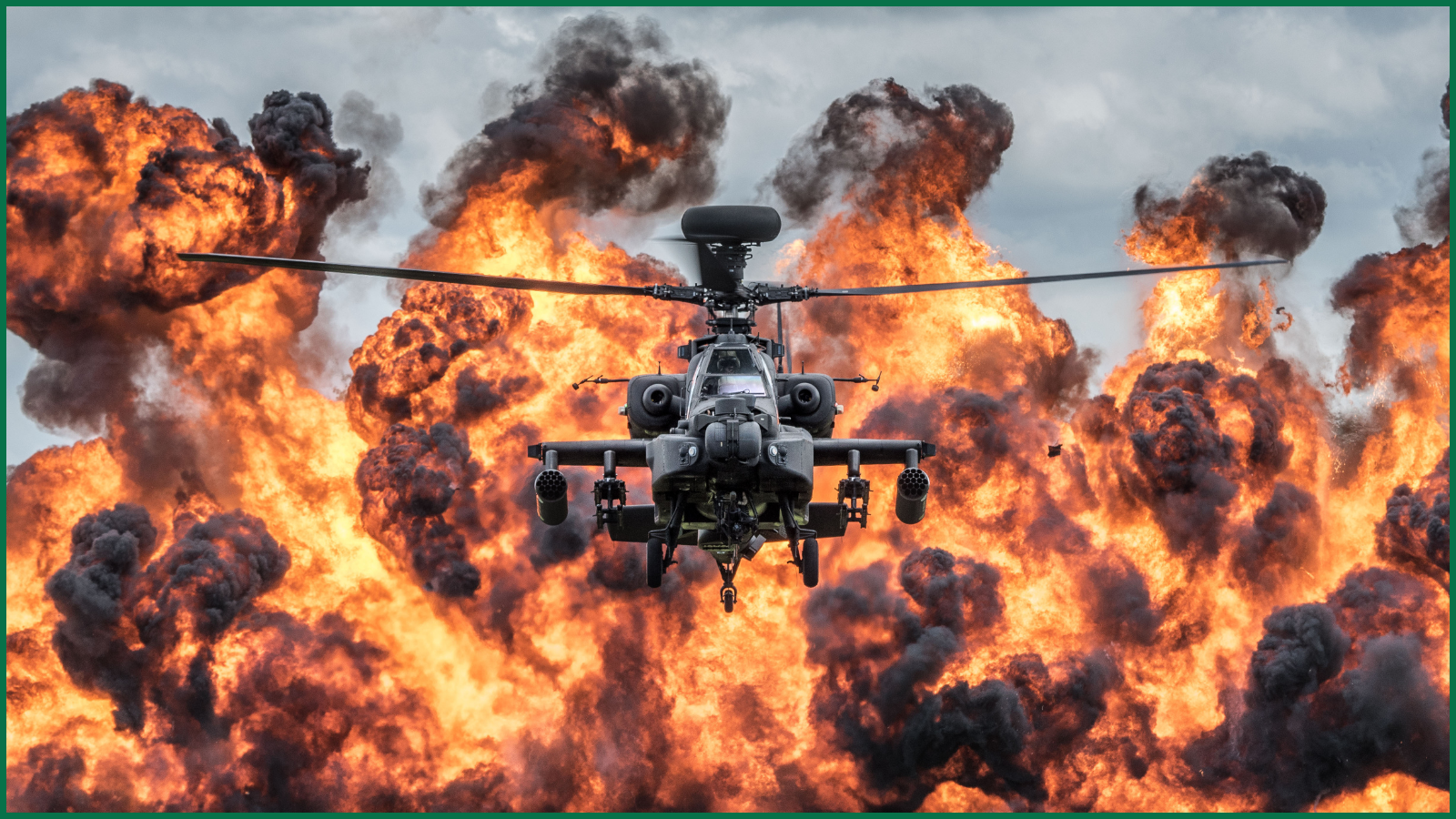
    Luckily for the IRGC, Trump’s decision to go to war with Iran allowed them to unleash the full force of their asymmetric power and they exploded out from the box that had previously contained them. Trump is now confronted with the stark reality that he won’t be able to contain them economically or militarily again. He’ll have to either destroy the country entirely or watch it become dramatically strengthened.

    The bleak circumstances of war are a heavy burden to bear for this geopolitical competition over economic dominance. But if there is a silver lining to these clouds, Iran has plucked it from the sky and laid it at our feet. They have weaponized the global dependency on oil and wielded it to their great advantage; they have exacted a toll from the genocidal state of Israel; they have exposed limits to American militarism, inspiring defiance from tormented nations like Cuba

    Since the belligerent and cowardly attack on Iran, the world has turned to greener fertilizers, electric vehicles and renewable solar and wind power generation for energy needs. A helium shortage will put the brakes on a runaway tech sector and military-industrial complex. From the ashes of war, we may find the objective conditions of mankind gradually change for the better. Since a hegemonic power cannot sanction the Sun or go to war over wind, the foundation of a post-capitalist cooperative economy slowly becomes concretized.

    Henri Lefebvre once said, “History puts its worst foot forward.”3 There is a duality to history, a tendency for progress to be paid up-front in coins forged by blood and fire. Iran is paying that price now in opposition to the oil-thirsty American establishment and Zionist lobby.  As allies for a better world, we can always hope that Tehran is the rock where the wave of western imperialism breaks. 

    In sols.

    Send your questions to the Reclamationeditor@thereclamation.co

    Footnotes:


    1. Erich Fromm, Escape From Freedom (Holt, 1969): 293. ↩︎

    2. China, Russia/the former Soviet Union and Iran have all found themselves surrounded by American bases at one time or another. ↩︎

    3. Henri Lefebvre cited in Jameson, Valences of the Dialectic (Verso, 2010): 287. ↩︎
  • Ask the Editor: Iran, and America’s Doomsday Scenario

    Ask the Editor: Iran, and America’s Doomsday Scenario

    To the editor,


    What is the outcome of the U.S.–Israeli attack on Iran?

    Thanks!

    Kora.

    [Sent via Bluesky]

    Hi Kora,


    By many accounts Americans and Israelis approached this military attack with different objectives. For the Americans led by Trump, the objective after the decapitation strike was the quick emergence of a compliant leader that would submit to Washington’s demands on the state. Israel no doubt knew that this outcome was unrealistic but nonetheless were elated to have American assistance with their ultimate goal, which is the total destruction of Iran as a functioning country.

    Alas, nothing has rationalized Iran’s notorious slogan of “Death to America! Death to Israel!” more than this joint U.S.–Israeli attack, which has already blown up children at a school in Minab and brought calamity to the entire population of Tehran. Assassinations and aerial bombardment have led Iranians to rally around the flag and this alone has frustrated American and Israeli designs. Even further, Iran has demonstrated the ability to hold the Strait of Hormuz and Gulf states hostage, while simultaneously inflicting heavy damage to Israeli infrastructure and American bases in the region.

    Iran has a strong hand to play as they try to end this war on their terms: war reparations from the U.S. and Israel, along with international security guarantees against future strikes. Ultimately, this war is one of attrition between Iranian missiles and regional interceptors. Whichever side runs out first will lose.

    If the United States and Israel neutralize Iranian weapons and prevail, the global status quo will remain depressingly the same. Trump will continue to mark more and more countries for imperialist expansion and Israel will solidify itself as the undisputed Middle Eastern military power without any counterweight.

    But the spectre of an Iranian victory against the West’s flagship militaries should not be taken lightly. In the Middle East, perceived strength matters more than anything else. This is how Israel and the United States have managed to expand their influence over Arab politics during the past few decades, despite those countries being massively unpopular amongst the Muslim populace.

    An Iranian victory replete with reparations would shatter the myth of Israeli invincibility and demonstrate U.S. military presence to be a security liability rather than an asset. The net effect would be a much smaller military footprint for the U.S. in the region as they lose control control over the Persian Gulf. Meanwhile, the prestige of Iran’s theocratic government in the Islamic world would soar to new heights.

    The Iranian conflict has already become a black hole for critical global energy supplies and western investment in the Gulf. This will weaken the ability of European capitals to aid Ukraine at a moment when Russia expects a windfall from its oil exports. If there is a U.S. defeat by Iran, don’t be surprised if Ukraine is the next western ally to settle a conflict on unfavourable terms.

    The Europeans have been on the receiving end of continuous insults and threats from Trump regarding tariffs and territorial annexation. Having witnessed the limits of U.S. military capability overseas, the next crop of European leaders should pursue a new security regime for their continent that includes a durable peace and trading relationship with Russia.1

    In Asia, the story is much the same. Their energy costs and stock markets have been hit hard by Trump’s decision to illegally attack Iran. They have also been subject to Washington’s erratic tariff policy. But luckily for Asians, they share their continent with a burgeoning superpower that has routinely demonstrated stability and restraint—and has invested in all the right places. China has weathered the oil shock with relative ease, thanks to long-term planning and allocations in green energy and battery technology. For Asia, the increasingly obvious limitations of American security only underline the benefits of deepening economic relations with Beijing.

    The stakes are obviously a lot higher than Trump realized when he decided to take a ride to Tehran with the genocidal prime minister of Israel. Israel, by the way, will be lucky to survive an Iran war loss over the medium term; war-addicted and Spartan countries only function so long as they win the conflicts they start. Across the world, we can expect the Middle East to lurch toward Iran, Asia to lurch toward China and Europe to lurch toward Russia. American military prestige will take a massive hit and the oil shocks this war has caused will do immense harm to Trump’s fossil fuel-driven economic agenda.

    The war is not yet over. But if the zenith of American hegemony passed over the sands of Iraq and Afghanistan, it may be Iran where the nadir is found.

    In sols,

        Your editor.

    Send your questions to the Reclamationeditor@thereclamation.co

    Footnotes:

    1. Polls show European views of the United States in free-fall over their treatment and future elections should reflect this mistrust. ↩︎
  • Ask the Editor: Does Gunboat Diplomacy Work?

    Ask the Editor: Does Gunboat Diplomacy Work?

    To the editor,


    Why does Trump like gunboat diplomacy and does it work?

    Thank you,

    Tyler.

    [Sent via Bluesky]

    Hi Tyler,


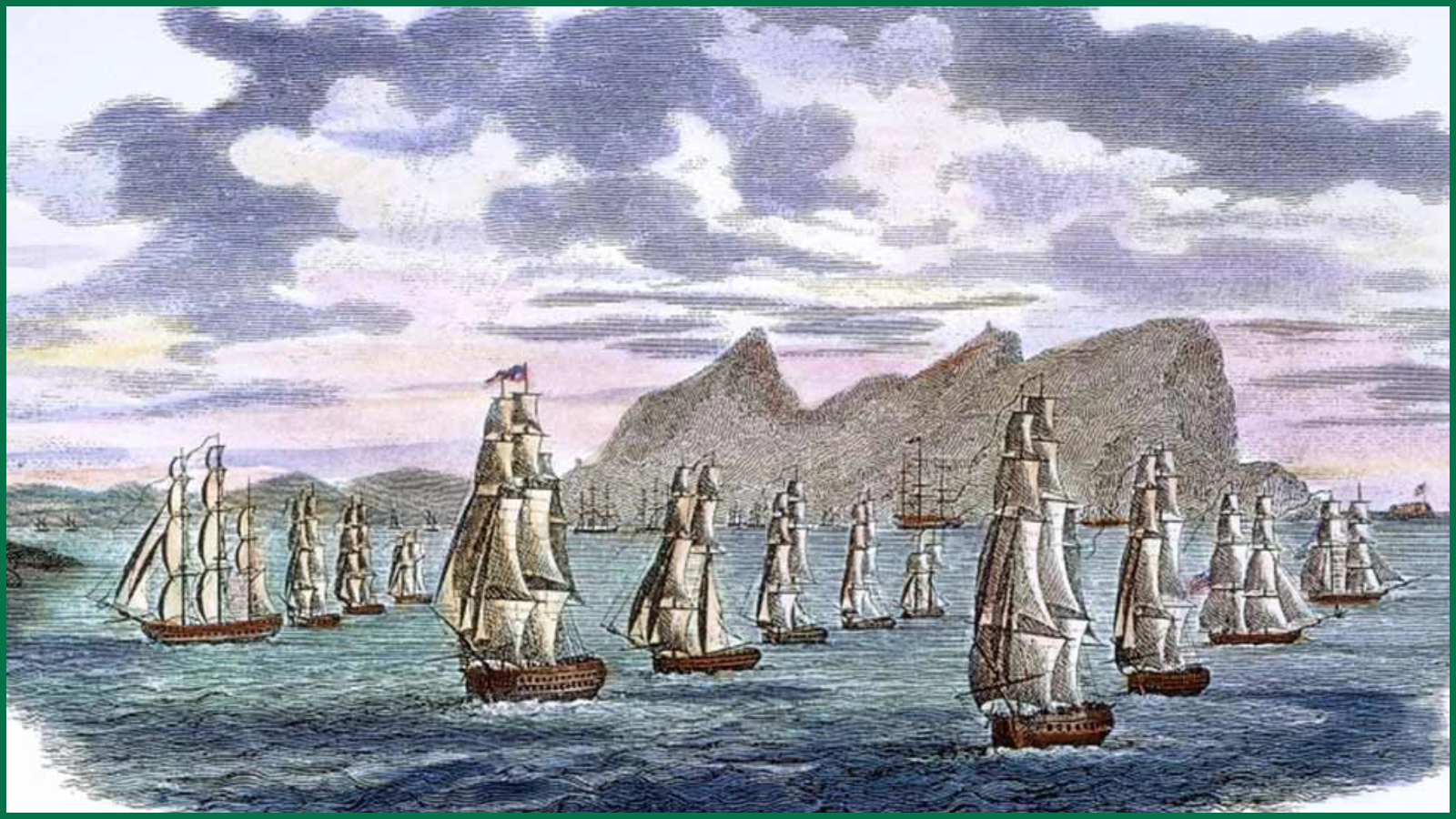
    The shrewd imperialist planner, Henry Kissinger, once said that “an aircraft carrier is 100,000 tons of diplomacy.” Gunboat diplomacy is to international relations what “the stickup” is to people on the street: a violent robbery at gunpoint. No sane person would hand over their wallet just to anyone who asked for it, but a gun in the face will change that equation. Since the 1800s, imperial powers had similarly learned that other countries were a lot more agreeable to lopsided treaties when a naval armada was docked along their coastline and ready to open fire. 

    Gunboat diplomacy was used by the British against China during the Opium Wars, against Haiti when the U.S. stole their national gold reserves, against Japan and Korea for purposes of U.S. trade, by France against Thailand for the relinquishing of modern-day Laos to French Indochina and the U.S. against Colombia for the acquisition of the Panama Canal Zone—to name just a few examples in a very long list.1

    The topic has gained new relevance in the age of Trump’s bulldozer approach to international relations. He has used a mix of tariffs and annexation threats against stalwart U.S. trading partners in order to browbeat them into accepting humiliating trade agreements. Meanwhile, explicit gunboat diplomacy has become Trump’s preferred tactic against countries under sanction and immune to tariffs. The first two months of 2026 have witnessed the U.S. navy kill and kidnap Venezuelans, impose a cruel blockade on Cuba and surround Iran with devastating weapons of war.

    A robber committed to the threat of violent harm does not have to exchange anything of material value in order to receive a ransom. The asymmetry of this transaction is what incentivizes his crime. Trump engages in gunboat diplomacy for the same reason he applies tariffs with zeal—he believes that asymmetrical coercion is the backstop to favourable terms. Under the narrow horizon of short-term self-interest, this approach can appear to work. But robbers do catch blowback. And with history as our guide, we see that this strategy of imperialist aggression often does as well. 

    Japan acquiesced to American demands in the 1800s—but this sent it down a road of aggressive industrial expansion, fascist government, the colonization of Korea and the bombing of Pearl Harbour. The British did impose harsh treaties on China—but these fomented the Boxer Rebellion that laid the foundation for Mao’s decisive civil war victory and modern China’s Marxist outlook. The French did expand their colonial holdings in Southeast Asia—but this, too, boomeranged in the form of subsequent communist revolutions.

    For every action there is an equal and opposite reaction. Capitalist powers have had the tendency to underestimate the agency of those that they dominate. Every war, tariff and threat introduces a new conflict, a new dialectical friction, into the tapestry of global relations. The United States has embarked on a strategy to leverage its economic and military supremacy in order to vassalize the world and extract surplus value without trading for it. On the surface, this may seem to work. But as global trade increasingly re-routes around the U.S., expect opposition to American hegemony to stiffen until it eventually comes undone.

    In sols,

        Your editor.

    Send your questions to the Reclamationeditor@thereclamation.co

    Footnotes:


    1. See Karl Marx, “The Anglo-Chinese Treaty” in Dispatches for the New York Tribune: Selected Journalism of Karl Marx (Penguin, 2007): 31-36 for details of the opium trade imposed on China and unequal treaties pursuant to it. ↩︎
  • Ask the Editor: Marxism and Intersectionality

    Ask the Editor: Marxism and Intersectionality

    To the editor,


    Is there a Marxist critique of intersectionality or did intersectionality come out of Marxism?

    Thank you,

    Lydia.

    [Sent via Substack]

    Hi Lydia,

    “Intersectionality” is one of those politically loaded terms that evokes a lot of contemporary discourse around equity, diversity, inclusion, accessibility and cultural “woke” wars. Because Marxism is a four letter word to many people on the right, people like Jordan Peterson and James Lindsay have described progressive efforts to remedy racism and homophobia as Marxist in nature. This is nothing new, by the way. Environmentalists, feminists, literacy advocates and anti-segregationists have all worn the communist label at one time or another. 

    “Intersectionality” was coined by Kimberlé Crenshaw and elaborated on by Patricia Hill Collins and others to describe the interlocking of social prejudices, economic inequalities and political disadvantages that apply to a variety of historically oppressed people. For example, intersectional theory posits that a Black woman or a gay Asian will confront social and political obstacles contingent on their minority status and independent of economic class.

    The concept of intersectionality is reasonable from the Marxist viewpoint. Marx himself observed a variety of race and gender-based discriminations amongst the working class in his own time. In factories, it was found that women and children could be exploited at lower wages than men.1 Amongst the English working class, the influx of Irish were reviled for their acceptance of lower wages and blamed for cheapening the labour market. And for the countries that had enslaved Africans for the plantation economy, Marx warned: “Labour cannot emancipate itself in the white skin where in the black it is branded.”2

    Between the premises of intersectionality and classical Marxism, there is an overlapping understanding that class alone does not determine social standing within capitalism. The trend toward DEI hiring policies of corporations, diversity quotas at universities or inclusive on-screen representation is something that could have been predicted by Marx. As capitalism has matured and globalized, it has naturally acquired a more cosmopolitan flavour and more demands are placed on the system from an increasingly diverse crowd of consumers and workers. For this reason many capitalist multinational corporations and Hollywood studios have adopted diversity policies with enthusiasm.

    As a result of diversity quotas, “woke” virtue signalling and the absorption of economic migrants by the West, antagonisms have arisen in society between majority and minority factions of workers, bureaucrats and entrepreneurs. Speaking of hostilities between ethnicities, Marx wrote:

    This antagonism is artificially kept alive and intensified by the press, the pulpit, the comic papers, in short, by all the means at the disposal of the ruling classes…It is the secret by which the capitalist class maintains its power. And the latter is quite aware of this.

    One can acknowledge the reality of historical oppression and simultaneously reject liberal remedies that seek to pit man against woman, coloured against white, queer against straight. Discrimination in any direction operates within the ruling class paradigm of artificial scarcity. Instead, socialism posits economic solutions of universal application: socialized housing, public healthcare, full employment targets and freely accessible higher education. Fair trading practices must be developed with Global South countries in order to eliminate exploitation and reduce the number of economic refugees.3 

    In the long run, it is only an economic base that strives toward universal abundance instead of capitalist profit that is capable of abolishing the social divisions manufactured by history. And that, I submit, is the Marxist position.

    In sols,

        Your editor.

    Send your questions to the Reclamationeditor@thereclamation.co

    Footnotes:

    1. Karl Marx, Capital: Volume One (Ancient Wisdom Publishing, 2019), 320. ↩︎

    2. Ibid, 195. ↩︎

    3. The international economy must be one that minimizes global poverty and reduces the demand of people to flee their homeland. Marx understood the challenges of accommodating large numbers of economic refugees in foreign societies and, in the case of the Irish, he attacked the root cause by demanding that Ireland be liberated from the claws of English landlords and capitalists. ↩︎
  • Ask the Editor: ‘The Rupture’

    Ask the Editor: ‘The Rupture’

    To the editor,

    Canada has been targeted with threats from Trump since Prime Minister Carney’s Davos speech. Can you tell me why it was so provocative?

    Thank you,

    Kay.

    [Sent via WordPress]

    Hi Kay,

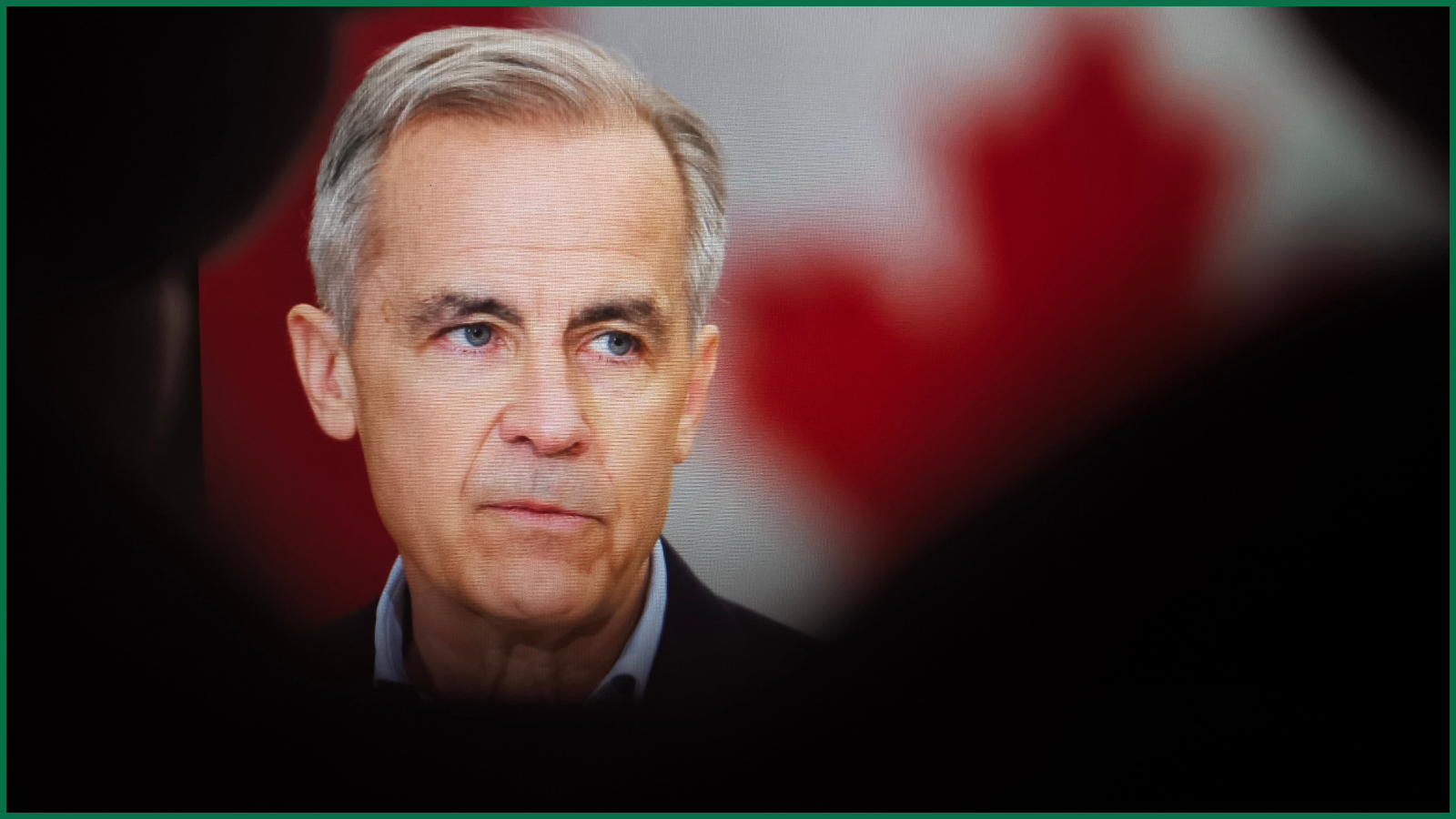
    Mark Carney’s diagnosis of “a rupture” in the world order has been hailed for its clarion call to middle powers to band together and form a counterweight to American global hegemony. Under threat of U.S. economic reprisals, Carney explained, a variety of demands are now being made on the allies that have benefitted from Pax Americana. As if trying to prove Carney’s point, Trump replied the next day: “Canada lives because of the United States. Remember that, Mark, the next time you make your statements.” By acknowledging Trump’s coercive demands, Carney invited another one—stop complaining or Canada might not live.

    Since 2016, Trump has promised to shake down the world on behalf of America and Carney only affirmed that fact in Davos. It is unclear if Trump really understood the content of the message or if he was merely offended that headlines were grabbed by another world leader. The psychological pathologies of the current U.S. leader are difficult to overstate. Unintentionally, Trump’s threatening response to Carney’s speech elevated its importance and imparted a lot more aura to its content than it would have otherwise had.

    Carney only described a rupture in the appearance of the world order. Not its substance. Speaking as an elite financier, Carney cited a controversial former president of Czechoslovakia and said it was only a sign in the window that made people believe in the working class power of former socialist states. As an analogy for the present, Carney implied that the concept of a liberal “rules-based international order” was only ever a guise for operational U.S. global hegemony. Strategic allies such as Germany, Saudi Arabia and South Korea enjoyed market access in exchange for adherence to “American interests”—but this was the extent of the norm.

    The U.S.-led global order has always been transactional and never about hifalutin “democratic values” or rational global governance. The trail of human rights violations, democratic overthrows, targeted assassinations and full-scale invasions is too long to claim otherwise. The revival of state-sanctioned piracy and gunboat diplomacy targeting Venezuela, Cuba and Iran only adds to a long-established pattern of lawless American aggression abroad.

    The shockwave of U.S. military rampage felt for decades in the Global South harkens Karl Marx: “The profound hypocrisy and inherent barbarism of bourgeois civilization lies unveiled before our eyes, turning from its home, where it assumes respectable forms, to the colonies, where it goes naked.”1 Trump is not a rupture to the American hegemonic order. He is the ruling class without clothes. He offends the elitist sensibility of a Davos crowd not accustomed to being slapped about the head by the swinging dick of America’s president. But let’s exit the world of posh Swiss resorts in the Alps. How about those crowds of Baghdad, Caracas, Mogadishu, Havana, Jakarta, Ramallah or Tehran? Threats of annexation and tariffs against middle powers must appear positively trifling next to the suffocating economic embargoes, CIA-managed torture chambers, genocidal carpet bombings and rock-ribbed support for right wing dictatorships that have visited the Global South.

    As a central banker, Carney is well aware of the vital function that international debt bondage and structural adjustment programs play in securing cheap labour and resources to middle powers. If he seemed to gesture toward the brutal and ongoing excesses of American control without denouncing any examples—this is why. The middle powers lack the scale of the hegemon but they lean on a system of dramatic capitalist exploitation all the same. Carney may be able to capture the zeitgeist of the World Economic Forum but a man with his pedigree will never apprehend the economic basis that is needed to construct a true new world order. 

    In sols,

        Your editor.

    Send your questions to the Reclamationeditor@thereclamation.co

    Footnotes:

    1. Karl Marx, “The Future Results of British Rule in India,” in Dispatches for the New York Tribune: Selected Journalism of Karl Marx (Penguin, 2007): 124. ↩︎
  • Ask the Editor: The Demonic Nature of Global Rearmament

    Ask the Editor: The Demonic Nature of Global Rearmament

    To the editor,


    There are huge increases to military budgets around the world and a lot of talk about a wider war with Russia, conflict with China over Taiwan and the “Donroe Doctrine” in the Western Hemisphere. Are countries preparing for  World War III?

    Thank you,

    Kyle.

    [Sent by email]

    Hi Kyle,

    The situations in Ukraine, Venezuela and Iran demonstrate an aggressive push for hegemonic consolidation: the U.S. is determined to put all of Latin America into a stranglehold and knockout Israel’s last major stronghold of resistance in the Middle East, while Europe is now tasked with keeping Russia out of their sphere. Throw in the rise of China, and these developments have the world starting to resemble the European balance of power that collapsed into World War I.

    In a world balancing on the weight of military strength, countries are compelled to invest in armaments or be tossed from the scale. Japan has rubber stamped a record-setting military budget and Taiwan has done the same. Canada wants to triple its military spending; Australia is under pressure to raise theirs by 75%. India, Germany and France all have proposals to double their military spending, with Emmanuel Macron adding: “To be free in this world we must be feared. To be feared we must be powerful.” Without parsing what that means to the freedom of those cowering in fear, Trump seems to agree with Macron by proposing a 50% increase to America’s already-whopping $1 trillion military budget. His proposed $1.5 trillion military spend doesn’t sound like a peacetime budget—that’s a budget for war

    In this political context, worrying about World War III is not unreasonable. Against a similar arms race backdrop in 19th century Europe, Friedrich Engels predicted World War I:

    I imagine that the plan is not to push things to extremities, to more than a sham war. But once the first shot is fired, control ceases, the horse can take the bit between its teeth…Eight to ten million soldiers will massacre one another and in doing so devour the whole of Europe until they have stripped it barer than any swarm of locusts has ever done.1

    Bombing countries like Iran or kidnapping the presidents of countries like Venezuela might not get us there. But desensitization to this uptick of radical interventionism makes a miscalculation more likely, as happened between the Austro-Hungarian Empire and Serbia once upon a time.

    The timing of this global rearmament could not be worse, given the present state of the environment and the residue of an inflationary crisis already aggravated by global conflict. Marx held complex views about the role of the military within the broader capitalist economy, but in the Grundrisse he noted: “The impact of war is self-evident, since economically it is exactly the same as if the nation were to drop part of its capital into the ocean.”2 Warfare vanquishes the resources that could be used to build an economy of human flourishing into plumes of blood and fire. In a competitive world of amplified scarcity such as it is, the proliferation of advanced weaponry and nuclear bombs adhere to a quest for economic dominance—consequences to human survival be damned.

    The ominous parallels between the first world war and a possible third recall Freud’s compulsion to repeat: we live in a neurotic civilization containing “a demonic character” whereby repressed traumas override the pleasure principle and are revisited again and again and again in order to “re-encounter our identity.”3 Given the violent and domineering history of capitalism, revisiting past demons in a nuclear-armed multipolar world would be nothing short of biblical.

    In sols,

        Your editor.

    Send your questions to the Reclamationeditor@thereclamation.co

    Footnotes:


    1. There was an estimated 8.8 million military deaths during World War I, making Engels’ prediction exceptionally accurate. A further 6–13 million civilian casualties are estimated, resembling that “swarm of locusts” stripping Europe bare. ↩︎

    2. Karl Marx, Grundrisse (Penguin, 2005): 129. ↩︎

    3. Sigmund Freud, Beyond the Pleasure Principle (Broadview Press, 2011): 74-75. ↩︎
  • Ask the Editor: Predicting 2026

    Ask the Editor: Predicting 2026

    To the editor,


    What do you expect in the year ahead?

    Happy New Year,

    Teela.

    [Sent from Bluesky]

    Happy New Year!

    Predictions may be a fool’s errand but there is always some low-hanging fruit. Democrats will sweep midterm elections, Canada’s prime minister likely obtains his coveted majority government and plastic pollution continues to worsen. Marxists understand the relatively low stakes of these surface-level tendencies. The world we are living in is one where power has long been consolidated by an elite corporate class; yawning economic inequalities and corrupted liberal democracies are only symptoms of this fact. I do not foresee any challenge to ruling class power in the near term, which means that the direction of 2026 has already been set.  

    For all its Trump-related pandemonium, 2025 did not really move the needle away from trajectories previously established. Inflation continued to eat away at pocketbooks around the world. Russia and Israel aggressively redrew the maps of their respective neighbourhoods. China held on to its massive gains in global exports and new technologies. The Western world, including Canada and the European Union, have once again proven politically adrift without the tide of American leadership. The artificial intelligence economy—buoying the world’s stock markets by hype—has turned flat without reaching any clear tipping point. Venezuela has invited condemnable aggression from Washington and this is the fate of any Latin American country daring to exercise sovereignty over their national resources.

    With the big stories of 2025, you’ll notice there was not a lot that was new; events have all unfolded around past momentum. Even an objective change, like US tariff polilcy, has only accelerated the existing trend of Western decline relative to a rising East. Populist movements demonstrate a world clamouring for catharsis but 2026 won’t be the year to deliver it. That is because the economic forces at play tell a story of near-term easing rather than escalation. Inflation is slowing down. AI investors have begun to exercise caution amidst talk of a bubble. The prospect of a Russia–Ukraine ceasefire signal the willingness of both to prioritize economic repair over military objectives. And the erraticism of the Trump White House has only spurred China to stay its course while the West begrudgingly flounders. The fate of Venezuela’s Maduro government may be an open question but, whatever happens, it will be a movie we have seen before.

    The tense stability which looms over the globe this January does not portend any major improvement. Financial strain, environmental deterioration, warfare, oligarchic power, political impulsivity and social unrest will all continue to simmer under the heat of the recent past. The ancient Greek philosopher Anaxagoras said that to “separate off” elements from one another takes a revolution.1 Likewise, the West will need to “separate off” its current ruling class in order to realize a change to its set trajectory. History shows us that revolutions do not occur unless class conflict reaches a raging boil. Although we will be waiting past the new year for that, let’s raise a glass to 2026 and try our best to enjoy the simmer.

    In sols,

        Your editor.

    Send your questions to the Reclamationeditor@thereclamation.co

    Footnotes:

    1. Early Greek Philosophy, trans. Jonathan Barnes (Penguin, 2002): 196. Anaxagoras here was referencing the nature of matter in the universe. ↩︎
  • Ask the Editor: Carney No Match For Trump’s Gutpolitik

    Ask the Editor: Carney No Match For Trump’s Gutpolitik

    To the editor,


    Why is Canada getting hit so hard with American tariffs? It’s among the top five nations in terms of the relative tariff rate. Canada’s new prime minister, Mark Carney, had taken a tough tone toward Washington during the spring election, but he’s been very agreeable since taking office and eager to get a trade deal behind him. What is holding up the US side?

    Thanks,

    Ian.

    Hi Ian,

    For all the oceans Canada touches with its long borderlines drawn out over maps, there is one geographical disadvantage that has come with the northern territory: there is only one neighbour, and it’s a juggernaut of economic and military proportions. Trump sees a geographic dependency and is determined to use it as a cudgel to extract concessions from Canada.

    However lopsided the relationship may appear on paper, it is a mistake for any resource-rich country to play the pauper and beg to be relieved of their abundance. Yet that is exactly what Carney has done. When the US raised tariffs over laughable fentanyl export allegations, Canadian Liberals responded with a multi-billion dollar border security package. When Trump threatened a halt to trade negotiations over the digital service tax—applied to the harvest and sale of personal data by tech giants—Ottawa scrapped it. When the Ontario government ran an anti-tariff ad that Trump didn’t like, it was immediately pulled from the airwaves with a profuse apology from Carney. Despite this, Washington has suspended negotiations with its northern neighbour, preferring to leave the full brunt of tariffs intact.

    Epictetus said that bullies may mock your principles but, “if you let these people dissuade you from your choice, you will earn their derision twice over.”1 Trump, no doubt, sensed an opportunity the moment that Carney put his elbows down and went hat-in-hand to the White House shortly after winning his election. In that moment he had dutifully earned Trump’s derision—and it has been Carney dancing to Trump’s tune ever since. Why should the US negotiate tariffs when so much can be extracted with them in place? 

    The tariffs may be disastrous policy but that is unseen in Washington. Although the Business Council of Canada has tasked Carney with having the American president see the light, the opposite has occurred. As a global banker, Carney is powerless to look beyond the facts and figures of the neoliberal order. Meanwhile, Trump has invented a new genre of politik somewhere between the real and ideal—gutpolitikand Carney is squirming within its sweaty fold. 

    It is unlikely he’s going to slither out. Ottawa should be leveraging the public appetite for a hardline on trade negotiations in order to open up a new relationship with China, including Belt-and-Road participation. Ottawa should be rescuing its environmental commitments and stabilizing unemployment with a worker owned enterprise program. Ottawa should be minting crown corporations in order to expand the national manufacturing of cars, homes and military equipment for domestic use. Instead automobile factories will shutter, knowledge will go to waste, corporate bailouts will accumulate, and billions will be shed abroad on arms purchases. 

    The neoliberal era is over. Trump is only a sign of the times. Until the public understands this, the slide into the abyss is irresistible.

    In sols,

        Your editor.

    Send your questions to the Reclamationeditor@thereclamation.co

    Footnotes:


    1. Epictetus, Discourses and Selected Writings (Penguin, 2008): 229. ↩︎
  • Ask the Editor: To End Fascist Terror

    Ask the Editor: To End Fascist Terror

    To the editor,

    What do you think of the recently approved peace plan for Gaza? I’m skeptical, because it was drafted by Trump’s team and he has openly discussed ethnically cleansing the strip in the past. However, I just want the genocide to end. Does this new resolution have a chance to do that?

    Thank you,

    Serena.

    Hi Serena,

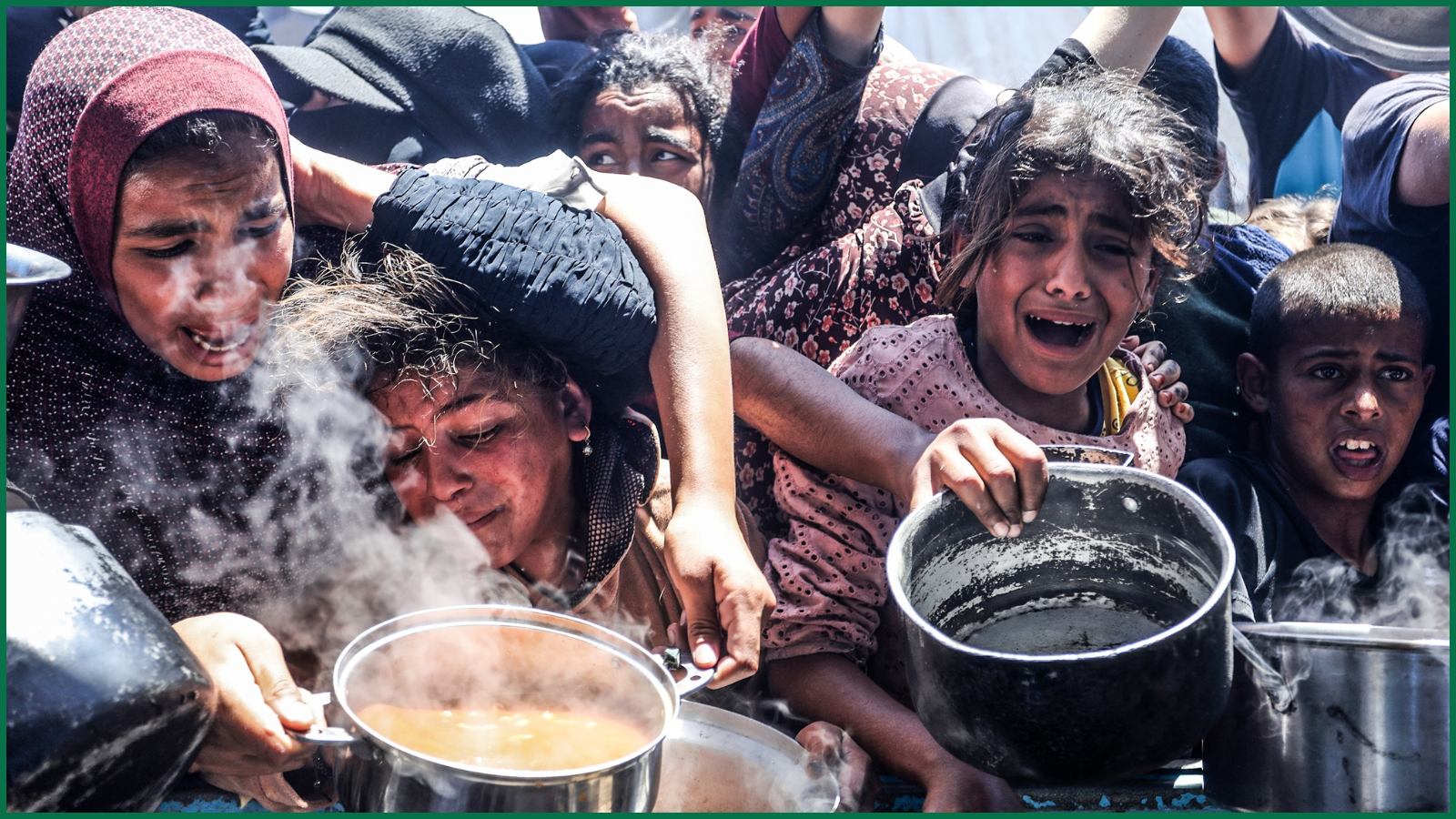
    If the history of the colonization of Palestine is any guide, it does not bode well for Gaza. So many waves of diplomacy have broken along the Mediterranean shores of Palestine, mainly owing to international under-appreciation of one fact concerning Israel: its existence is predicated on the erasure of Palestine. This is why hundreds of historic Palestinian villages under Israeli jurisdiction have been razed and planted over, bulldozed and repopulated by settlers. This is why thousands of ancient olive trees in the West Bank are either set on fire or uprooted by the occupying military every year. This is why militant settlers run pogroms on Palestinian communities. To recognize a Palestinian state would be to recognize a people they’d rather not exist, and face the cold mirror of claims to ethnically cleansed, illegally acquired territory.

    The international failure to comprehend the nature of Zionism can be attributed to the general failure to comprehend the nature of the dialectic: “an extreme of one state or action suddenly shifting into its opposite.”1 While the idea of a bi-national, multi-religious state in Palestine was popular in Zionism’s early history, the fires of Nazism in Europe had so-brutalized the Ashkenazi population that creating a radical ethnostate of their own suddenly appeared as a violent necessity. 

    The pursuit of this ethnostate has walked Israel into a permanent state of warfare since its inception. The monstrous timeline that we find ourselves in only captures the adage: war makes fascists of us all. While Israeli leadership had erstwhile attempted to make normalcy with recognized Arab nations, the 2023 thrust of Hamas attackers into the motherland caused “the bubble to burst and the monster to leap forth before our eyes.”2 The resulting genocide in Gaza at the hands of the fascist state is one of the the gravest horrors in human history, making shameful witnesses of all the world’s nations.

    The tempo of death may slow but it is important to understand that fascist societies cannot be negotiated with. They can only be brought into submission. In this case, nothing short of withering sanctions against Israel and foreign protection of highly-endangered Palestinian lives in the West Bank and Gaza Strip has a chance of tempering Israeli aggression, rolling back illegal settlements and bringing peace. Sun Tzu cautioned that one must know the enemy to avoid defeat. Western leadership cannot even identify the enemy of this colonial struggle, let alone understand them. The intention underwriting Trump’s 20-point plan may be sound; its knowledge of the enemy is not.

    In sols,

        Your editor.

    Send your questions to the Reclamationeditor@thereclamation.co

    Footnotes:


    1. G.W.F. Hegel, The Science of Logic (Hythloday Press, 2014): 96. ↩︎

    2. Karl Marx, The Eighteenth Brumaire of Louis Bonaparte. ↩︎
  • Ask the Editor: The Meaning of Jeffrey Epstein

    Ask the Editor: The Meaning of Jeffrey Epstein

    To the editor,

    Will Trump’s past association with Jeffrey Epstein take him down, as it did to Prince Andrew and Peter Mandelson in the UK? Who else might be involved and why is everything so slow to come out? I’ve been hearing about Epstein and Ghislaine Maxwell for years but have only followed the story over the past year.

    Respectfully,

    Robert.

    Hi Robert,

    It is impossible to judge whether the full magnitude of the Epstein ring will ever emerge. When this story first made headlines, it seemed plausible that the crimes were only the work of a perverted billionaire who used people like Bill Clinton, Donald Trump, Bill Gates and various Hollywood celebrities to shield his reputation. Since Trump was returned to the White House he has made blunt attempts to suppress the Epstein story—even labelling it as a hoax. Predictably, this tactic has backfired and instead made Epstein an even greater object of scrutiny.

    Setting the prurient details of the pedophile ring aside, the number of prominent people that Epstein had personally met and spent time with is strange. Over the summer, Chris Hedges recorded an illuminating podcast with Nick Bryant, the investigative journalist who first published Epstein’s contact list and flight logs. They cover the obscure relationship that Jeffrey Epstein had with Ghislaine Maxwell, his mysterious source of wealth and the possibility that he was an intelligence asset running a honeytrap operation. The “friendships” that Epstein was desperate to make and his connections to the Israeli government certainly add weight to that possibility.

    The political ramifications are fairly straightforward. Trump’s proclivities are well documented and long-known at this point. It is unlikely that his involvement in Epstein’s crimes will move the needle for anybody unconvinced by prior evidence. Outside of the Trump cult, don’t be surprised to see a few more heads roll as more details about Epstein’s past associations come to light. 

    The meaning of Jeffrey Epstein should not be partisan scorekeeping. These are crimes committed against flesh-and-blood working class children whose victimization was enabled by capitalist class power. Intelligence asset or not, it is no coincidence that Epstein first accessed wealth before building a sex trafficking ring. Mark Fisher once described capital as “an abstract parasite, an insatiable vampire and zombie-maker; but the living flesh it converts into dead labour is ours, and the zombies it makes are us.”1 As capitalism turns both nature and humanity into venal objects, those who live by the labour of others are the most ripe to feel entitled to the bodies of workers and their children.

    The crimes are obscene but that is not why it runs in the collective consciousness. What the Epstein saga and other conspiracy theories reflect is a deep-seated insecurity that we have about our position in the hierarchy of capitalist production. The glaring lack of justice for working class families preyed on by Jeffrey Epstein and Ghislaine Maxwell is an illustration of class domination; an economy where labouring bodies transform the world into a playground for the rich.

    In sols,

        Your editor.

    Send your questions to the Reclamationeditor@thereclamation.co

    Footnotes:
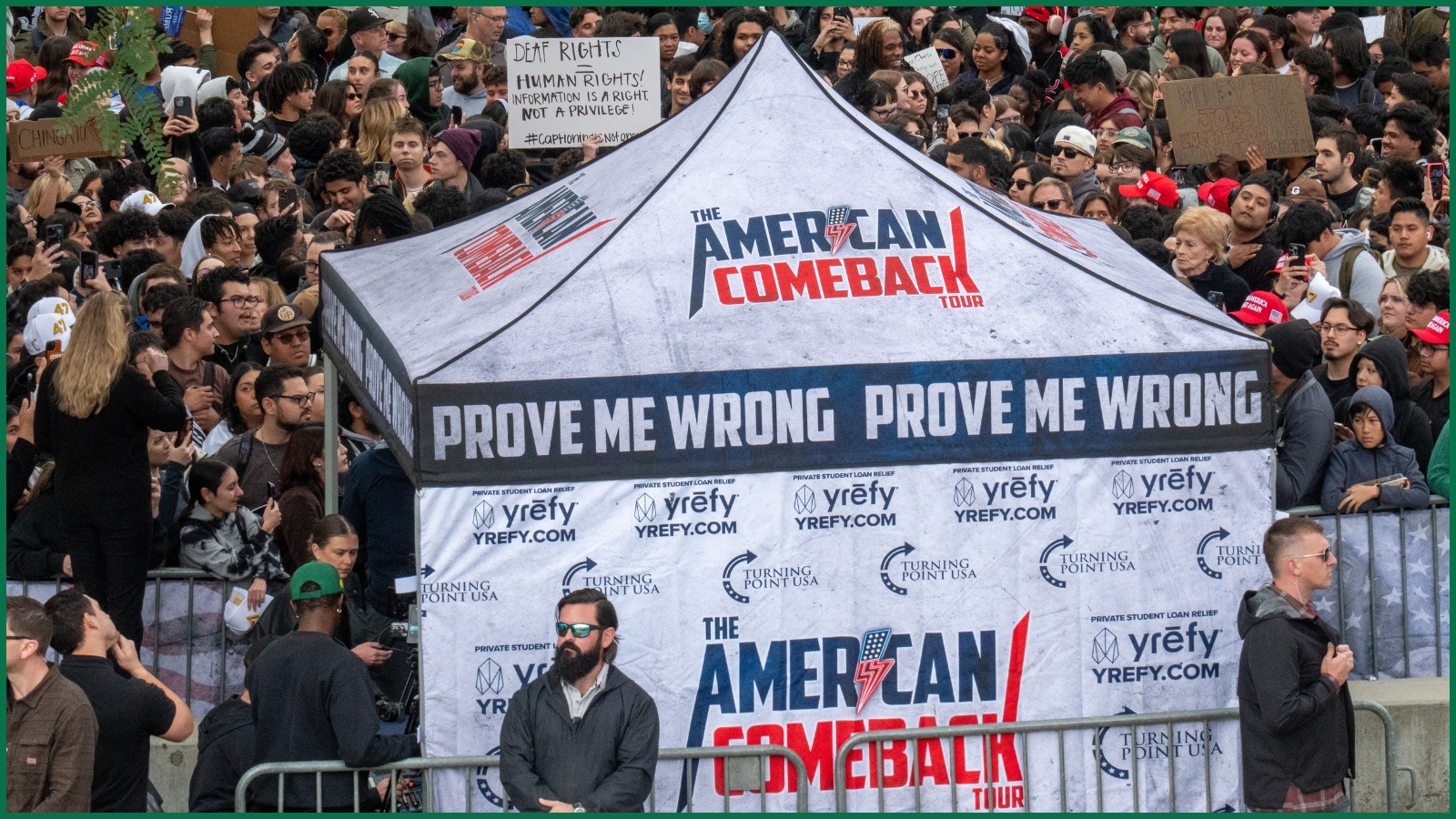

    1. Mark Fisher, Capitalist Realism: Is There No Alternative? (Zero Books, 2009): 15. ↩︎

  • Ask the Editor: “I’m Afraid of Dying”

    Ask the Editor: “I’m Afraid of Dying”

    Dear editor,


    I’ve been surrounded by death recently. At least it feels like that. My mentor from college passed away from metastatic breast cancer a few months ago. She was in her thirties. Then it was a cherished family friend; in her sixties, also cancer. Most recently a co-worker’s heart gave out on the job. That was only two months ago. I have felt doom since then. It is affecting my sleep. What if I don’t wake up in the morning? Any moment my life could be torn away from me. Will I receive a cancer diagnosis? Brain aneurysm? Could my heart explode next time I am on the treadmill? What happens afterward? I’m afraid of dying.

    Thanks,

    Charlotte.

    Dear Charlotte,

    I find the present age a little too scientific about this issue. Regularly attend the doctor, have blood analyzed, wear a helmet on the bike and don’t think about mortality. That’s a long ways off. And it might be. But it might not be. In my own experience, grief is almost “not supposed to be” discussed past the funeral and, for pensive people, this prohibition may exacerbate the death anxiety. In order to live with the uncertainty of existence we must dispel the image of a hungry grim reaper hanging about our shadows with a gleaming sickle.

    Freud saw death as a drive to “restore an earlier state”—the state of inorganic being. And Marx said that “death seems to be a harsh victory of the species over the particular individual and to contradict their unity.” Both are true in that rational Enlightenment sort of sensibility but they have all the comfort of a cold steel bed. 

    Religious beliefs aside, I’ll point out that the ancient philosophers tended to be more confrontational with this subject than those that came later. At the height of Christendom all attention was paid to the afterlife and in modernity all attention is paid to rigid inquiry. For this subject I turn to to the Epicureans who lived by the adage: “Death is nothing to us.” As atomic beings, once we lose our senses, we lose our ability to perceive, worry or fear anything. It is therefore irrational to worry about non-existence as there is nothing that can be feared in that state. What you are experiencing is neither an authentic fear of death nor a fear of loss. We do not lose our lives, we only cease to live them.

    It seems to be the suddenness by which your loved ones and colleague stopped living that has aggravated your grief and catalyzed anxiety. There may be unfulfilled wishes that flummox you. Epicurus said: “He who is in least need of tomorrow will approach it with the greatest pleasure.”1 This is where I believe you should channel your conscious energy. What provides you enjoyment? Try to arrive happy every night to bed. There are likely social pressures and internal judgements that you are facing. Consciously and humbly work through them. Do you have unfulfilled goals and aspirations stoking this “need for tomorrow”? It is important that you locate these because they are the true sources of anxiety. The fear of dying is relieved once you temper the need for tomorrow and render it no more than a pleasant want.

    In sols,

        Your editor.

    Send your questions to the Reclamationeditor@thereclamation.co

    Footnotes:


    1. Brad Inwood and L.P. Gerson, eds., The Epicurus Reader: Selected Writings and Testimonia (Hackett Publishing, 1994), 103. ↩︎
  • Ask the Editor: “What is Postmodernism?”

    Ask the Editor: “What is Postmodernism?”

    Dear editor,


    Here’s something I’ve heard applied to Donald Trump, woke liberal activists and everyone Jordan Peterson doesn’t like: postmodern. It’s also a label placed onto some of my favourite films, buildings and artwork, like Eternal Sunshine of the Spotless Mind, the Petronas Towers in Kuala Lumpur and Andy Warhol prints.


    What is postmodernism? Is it good or bad?

    Cheers,

    Sora.

    Dear Sora,


    In his 1991 book Postmodernism, or, the Cultural Logic of Late Capitalism, Fredric Jameson argued presciently that the radical structural changes to the economy underway in the 1980s created a western culture disillusioned by progress, marking a break with modernity in the process.1 33 years later, the disillusionment has deepened and postmodernism rules the public sphere


    After the medieval period was destroyed by the riches of exploited labour and resources from the Americas, modernity followed in its wake. Modernity is characterized by Enlightenment philosophy, secularization and science, liberal democracy, romantic and realist artwork and International Style architecture. It is debatable whether we have truly exited modernity but postmodernism can at least describe its latest evolution. 


    The most consequential casualty of the postmodern turn is the belief in progress. This has given space for right wing populists around the world to lash out at the previous order and ruling institutions. Lacking any philosophical grounding, there has been a tidal wave of contradictory political expressions coming in from the right: nostalgia for past glory while undermining the institutions that facilitated it; trickle down tax policies and trade protectionism; conspiracy theories and “alternative facts;” religious affirmations and hedonistic menageries of drugs and sex. Anything goes, and this is the hallmark of postmodernism. Because there is no grand narrative of history or final destination for humanity, nothing has to make sense beyond the present moment. Postmodernism did not produce identity politics; on the contrary, identity politics relied on the modernist narrative of a society gradually abolishing social prejudices. The triumphalism of postmodern politics has destroyed the “woke” idea, and liberals abandon it as rats flee a sinking ship.


    Many of the postmodern elements seen lately in politics have existed for years in the realm of culture. The parade of cinematic reboots and remakes, nonlinear story structures, imitation of past styles without context and a fusion of high and low art are a few postmodern characteristics that Jameson identified. Postmodernist culture like film, music, artwork or architecture, relies on extensive reference to the past because of an inability to apprehend the future.


    Postmodernism isn’t good or bad. It is simply the cultural analog to our current economic structure and material life. Finding resonance with postmodern culture is expected as we, too, are products of late capitalism.  Just as we see postmodernism dominate the society of a nihilistic West, futurism dominates the society of an optimistic China. Only when the West has consciously apprehended its economic levers will it be able to determine its future and set foot to a new era yet again.

    In sols,

        Your editor.

    Send your questions to the Reclamationeditor@thereclamation.co

    Footnotes:


    1. Fredric Jameson, Postmodernism, or, the Cultural Logic of Late Capitalism (Duke University Press, 1991). ↩︎
  • Ask the Editor: “Online Shopping and Overspending”

    Ask the Editor: “Online Shopping and Overspending”

    Dear editor,


    There’s too much out there already. I’m online shopping and overspending. I can’t say exactly when it started, it crept up on me sometime after I started my current office job. I’m reading promotional emails at lunch and browsing my socials and Amazon after dinner. I am getting at least one new package every day.

    The worst part is I’ll start browsing for something that I think I need to buy, like tablecloths, and end up with a couple of belts. I’ll forget about the tablecloth until the next day and it happens again. Money can get tight when I need it unexpectedly or for a social obligation. It all seems so wasteful and I’m feeling guilty. What can I do?

    Thank you,

    Patricia.

    Dear Patricia,

    You are a human being. There is a side to our nature that is thoughtful, caring, cooperative and holistic. This is where the guilt stems from. Then there is another side that is impulsive, greedy, hungry and competitive. This is where the overconsumption stems from.

    It is a deafening fact that we exist in an economic system that appeals to the worst side of our nature and it makes us miserable. We do not choose these circumstances but we are wise to understand them. 

    In Lacanian terms, what is happening is repetition stemming from a lack. In the process of becoming fully developed subjective individuals, a split develops between conscious and unconscious, ourselves and others, who we think we are and who we really are. The resulting void is the lack that causes desire.1 When you intend to buy one thing only to buy something else, as in a trance—that is not important here. It may feel as though you are filling a void with that flash of dopamine that is transmitted once your item is on its way. But this is a void that cannot be filled, it can only be distracted from and kept away at a distance. The impossibility of complete satisfaction will drive repetition, resulting in deflation upon realization that the void remains.

    Knowing this won’t fix your problem but hopefully it helps break the current pattern of repetition. Scroll to the bottom of those promotional emails and unsubscribe yourself from all of them. Replace browsing time with another activity, preferably off-phone. Make a conscious effort to buy exclusively from brick and mortar stores, where possible.

    Consider Heraclitus: “Always having what we want may not be the best good fortune. Health seems sweetest after sickness, food in hunger, goodness in the wake of evil, and at the end of daylong labour, sleep.”2 Once novelty, need and planning are incorporated into your purchases, they will feel gratifying once more.

    In sols,

        Your editor.

    Send your questions to the Reclamationeditor@thereclamation.co

    Footnotes:


    1. Calum Neill, Jacques Lacan: The Basics (Routledge, 2023): 56-58. ↩︎

    2. Heraclitus, Fragments (Penguin, 2003): 69. ↩︎
  • Ask the Editor: “Why Was Charlie Kirk So Popular?”

    Ask the Editor: “Why Was Charlie Kirk So Popular?”

    Dear editor,


    The coverage has been wall-to-wall ever since the recent assassination of Charlie Kirk. I understand it is a tragedy to lose a young family man to homicide. Politics is very divided now. Despite this, people are getting fired for criticizing Kirk’s politics. With everything happening in the world, I did not see this escalating so much. I had only heard of Charlie Kirk and Turning Points USA in passing before this happened but now I realize that he was big in the Trump world. Why was he so popular to begin with?

    Thanks,

    Davey STL.

    Dear Davey,

    In western representative democracies, politics has literally become a bloodsport. Despite this, the range of issues being debated are actually very narrow. There is always a centrist liberal party and a right wing conservative party and both of them want to maximize returns for wealthy donors above all. There is some discussion about foreign policy, tweaks to government distribution and emotional social issues. That’s about it. In Canada, we have a corporate stooge for prime minister. He campaigned as some kind of progressive nation-builder but he has been anything but in government. 

    Right wing donors in the United States, under the guise of “libertarianism,” are particularly focused on unshackling themselves from environmental protections and labour laws while gaining tax loopholes and subsidies. These ideas aren’t very saleable in the perfunctory elections that take place every couple of years and that’s where activists like Charlie Kirk come in.

    Kirk found a couple of wealthy patrons for his Turning Point organization when he was about 18 years old: Bill Montgomery and Foster Friess. They plugged him into the obscenely vast and well-funded right wing donor network that elevated him to star-status on the right. He built his brand identity by debating liberal college students for a wider audience. In one produced for Jubilee Media, there were five topics discussed: abortion, gender studies, trans-women, diversity, equity and inclusion (DEI) hires and affirmative action. Nothing about corporate power, environmental protection, financial monopolies or the military-industrial complex—the issues that will actually impact the future well-being of society. And that’s the point. Noam Chomsky: 

    The smart way to keep people passive and obedient is to strictly limit the spectrum of acceptable opinion, but allow very lively debate within that spectrum – even encourage the more critical and dissident views. That gives people the sense that there’s free thinking going on, while all the time the presuppositions of the system are being reinforced by the limits put on the range of the debate.1

    When Marx and Engels wrote “the ideas of the ruling class are in every epoch the ruling ideas”—they weren’t talking about the “ideas” paraded about by Joe Rogan, CNN or Charlie Kirk. They were talking about those that can’t be questioned.

    The ruling class lost a talented propagandist, a powerful distractor. Kirk should not have been murdered. It is a tragic loss for his family and his assassination will play right into the hands of his own talking points. After all, if he can be killed over the things he said, those things must now seem really important. 

    In sols,

        Your editor.

    Send your questions to the Reclamationeditor@thereclamation.co

    Footnotes:


    1. Noam Chomsky, The Common Good (Odonian Press, 1998): 43. ↩︎
  • Ask the Editor: “Is China For Real?”

    Ask the Editor: “Is China For Real?”

    Dear editor,

    To be honest, I did not pay much attention to China until I learned that a number of my colleagues were using DeepSeek and preferred it to the American ChatGPT. Since then I have become aware of their advanced renewable megaprojects, electric vehicles and 6G technology, the Great Green Wall, their leading high speed rail network and epic skylines and bridges.

    After the recent military parade, a number of people have told me that the advanced equipment on display may not be real, that the West still leads in terms of military power and computer chips. But considering the other ways they have left Western nations behind, I am not so sure. Are they the new superpower? Is China for real?

    Thanks,

    Bruce.

    Dear Bruce,

    You’ve answered half of your own question: if the existing civilian technology and visible infrastructure in China is more advanced than anywhere else, why wouldn’t their military be the most advanced as well? 

    There are obvious safety reasons explaining why live explosives aren’t going to be marched down the centre of Beijing. But given China’s successful track record deploying technology, it is likely that the weapons on display are already operational or will soon be in production. There were many potential customers in the audience, after all. 

    China is definitely for real. The question about superpower status is difficult to answer and I’ll refer you to a previous article about where things currently stand between Chinese and American supremacy. Questions of that sort are often only apparent in hindsight. Ten years from now, we may look back at the 2025 China Victory Day Parade as a decisive turning point in world history.

    The doubters will claim that the power of these weapons is unknowable until they are tested in battle, as if rooting for war. If Xi Jinping has learned any lessons from the great Chinese military strategist Sun Tzu, let’s hope it was this: “The skillful leader subdues the enemy troops without any fighting.”1 With a U.S. shift away from Asia on the horizon, Xi’s parade may have done the trick.

    In sols,

        Your editor.

    Send your questions to the Reclamationeditor@thereclamation.co

    Footnotes:


    1. Sun Tzu, “Attack by Stratagem” in The Art of War. ↩︎
  • Ask the Editor: “I Am Losing My Hair”

    Ask the Editor: “I Am Losing My Hair”

    Dear editor,

    I am losing my hair. The first time I noticed was a few months ago and I did not think on it much. But the signs are everywhere: cleaning the shower drain, fluffing my pillow. The process is accelerating. Yes, I have been to the doctor. If there is a vitamin or mineral deficiency, it is not showing. Stress, genes and/or hormones, she said. 

    I don’t think anybody can fix this problem with the follicles. What I am left with is a distressed feeling, particularly around the mirror. I dread to run my hands through my hair. What is left of it, that is. Any thoughts?

    Thank you,

    Alex.

    Dear Alex,

    I want to first emphasize that what you are experiencing is completely normal. Despite a high prevalence of baldness and hair loss that affects both men and women, I have yet to meet anyone who was not extremely upset by the process. In psychoanalytic terms this relates to castration anxiety. As the philosopher Slavoj Žižek explains, the horror of castration “is the absence of the penis, i.e., the fact that there is nothing to see where the gaze expects something.” The power of Edvard Munch’s Scream is struck by the subject’s missing nose and ears more-so than the shriek itself.1 When it comes to hair loss, it is the sight of skin where one expects to see hair that is distressing most of all.

    The good news is that this is only symbolic. Like any other loss, the shock of baldness interrupts our imaginary place in the social order. But once we have internalized our new reality, we embrace the social order anew. I’d like to refer you to an article written by Stuart Heritage and published in The Guardian: “Going bald is terrible. But being bald? Actually not bad.” In other words, the worst part is coming to accept the new state of being. Whether your hair loss halts or you get plugs or you shave it off—that will not matter. Once your new state of being is embraced the anxiety will dissipate.

    In sols,

    Your editor.

    Send your questions to the Reclamationeditor@thereclamation.co

    Footnotes:


    1. Slavoj Žižek, Enjoy Your Symptom! (Routledge, 1992), 130. ↩︎
  • Ask the Editor: Grieving the Loss of a Pet

    Ask the Editor: Grieving the Loss of a Pet

    Dear editor,

    I’ve lost a cherished pet. My cat passed away earlier this year and this has felt like one of the most devastating losses I have ever experienced in my life. We spent every waking hour around the house together; he loved me unconditionally and he felt like an extension of my soul. 

    As a materialist, I am conflicted. On principle, I do not believe in the afterlife. But in moments of grief I find comfort in the idea of heaven, the idea that I will meet my loved ones again on the other side. How should I think about this philosophically?

    Regards,

    Beatrix.

    Dear Beatrix,

    I am very sorry for your loss. People and their pets can forge deep bonds because these relationships are free of the complicated dramas and personal judgements that often pockmark our interpersonal relations.  

    It is important to understand that the realm of materialism includes both matter and energy. Matter is easy to comprehend because it is visible and something that we can physically interact with. Energy accounts for motion but it is not something that we can see directly. We do not interact with it so much as we feel it. When Marx likens social relations to a “law of gravity” or makes reference to the “life force,” he is affirming a notion of energy being like the glue which binds material objects together.

    If a star loses a planet in its orbit, it wobbles. Though it has lost the gravitational energy of this planet, its former presence can be observed thousands, even millions of years later. This is because the gravity between two objects will make permanent changes that persist long after the relationship ends.

    Likewise with our cherished pets. We may wobble with grief when they are gone and we will be permanently changed after they do. The realm of energy is mysterious and the existence of an afterlife cannot be confirmed or denied by current understanding. But your heart is beating and let Abraham Lincoln remind you that “the memory” of your loved one, “instead of agony, will yet be a sad sweet feeling in your heart, of a purer and holier sort than you have known before.”1  

    In sols,

    Your editor.

    Send your questions to the Reclamationeditor@thereclamation.co

    Footnotes:


    1. Abraham Lincoln quoted in Edith Hall, Aristotle’s Way: How Ancient Wisdom Can Change Your Life (Penguin Books, 2020), 230. ↩︎