Tag: Marxism

  • Understanding Chinese Socialism

    Understanding Chinese Socialism

    China is one of the most misunderstood countries in the West for all of the predictable reasons: the far-away geography, the curious culture, the unfamiliar politics, the ferocious economy. It is either portrayed as a one-dimensional menace to democracies or, less often, as the last hope to save the biosphere or the Global South. China can be the rigid communist or the wild capitalist—it only depends on the point of view of the observer. Dan Wang is the latest to re-cast China, an engineering state in contrast to the lawyerly society of the United States. He hit the shore of this discovery when it occurred to him that many of America’s founding fathers were lawyers and Deng Xiaoping had promoted a lot of engineers in the 1980s. According to Wang, this is the reason why China builds a lot more stuff than the U.S. today. But he’s wrong.

    What Wang discovered is only a basic difference between Marxist-Leninist societies and liberal capitalist ones. The Soviet Union was dominated by engineers, as China and Vietnam are today. Even Cuba has been described as “a society of engineers.” Conversely, western bourgeois revolutions were all dominated by those with legal backgrounds; Thomas Jefferson in the U.S., Oliver Cromwell in Britain, Maximilien Robespierre in France—to name only the most notorious. The first prime ministers of Canada, Australia and India were also lawyers. But if the American “lawyerly society” was able to out-build and outproduce the Soviet engineering state, why can’t it do the same against the Chinese?

    The answer has little to do with lawyers or engineers and everything to do with economics and governing ideology. Whereas the American commitment to capitalist class power led it directly into a deindustrialized, cannibalistic financial economy, China’s commitment to building socialism led it to becoming the greatest workshop in human history, in command of entire supply chains and advanced technology. America had built a great industrial power by the early twentieth century and organized labour had won considerable political power throughout the New Deal and Cold War eras. But this unravelled almost the moment the Cold War wound down. The disciplining of the western workforce was inevitable in an economic system pursuing profit for the sake of profit, and it arrived in the form of offshore manufacturing, real estate speculation, vulture capitalism, super-exploited migrant labor and intensified corporate lobbying

    Marxism-Leninism in China

    China, meanwhile, was an accident of epic proportions. Whereas other Marxist-Leninist states in the Soviet bloc were successfully marginalized from the global capitalist economy, the U.S. under Nixon and Kissinger embraced China in a successful effort to defeat Moscow by exploiting the Sino-Soviet split. Successive presidential administrations gambled that global capitalism would so thoroughly corrupt Chinese socialist aspirations that the country would abandon Marxist thought altogether. This has turned out to be a bad bet if the words of paramount leader Xi Jinping are any indication: “If we deviate from or abandon Marxism, our Party would lose its soul and direction. On the fundamental issue of upholding the guiding role of Marxism, we must maintain unswerving resolve, never wavering at any time or under any circumstances.”

    Statements like this from Chinese leadership mystify western audiences, both left and right. Too many people view socialism through the narrow paradigm of the Soviet system or left wing politics at home and conclude that China has hopelessly deviated from Marxist theory. But what if it is the western left that is aimless and the Soviets who were forced to deviate? Western politics is so saturated with capital that even nominally “progressive” forces don’t understand the corporate interests being served by mass migration crises and obsessional identity politics. And the Soviet Union, facing multiple foreign invasions at the outset, rapidly nationalized most of its economy and placed it under a central command in order to first stave off European aggression and then counter American containment strategies. The Soviet Union was able to achieve incredibly high levels of human development and military superpower status, but balancing these two priorities against western counter-pressure proved unsustainable over the long haul.

    China pursued somewhat similar policies to the Soviets until American rapprochement came in 1972, when Nixon visited Mao. Imperial pressure against China was lifted, culminating in large amounts of western commercial investment by 1979 and a U.S. State Department upgrade for China to “friendly, developing nation.” This is where the great misunderstanding of China began: for the left, China was seen as selling out the socialist movement to imperialists and for the right, China was increasingly seen as a nascent capitalist champion. Neither side was completely right or wrong.

    China did embrace capitalist investment in a way that was not geopolitically possible for other Marxist-Leninist states. The private sector of China is notoriously wild and cutthroat. At the same time this does not represent a reversal of the Marxist course in China, as originally charted by Mao. Consider the Chinese flag: four small stars representing the national bourgeoisie, petit bourgeoisie, the working class and the peasantry. Mao, while fiercely antagonistic toward rent-extracting landlords, had a different understanding of China’s domestic capitalists: 

    The national bourgeoisie differs from the imperialists, the landlords and the bureaucrat-capitalists. The contradiction between the national bourgeoisie and the working class is one between exploiter and exploited, and is by nature antagonistic. But in the concrete conditions of China, this antagonistic contradiction between the two classes, if properly handled, can be transformed into a non-antagonistic one and be resolved by peaceful methods.1

    In Marxist theory, capitalism is seen as a major progressive advance over the feudal mode of production. When Mao came to power, China was largely a feudal state. For this reason Mao favoured China’s capitalist elements over the landlords of the feudal order. Mao proposed a five-tiered structure of ownership during China’s transition phase which has been applied throughout the country: state-owned enterprises, cooperative land ownership, individually owned businesses, private corporations and public-private partnerships. The Communist Party of China, while it bristles under imperialism, has always recognized this classical Marxist principle: capitalism is the mother of socialism, not its enemy. Karl Marx: 

    The bourgeois period of history has to create the material basis of the new world—on the one hand universal intercourse founded upon the mutual dependency of mankind, and the means of that intercourse; on the other hand, the development of the productive powers of man and the transformation of material production into a scientific domination of natural agencies. Bourgeois industry and commerce create these material conditions of a new world in the same way as geological revolutions have created the surface of the earth. When a great social revolution shall have mastered the results of the bourgeois epoch, the markets of the world and the modern powers of production and subjected them to the common control of the most advanced peoples, then only will human progress cease to resemble that hideous pagan idol who would not drink the nectar but from the skulls of the slain.2

    Having built a mass-party of over 100 million members, the CPC believes that China has already completed its great social revolution and have set themselves the task of mastering “the results of the bourgeois epoch.” In Building Socialism with a Specifically Chinese Character, Deng Xiaoping describes foreign investment as “a major supplement in the building of socialism,” with the goal of “highly developed productive forces and an overwhelming abundance of material wealth.” This is a redux of Engels, who said that the forces of production “must be multiplied to the extent necessary for the creation of a communal society” before private property can be abolished.3

    Whereas the advanced capitalist countries were able to develop their productive forces through a historical process involving colonial extraction, debt bondage, slavery and corporate-driven markets, China is doing the same with a combination of foreign capital investment, state owned enterprises, domestic start-ups and state-dominated markets operating under the umbrella of five year plans and consultative democracy

    The Limits to Capital

    Since the dawn of civilization, Marx noted, the property relations of an economy eventually become barriers to the further advancement of technology and production.4 In feudalism, there was only so much progress that was possible in an economy dominated by illiterate subsistence farmers paying rent to lords. The limits inherent to the feudal order are what eventually provoked daring exploration missions leading to the discovery of the Americas, European mercantilism, the plantation economy and subsequent Industrial Revolution. 

    As industry has progressed, it has gradually given way to rent-seeking financial monopolies and Big Tech companies which are posing enormous barriers to production in western economies. Even our Gross Domestic Product (GDP) data can no longer be trusted, as the economist Michael Hudson explains: “Bank penalties and fees are now counted toward GDP rather than as an economic cost. GDP accounting is now a travesty that credits finance as producing a product rather than zero-sum transfer payments.”5 Our system cannot solve this problem because our system is the problem—and no quantity of Trumpian neofascist rebellions will change the fundamental contours of the western economy. Only a revolution can do that.

    Post-revolutionary China, on the other hand, has seen enough to avoid these pitfalls. Financial capital currently plays an important role allocating resources toward innovation and productivity but, left to its own devices, it will devolve into debt predation, real estate speculation and inflating unproductive assets like stocks and cryptocurrencies. According to Marxian economics, money has a price but only production can create objective value. Banks in China are state owned and directed to fulfill the five year plans that build their country. Salaries and compensation for financial service managers have been reigned in and regulatory frameworks ensure that Chinese hedge funds invest in domestic products like DeepSeek rather than asset prices. It’s been said that the West can never produce like China and this is why.

    Projects from state owned enterprises, clockwise from left: Raffles City, Huajiang Grand Canyon Bridge, China Energy Engineering Corporation. The public sector can build according to use rather than profit.

    Marx and Engels supported free trade and industrial competition as a means of provoking technological revolution and working class development.6 China has used both instruments to build out world-leading high speed rail, renewable energy infrastructure, electric vehicles, high tech skyscrapers and record-setting bridges. Unlike capitalist countries that over-promise and under-deliver on almost everything, China’s public sector consistently beats its own targets. They have a working class of 772 million people, of which 500 million are considered middle class. But the contradictions created by technological change, fluctuations in value and financially ruinous competition often spur crises, and these crises promote changes to economic relations and political orientation. 

    Socialism with Chinese Characteristics

    For China, crises precede expansion of the public sector. Banking, land and resources are already under socialized ownership. Further, there are 362,000 state owned enterprises in the country comprising 60% of total market capitalization. With many people forecasting future economic turbulence, economists Minqi Li and Lingyi Wei see a China that is well-positioned to: 

    Either take over the remaining capitalist enterprises or invest in new socially owned enterprises to replace the bankrupt capitalist enterprises. Eventually, this could pave the way for social control over economic surplus, to be used for the free development of all individuals in manners to be determined by democratic decisions.7

    Throughout their work, Marx and Engels stressed the need to not simply oppose capitalism but to go beyond it.8 Neither the workers’ state of the Soviet Union nor the welfare states of western nations have actualized this concept.9 By prioritizing production over distribution, China is doing exactly what Marx outlined in his Contribution to the Critique of Political Economy and Engels in his Principles of Communism: driving the forces of capitalist production to their technological limit before crossing the barricade that capitalist relations inevitably impose.

    The colossal solar plants, hydro dams and wind farms that China is constructing are not just for show. They are the building blocks of a fully-automated robotic economy powered by the Sun. Under social ownership, an advanced economy of this type makes class distinctions extinct. It makes economic democracy viable, free development of individuals possible and the Communist Party unnecessary—as Mao envisioned.10

    In America, plantation slavery funded industrial capitalism and industrial capitalism, in turn, made slavery obsolete. In China, capitalism is funding a high-tech socialist economy and socialism, in turn, will make capitalism obsolete. Marx wrote in The Poverty of Philosophy: “The hand-mill gives you society with the feudal lord; the steam-mill, society with the industrial capitalist.”11 China finishes the thought: “And the socially-owned robot gives you society without class.”  

    Thanks for reading!

    Footnotes:

    1. Mao Zedong, On the Correct Handling of Contradictions Among the People. ↩︎

    2. Karl Marx, “The Future Results of British Rule in India,” Dispatches for the New York Tribune: Selected Journalism of Karl Marx (Penguin, 2007), 125. ↩︎

    3. Friedrich Engels, The Principles of Communism. ↩︎

    4. Karl Marx, “Preface” of A Contribution to the Critique of Political Economy: “At a certain stage of development, the material productive forces of society come into conflict with the existing relations of production or—this merely expresses the same thing in legal terms—with the property relations within the framework of which they have operated hitherto.” ↩︎

    5. Michael Hudson, “Finance Capitalism versus Industrial Capitalism: The Rentier Resurgence and Takeover,” in Review of Radical Political Economics, Vol. 53, No. 4: 12. ↩︎

    6. Karl Marx, Capital Volume II (Penguin, 1992): 250. ↩︎

    7. Minqi Li and Lingyi Wei, “Surplus Absorption, Secular Stagnation & the Transition to Socialism in China,” in Monthly Review Vol. 76, No. 5: 25. ↩︎

    8. In particular, see Karl Marx’s Economic and Philosophic Manuscripts of 1844 and Friedrich Engels’ The Principles of Communism. ↩︎

    9. Erich Fromm, “Marx’s Concept of Socialism” in Marx’s Concept of Man: “Marx, the man who every year read all the works of Aeschylus and Shakespeare, who brought to life in himself the greatest works of human thought, would never have dreamt that his idea of socialism could be interpreted as having as its aim the well-fed and well-clad “welfare” or “workers’” state.  ↩︎

    10. Mao Zedong, On Contradiction and On Practice (Midnight Press, 2023): 47. “To build the Communist Party is in fact to prepare the conditions to eliminate the party and all parties.” ↩︎

    11. Karl Marx, “The Metaphysics of Political Economy” in The Poverty of Philosophy. ↩︎
  • How Industry Created A Bird Flu Apocalypse

    How Industry Created A Bird Flu Apocalypse

    When the H5N1 strain of avian influenza was first identified in 1996, history could not dictate the path it was going to take. Highly contagious avian diseases had tended to spread like wildfire within the confines of isolated poultry operations but would burn out quickly in nature because the deaths of wild hosts inhibited spread between dispersed animal populations. But H5N1 is different. 

    As industrial agriculture and intensive livestock holdings have fanned across the world, it is apparent that disease contagion is fanning out alongside it. Maybe this isn’t entirely surprising given the multitude of other dangerous externalities that have emerged as byproducts of the industrial era: energy consumption and atmospheric recomposition leading to climate change; mass production of plastics and the clogging of waterways, whale guts and microplastic in human tissue; air coolants and a hole in the ozone layer; urban sprawl, resource extraction, crop monocultures and biodiversity collapse.

    In 1996, H5N1 struck geese farms in China and a huge number of birds were lost and that may have been the end of it. But then it struck Hong Kong. And South Korea. And Southeast Asia. And Japan. And then it struck everywhere all at once. H5N1’s body count reads like an animal apocalypse: over 300 million birds from every continent on Earth, tens of thousands of mammals including seals and dolphins, and about 500 humans struck dead. Migratory birds have spread the virus the world over but what’s astonishing about H5N1 is how it has gained strength over time, with its death rate and range of infected species becoming progressively worse.

    Bioterrorism

    When H5N1 collides with a poultry farm it’s like a missile. It infects thousands of hosts at a shot, combining and re-assorting itself in each animal body before rapidly moving to the next. These are tightly packed environments devoid of fresh air, clean water and faecal-free space—the most perfect accelerant imaginable for a rapidly mutating influenza. Thanks to the paucity of poultry operations along migration routes, the virus has continued to cycle between poultry and wild birds unabated for almost thirty years now. Wild birds pick up the bird flu from a poultry farm and, whether they survive or die, spread it to the next poultry farm along the migration route, creating a whole new strain of H5N1 to which there are no defences.  And just like that, a self-perpetuating death spiral provoking the slaughter of millions of farmed animals and mass die-offs in the wild has been unleashed.

    The havoc wreaked by H5N1 over the past three decades has made this pathogen the pioneering subject of controversial gain-of-function viral research. When questions were volleyed over the bio-terrorist potential that these new technologies raised, Anthony Fauci, former Director of the National Institute of Allergy and Diseases, replied: “Nature is the real terrorist.” Absurd, yes—we will all succumb to our biology at some point. But has nature not given birth to all things living and sustained it with purified air, filtered sunlight and an abundance of glorious freshwater and botanicals that heal? Further, is it not human industry that is degrading the life-giving functions of the biosphere—polluting our atmosphere, contaminating our oceans—even summoning an unstoppable serial killing virus from the feathery cages of battery hens?

    H5N1 could not exist absent the viral reservoir provided by billions of human-farmed poultry living in putrid conditions. Although industrial activity has birthed this virus, commerce has taken an economic hit as a result. It is this threat to industry that governments have their eye on, with Vox reporting that the US Department of Agriculture “is primarily focused of protecting the poultry industry,” staring past the unfolding catastrophe in wildlife conservation and pursuant risk of another human pandemic. The latter is a very real possibility, especially in light of studies revealing that the devastating pandemic of 1918 likely sprang from an avian strain of influenza.

    Crisis Capital

    And so, H5N1 is yet another capitalist crisis whereby private actors create an existential threat that the state must contain while simultaneously sheltering the problem-causing industry. It is overwhelmingly workers that have lost their lives to H5N1, and rank-and-file consumers and taxpayers will foot the bill for additional costs imposed on the industry. Because of this, it is unlikely that holistic approaches and reforms to Big Poultry that researchers have called for will actually come to pass.

    Karl Marx, regarding the transition from the feudal to capitalist mode of production, described the changes that capitalism brought to livestock rearing in England. As food became commodified and profit-oriented, so did stable feeding become dominant: 

    In these prisons animals are born and remain there until they are killed off. The question is whether or not this system connected to the breeding that grows animals in an abnormal way by aborting bones in order to transform them to mere meat and a bulk of fat—whereas [before commodification] these animals remained active by staying under free air as much as possible—will ultimately result in serious deterioration of life force?1

    If there is a correlation between the vectors of H5N1, ocean acidification, addiction and mental health crises, plastic waste and contamination, surging global slums, an unaffordable cost of living and even right-wing populism, then it is the entire capitalist modality that needs a rethink instead of choice industries. We have the technology and resources to implement programs of regenerative farming, resilient landscapes, wildlife conservation, sustainable cities and even a cleanse of air and oceans. But such practices simply cannot operate on a for-profit basis despite the desirability of their outcomes.

    The timeline presented here gives a snapshot of H5N1 as it has moved through the media landscape since first coming onto the collective radar. Even though almost 8,000 academic articles have been published on this topic, it has only penetrated the mainstream swayingly, oscillating from intense interest when human beings and cute baby seals are effected, and near-oblivion in years when it is seemingly contained to the fetid poultry site. By giving this invisible pathogen contours in our imaginations, we can hopefully better contextualize this virus as individuals and bring light to the correct places with our torches.

    Timeline of H5N1

    1996 

    • Contagion breaks out on goose farms in mainland China kill 40% of infected birds. The pathogen is discovered to be a highly contagious influenza virus and is categorized as “H5N1.”

    1997 

    • A “mysterious ‘bird flu’ virus” erupts among poultry farms and markets in Hong Kong, causing mass die-offs of livestock. H5N1 is determined to be the culprit. Authorities order every chicken in Hong Kong slaughtered over a two day period, plus any ducks, geese, quail or pigeons held within proximity. Workers from Hong Kong’s chicken farms and market stalls are tested for H5N1. 18 total infections were discovered resulting in six deaths.

    2001 

    • H5N1 reappears in Hong Kong, killing 800 chickens within 24 hours and forcing closed poultry markets with further culls of thousands of birds.

    2002 

    • Four ducks and a swan found dead in a Hong Kong pond. Tissue samples confirm presence of H5N1.

    2003 

    • Two members of a Hong Kong family test positive for the virus. One dead.
    • Two tigers and a pair of leopards in a Thailand zoo found dead after feeding on chicken carcasses. Tests confirm presence of H5N1 in tissue samples. A further 147 tigers go on to die of influenza or culling.
    • South Korea detects avian influenza on multiple poultry farms across the country, resulting in a cull of one million chickens and ducks.

    2004 

    • H5N1 reappears in Hong Kong, killing 800 chickens within 24 hours and forcing closed poultry markets with further culls of thousands of birds.
    • Japan, China, Cambodia, Vietnam, Laos, Indonesia, Thailand and Malaysia report outbreaks of H5N1 among poultry, evidence that the disease spread along the East Asian-Australasian Flyway. The flyway, stretching from New Zealand to eastern Siberia, is utilized by millions of wild birds belonging to 600 different species.
    • The culling of two million chickens in Vietnam prompts KFC to pull chicken from their menu in favour of fish.
    • 22 people confirmed dead in Vietnam from H5N1 and 12 in Thailand. At this point in time, up to 70% of people known to have contracted avian flu have died as a result.

    2005 

    • Over 6,000 wild birds infected with avian flu are found dead at China’s Qinghai Lake.
    • Avian flu outbreaks in Siberian poultry coincide with discovery of nearby dead migratory birds. Kazakhstan reports outbreak among chickens and Mongolia discovers 89 dead birds positive with H5N1 at two lakes.
    • Nigeria and Egypt report poultry outbreaks while Finland finds H5N1 in seagulls. Later, Croatia confirms presence of H5N1 in wild birds and Romania and Turkey report outbreaks in poultry.
    • EU leaders hold emergency talks in Luxembourg to discuss possible responses by member nations. In the U.S., President Bush recommends $7.1 billion be spent in tracking avian influenza, experimental vaccine development and stocking anti-virals.
    • Tamiflu supply is squeezed as production does not ramp up to meet new demand for the anti-viral drug. The pharmaceutical giant Roche projects a windfall of profit as a result: $875 million extra for the year, on account of avian flu concerns.
    • Hackers capitalize on bird flu fears, circulating emails that promise valuable bird flu information and gaining remote control over any computer that opens them.
    • Researchers discover an H5N1 strain that is resistant to Tamiflu. David Nabarro, senior health expert with the World Health Organization, predicts a human pandemic stemming from avian flu could kill 150 million people.

    2006 

    • H5N1 confirmed in 60 countries from East Asia through the Middle East, Africa and Europe.
    • Multiple human fatalities occur in North Africa and the Middle East and 25 die of bird flu in Indonesia. Virus appears to mainly spread from bird-to-human and shows limited capability of human-to-human infection.
    • Dr. Anthony Fauci of the National Institutes of Health tells the Associated Press: “Hopefully the epidemic [in birds] burns itself out, which epidemics do, before the virus evolves the capability of…going from human to human.”
    • Bird flu flare-up on a chicken farm in South Korea leads to a cull of 236,000 poultry, in addition to all pigs, cats and dogs within a 1,650 foot radius of the infection site.

    2007 

    • Number of human infections dwindles. The New York Times notes that as “the illness receded, the scary headlines—with warnings of a pandemic that could kill 150 million people—all but vanished.”
    • Despite fading interest, the Center for Infectious Disease Research reports the view of scientists and epidemiologists: so long as H5N1 circulates among wild birds, the risk to humans and poultry stocks remain the same.

    2009 

    • A 19 year old duck farm worker dies of avian influenza and Pakistan reports outbreak in poultry.

    2010 

    • A Hong Kong couple contracts avian influenza while travelling in mainland China, resulting in one hospitalization. Source of infection unknown as they had no contact with farmed birds. 

    2011 

    • 62 human cases of H5N1 are confirmed: 39 in Egypt, 12 in Indonesia, eight in Cambodia, two in Bangladesh and one in China. 34 deaths result.

    2012 

    • Some of the earliest ever gain-of-function research is revealed to be taking place in laboratories from North America, Europe and Asia, as scientists aim to create H5N1 strains that are highly pathogenic to people in order to better understand the potential risks. Concerns over bioterrorism and lab leaks prompt moratoriums on this type of research and academic papers to be censored. 
    • Scientists agree as little as five mutations to existing H5N1 strains could yield a catastrophic contagion among people.

    2014 

    • A 20 year old health care worker contracts H5N1 while travelling Beijing and dies in Red Deer, Alberta. North America’s first recorded fatality. Source of infection unknown.
    • World Health Organizations continues to monitor outbreaks within poultry farms and dozens of people across Africa and Asia.

    2015 

    • 100 migratory birds, including swans and pochards, found dead at a reservoir in China.

    2016 

    • India, battling H5N1 on poultry farms for two years, declares itself bird flu free in September. One month later, multiple waterfowl are found dead of H5N1 at a Delhi zoo.
    • Bangladesh, France, Niger and Nigeria report H5N1 outbreaks on farms.
    • H5N1 strains resistant to antivirals emerge in Egypt.

    2017 

    • Malaysia experiences severe H5N1 outbreak, resulting in a cull of 30,000 chickens as China bans Malaysian poultry products and a state of emergency is declared in the state of Kelantan.

    2019 

    • The digital public health publication STAT noted no new human fatalities of H5N1 in over two years. A related strain which emerged in 2014, H5N6, has killed approximately six out of 12 people infected since its detection.

    2020 

    • Amid a raging COVID-19 pandemic, China culls 18,000 chickens in Hunan province after 4,500 chickens are found dead on a farm due to H5N1.
    • Within a two week span, poultry farms in the Netherlands, Britain, Germany, Denmark, Sweden, Poland, Croatia and Ukraine are hit with H5N1.

    2021 

    • An outbreak of H5N1 is reported on a poultry farm in Senegal. Later, rangers  discover 750 dead pelicans positive with the strain at a wild bird sanctuary.

    2022 

    • 8,000 Sandwich terns found dead at a breeding colony in the Netherlands.
    • British shorelines “smell of death” as hundreds of thousands of seabird corpses wash up dead after mating season, part of an H5N1 outbreak affecting the entire continent of Europe. Researchers estimate a death rate of 50–100% among wild birds which become infected with H5N1, depending on the species.
    • 13,000 seabirds in Peru turn up dead on beaches, mostly pelicans. H5N1 detected.
    • Deaths spike among wild birds in Canada, as outbreaks erupt in 200 commercial flocks across the country. 
    • H5N1 spreads rapidly across multiple detection sites in the continental United States, infecting one prison labourer who was involved with culling an infected flock in Colorado. Between culls and disease, over 50 million American domestic birds are killed. 
    • 330 seals along the Quebec and Maine coast are killed by H5N1, raising the spectre of the virus among mammals. Wild red foxes and farmed mink have also been infected, in addition to zoo mammals that were fed infected chickens. 
    • Conspiracy theories abound online, blaming Bill Gates and the CDC for releasing the deadly pathogen.
    • Globally, 77 million birds are culled in an attempt to contain the H5N1 pathogen.

    2023 

    • Based on all available information, Biosecurity specialist Juan Cambeiro reports that the likelihood of a human H5N1 pandemic breaking out in any given year is 4%. There is an 80% chance it would be worse than COVID in terms of fatalities.
    • Mass die-offs of gulls reported across Europe. Although wildlife detections are difficult measurements, by 2023 researchers estimate millions of wild birds have died due to the virus on a magnitude never before seen.
    • Eight dead skunks around Vancouver test positive for H5N1.
    • In Poland, 29 dead house cats tested positive for the virus of which 18 were indoor pets. Source of exposure unknown.
    • 485,000 animals, including mink and foxes, are culled in Finland after outbreaks on fur farms.
    • In a Canadian lab, predominant bird flu strain was found to “efficiently” spread between ferrets.
    • The number of known wild bird deaths from influenza in Peru swells to 63,000. Meanwhile, between January and October, a staggering 24,000 South American sea lions are found dead, suggesting mammal-to-mammal transmission.
    • Virus detected amongst migratory birds in Antarctica, the last continent to fall to contagion.
    • To date, 853 human cases of H5N1 have been reported with 53% of them fatal.

    2024 

    • Avian influenza detected in dead Alaskan polar bear to start the year. 48 different mammal species have been known to be infected to date.
    • Penguins begin dying of H5N1 in Antarctica while British conservationists report “catastrophic” decline of seabird population.
    • H5N1 virus found in cattle herds across six US states, then nine. Virus appears concentrated in milk and to circulate freely between cattle. True scale of bovine outbreak unknown as many producers resist cooperation with federal authorities.
    • H5N1 virus show up on grocery store shelves in milk, though pasteurization neutralizes the virus. 
    • Barn cats drinking raw milk succumb to bird flu deaths.
    • Wastewater samples reveal presence of the pathogen in six states: California, Idaho, Iowa, Minnesota, Michigan and Texas.
    • Sales of raw milk contaminated with bird flu pop as some consumers believe it will help them build immunity to the virus.

    2025 

    • $590 million contract awarded to Moderna to speed up development of a bird flu vaccine.
    • Retail prices for American eggs almost double over the previous year, as infected hens are culled en masse in the United States. Egg heists and border smugglers are reported.
    • The Moderna vaccine contract is cancelled by the Trump administration, citing “ethical concerns” over mRNA technology.
    • Robert Kennedy Jr. suggests ending containment strategies and letting bird flu spread wild.
    • Chilean scientists sequence H5N1 in Antarctic penguin populations, confirming similarities to strains decimating South American marine mammals.

    Footnote:

    1. Karl Marx quoted in “Marx as a Food Theorist?” Monthly Review, Vol. 68, No.7: monthlyreview.org/2016/12/01/marx-as-a-food-theorist ↩︎
  • Dialectics

    Dialectics

    This article is part of a series on classical Marxism.

    When Heraclitus said, “no man ever steps in the same river twice, for it is not the same river and he is not the same man,” he was emphasizing the permanency of an unyielding process of change through time. Time does not pass calmly forward—it is forceful, obliterating the present and fossilizing the past, with all matter standing as its witness. The essence of this perpetual motion found in nature is what dialectical materialism seeks to grasp as a framework for the analysis of everything in the universe, from the tiniest atoms to the largest stars. Put simply, dialectics is the study of change.

    The first thing to establish is that the laws of nature—including the speed of light, gravitational attraction, conservation of energy, etc.—were woven into the universe at its inception. Current science holds that our universe was born from immense countervailing forces: a sub-atomic singularity of infinite density and infinite heat that erupted in a Big Bang.1 In dialectical terms, countervailing forces are referred to as contradictions and contradiction not only set the universe in motion, but they provide the friction that keeps it moving. For example, we see our solar system locked in an orbital tug of war between the gravities of planets and their Sun, cosmic collisions that send whole worlds spinning and tensions between galactic megastructures in a universe that has been inflating outward since the start.

    Human societies, though notoriously difficult for the subjective observer to predict, must adhere to natural laws of motion and change all the same: “The reason is that nature and society are not different realities, but are co-evolving existences, in which society is asymmetrically dependent upon the larger natural world of which it is a part.”2 This realization is what gave impetus to Karl Marx’s ingenious application of Hegel’s abstract dialectical method to the concrete, material world in which we live. He described the motion of human societies as elliptical, as in a spiral galaxy or solar system: “For instance, it is a contradiction to depict one body as constantly falling towards another, and as, at the same time, constantly flying away from it. The ellipse is a form of motion which, while allowing this contradiction to go on, at the same time reconciles it.”3 Progress is thus neither linear nor obvious, since change is the product of conflict and creation is the outcome of destruction.

    Although Marx did not formally codify the dialectical method he used to present his work in Capital and Grundrisse, his long-time collaborator Friedrich Engels did summarize three main ontological principles:

    • The transformation of quantity into quality. Also known as a phase transition, this occurs when an accumulation of some input reaches a tipping point, creating something new. For example, liquid water will turn into steam once a quantity of heat has been reached. Or, in outer space, a molecular gas cloud will gradually accrete into a ball and ignite the fusion of a star once a certain threshold of gas and dust have amassed together. In human societies, quantities—of technologies, climate changes, population densities, natural resources and capital accumulation—have led to changes in the quality of society, as seen during the Neolithic Revolution, rise of ancient empires, feudalism and Industrial Revolution. In the contemporary period, changes to quantities are occurring at an exceptionally fast pace, with consequences to quality still unknown.
    • Interpenetration of opposites. This refers to two elements that are simultaneously opposite one another and interdependent on the opposition in order to exist. For example, light cannot exist without dark or heat without cold. Magnetism relies on the opposition between north and south poles to create a magnetic field and magnetic monopoles simply do not exist. In human society, this phenomenon is most poignantly observed with economic classes. While classless association has been the norm in human evolutionary development, classes themselves can only exist in relation to others. For example, a slave owner cannot exist without slaves. Nor can a landlord exist without tenants or a capitalist without workers. Even the much-discussed “middle class” implies, by mere mention, the existence of an “upper” and “lower” class in relation to it. The interaction of these various classes, their interpenetration with one another, is what accounts for the dynamism of society.
    • The negation of the negation. As mentioned in the opening paragraph, time fossilizes the past, it embeds history into the present and carries it forward into the future. When a cloud of gas and dust collapses into a star, the gas and dust are not deleted from existence but, rather, transformed into something new and complex. The gas cloud is negated by the star, and the star is eventually negated by a supernova—a stellar explosion of heavy metals and oxygen and helium back into space. Through a process of negation, a gas cloud is thus transformed into the planetary building blocks of the universe. On Earth, life forms are constantly negated by their own evolution into something else better adapted to actually existing environmental conditions, such as dinosaurs into birds. The past is found to mediate the present in all circumstances, however. While some dinosaurs evolved into birds, apes into hominids or flowering plants into fruit-bearing ones, the parameters of these evolutionary negations is set by the physical properties received from the past. This is why grass cannot evolve into an amphibian and humans cannot evolve into lizards. 

    In terms of human social development, it was the advent of sedentary living, private property and class structure which negated the classless tribal societies that conditioned human evolution for hundreds of thousands of years. The negation of class society by a higher-order classless association is made possible by technological progress and the human desire for cooperation, leisure and self-directed activity—desires embedded in the present that are received from our collective past. As a molecular gas cloud is transformed into heavy metals, the free association of humanity’s tribal past may be transformed into a technologically advanced, classless and abundant global civilization.

    Cooperation is a carryover from our collective prehistory—the primordial pillar to our monumental success as a species. Class society perverts this tendency toward cooperation by placing the majority of humans into the service of an elite ownership class—with side effects of violent competition and a degraded biosphere that threatens our existence. It is the negation of classes and the fomenting of universal cooperation innate within us that provides the dialectical basis for a peaceful and healthy free association of producers.

    Further reading: 

    Friedrich Engels, Dialectics of Nature.

    —————


    1. Singularities of this nature are also posited to exist at the centre of black holes, leading some scientists to speculate that black holes serve as a point of origin for our universe and infinite more. ↩︎

    2. John Bellamy Foster, “The Return of the Dialectics of Nature: The Struggle for Freedom as Necessity,” Monthly Review, Vol. 74, No. 7: 13. ↩︎

    3. Karl Marx, Capital, Volume One (Ancient Wisdom Publications, 2019), 198.  ↩︎
  • Historical Materialism

    Historical Materialism

    This article is part of a series on classical Marxism.

    The chronological sequence of events leading to the present can be looked at in a number of ways. Sometimes it is mystified, a progression guided by the hand of God or a creator. This is generally what is taught in churches. To the more secular-minded, it can appear as a random sequence of events—one unfolding drama after another between the armies of warlords and conquerors, the avarice of kings and emperors, the bedrooms of aristocrats and financiers. This is the “great man theory” of history which supposes that social changes and historic events are mainly impacted by gifted individuals driving the realm of humans forward. Then there are the idealists, asserting the predominance of collective consciousness and content of the mind in determining events. This view holds that the best ideas will advance themselves through free and open communication, with the strongest ones rising to the top and shaping our government, laws, technologies, economic exchange and global institutions.

    The materialist conception of history grounds things differently. As humans are evolved from nature and are reliant on it to meet all of our basic needs, materialism places our history on the basis of our natural being. As most hominids and pre-modern humans existed without religious concepts, advanced cognition or complex language, mapping our history onto these things does not make much sense. While human society today may “feel” very much removed from the whims of nature, this is a fallacy since everything from computers, smartphones, houses, clothes and food are all ultimately derived from some natural extraction. Thus the true fault line between society and the world of nature is “the mediating realm of human labour and production.”1 As individuals must be nourished and fed before they can think or speak, so too must any collective of people be able to meet their biological needs before they are able to ponder philosophy, establish an oral history or develop an artistic culture: “The first historical act is thus the production of the means to satisfy these [biological] needs, the production of material life itself.”2

    Historical materialism is the assertion that the basis of all history starts with how people produce. Because we, as material beings, are required to first produce our physical bodies before we can produce ideas and individuals, the ideas and individuals that come thereafter will be a reflection of how we produce. Everything else—politics, art, culture, religion—derives secondarily from this basis in production. That is not to dismiss the existence of individual talents or the significance of ideas, but life’s first instances must be materially produced before any individual or collective expressions can be made. The latter depends on the former. Thus it is seen that great men, religion, political intrigue and ideas in general are corollary to the economic system and not the other way around. Human societies, as an outgrowth of nature, therefore emerge with a universal base-superstructure shape that Karl Marx summarized as follows:

    In the social production of their existence, men inevitably enter into definite relations, which are independent of their will, namely relations of production appropriate to a given stage in the development of their material forces of production. The totality of these relations of production constitutes the economic structure of society, the real foundation, on which arises a legal and political superstructure and to which correspond definite forms of social consciousness. The mode of production of material life conditions the general process of social, political and intellectual life. It is not the consciousness of men that determines their existence, but their social existence that determines their consciousness.3

    Image: Wikimedia Commons

    Labour and production are an “everlasting Nature-imposed condition of human existence” but the forms that production takes and the societies that it produces are variable and highly dependent on available technology, access to resources, received cultural values, etc.4 The social hierarchy of production plus the resources in use and the technologies deployed constitute the mode of production—the economic base. Politics, culture, social customs and intellectual products are the superstructure resting atop this base, shaping our individual and collective consciousness. If anybody imagines being born at a different time period than their own, what they are imagining is life within a different hierarchy of production and its corresponding customs and norms.

    In history, there has been a progression of four major modes of production that have been well-documented and studied, presented below. A fifth is theorized but has yet to fully emerge.

    1. Primitive communism. This is also known as a tribal or hunter-gatherer society, but it is regarded as a form of communism because they were classless. A classless society does not denote equality or absence of authority or any social hierarchy, however. Classlessness denotes individual autonomy over labour, as nobody has the means to seize the work of others. Surpluses, resources and positions of authority are managed democratically by the group, often by consensus. This mode of production was predominant during the Paleolithic Era when Earth was in an ice age. The economic base consisted of technology such as bows and arrows, early use of fire, rafts, hand axes, and big game resources like rhinoceros’ and woolly mammoths. This mode of production corresponded with a superstructure which found expressions in cave paintings, figurine carvings, flute-like instruments made of bone and animistic religions.
    1. Ancient mode of production. The transition to settlements and agriculture occurred after the ice age had ended and various megafauna species began going extinct. The warmer climate allowed for a transition to domesticated crops and livestock which resulted in much greater food production and increased population densities—even as life expectancy crashed due to higher rates of disease and less nutritious diets. The appearance of large grain surpluses also gave rise to humanity’s first class structures and violence over territory. As warrior-kings and armies developed, enslavement of other peoples became common. This mode of production is largely epitomized by the master–slave class relation seen in Ancient Greece, Rome, Persia and Asia. Humanity’s first cities were created under this mode and it developed technologies like wood ploughs and iron tools, utilizing a variety of resources through aqueducts, roads, mines and quarries. The existence of a slaveholding class resulted in a complex superstructure marked by polytheistic, harvest-based religions, early writing systems, political institutions, philosophy, pottery and astronomy.
    1. Feudal mode of production. Feudalism came into being as the western Roman Empire was gradually undermined by an exhaustion of the slave trade and conflict with Germanic tribes, until it was eventually negated by the tribes altogether. The result was a massive deconstruction of political authority, away from cities and empire and toward rural fiefdoms controlled by warlords-turned-aristocrats and hereditary royal monarchies. This mode of production is defined by the predominant lord–peasant class relation. While ownership of slave labour was diminished, the labour of serfs was captured by agricultural rents paid to the manor. Previously discovered technologies were mostly adapted to village life, including mills, clocktowers and blast furnaces. The superstructure at this time was largely characterized by the rise of monotheistic religion across the known world. In western Europe, this was crystallized in the Catholic Church which offered political legitimacy to rulers in the form of a “divine right to rule” ideology. The Church also dominated the musical, writing, art and social life of this time period.  
    1. Capitalist mode of production. As feudal Europe developed its productive forces and its aristocracy matured, a thirst developed for expanding trade routes. Existing routes had become monopolized by the Ottoman Empire and this is what motivated Christopher Columbus to set sail, eventually landing on the shores of what is now the Dominican Republic. Ensuing was an unprecedented wave of settler colonization, with all of the pillage of gold, silver, produce, furs and fish that came along with it. As whole continents cracked open to agriculture and trade, plantations developed and slavery was revived in a racialized form. This veritable rush of wealth led to immense capital accumulation by European powers, ushering in the capitalist era. Technological development began to rise exponentially with the Industrial Revolution of the 1700s, as steam power, cotton gins and telegraphs appeared. Additional crop varieties from the New World and improved plough technology led to enclosures of farmland, expulsions of peasants and the creation of a mass wage-labour force. The capitalist–wage labour, or employer–employee, class relation is dominant under capitalism, rendering both slavery and serfdom uneconomical due to huge increases in production and the need for mass-consumption. The superstructure under capitalism is marked by the rise of liberal representative democracy, a secular public life, the fracturing of the Christianity with Protestant strains, mass media and the commodification of culture and goods and services. With rapid technological change, capitalism has now placed us firmly into the digital age.
    1. Free association of producers. A theoretical system whereby the labouring classes under capitalism—almost 99% of the population—become the ruling ownership class over the economy and government. Systems of socialist ownership sprouted up during the 20th century in opposition to imperial capitalism, while others have found a footing within the global capitalist structure today. National parks, public education, health care services, co-operatively owned enterprises, public transportation and the post office are all examples. Durable forms of socialism have yet to supersede global capitalism in a meaningful way. The goal of a free association is a classless society which minimizes mandatory work and unleashes the creative potential of all individuals as they dedicate themselves to self-directed pursuits. The primary purpose of this economic base is to produce goods and services according to need rather than payment, with the realm of want and culture dictated by free and voluntary exchange between individuals. Calculated surpluses would be managed via direct democratic means and allocated according to the material interests of the liberated society. The superstructure of such a system is unknown, but would be determined organically from the bottom-up, with decentralized communication technology, such as the Internet, playing a central role.

    Further reading:

    Karl Marx and Friedrich Engels, The German Ideology: Chapter One.

    —————————–


    1. John Bellamy Foster, “The Return of the Dialectics of Nature: The Struggle for Freedom as Necessity,” Monthly Review, Vol. 74, No. 7: 6. ↩︎

    2. Karl Marx and Friedrich Engels, The German Ideology: On Feuerbach. ↩︎

    3. Karl Marx, “Preface” of A Contribution to the Critique of Political Economy. ↩︎

    4. Karl Marx, “Chapter 7: The Labour-Process and the Process of Producing Surplus Value” in Capital: Volume One. ↩︎
  • Capitalism

    Capitalism

    This article is part of a series on classical Marxism.

    There is a claim that capitalism is defined by free trade and markets but this is an obscurity. Capitalism utilizes both markets and economic planning where beneficial, just like every other economic system has done—including hunter-gatherers, ancient Rome and feudal Japan. The definition of capitalism is actually very simple and specific: private ownership of production and wage labour. These characteristics may seem unimpressive from today’s vantage point but their fruition conceals a long and shady history.

    In Capitalist Realism, Mark Fisher points out the prevailing sentiment of 21st century disempowerment: “It is easier to imagine the end of the world than the end of capitalism.”1 As recent movies and television series indicate, there is a fascination with the apocalypse and barren moral landscapes that burn on our consciousness. Now that capitalism is concretized as the social reality in most of the world, the mind’s eye has tunnel vision regarding it. However, this anguish is not a distinct capitalist phenomena. Eschatology is an ancient subject. Generations of medieval peasants saw little change, despite the shifting boundaries of feudal fiefdoms and principalities. The Roman Empire and Ancient Egypt were supposed to last forever. And the Paleolithic era nearly did. For so many who lived and died in the past, it must have also been easier to imagine the end of the world than the end of their own way of life.

    That would not be true of every single generation—after all, there are active periods of revolution where artifacts and norms are torn down within the lifetime of individuals. And if anything distinguishes capitalism from what has preceded it, it must be the fixed quality of hectic upheavals. Karl Marx observed: “Constant revolutionizing of production, uninterrupted disturbance of all soil conditions, everlasting uncertainty and agitation distinguish the [capitalist] epoch from all earlier ones.”2 And again: “Modern industry never views or treats the existing form of a productive process as the definitive one. Its technical basis is therefore revolutionary, whereas all earlier modes of production were essentially conservative.”3 The nature of capitalism is therefore paradoxical—its end is unimaginable but so too is any status quo within it. Revolutionary change—in consumer goods, living costs, warfare, culture, nature and demographics—are always descending upon us under capitalism.

    Primitive communism, ancient slave societies and feudalism all arose gradually. The phase transitions triggered by natural human evolution, a warming Neolithic climate and the supplanting of Rome’s slave economy with feudalism all took place over centuries. Not so with capitalism. If capitalism is a spinning-hot mess of instability, conflict, technological invention and brutal exploitation, it’s because it was born in a frenzy of looting, genocidal violence, biological contagion and piracy. Feudal Europe was a pressure cooker of mounting debts, stifled trade routes, Catholic Inquisitions, bubonic plague and a bridled merchant class. Capitalism did not really emerge in the world—it exploded onto it the moment Columbus made landfall on Caribbean shores. Observing the golden adornments and timid nature of the Arawak people he encountered, Columbus salivated: “With fifty men we could subjugate them all and make them do whatever we want.”

    In a short matter of decades the indigenous societies, mired in less-advanced modes of production like primitive communism and slave economies, were broken to the thunder of Old World disease, technology and thirst for lucre. Gold and silver deposits in the Americas were drained by indigenous labour toiling under the swords of conquistadors, oceans were mercilessly exploited, vast tracts of land were cleared for plantations of sugar, tobacco and cotton, the African slave trade was engaged.4 From the European perspective, wealth seemed to amass from thin air, as all debts were paid far from home in the form of blood and environmental ruination. In a preview of what would later become the stock market, expeditions dedicated to pillaging native kingdoms were funded by investors risking capital for shares on future spoils. It was the ransacking of the Americas, the mass-utilization of African slaves and gunboat diplomacy in Asia that marked capitalism’s primitive accumulation stage. To follow still was the Industrial Revolution and formal colonization of South Asia, the Middle East and continental Africa.

    The concept of phase transition is also described as “the transformation of quantity into quality.” The pillaging of the Americas illustrates this, as a massive rupture to the feudal mode of production burst open once the natural and social wealth of two continents was exposed to those with armaments and the backing of mercantile investors. European land—the primary source of life and wealth through the feudal age—diminished in its preciousness, and the fortunes of the landed aristocracy diminished along with it. The massive surplus of inputs—precious metals, sugar, cotton, forced labour, etc.—was absorbed by the relatively small population of western Europe and forced a phase transition from a relatively closed and stable feudal system into a rabidly expansionary global capitalism.

    As land in Europe lost its importance in a rapidly evolving mode of production, pressure was applied to agriculture to squeeze more out of the lands. New rotation methods were implemented, new American crops like potatoes and corn were planted, new ploughs were deployed, peasants that had worked lands for generations were evicted by force. The separation of peasants from their livelihood on the land is how wage labour emerged. The collision between the masses of peasants dispossessed of their ancestral lands and a new class of capital owners is what gave birth to the modern system: 

    The historical conditions of [capitalism] are by no means given with the mere circulation of money and commodities. It can spring to life only when the owner of the means of production and subsistence meets in the market with the free labourer selling his labour-power. And this one historical condition comprises a world’s history. Capitalism, therefore, announces from its first appearance a new epoch in the process of social production.5

    Feudalism was being negated fast, especially in Britain where the Industrial Revolution began. The overwhelming amounts of resources flooding Europe spurred productive innovation in order to process it all. New forms of capital were merged into a fledgling factory system, such as steam power, milling machines, blast furnaces and power looms. But now the capital owner was faced with a unique problem posed by this new web of economic relations: overproduction. Too many goods could be produced for the domestic market to possibly absorb at a profit.

    Typical in the history of capitalism, the solution was found at the end of a gun. Leveraging their technological advantages, European states in the service of financial capital laid siege to India and China, the great powers of Asia. China became a dumping ground for opium and the Indian domestic economy collapsed as their market was flooded with cheap European textiles and manufactures. Much of South Asia and Africa were formally colonized, transformed into outlets for excess European production and becoming sites of resource extraction under systems of forced labour.

    It was these three broad motions that resulted in a world under capitalist domination. First, the pillaging of North and South America and genocidal exploitation of enslaved Africans and indigenous peoples. Second, the creation of a mass of wage labourers drawn from the European peasantry through enclosures that separated them from their land. Finally, the establishment of extractive colonies across almost the entirety of Asia and Africa. While these processes have continued to evolve rapidly over the 20th century to the present, the mechanism whereby one class extracts profit at the expense of another has not changed—it is baked into the logic of capitalism. The geographer, David Harvey, sums up capitalist history thus: 

    The transformation of labour, land and money into commodities rested on violence, cheating robbery, swindling and the like. The common lands were enclosed, divided and put up for sale as private property. The gold and silver that formed the initial money commodities were stolen from the Americas. The labour was forced off the land into the status of a “free” wage labourer who could be freely exploited by capital when not outright enslaved or indentured. Such forms of dispossession were foundational to the creation of capital. But even more importantly, they never disappeared.6

    It is difficult not to recognize capitalism as a zero-sum game when considering its history and present-day unfolding. Over a billion people in less-developed capitalist countries live in slums—a number projected to double by 2050. Over 700 “dead zones” without oxygen have formed in the ocean as a byproduct of heavy shipping traffic, plastic waste, overfishing and the acidification of waters by carbon emissions. Over 187 million people have died from wars involving capitalist competition over resources since the last century—and that number is climbing. Even in the core capitalist countries of the West, an increasing number of crises and epidemics are building—the mental health crisis, climate crisis, housing crisis, inflation crisis, drug epidemic, refugee crisis—with more to come. While its productive capacity is unquestionable, an enormous surplus is amassed by a small number of elite capital owners—close to 0.1% of the population—and arrives by a process of destabilizing exploitation, including international military coercion, imbalanced trade treaties and unmitigated pollution of the biosphere.

    It is the contention of classical Marxist philosophy that a positive-sum economy working for all is only possible along the lines of a democratic, classless economy that puts wealth creation and scientific discovery at the disposal of the working class. On progress under capitalism, Marx states:

    When a great social revolution shall have mastered the results of the bourgeois epoch, the markets of the world and the modern powers of production and subjected them to the common control of the most advanced peoples, then only will human progress cease to resemble that hideous pagan idol who would not drink the nectar but from the skulls of the slain.7

    Further Reading:

    Karl Marx, “The Future Results of British Rule in India.”

    ———–


    1. Mark Fisher, Capitalist Realism: Is There No Alternative? (Zero Books, 2009), 17. ↩︎

    2. Karl Marx and Friedrich Engels, The Communist Manifesto. ↩︎

    3. Karl Marx, Capital: Volume One (Ancient Wisdom Publishing, 2019), 318. ↩︎

    4. Ian Angus, “The Fishing Revolution and the Origins of Capitalism,” Monthly Review, Vol. 74, No. 10. ↩︎

    5. Karl Marx, Capital: Volume One (Ancient Wisdom Publishing, 2019), 120. ↩︎

    6. David Harvey, Seventeen Contradictions and the End of Capitalism (Oxford University Press, 2014), 57. ↩︎

    7. Karl Marx, “The Future Results of British Rule in India,” in Dispatches for the New York Tribune: Selected Journalism of Karl Marx (Penguin, 2007), 125. ↩︎
  • Class Conflict

    Class Conflict

    This article is part of a series on classical Marxism.

    It was Aristotle who first observed that civilization does not really begin until an economic surplus is produced by one class for use by another—a point taken up by Karl Marx and Friedrich Engels in the opening line of The Communist Manifesto: “The history of all hitherto existing society is the history of class struggles.”1

    Without slaves and masters, plebeians and patricians, serfs and lords, workers and capitalists, then systems of writing, military, philosophy or political authority could not have been developed and expressed by civilization. While a surplus depends on a labouring majority of the population to produce it, throughout history it has been captured by a minority of ruling class elites who have used it to entrench authority. The struggle over production and control of this surplus is known as class conflict and it manifests itself in myriad ways—terms of interest and debt, governmental leadership, monetary policy, the dictatorship of the workplace, cost of education and healthcare, decisions regarding the social safety net, access to home ownership and the rights of tenants, etc. It is within this confrontation between elites and the labouring masses that all political decisions are made and social direction is taken.

    Class systems, while persistent and stubborn, have no basis in nature and present themselves as an obstacle to harmonious living. This is why both Thomas Jefferson and Jean-Jacques Rousseau believed indigenous societies provided more happiness and social stability to their members, as fruits of labour were democratically allocated and law was a matter of popular opinion instead of a violently-enforced dictate by one class onto another. Marx writes:

    One thing, however, is clear—nature does not produce on the one side owners of money or commodities, and on the other, men possessing nothing but their own labour-power. This relation has no natural basis, neither is its social basis one that is common to all historical periods. It is clearly the result of a past historical development, the product of many economic revolutions, of the extinction of a whole series of older forms of social production.2

    As discussed in the article on capitalism, it is only when the capital owner meets in the marketplace those with nothing but their labour to sell that the capitalist mode of production is born. From this point onward, workers and capitalists are locked into an interpenetration of opposites and go on to supplant the previously dominant lord and serf class relation in Europe before conquering the globe. Prior to the Industrial Revolution, proto-capitalism could only be concerned with looting existing riches from the technologically disadvantaged. And while the coercive elements of capitalism have never disappeared, it did manage to become a mode of production in its own right—the most productive to ever exist—owing to the unlocking of resources on a massive scale, subsequent technological innovation and the forceful drawing of an urban wage labour pool from the countryside. The latter is a process still underway in many less-developed parts of the world.

    Like feudalism and the slave economies of antiquity, multiple classes exist along the base and superstructure of capitalism: bureaucrats, intellectuals, media personalities, contractors and soldiers exist alongside destitute slum-dwellers, drug addicts and the fully homeless. But the employer–employee relation is dominant because it enables vast wealth and power to concentrate in few hands and produces almost every available good and service for consumption. These two classes are inter-dependent, they cannot exist without the other and yet they possess contrary material interests: the employer wants to keep wages paid for labour time as low as possible, while the employee wants the opposite. Owing to this contradiction, capitalism has witnessed a succession of struggles over union-organizing, outsourcing of jobs to cheaper, less-regulated countries and political conflict at the state level over public benefits and investment. 

    Consciously recognized or not, class conflict between employers and employees provide much of the friction that animates our politics, society and individual lives. Despite the inter-dependence of these two great classes, the power imbalance clearly favours capital owners. While an employer may choose to hire a worker to assist in generating profits, the employer will have many prospective employees to choose from and, in any case, does not need any specific worker in order to survive. This is not true for the worker, who must find employment to survive and will have far fewer employment prospects available to them than an employer will have prospective employees. In other words, as presently constructed, the capitalist class needs the working class to create value but the working class needs the capitalist class to actually survive.

    This power imbalance that exists at the economic base of capitalism likewise manifests in the superstructure. Whereas the Catholic Church played the dominant role in mediating class relations and asserted the nobility’s “divine right to rule” during feudalism, it is the state that performs this function in capitalism. As the locus of production shifted from farmlands and enslaved populations toward a global web of resource extraction and colonial markets, a robust state apparatus in the service of the capital class became necessary to ensure the protection of property throughout the supply chain: 

    State formation and the origins of financial capitalism were closely connected, and this nexus provided a way for prosperous urban citizens in high finance, a small elite, to establish their influence on politics while simultaneously making their entrepreneurial success dependent on powerful rulers and their shifting political fortunes.3

    It is through the capitalist state apparatus that much of the world became exploited as colonies or subjugated by unequal treaties in the service of investment. It is through this state apparatus that great wars over resources and markets are fought, where great masses of debt are leveraged, where prisons are filled, where school curriculums are devised, where infrastructure projects are authorized, interest rates are set and budgets are formed. All of this is carried out under the direction of elite stakeholders, while the public is only roused to “vote” every so often for this-or-that corporate-backed political party. Since this vote is the only meaningful say that the public has in its own politics, Emma Goldman adroitly observed: “If voting changed anything, they’d make it illegal.”4 

    If the state were in the hands of the public, it would be unlikely to mediate class conflict in the interests of capital owners. But in the hands of financial capital, the state has the unique ability to socialize costs and privatize profits. For example, the 2003 invasion of Iraq was funded largely by debts leveraged against the American taxpayer and fought with the bodies of working-class sons and daughters. Meanwhile trillions of dollars of public money disappeared into the pockets of bondholders and the CEOs of defence contractors. Another example was during the COVID-19 response when central banks around the world acted in unison to eliminate interest rates and prop up stock market assets by printing money at a time of mass lay-offs and restrictions on movement for the non-yacht owning public. In the aftermath, it is no surprise that the capital owners came out wealthier than ever before while the global working class suffers crippling inflation and a punitive cost of living. This is the capitalist state working as intended—socializing costs and privatizing gains—and this service is the chief reason why “a stateless capitalism is unthinkable.”5 

    From its outset, capitalism was predicated on the violent destruction of traditional societies, the coercive acquisition of wealth, class conflict, environmental ruination and reinventions of production in the interest of profit. These core characteristics have hardly changed. Workers and consumers alike are powerless relative to the capital-controlled market, and the state is in the hands of those same elite interests lurking behind every crisis, making a serene life on this Earth nearly impossible. While capitalist technology has given humanity the tools to solve economic scarcity, employing them in a socially and ecologically harmonious way is stonewalled by a state of class contradiction. Class consciousness describes the active decisions of one class to pursue their interests by state capture and force. The economic elites have accomplished this. But there is an emerging consciousness bubbling under the surface of digital connectivity, a new language developing in the full sunlight of existing oligarchy. Once working class consciousness has crystallized, the construction of a new, liberatory government may commence.

    Further Reading:

    Karl Marx and Friedrich Engels, The Communist Manifesto.

    ———–


    1. Karl Marx and Friedrich Engels, The Communist Manifesto. ↩︎

    2. Karl Marx, Capital: Volume One (Ancient Wisdom Publishing, 2019), 120. ↩︎

    3. Jürgen Kocka, Capitalism: A Short History (Princeton University Press, 2016), 43. ↩︎

    4. This quotation is somewhat apocryphal, and is sometimes attributed to Mark Twain as well. ↩︎

    5. David Harvey, Seventeen Contradictions and the End of Capitalism (Oxford University Press, 2014), 72. ↩︎
  • Value

    Value

    This article is part of a series on classical Marxism. 

    One major characteristic separating the Marxist school from other philosophies is the engagement with liberal economics following Marx’s exhaustive survey of classical English political economy. As physical beings, we have real biological needs sated by an ever-more complex capitalist economic system. It is this system of production and consumption that cannot help but exert influence on our conscious thoughts—and that is true even as few people have any meaningful understanding about how our economic system works. So many imagine economics as stock tickers, randomly fluctuating commodity prices, national GDP charts, unemployment percentages and bespectacled accountants with blank personalities.

    Statistics are revelatory but they are only surface-level expressions of the multitude of relations between people engaged with each other in production and consumption. More generally, global society as a whole “does not consist of individuals, but expresses the sum of interrelations, the relations within which these individuals stand.”1 In economic terms, wealth and status are acquired relative to others. Within capitalism we can say an individual is “wealthy” only because he generally has more money or assets than most others. We can identify others as “employee” or “employer” or “contractor” or “entrepreneur” only in the presence or absence of a relation to clients, a boss or paid staff. Value is likewise a social product created through interrelations. Marx writes: “The law of gravity asserts itself when a house falls about our ears. The determination of the magnitude of value by labour time is therefore a secret, hidden under the apparent fluctuations in the relative values of commodities.”2 Like gravity, value is asserted not as a material force but as a relation between subjects locked in a process of exchange.

    In the realm of capitalist relations, the signature object of production is the commodity.3 A commodity embodies three value forms in a self-supporting dialectical unity:

    • Use-value refers to the utilitarian qualities of a commodity and its ability to satisfy the wants or needs of people. For example, chicken and vegetables can satisfy hunger, just as a smartphone can satisfy the want of entertainment and communication. How one might use a commodity is a subjective quality unlike price.
    • Exchange-value roughly corresponds with the objective cost to produce commodities as they move along the supply chain. Price can fluctuate wildly in accordance with monetary liquidity and the law of supply and demand but, in equilibrium, the exchange-value of a commodity tends to reflect the cost of producing it—the labour time and materials. For this reason, chicken and vegetables tend to exchange at significantly lower prices than smartphones which require specialty materials and expert design. Supply and demand determines short-term oscillations in price but it does not define exchange-value.
    • Value. Value refers to the natural material and quantity of labour congealed in a commodity. It is a historical constant that, absent mental and physical human labour, nothing can be produced or consumed. Therefore, labour is the only component of the process that transforms nature into commodities. Value is in constant flux and cannot be measured with precision because the labour-time congealed by a commodity must be socially necessary if it is to impart value. Inefficient workers or technologically-backward factories cannot impart value into their product by taking more time than is necessary to produce it. By the metric of socially necessary labour time, chicken and vegetables purchased at the grocery store will have a lesser value than those same items served on a plate in a fine dining restaurant. A smartphone, on the other hand, will have more value than either of those commodities because of the additional labour time required to produce a more sophisticated item.

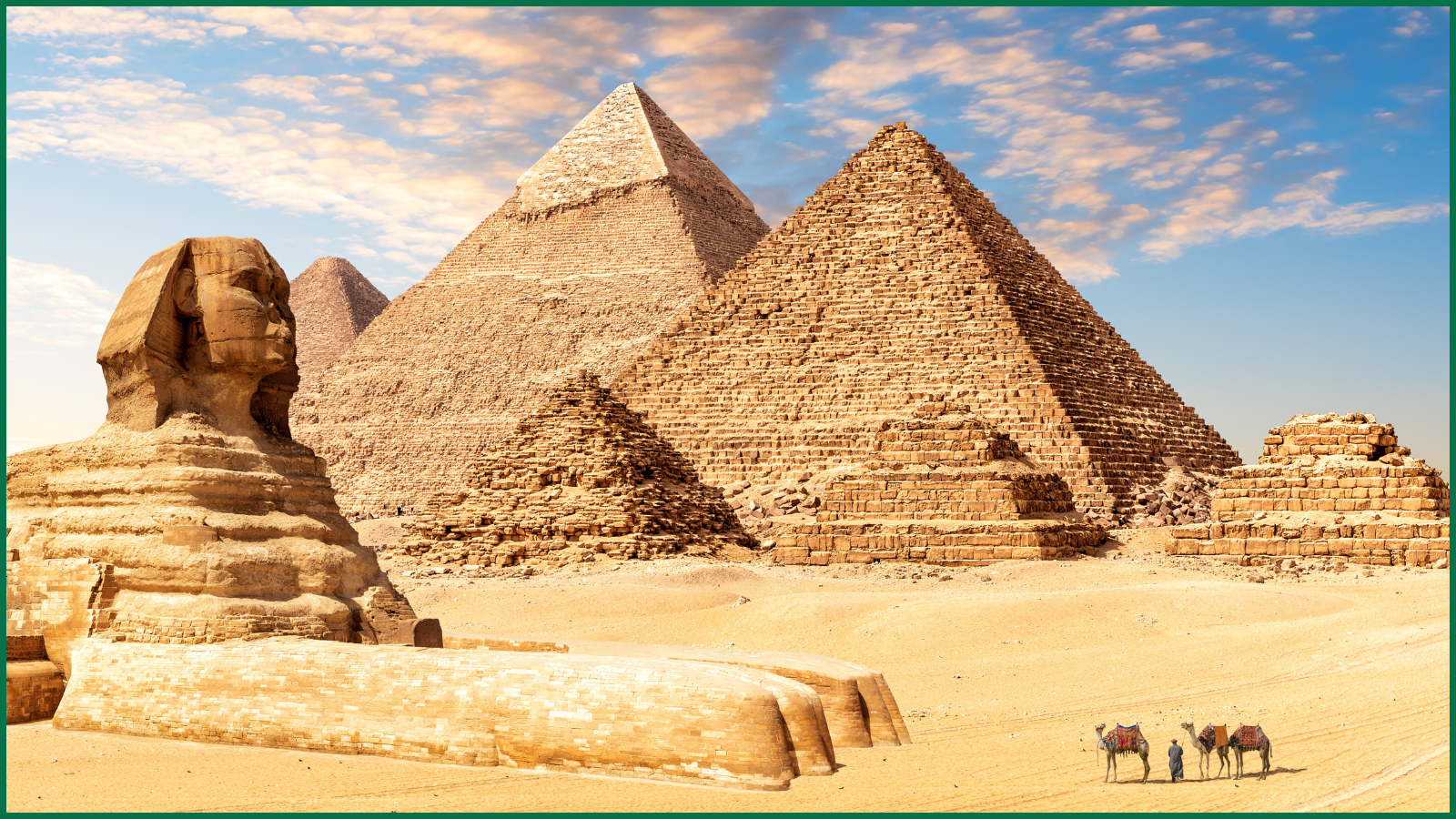
    To avoid confusion, it should be emphasized that this unity of values is what is found in commodities on the market. Marx did not believe that value was a measurement that could be universalized. Previous modes of production saw the construction of mountainous pyramids and gleaming temples which contain impossibly-high amounts of congealed labour and priceless materiel and no realistic use-value or market exchange could ever justify producing such wonders today. The rationale behind the historical production of priceless artifacts, monuments and palaces belong to entirely different sets of economic relationships that are now extinct.

    In present times, an individual may expend great quantities of labour time writing bad novels or packing sand castles and never produce a commodity because their product has no use-value that someone would exchange for. The last idiosyncrasy to note is the world of scams, derivatives, fiat currency and financial speculation that are all designed chiefly to transfer money between market participants without contributing to the global store of value. One notorious example is quantitative easing, which sees the money supply increase faster than the actual production of value. This is what causes inflation.

    With knowledge of the value forms, one can apply them to any commodity that is produced and sold in the capitalist system we live in. A potted plant finds use-value in its aesthetics and air purifying potential. It might exchange for $20 and it congeals a value relative to its growing conditions, the time it took to reach a 12 inch height and the transportation required to deliver it to the local gardening centre.

    As the only commodity capable of imparting more value than it withdraws, labour is the linchpin—without this commodity, the global web of capitalist production collapses. The wage and salary worker must “bring a commodity to the market, i.e., his own skin.”4

    The employee offers up their labour-power for use by an employer, transferring a value that correlates with their cumulative experience and skills. In exchange, they are paid a wage that is primarily determined by the supply and demand of the labour market. And it is from this special commodity where the enormous surpluses of the modern age are derived, where government budgets are inked, armies are raised and corporate largesse is created: that labour-power injects more value into a commodity than it will receive back in a wage.

    Discovering this surplus-value is what led to Marx’s articulation of crisis theory; as workers produce a surplus beyond what they are able to consume, the system must be constantly expand in order to absorb the created surplus. Inherent to capitalism are periodic eruptions due to overproduction and barriers to expansion that result in economic recessions and depressions. This tendency toward crisis is papered over by mass immigration, warfare, “free trade” agreements and a flow of debt and credit, but crisis in capitalism can only be delayed and never avoided.

    In this capitalist economy, the use-value of cheap labour is sought the world-over and unemployment levels are carefully managed in order to suppress wages via inflow immigration, the outsourcing of production and state expenditures or cuts. The result is a feast whereby a global ruling class gorges on those with nothing to sell in the market but their bodies.

    It was shown that the appropriation of unpaid labour is the basis of the capitalistic mode of production and the robbery of the worker is carried out by its means; that the capitalist, although he buys the labour-force of the worker at the full value which it possesses in the market as a commodity, yet derives more from it than he has paid for it, and that in the last instance this surplus creates the total amount of value from which the capital steadily increasing in the hands of the capitalistic class is amassed.5

    As presently constructed, the capitalist class needs the working class to create value but the working class needs the capitalist class to actually survive. A massive power imbalance between the elite capitalist ruling class and workers is thus concretized by economic necessity and witnessed by the commodity, value-forms conjoined.

    Further Reading:

    Karl Marx, Critique of Political Economy: Part One.

    ———–


    1. Karl Marx, Grundrisse (Penguin, 2005), 263. ↩︎

    2. Karl Marx, Capital, Volume One (Ancient Wisdom Publications, 2019), 49. ↩︎

    3. David Harvey, A Companion to Marx’s Capital (Verso, 2010), 23. ↩︎

    4. Karl Marx, Capital, Volume Two (Penguin Classics, 1993), 285. ↩︎

    5. Friedrich Engels, Anti-Dühring and Other Works (Graphyco Editions, 2021), 29. ↩︎
  • Ecology

    Ecology

    This article is part of a series on classical Marxism.

    The relation of organic beings to their environment has always been one of give-and-take. While nature furnishes the conditions that organisms need to survive, it has also manufactured hazardous weather events, predators, diseases and landscapes that spell certain death. In concordance, a healthy ecosystem begins with the soil required for vegetation, which in turn supports a pyramid of animal and insect populations. All things living return, lifeless, to the soil and start the cycle anew. But this metabolism can be disturbed. Overpopulation of one species relative to others, tectonic shifts and volcanic explosions, atmospheric composition, hydrological changes and, infamously, asteroid strikes from outer space—any of these things open up a metabolic rift in the ecological cycle that result in mass extinctions and a phase transition of the environmental regime.

      Since the last ice age ended with the Younger Dryas, humanity has struggled to find metabolic concordance with its environment as new modes of production and class conflict arose. Friedrich Engels observed: 

    The people who, in Mesopotamia, Greece, Asia Minor and elsewhere, destroyed the forests to obtain cultivable land, never dreamed that by removing along with the forests the collecting centres and reservoirs of moisture they were laying the basis for the present forlorn state of those countries. When the Italians of the Alps used up the pine forests on the southern slopes, they had no inkling that by doing so they were cutting at the roots of the dairy industry of their region; they had still less inkling that they were thereby depriving their mountain springs of water for the greater part of the year and making possible for them to pour still more furious torrents on the plains during the rainy season. Thus at every step we are reminded that we by no means rule over nature like a conqueror over a foreign people, like someone standing outside nature—but that we with flesh, blood and brain, belong to nature, and exist in its midst and that all our mastery of it consist in the fact that we have the advantage of all other creatures of being able to learn its laws and apply them correctly.1

    We can recognize that classless hunter-gatherer societies had a mode of production that could have lasted forever as it was technologically-bound to the necessity of sustainable resource consumption and replenishment. But a metabolic rift emerges at the outset of settlement, private property and class division. The soil is tilled, the population proliferates, wildlife is suppressed, waste and nutrients become dislocated by urbanization. While the ancients are forgiven for their lack of foresight toward unintended environmental consequences, the present situation reveals a unique contradiction: while capitalism affords us the science to decode nature’s laws, its momentum denies us the ability to abide them in any rational way.

    The expansionary logic of capitalist production is driven by market competition, the quest for profits and the dominance of exchange-value over use-value in economic relations. As labour and nature are the source of all values in capitalism, they are squeezed mercilessly for the surplus that sweats from their pores.2 The result is an economic system of deeply deformed priorities. Because the use-value of something is only evaluated in terms of what it can exchanged for, the capitalist economic system is unable to price a breathable atmosphere, a healthy ocean, an intact rainforest or an endangered species. On the contrary, minimizing production costs for the sake of profit dictates active harm to the ecosystems that underpin our biological existence. The reason why microplastics float free in our bloodstreams and millions of Amazonian acres disappear annually is because there is no profitable exchange that restricts the use of plastic or spares billions of trees from cattle ranches and sugarcane plantations. While the use-value of a livable biosphere is obvious, within the confines capitalist production both nature and people become venal objects, subordinate and abused.3  

    The systemic nature of environmental challenges are important here, lest one chalk them up to moral failings or inadequate education. For example, it is a consequence of capitalist production that every year 54 billion tons of annual emissions enter the atmosphere and 20 million tons of plastic flow into oceans. But this does not represent “a moral deficit of individual capitalists. They are obliged to follow such behaviour due to competition with other capitalists if they want to survive as capitalists. The decision to act in accordance with that blind drive appears rational.”4 Any attempt from the civil society to legislate better practices will likewise be met with a well-funded wall of oligarchic political resistance, rendering so much effort futile. And the emissions spewed into the atmosphere and plastic dumped into the oceans accelerates, each year more than the last, expanding in lockstep with the capitalist system itself. This is to say nothing of the emptying of aquifers, global deforestation, the hole in the ozone layer, acidifying oceans and the mass extinction of species simultaneously in motion.

    While Marx identified extreme disturbances in the Earth’s ecological metabolism due to industrial production, he did not view the metabolic rift as something unique to the capitalist mode as it is a common feature of all class societies, including the feudal and ancient slave economies. What capitalism has done is elevate the rift to the level of existential threat and, through a process of technological advance, it poses an opportunity to resolve global class conflict altogether. Classlessness, he writes, 

    is the genuine resolution of the conflict between man and nature and between man and man—the true resolution of the strife between existence and essence, between objectification and self-confirmation, between freedom and necessity, between the individual and the species. Communism is the riddle of history solved, and it knows itself to be this solution.5

    To understand his conclusion, we can look to the long-simmering crisis of climate change as it relates to ruling class power. On the one hand, we have a faction of the ruling class which profits directly from fossil fuel combustion and has spent billions of dollars to propagandize the population into believing that there is no consequence to the 53 billion tons of nitrous oxide, methane and carbon dioxide emitted annually. This faction is seen prominently in the Koch Industries and ExxonMobils of the world.  Then there is the other faction of elites who ostensibly recognize the problem while hypocritically living lavish, emission-intensive lifestyles, pursuing egoistic conquests of outer space and contradictory public policy. Elon Musk, Jeff Bezos and Mark Zuckerberg fit into this category, with the latter repeatedly calling for action on climate change while treating himself to a 387-foot super yacht that spews 40 tons of carbon dioxide per hour at cruising speed. 

    Under the auspices of a ruling class engaged either in denialism or outright hypocrisy, what wisdom is the working public supposed to gather from any attempt to manage emissions? Emissions reduction is contextualized either as a outright conspiracy theory or an undue demand to sacrifice yet more of the economic pie—a pie which they produce and receive crumbs to eat.

    As it stands, “the emissions of the world’s millionaires alone would deplete 72 percent of the remaining carbon budget for staying with the 1.5°C [warming] limit,” but there is no talk of capping the individual emissions of the global elite.6 No action can be taken against an elite capitalist class at the helm of the political levers and in control of economic production. And still, 

    the consequences of not reducing emissions on the scale proposed by the IPCC would be calamitous. A 2°C increase could cause the Antarctic ice sheets to disintegrate resulting in up to a nine-meter rise in sea levels. A temperature increase of three degrees could raise sea levels by 25 meters, endangering world food production. This, as well as the melting of the Himalayan glaciers, could result in billions of climate refugees. An increase in carbon dioxide concentrations of 550 parts per million, a 4°C temperature increase, could raise sea levels by as much as seventy-five meters, inundating most coastal areas.7

    Imagine asking billions of working people and their progeny to risk all this disaster so that a meagre 1.5 percent of the world’s population may enjoy a plush existence, unfettered. This is the flex of ruling class power.

    It remains that a technologically advanced economy need not fly within the narrow horizon of commodified nature toward a ruthless pursuit of profit. New value forms can be discovered and asserted. The use-values of a liberated working class will include clean air and water, artistic and scientific progress, a free wild, medical discovery, creative innovation, automated production, leisure and abundance. Our 200,000-year history has shown that ecological ruin and ruling class power is not a feature of our species but an aberration to our story.

    Further reading: 

    Anita Waters, “Marx on the metabolic rift,” Monthly Review Online.

    —————


    1. Friedrich Engels quoted in John Bellamy Foster, Marx’s Ecology: Materialism and Nature (Monthly Review Press, 2000), 236. ↩︎

    2. Karl Marx, Critique of the Gotha Program. ↩︎

    3. Foster, Marx’s Ecology, 74. ↩︎

    4. Kohei Saito, Karl Marx’s Ecosocialism: Capital, Nature, and the Unfinished Critique of Political Economy (Monthly Review Press, 2017), 125. ↩︎

    5. Karl Marx, Economic and Philosophic Manuscripts of 1844. ↩︎

    6. Matthias Schmelzer and Elena Hofferberth, “Democratic Planning for Degrowth,” Monthly Review, Vol. 75, No.4: 149. ↩︎

    7. Kent Klitgaard, “Planning Degrowth,” Monthly Review, Vol. 75, No. 3: 87. ↩︎
  • Revolution

    Revolution

    This article is part of a series on classical Marxism.

    Marx observed that revolution occurs when “the material productive forces of society come into conflict with the existing relations of production.”1 Over the territories of the Soviet sphere, this happened first when breaking out from autocratic feudalism in 1917 and again in 1991 when a lethargic party apparatus was absorbed by global capital. The Marxist-Leninist states of the Soviet Union and its offshoots were successful in negating their feudal and colonial circumstances. But on the conditions necessary for socialism, Marx says it is “bourgeois industry and commerce that create the material conditions of a new world in the same way as geological revolutions have created the surface of the earth.”2 It isn’t the feudal aristocracy or foreign colonizer that must be negated, it is the late capitalism of the present. Only then may we reach the conscious, abundant and individual-affirming free association that Marx had contemplated. 

    In the West today the capitalist oligarchy flaunts its power more than ever against a backdrop of digital connectivity, modern monetary theory, artificial intelligence and the ruination of mental and natural spaces. Our political institutions and regulatory bodies—devised by the pre-internet industrial society—have been rendered moribund against the rapidity of technological development and monopolistic economic power. The luxury doomsday bunkers constructed by billionaires is an admission from the ruling class that the centre will not hold indefinitely. That the people are not satisfied with the wealth they’ve appropriated. That there are more of us than there are of them. 

    But the people—us—we don’t have bunkers for solitude. The world will be ours to fix, regardless if we want it. Will these presently grinding contradictions produce the friction needed for revolution? Marx answers: “The changes in the economic foundation lead sooner or later to the transformation of the whole immense superstructure.”3 What shape this will take is not predetermined. There are some who suggest that we are entering a techno-feudalism, with Big Tech rentiers harvesting our data and content creations across digital spaces in a quest for global domination. It is difficult to imagine a rosy outcome if our primary economic function were reduced to online activity, feeding only from the scraps of corporate largesse through some kind of universal income scheme.

    The situation is not hopeless. These new technologies contain within them the potential to enslave us but also carry, dialectically, the potential to set us free. Even from the Victorian Era, Marx predicted that global connectivity could advance prosperity and liberate the entire species instead of the current set-up whereby one country or class progresses only at the expense of another. Right wing populism will have its moments to try and return the world to a simpler order of things. But they should know that these attempts will always be feeble in a world where no man will step in the same river twice.

    Affecting an axial shift, Marx likens political action to learning a new language: “…the beginner who has learned a new language always translates it back into his mother tongue, but he assimilates the spirit of the new language and expresses himself freely in it only when he moves in it without recalling the old and when he forgets his native tongue.”4 To that end, any movement predicated on “Great, Again” cannot articulate solutions to the problems posed by the current paradigm. If it seems that right wing “solutions” only cause greater problems after the fact, it is because all of its referents are embedded within the problem’s cause—namely, the capitalist system. A revolutionary programme must create something dynamic, a system which does not dominate the masses but the opposite: the masses dominate the system. 

    To end the spell of corrupt elections, special interest groups and outdated constitutions, power needs to flow directly from the people via combinations of online voting, citizens’ assemblies chosen by lot and direct referenda. It is radical structural change, not policy change, that opens the doors to freedom. The post-revolutionary abolition of all political parties and elected representatives. The nationalization and subordination of banks, tech, pharmaceutical and telecom companies to the democratically planned production goals of the people. The decontamination of the environment and protection of biodiversity, wild spaces and hunting grounds for their own sake. The promotion of worker-owned enterprises, community associations and consumer cooperatives to service local needs. The dissolution of innovation-destroying “intellectual property.” The erasure of the Kafkaesque legal bureaucracy in favour of courts of ethicists and philosophers. The suppression of central bank financiers, the billionaire ownership class and the Davos-style decision making of the global elite.

    Aristotle imagined that communally owned automata—robots—could free humanity from toil by making necessary human labour redundant. It is an idea that the classically-trained Marx grasped during his lifetime in the age of early mechanization. An economy where automation was not a blind tool for profit, but rather, was put into the service of humanity to create use-values that individuals would harness. It is only in the post-capitalist sphere that a mass-unchaining of people from the compulsion to labour can be realized. This economy must be dynamic, premised on the maximization of free time and fully developing the talents latent in each individual. The individual, in turn, “reacts back upon the productive power of labour as itself the greatest productive force.”5 The potential of our species becomes realized only when the full potential of each individual is expressed.

    It is in this vein that Marx and Friedrich Engels argued for a world where “the free development of each is the condition for the free development of all.”6 Free development is not a matter of social justice or moral righteousness. The more victims of poverty, prejudice, preventable death and compelled labour that fall in the world, the fewer people we have contributing to our collective well-being and individual material life. The objective is therefore not equality but classlessness. Both class division and social equality bring limitations to individual compensation and the expression of talent. The cessation of class conflict is requisite to eliminating depravations, cultivating virtue and maximizing the self-directed activity of society’s members. It is only the universal development of human power which may form the basis of a productive and limitless civilization, harmonious with nature and spiritually rich.

    The capitalist ruling class, with its trail of biological contaminations and enslaving techno-feudalist designs, will try to safeguard their misanthropic commercial interests and hypnotize us with dead-end notions of “building back,” “great resets” and conservative “golden ages.” But, in the words of the great philosopher, Slavoj Žižek: “It is not that Communism is one of the possible choices; it is the only choice. Once we choose it, we see it’s the only way out.”7

    Further reading:

    Friedrich Engels, The Principles of Communism.

    ———–


    1. Karl Marx, “Preface,” A Contribution to the Critique of Political Economy. ↩︎

    2. Karl Marx, “The Future Results of British Rule in India,” Dispatches for the New York Tribune: Selected Journalism of Karl Marx (Penguin, 2007), 125. ↩︎

    3. Marx, “Preface,” Critique of Political Economy. ↩︎

    4. Karl Marx, “Chapter One,” The Eighteenth Brumaire of Louis Bonaparte. ↩︎

    5. Karl Marx, Grundrisse (Penguin, 2005), 711. ↩︎

    6. Karl Marx and Friedrich Engels, The Communist Manifesto. ↩︎

    7. Slavoj Žižek, Heaven in Disorder (OR Books, 2021), 221. ↩︎