

To the editor,
Why does Trump like gunboat diplomacy and does it work?
Thank you,
Tyler.
[Sent via Bluesky]
Hi Tyler,
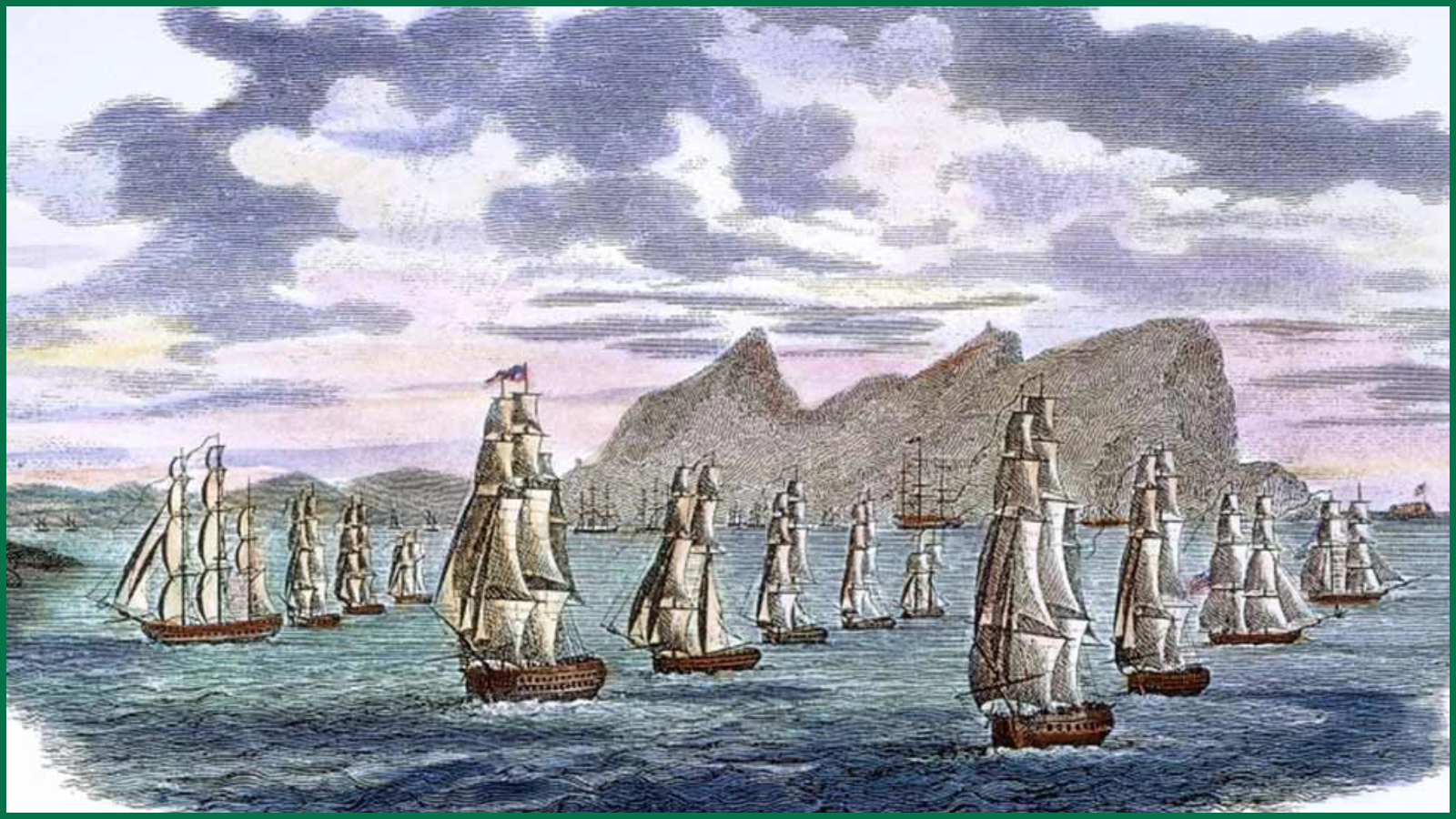
The shrewd imperialist planner, Henry Kissinger, once said that “an aircraft carrier is 100,000 tons of diplomacy.” Gunboat diplomacy is to international relations what “the stickup” is to people on the street: a violent robbery at gunpoint. No sane person would hand over their wallet just to anyone who asked for it, but a gun in the face will change that equation. Since the 1800s, imperial powers had similarly learned that other countries were a lot more agreeable to lopsided treaties when a naval armada was docked along their coastline and ready to open fire.
Gunboat diplomacy was used by the British against China during the Opium Wars, against Haiti when the U.S. stole their national gold reserves, against Japan and Korea for purposes of U.S. trade, by France against Thailand for the relinquishing of modern-day Laos to French Indochina and the U.S. against Colombia for the acquisition of the Panama Canal Zone—to name just a few examples in a very long list.1
The topic has gained new relevance in the age of Trump’s bulldozer approach to international relations. He has used a mix of tariffs and annexation threats against stalwart U.S. trading partners in order to browbeat them into accepting humiliating trade agreements. Meanwhile, explicit gunboat diplomacy has become Trump’s preferred tactic against countries under sanction and immune to tariffs. The first two months of 2026 have witnessed the U.S. navy kill and kidnap Venezuelans, impose a cruel blockade on Cuba and surround Iran with devastating weapons of war.
A robber committed to the threat of violent harm does not have to exchange anything of material value in order to receive a ransom. The asymmetry of this transaction is what incentivizes his crime. Trump engages in gunboat diplomacy for the same reason he applies tariffs with zeal—he believes that asymmetrical coercion is the backstop to favourable terms. Under the narrow horizon of short-term self-interest, this approach can appear to work. But robbers do catch blowback. And with history as our guide, we see that this strategy of imperialist aggression often does as well.
Japan acquiesced to American demands in the 1800s—but this sent it down a road of aggressive industrial expansion, fascist government, the colonization of Korea and the bombing of Pearl Harbour. The British did impose harsh treaties on China—but these fomented the Boxer Rebellion that laid the foundation for Mao’s decisive civil war victory and modern China’s Marxist outlook. The French did expand their colonial holdings in Southeast Asia—but this, too, boomeranged in the form of subsequent communist revolutions.
For every action there is an equal and opposite reaction. Capitalist powers have had the tendency to underestimate the agency of those that they dominate. Every war, tariff and threat introduces a new conflict, a new dialectical friction, into the tapestry of global relations. The United States has embarked on a strategy to leverage its economic and military supremacy in order to vassalize the world and extract surplus value without trading for it. On the surface, this may seem to work. But as global trade increasingly re-routes around the U.S., expect opposition to American hegemony to stiffen until it eventually comes undone.
In sols,
Your editor.
Send your questions to the Reclamation: editor@thereclamation.co

Footnotes:
See Karl Marx, “The Anglo-Chinese Treaty” in Dispatches for the New York Tribune: Selected Journalism of Karl Marx (Penguin, 2007): 31-36 for details of the opium trade imposed on China and unequal treaties pursuant to it. ↩︎