
Most of us dread the deadening of the body and will do anything to avoid it. About the deadening of the soul, however, we don’t care one iota.1
—Epictetus
As the earliest human societies emerged conscious from nature egalitarianism was a common characteristic. Economic surpluses were minimal and production of material needs relied on a nakedly social effort. The psychologists David Erdal and Andrew Whiten suggest: “Egalitarian behaviour patterns evolved because…individuals became so clever at not losing out to dominant individuals that vigilant sharing became possible, and this was the most effective economic strategy in the circumstances in which Homo sapiens evolved.”
In the prehistoric era of hunter-gathering, or primitive communism, there was no incentive to hoard resources, ideas or technology. In fact, doing so would have carried detrimental consequences to the individual, the group and the wider species. Resources and technology were freely shared between groups and individuals, and this type of cooperation facilitated the dominion of humanity over the globe. The free exchange of ideas and resources during this era fall into the categories of gifts between tribes, reciprocal exchange between kin and petty barter between individuals.
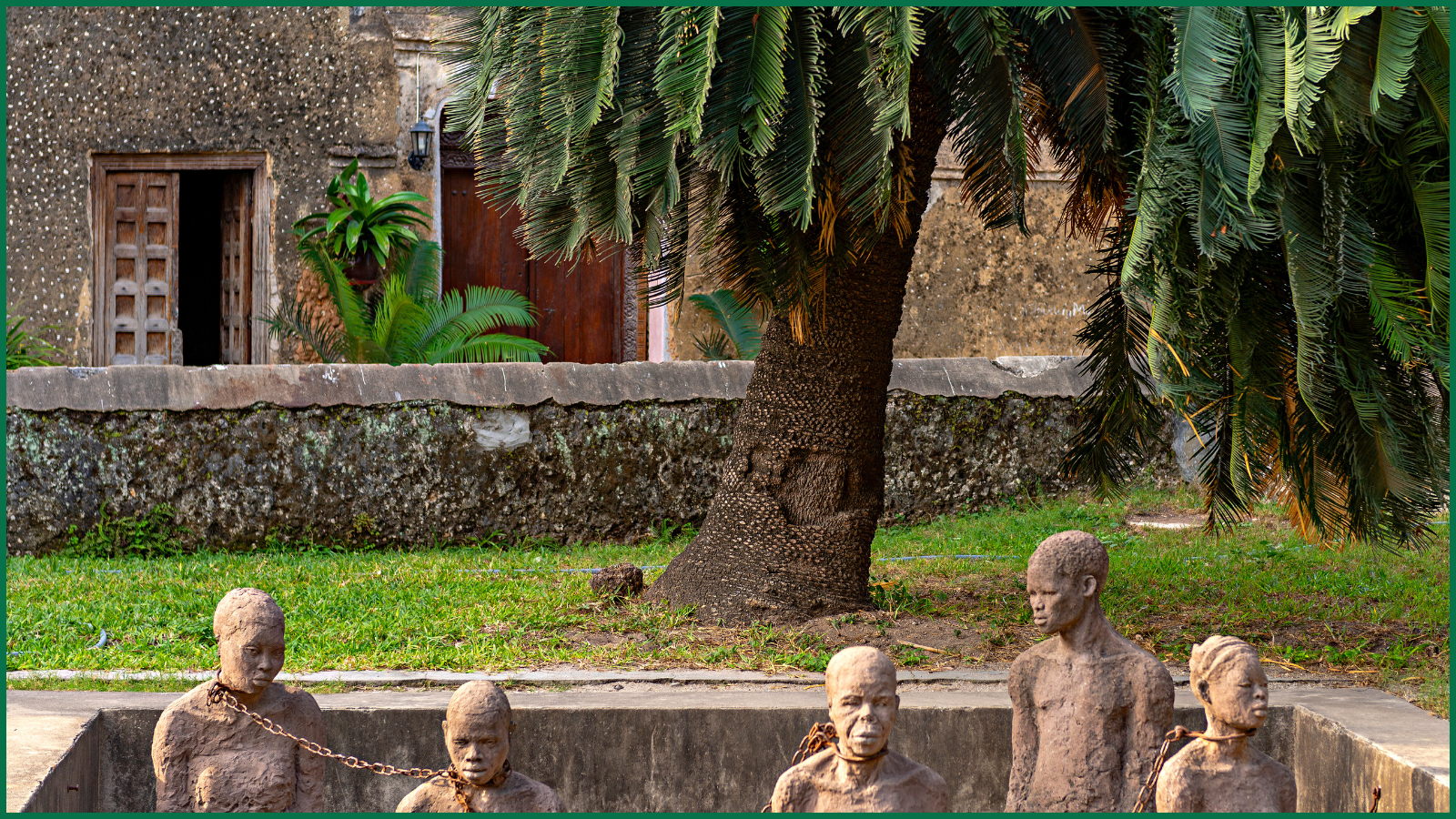
After ecological pressures provoked the Neolithic Revolution, humanity had to grapple with sedentary living and the production of an economic surplus above what was needed to reproduce the population. In the presence of surplus, our tendency toward cooperation and egalitarianism became inverted and economic classes formed which laid claim to different points along the production and distribution ladder. In a dialectical reversal of epic proportions, the prehistoric aversion to domination gave way to the slave economy, the most oppressive economic system known to history.
Ancient Rome was so saturated with unfree labour that little distinction was made between working citizens earning a wage and slave labour owned by a master. Slaves commonly held managerial roles, conducted business and apprenticed in skilled trades. Selling oneself into slavery was an attractive means to escape poverty. In such an economy, it was the narrow band of elite slave owners who absorbed the surpluses of antiquity.
Dawn of the Market
Both enslaved and wage labour transitioned into tenant farming during the late decline of the western Roman empire. Feudalism was a sort of synthesis between the enslaved labour of Rome and the social organization of the Germanic tribes. Meanwhile, Christian idealism began to permeate the superstructure of medieval Europe. Since most of the population was tied down to agricultural production on plots of land, merchants took on an important role in the circulation of goods. Markets were held at regular times and places throughout Europe, giving prospective buyers and sellers of wares notice to prepare. Merchant guilds coordinated the movement of imports and commercial profits became a pathway for non-landholding Europeans to capture a piece of the economic surplus of the feudal era.
Medieval commerce was sublated by the capitalist system as it began to develop after 1492. After peasants were shook loose from ancestral farmland and piled into cities, permanent shops replaced the market squares and merchant banks funded New World pillaging expeditions. We see a point in history where labour, surplus production and capital break free of physical boundaries. This economic transformation created the foundations of science, Enlightenment philosophy, the modern state, monetary system and, of course, the idea of the free market.
“Free market” is defined by Britannica as “an unregulated system of economic exchange, in which taxes, quality controls, quotas, tariffs, and other forms of centralized economic interventions by government either do not exist or are minimal.” It’s interesting that free market fundamentalism—or laissez-faire economics—arrive on the political scene around the same time as socialism does, during western industrialization.
As noted in the first paragraph, human beings evolved with an aversion to domination and preference for some modicum of economic and political egalitarianism. The adoption of sedentary living and the creation of economic surpluses within a class hierarchy threw back much of the formal cooperation of hunter-gatherers but it did not eliminate the collective want of freedom. Cooperation and freedom from domination is hardwired into our evolutionary history. This is visible in slave rebellions and peasant uprisings, as well as religions preaching liberation of the spirit. What capitalist modernity offers is a chance to concretely understand society and create the necessary political and economic conditions for liberation.
Socialism v. Markets?
For socialists, liberation involves a positive action: the organization of workers to overthrow the state and create a new government that lays hold of the economic levers of power. This would allow society to democratically create the material conditions needed for individual flourishing. Free marketeers are the inverse of this, socialism’s negative correlate: cut the government to a minimum and remove political authority from economic levers. The great promise of the free market is to provide “social order without institutions, claiming not to be one itself.”2 The premise here is that a market of self-interested individuals is the best allocator of goods and services for the whole of society. The market represents true capitalism, and true capitalism only exists where state authority ends.
Voluntary exchange between individuals would certainly be a feature of any pro-social economy. For this reason free market fundamentalism can sound attractive. But it brings forward serious problems owing to the rock-ribbed power imbalances embedded within the capitalist economy. Every class society has featured an elite class which posits a state to protect property and safeguard economic interests and capitalism is no different. In his history of capitalism, Jürgen Kocka writes:
State formation and the origins of financial capitalism were closely connected, and the nexus provided a way for prosperous urban citizens in high finance, a small elite, to establish their influence on politics while simultaneously making their entrepreneurial success dependent on powerful rulers and their shifting political fortunes.3
This is a situation that continues to the present day, with the powerful corporate lobby and central banks that fuse financial capital to the state apparatus.4
Assuming that the Siamese twins of state and corporate power could be surgically separated, the benefits are not clear. The capitalist market is not like the reciprocal exchange and gift economies of our prehistoric ancestors. It descended to us from authoritarian ramparts, by way of colonial subjugation, race-based slavery and violent ethnic cleansing. No wonder that the capitalist market is a bare-knuckled fight in which each participant must attempt to end the day with more money than they began it with.
Even for a bourgeois economist like John Maynard Keynes it was apparent that the accumulation of money had bound society to “pseudo-moral principles which have hag-ridden us for two hundred years, by which we have exalted some of the most distasteful human qualities into the position of the highest virtues.”5 Under such conditions, scams are incentivized, price gouging is profitable, environmental stewardship is burdensome, stock swindles are rife and labour appears only as a costly appendage to production.
Stamping the capitalist market with the title of “free” does not dress the window much either. Engels pointed out the logical fallacy of the “free” aphorism when critiquing a proposal to repackage Germany as a free state: “Taken in its grammatical sense, a free state is one where the state is free in relation to its citizens, hence a state with a despotic government.”
Once the great mass of people is subordinated to market forces by way of survival, the market is free to act on them in despotic ways. The workplace is a totalitarian encampment where using the bathroom and eating lunch are objects of scrutiny, the threat of termination hanging like the sword of Damocles over the necks of employees.6 Meanwhile, bills accrue. Small businesses collapse under the weight of competition. Houses are seized by debt obligations and families go hungry by price shocks. In the absence of income, the free market pushes desperate participants into drug peddling and sex trafficking. Art and corporate advertising become salacious performances demanding attention from a tired population on the go. Sterile escapism is rampant. Information deteriorates to the standards of minds made lazy and politics is a bloodsport. Every stripper pole, inside trade and contract killing can be rationalized so long as it pries away a profit. When Adam Smith likened the market to an “invisible hand” he failed to mention how often it would punch us in the face.
Past the Paradigm
The multitude of social ills kicked up by a despotic market which commands labour and demands consumption is the reason why the free market utopia is a mirage, at best. Even a conservative thinker like John Gray adroitly pointed out that cultural conservatism is not compatible with free market, laissez-faire policies.7 The conservative rebellion against corporate diversity policies and global trade are examples of misalignment between the capitalist market and traditional values.
If the political theatre is the stage of class conflict, the current tug-of-war between interventionist modern liberals and the protectionist populist right wing demonstrates that there is no room in the troupe for free market fundamentalists. The market has already blazed a trail for mass migration, menacing technologies, medical bankruptcy, sky-high utility prices, the outsourcing of decent jobs and hollowing out of public infrastructure. All that’s left to do is fight amongst the wreckage left in its wake.
The capitalist paradigm has only cemented over a scant 300 years of human history. Capitalism has visited humanity with a progression out of feudalism but its market is neither efficient or rational, as the swelling expanse of global slum dwellers, overflowing landfills and microplastics in our bloodstream attest.
What is needed is not the expansion of the capitalist marketplace but its sublation: a pulling forward of our latent cooperative instincts into a universal exchange that rewards economic actors according to the satisfaction of human need rather than profit. In such a post-capitalist market, the gift economy and reciprocal exchange reappear. Rewards accrue to the doctors curing cancer; the innovators shortening the workday; the oceanographers detoxifying our waterways; the engineers constructing comfortable housing and transport for all. For humanity to have a future we must not oppose the current paradigm but go beyond it.
Thanks for reading!

Footnotes:
Epictetus, Discourses and Selected Writings (Penguin, 2008): 15. ↩︎
Fredric Jameson, Valences of the Dialectic (Verso, 2010): 293. ↩︎
Jürgen Kocka, Capitalism: A Short History (Princeton University Press, 2016): 43. ↩︎
David Harvey, The Limits to Capital (Verso, 2018): 321. ↩︎
Keynes as quoted in David Harvey, A Companion to Marx’s Grundrisse (Verso, 2023): 83. ↩︎
David Harvey, A Companion to Marx’s Capital (Verso, 2010): 176. ↩︎
John Gray discussed in Jameson, Valences, 463-4. ↩︎