Tag: Capitalism

  • Marx and Shakespeare: Unracing Othello

    Marx and Shakespeare: Unracing Othello

    If virtue no delighted beauty lack,
    Your son-in-law is far more fair than black.

    —Duke of Venice, Act 1, Scene 3.

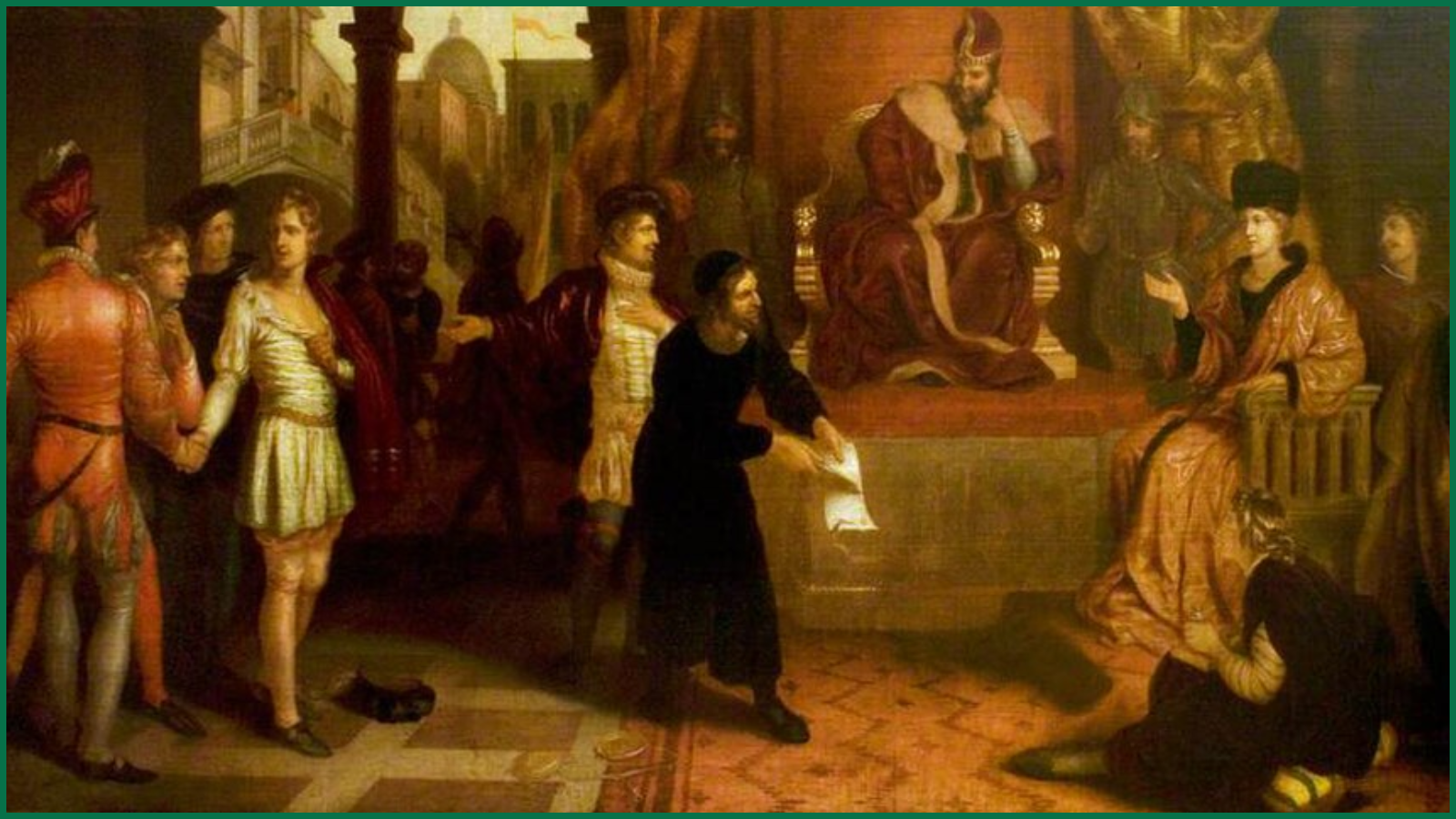
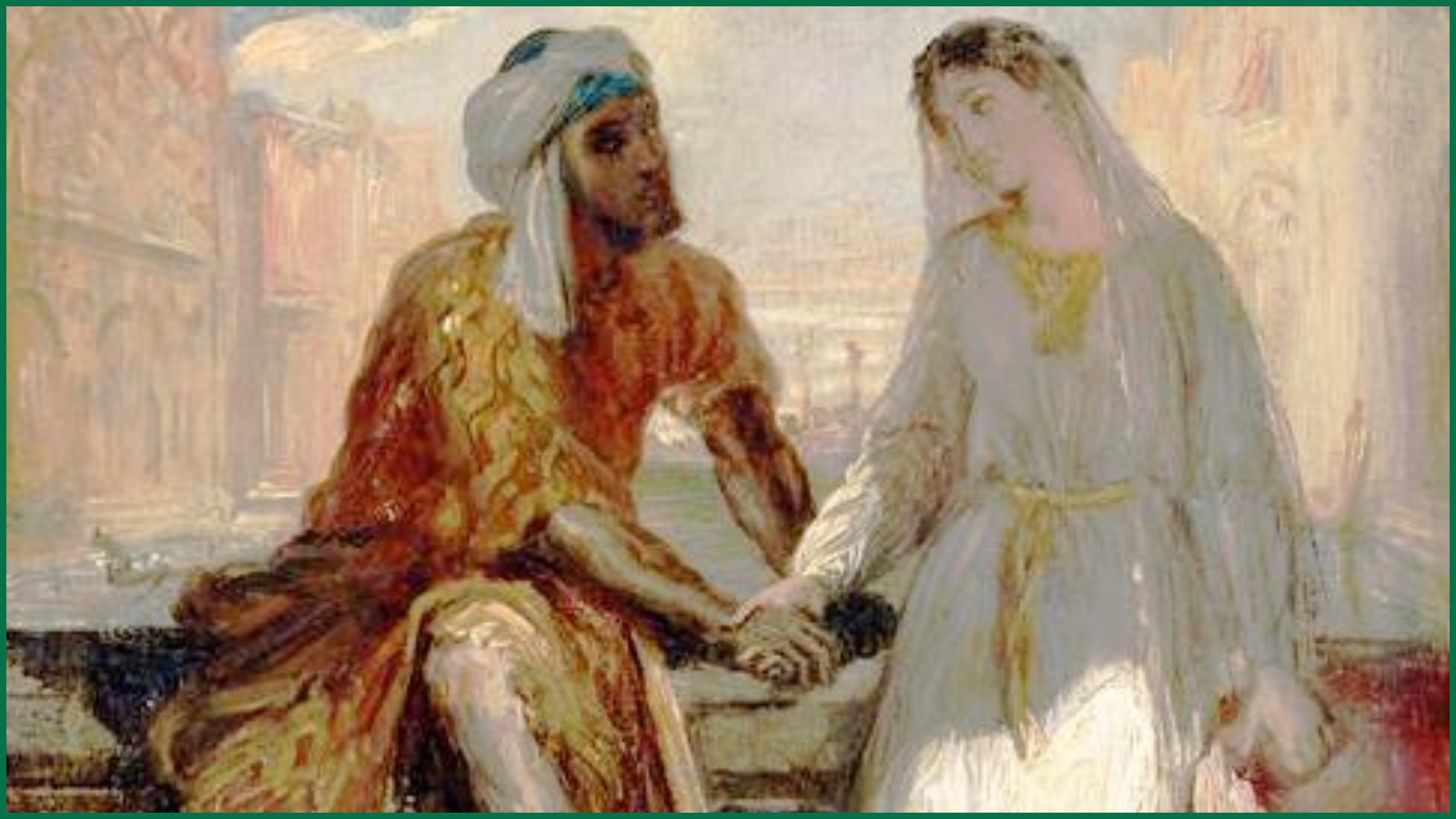
    The Tragedy of Othello, the Moor of Venice is a Shakespeare play that carries an echo of the European imagination that lasted beyond Karl Marx’s lifetime. “Moor” was a term used by Europeans to refer to the Muslim North Africans who had conquered and ruled the Iberian Peninsula between 711 and 1492. The Muslim population of Al-Andalus—modern day Spain and Portugal—were quite heterogeneous and did not use the Moor identifier themselves. Even after the Christian reconquest of the Iberian Peninsula, “Moor” was a common European designate applied to continental Africa and the Middle East.

    The term was derived from the ancient Roman province of Mauretania—modern day Morocco and Algeria— and it eventually came to denote virtually anyone of a darker complexion. Marx, a German and ethnic Ashkenazi, was nicknamed “the Moor” by friends and family owing to his swarthy skin tone, hair and eyes.

    The Moor label—applied to Marx but also by Shakespeare to his Othello title character—is emblematic of European perceptions of race as they evolved through centuries. Since the era of ancient Rome, people of North African, Middle Eastern and sub-Saharan African origin worked and lived in continental Europe. Yet “the ancients did not fall into the error of biological racism; black skin colour was not a sign of inferiority.”1

    The ancient world was hardly free of prejudice; individuals were judged harshly according to their occupation, cultural identity or status as citizens. But the concept of race did not exist and physical differences between groups were thought only to be the effects of climate on the human body. This view of race and ethnicity largely held through Europe’s medieval era and into Elizabethan England: “The theory of the humours, the basis of Elizabethan psychology, maintained that men were of different complexions, statures, and countenances of mind and body according to the climate of their birth.”2

    Lacking a social construction of race, ancient Rome based their in-group identity on citizenship. And medieval Europe and Renaissance England did much the same thing, only with Christianity as the defining in-group characteristic. This began to change in many parts of Europe during Shakespeare’s lifetime with the advent of the trans-Atlantic slave trade. Othello therefore occupies a blurry space somewhere at the dividing line between the western religious sorting of peoples and the systematic racial categorization that would later come.

    A World of Sighs

    At the open, we learn that Othello has married Desdemona, the daughter of a Venetian senator. Othello descends from a vague “Moorish” nobility but lives as “a Christianized black in Venice” who has risen to the rank of an esteemed general in the Venetian military.3 Iago serves as Othello’s trusted ensign but he has an axe to grind: Othello has passed him over for the position of lieutenant in favour of Cassio. This enrages Iago but he carefully keeps his feelings hidden. With discretion, Iago alerts Desdemona’s father to her betrothal and appeals to him with charged language in order to rouse opposition: “You’ll have your daughter covered with a Barbary horse…I tell you your daughter and the Moor are making the beast with two backs.”4

    Desdemona’s father, betrayed by his daughter marrying without his permission, appeals to the Venetian senate to overturn the ceremony. However, the senators are not persuaded. Desdemona had married with full consent and besides, they require the “valiant Moor” to defend Cyprus from an invading Turkish fleet. Iago then embarks upon a set of hateful schemes designed to ruin Cassio’s reputation, snatch money from Roderigo and destroy Othello’s otherwise happy marriage to Desdemona.

    Iago holds the crown amongst Shakespeare’s villains because of the sociopathic manner in which he weaponizes the trust that other characters place in him. Eventually snared by his own web of lies, Iago’s malevolent nature is laid bare in the last act before a bed loaded with the lifeless bodies of Desdemona, Othello and even Emilia, Iago’s wife.

    There is exceptional wickedness displayed here, as Iago ruthlessly manipulates Desdemona, Emilia, Cassio and Roderigo in order to convince Othello that his wife was unfaithful to him. But interest in Othello lingers due to the uniqueness of Shakespeare’s choice of protagonist. Shakespeare did not invent the character of Othello whole-cloth; he was devised from a “Moorish” character in a short story by the Italian poet Cinthio. Shakespeare’s version leaves open the possibility that Othello is an Arab or Berber noble of some type, but there are also a number of references to Othello’s appearance that suggest a black complexion.5 This was a bold choice for Elizabethan audiences as only an estimated 300-500 Black people are thought to have resided in England over that period of time. 

    Bootless Grief

    Shakespeare takes measures to ensure that the foreign Othello is perceived favourably by his audience. He possesses a Christian identity, his nobility and rank bless him with a majesty of speech and his bravery in battle has earned him the respect of the Venetian ruling class.6 Even spiteful Iago acknowledges Othello’s virtues that would make him a good husband to Desdemona:

    The Moor, howbeit that I endure him not,
    Is of a constant, loving, noble nature,
    And I dare think he’ll prove to Desdemona
    A most dear husband.7

    When Othello capitulates to jealousy and slays Desdemona, the labour that Shakespeare undertook establishing his merits persuade the audience to interpret Othello’s horrendous act as contrary to his nature. It is Iago’s scheming that appropriates the blame for this crime and Othello’s motivations are not presented by Shakespeare as “different from any white husband.”8 The extremely patriarchal relations of Renaissance Europe are fully displayed in Othello, without question. But despite the use of vulgar language on the part of antagonistic characters, Othello is assuredly not a racist play.

    While Shakespeare lived in a time just prior to the establishment of the concept of race, by Marx’s age this terrible social construction had reached a zenith. It is difficult to imagine that a story like Othello could be devised during the Victorian era without being subsumed by the social relations of race. In Capital, Marx asserted that racism and the capitalist mode of production shared a common origin during the age of colonial exploitation:

    The discovery of gold and silver in America, the extirpation, enslavement and entombment in mines of the aboriginal population, the beginning of the conquest and looting of the East Indies, the turning of Africa into a warren for the commercial hunting of black-skins, signalized the rosy dawn of the era of capitalist production.9

    While Elizabethan society viewed Christianity as a positive civilizing force, by the Victorian era Marx found a Christian society that was completely subordinate to capital accumulation and its accordant crimes:

    The barbarities and desperate outrages of the so-called Christian race, throughout every region of the world, and upon every people they have been able to subdue, are not to be paralleled by those of any other race, however fierce, however untaught, and however reckless of mercy and of shame, in any age of the Earth.10

    Destructing the Construction

    We can therefore assert that race and racism is a byproduct of economic relations born from the spiral of capital accumulation which early on necessitated colonial subjugation, forced labour and abject slavery. The impoverishing impacts of these economic forces have had profound effects upon global society into the present day, where we remain haunted by these spectres of history. If race is a social construction burnished by the capitalist paradigm then its demolition can only commence with the creation a new economic order.

    It was the Nigerian-British poet Ben Okri who said it best: “If Othello did not begin as a play about race, then history has made it one.” Indeed, Othello’s own race is as shapeless as the concept was during Shakespeare’s lifetime. But the aspiration today cannot be a return to feudalism or mercantilism or the harsh economies of antiquity. 

    Concerning race-based slavery, Marx wrote: “Labour cannot emancipate itself in the white skin where in the black it is branded.” Ending the systematic subjugation of labour along racial lines is one step of a larger emancipatory project. A society that does not sort individuals by race is one thing; a society that does not sort individuals by class is quite another.

    Martin Luther King Jr.’s dream of universal liberty will be seen through the eyes of a classless people that recognize the interconnectedness of the universe, of humanity, of all things living. Once the predatory fetters of competition are shed, cooperation will prevail by the motto: “The free development of each is the condition for the free development of all.”11

    Thanks for reading!


    1. Frank Snowden, Blacks in Antiquity: Ethiopians in the Greco-Roman Experience (Harvard University Press, 1970): 169. ↩︎

    2. Philip Butcher, “Othello’s Racial Identity” in Shakespeare Quarterly Vol. 3, No. 3: 246. ↩︎

    3. Peter Erickson, “Representations of Blacks and Blackness in the Renaissance” in Criticism Vol. 35, No. 4: 505. ↩︎

    4. Excerpts from Act 1, Scene 1. ↩︎

    5. Philip Butcher goes as far as saying that Othello is “undeniably black” in “Othello’s Racial Identity,” 247. ↩︎

    6. Russ McDonald writes, “Early-seventeenth century Europeans thought of Moors, Turks and Africans as pagan, but Othello is a Christian, a baptized convert whose Christianity is an important marker of his assimilation into Venice and the values of “civilization.” Russ McDonald, ed. Othello (Penguin, 2016): xxxvi. ↩︎

    7. From Act 2, Scene 3. ↩︎

    8. Ruth Vanita quoted in Rebecca Olson, “‘Too Gentle’: Jealousy and Class in Othello” in Journal for Early Modern Cultural Studies Vol. 15, No. 1: 6. ↩︎

    9. Karl Marx, Capital Vol. One (Ancient Wisdom Publishing, 2019): 533. ↩︎

    10. Ibid, 534. Quoting W. Howitt. ↩︎

    11. Karl Marx and Friedrich Engels, The Communist Manifesto. ↩︎
  • In Brief: Who Are the Globalists?

    In Brief: Who Are the Globalists?

    Question:

    Who are the “globalists” that are referenced so often?

    —P. K.

    Hi P. K.,  

    It seems the right will do anything but name capitalists as their enemy. While “globalism” can mean many things—including recognizing the global impact of local actions—the right tends to use the term as a sort of conspiratorial umbrella with which to shade their centrist opponents. In this vein, a globalist is someone who advocates trading off national sovereignty to a multinational governing body, such as the European Union or United Nations. Previous years have seen fixation with the World Economic Forum and their “Great Reset Initiative,” an alleged scheme to end personal property ownership through mind-controlling vaccines and outright seizure.

    From a Marxist perspective, the frustrating aspect of the right wing globalist conception is the truth embedded within it. Globalization is characterized by multinational firms outsourcing employment, corporate-drafted free trade agreements, international warfare and the financial takeover of the economy by hedge funds, asset managers and banks. These trends have been a chimera for the left for some decades now, and past protests in Quebec, Seattle and New York attest. 

    The membership of corporate clubs like the WEF is drawn directly from the global capitalist ruling class. Meanwhile, international trade agreements like the USMCA and political organizations like the UN and OECD are subsidiary to the reality of global commerce and economic interdependence. In other words, “globalism” is a mental image projected by the actually existing liberal capitalist economic order. The right seeks to alter the image while the left wants to smash the projector.

    Incredibly, Karl Marx and Friedrich Engels perfectly diagnosed the problem in 1848:


    The bourgeoisie has through its exploitation of the world market given a cosmopolitan character to production and consumption in every country. To the great chagrin of Reactionists, it has drawn from under the feet of industry the national ground on which it stood. All old-established national industries have been destroyed or are daily being destroyed. They are dislodged by new industries, whose introduction becomes a life and death question for all civilized nations, by industries that no longer work up indigenous raw material, but raw material drawn from the remotest zones; industries whose products are consumed, not only at home, but in every quarter of the globe. In place of the old wants, satisfied by the production of the country, we find new wants, requiring for their satisfaction the products of distant lands and climes. In place of the old local and national seclusion and self-sufficiency, we have intercourse in every direction, universal interdependence of nations. National one-sidedness and narrow-mindedness become more and more impossible, and from the numerous national and local literatures, there arises a world literature.1

    The “great chagrin of Reactionists” toward globalization during Marx’s lifetime has clearly never gone away—it is the root of the “globalist” slur. Many millions of people around the world rightfully bemoan the loss of local industries and a cosmopolitan economy that rapidly revolutionizes culture. But the right has never wrapped their arms around the problem, as evidenced by reflexive conservative support for corporate-friendly rates of taxation and deregulation that lubricate the globalization machine. 

    The reason why corporate-funded media and think tanks are so hostile to socialism is because it is the only remedy to what ails the capitalist economy. Unfair trade and the outsourcing of labour and capital is impossible under a system of nationalized finance, rational economic planning, public ownership of strategic industries and worker owned enterprises. Exceptionally low rates of taxation on workers are also possible under a system that allocates public sector surpluses toward infrastructure, as China proves. Facts are stubborn things and capitalism will one day have a final reckoning that puts an end to the contrived “globalist” contention once and for all. 

    In sols.

    Send your questions to the Reclamationeditor@thereclamation.co

    Footnotes:


    1. Karl Marx and Friedrich Engels, “Bourgeois and Proletarians” in The Communist Manifesto. ↩︎
  • Ask the Editor: Is Democracy Compatible with Capitalism?

    Ask the Editor: Is Democracy Compatible with Capitalism?

    To the editor,

    Is political democracy compatible with capitalist economies?

    Thanks,

    Matt.

    [Sent via email]

    Hi Matt,

    This is a complex question that hinges on subjective definitions of democracy. Democracy literally means “people rule,” derived from the ancient Athenian concept of demokratia. The basic definition is straightforward but the practice has varied wildly along with popular conceptions that are serpentine, at best.

    For example, ancient Athenians would dismiss elected representatives as non-democratic and oligarchic by nature. Athens had a direct democratic system that filled bureaucratic posts by lottery and passed laws with an assembly open to all citizens. On the surface, this appears even more in the spirit of “people rule” than what we have today. But when we adjust for the exclusivity of Athenian citizenship, only about 25% of the population was enfranchised since women, slaves and foreigners were forbidden from political participation. For older and more inclusive examples of “people rule” we could look to the consensus-based decision making among many tribal societies.

    Democratic models antiquity and beyond only takes us so far, however. The argument could be made that “purer” forms of democracy which developed in the context of a tribe or city-state are simply not compatible in a modern world of teeming metropolises and complex nation-states. There is merit to this argument from a historical materialist perspective.

    Consensus-based decision making is a logical outgrowth of highly interdependent individuals that hunted, gathered and sheltered as small communities. Cohesion and cooperation between members was the best guarantor of productivity and individual survival. In antiquity, on the other hand, the exploitation of slave labour was the productive basis that made a caste of citizens in the polis possible. This economic dependency on slavery elevated the role of military conquest and contributed to the confinement of women to the domestic sphere. Citizenship in the classical world was inextricably linked with military service and politics became the sole domain of a kind of warrior caste.

    What these historical examples illustrate are models of democracy that arose from economic practicality rather than lofty idealism. The same is true of modern democratic forms, which were spawned by a nascent bourgeois class looking to wrest control of government from the European aristocracy of the 17th and 18th centuries. This is why property qualifications were an important feature of early voting rights across the West, just as military service was an important feature of citizenship in antiquity. Capitalism favours commercial expansion and classical slave economies favoured military conquest, and this is reflected in the democratic forms that each system produced. 

    A unique aspect of industrial capitalism is the massive leap in productive capacity and potential. This has largely made material scarcity artificial and wholly dependent on access to money as the medium of consumption. Because of this, class struggle within capitalism has produced some benefits for the restive masses, including universal suffrage and a basic social safety net.

    Whereas strict parameters used to be put around those who can vote, it is now a case of parameters around those who can feasibly win office and pass legislation. Liberal governments all over the world are managed by financial elites with the ability to fund political campaigns, media networks, lobbyists and public debt. Capitalist democracies therefore achieve the appearance of popular legitimacy through multiparty elections but the actual governing process is nonetheless channelled by elite class interests. 

    Is democracy compatible with capitalism? If throwing a ballot every few years into a system subordinated to moneyed interests is the working definition of democracy, then yes—democracy is not only compatible with capitalism, it is capitalism’s “best possible shell,” as Lenin wrote.1 On the other hand, if we were to define democracy as “people rule” with popular decision making that extended from the workplace up to specific line-item national legislation, then capitalism is completely antithetical to it. Outside of tribal society, direct democracy is an unrealized ideal that awaits a radical economic transformation to give it shape.

    In sols.

    Send your questions to the Reclamationeditor@thereclamation.co

    Footnotes:


    1. Vladimir Lenin, “The State and Revolution” in Essential Works of Lenin: “What Is To Be Done? And Other Writings (CreateSpace, 2012): 382-3. ↩︎
  • We Are Ruled by a Lord of the Flies

    We Are Ruled by a Lord of the Flies

    “Fancy thinking the Beast was something you could hunt and kill! You knew, didn’t you? I’m part of you? Close, close! I’m the reason why things are what they are.”

    —William Golding, Lord of the Flies.

    For anyone thinking that Putin had overstepped boundaries when he invaded Ukraine, it turns out he was only ahead of the curve. Since that time we’ve had genocidal warfare visit Palestine, a president kidnapped from Venezuela, a starvation blockade imposed on Cuba and a criminal aerial bombardment come to Iran. Multiple crimes, in other words, and committed by successive presidential administrations of the West’s flagship state. No wonder the United Nations Secretary-General recently denounced international relations as a “law of the jungle.”

    The Jungle Book

    It must be a vestige of colonial history that conjures images of undulating spear tips and blood-stained fur whenever the jungle is invoked. This sort of iconography probably accounts for the jungle island setting of William Golding’s Lord of the Flies, the story about a group of schoolboys who get marooned during a military evacuation amidst a nuclear war. Initially, the boys are quite “civilized.” They elect a chief, hold orderly assemblies using a conch shell and maintain a signal fire to attract rescuers. But it doesn’t take long for these trappings of civilization to melt away under the tropical heat. Conflict divides the boys when the signal fire goes out and the hunting of a pig arouses primitive instincts, culminating in a spree of orgiastic violence. The aggressive faction of boys consumes the other by way of floggings and outright murder, and they eventually set the island on fire in an effort to flush out their first elected chief. 

    The great pre-Socratic philosopher Heraclitus wrote: “Fire of all things is the judge and ravisher.” We see this in Lord of the Flies, with the signal fire representing civilized order and the brush fire representing the desperate plunge into chaos and savagery. Golding possessed a cynical view of human nature that sees people animated by sadistic impulses in the service of selfish interests and power. This is a common position on human nature, also articulated by Chinese legalist philosophy and Thomas Hobbes’ “war of all against all” that characterizes life in a state of nature. Sigmund Freud adopted this position in his later writings as well, asserting the existence of a “primary mutual hostility of human beings” which civilization must tame by setting “limits to man’s aggressive instincts.”1

    One commonality between Golding, Hobbes, Freud and the Chinese legalists is that they were all heavily influenced by the demoniacal experience of warfare.2 Witnessing first-hand the human capacity for violence leaves scars on the human psyche that are well documented. Through allegory, Golding asserts that Satan’s captain, Beelzebub—the Lord of the Flies—is not an external supernatural force, but is actually a force inside us, a force within. Freud appeals to the death instinct in order to explain human aggression, similar to Hobbes and the legalists who view aggression as a simple fact of our nature. 

    Human Nature?

    Once that view of human nature is accepted, it is explained that human beings enter a social contract and form civilization as a refuge from our own terrifying base instincts. Violence and corruption in the world can be chalked up to inherently brutal instincts that inevitably infect all of our carefully designed social institutions and best laid plans. Although civilization can never be perfect, it remains the thin red line between orderly society and the violent anarchy of nature.

    The only problem with that argument is that it isn’t true. There is real world evidence that rejects the cynics and supports a view that humans are naturally cooperative rather than hostile: in 1965 a group of six teenage boys from Tonga found themselves stranded on a remote Pacific island. Far from descending into an orgy of violence, they built shelter and divided chores. They worked together and planted a garden, hunted feral chickens, collected rainwater in deadwood and rotated cooking duties. They maintained a fire and strummed a makeshift guitar and sang songs in the evenings to lift their mood. 

    The experience of the Tongan castaways gels with Raymond Kelly’s “Prehistoric warlessness” hypothesis, asserting that conflict and violence between human groups was virtually non-existent up until the Neolithic Revolution.3 That does not mean that there were no instances of homicide or executions within groups—nobody has that answer—but systematic warfare was simply not a feature of the Paleolithic economy that dominated human evolution for hundreds of thousands of years. This is because incredibly low population densities, combined with relatively high natural abundance, provided no incentive for humans to engage in inter-tribal violence.

    In our actual state of nature, warfare offered little gain in terms of resources but had the potential to destroy both warring parties with only a few casualties on both sides. It was therefore preferential to seek new territories on which to hunt and gather rather than fight over them. This is what explains human migrations out of Africa and our species’ rapid spread around the globe. 

    In a footnote, Karl Marx argues that philosophers “must first deal with human nature in general, and then with human nature as modified in each historical epoch.”4 Our human nature in general demands that we eat, drink, breathe, shelter, reproduce, etc. Modern human behaviour, such as language, art, music, abstract thought, planning and tool making arose to meet those needs. We can recognize that the universal behavioural traits of humans could not have been achievable in a Hobbesian “war of all against all” state of nature—every one of them required positive social intercourse in order to become characteristic of our species. It follows that cooperation in the context of low population density and relative natural abundance was the state of nature that defined our prehistoric evolution and are suggestive of “human nature in general.”

    Civilization of Corruption

    On the other side of the ledger is “human nature as modified in each historical epoch.” While our general characteristics concretized during the epoch of primitive communism, the expression of human behaviour began to vary wildly as environmental changes led to sedentary living, resource scarcity and class divisions that gradually permeating the social structure. The biological demands on human beings led us to developing a potential for many behavioural expressions—including turning our hunting spears on one another. But this potential for warfare and organized violence went unfulfilled until population growth and sedentism made it an economic necessity for one group to defend territory against another. From the Neolithic Revolution onward, a technological arms race and complex division of labour emerged to satisfy our biological needs. The resulting base and superstructure is history.

    Jean-Jacques Rousseau rightly scolded Hobbes for taking modern, “civilized” people and ascribing their flaws to nature.5 The philosophical question is this: does human nature corrupt civilization or does civilization corrupt human nature? Marx and Rousseau affirmed the latter, and that is also where the preponderance of anthropological evidence lies. It is not our nature that commands a world plagued by corruption, greed, ecological destruction and warfare. Indeed, our ability to recognize these things as defects affirms a natural revulsion towards them. Although we have the capacity for greed and violence, we also have instincts that lead us toward love, generosity and cooperation. 

    Resource scarcity has prodded human beings into unleashing some of their worst potentialities. The good news about our current capitalist mode of production is that scarcity has become largely artificial by way of tremendous leaps in productive technology. It is entirely possible to defeat scarcity with a new, cooperative mode of production that finally unleashes our best potentialities. Until then, we are ruled by a Lord of the Flies, but not in the way that Golding imagined. The Lord of the Flies is not an internal, but an external force; an alien process of capital accumulation and rigged market forces that determines our class standing and incentivizes our worst behaviours.

    Thanks for reading!

    Footnotes:

    1. Sigmund Freud, The Freud Reader edited by Peter Gay (W.W. Norton, 1989): 750. ↩︎

    2. Specifically World War II, the English Civil War, World War I and the Warring States period of China, respectively. ↩︎

    3. Raymond C. Kelly, “The evolution of lethal intergroup violence,” in PNASVol. 102, No. 43: 15294-15298. ↩︎

    4. Karl Marx, “Conversion of Surplus-Value into Capital” in Capital, Vol. One. He is specifically critical of utilitarians here, pointing out the utility of human behaviour can vary wildly depending on the mode of production available. ↩︎

    5. Jean-Jacques Rousseau, Discourse on the Origin and Basis of Inequality Among Men (Online Library, 2008): 23. ↩︎
  • Ask the Editor: A Silver Lining to the Clouds

    Ask the Editor: A Silver Lining to the Clouds

    Dear editor,

    Amidst the flurry of travel disruptions, high costs and global conflict, it is hard to see any positives. Is there anything to look forward to in these bleak times?

    Sincerely,

    Helen.

    [Sent via email]

    Hi Helen,

    In Marx’s materialist conception of history, particular attention is paid to the “objective conditions” of individual life and social being.1 These conditions include available technologies, resources, level of accessible material comfort and productive employment that shape our governing ideologies, happiness and culture. In the present economy we are heavily dependent on oil and gas for energy, fertilizer and plastic byproducts.

    This fossil fuel dependency has transformed the resource-rich Middle East into a site of economic competition between great powers. The result is a raging boil of oil money, ethnic strife and a vast quantity of weapons propping up systems of repression, resistance and neo-colonial extraction. What is happening in Iran right now is what happens when the pot boils over, just as it has previously boiled over in Yemen, Iraq, Afghanistan, Palestine, Sudan, Libya, Lebanon and Syria.

    It is important for those of us in the West to appreciate just how much of our perceived progress has relied on managing the conflicts and resources of other nations. The capitalist world order was largely cemented by accident, when Old World European technologies collided with New World resources and societies. But its persistence is consciously maintained by way of corporate exploitation of capital starved countries and military containment of economic rivals. In other words, there is an intrinsic relationship between the riches of one country and the poverty of another.

    Having survived the U.S. proxy war with Iraq, Iran became one of those rivals earmarked for “containment.”2 They were systematically marginalized from the global economy with sanctions and surrounded by American military bases. From the American point of view, this containment strategy was largely successful for decades and culminated with massive Iranian protests against the economic conditions of their country. The resulting crackdown only exposed the unsustainability of Iran’s trajectory.

    Luckily for the IRGC, Trump’s decision to go to war with Iran allowed them to unleash the full force of their asymmetric power and they exploded out from the box that had previously contained them. Trump is now confronted with the stark reality that he won’t be able to contain them economically or militarily again. He’ll have to either destroy the country entirely or watch it become dramatically strengthened.

    The bleak circumstances of war are a heavy burden to bear for this geopolitical competition over economic dominance. But if there is a silver lining to these clouds, Iran has plucked it from the sky and laid it at our feet. They have weaponized the global dependency on oil and wielded it to their great advantage; they have exacted a toll from the genocidal state of Israel; they have exposed limits to American militarism, inspiring defiance from tormented nations like Cuba

    Since the belligerent and cowardly attack on Iran, the world has turned to greener fertilizers, electric vehicles and renewable solar and wind power generation for energy needs. A helium shortage will put the brakes on a runaway tech sector and military-industrial complex. From the ashes of war, we may find the objective conditions of mankind gradually change for the better. Since a hegemonic power cannot sanction the Sun or go to war over wind, the foundation of a post-capitalist cooperative economy slowly becomes concretized.

    Henri Lefebvre once said, “History puts its worst foot forward.”3 There is a duality to history, a tendency for progress to be paid up-front in coins forged by blood and fire. Iran is paying that price now in opposition to the oil-thirsty American establishment and Zionist lobby.  As allies for a better world, we can always hope that Tehran is the rock where the wave of western imperialism breaks. 

    In sols.

    Send your questions to the Reclamationeditor@thereclamation.co

    Footnotes:


    1. Erich Fromm, Escape From Freedom (Holt, 1969): 293. ↩︎

    2. China, Russia/the former Soviet Union and Iran have all found themselves surrounded by American bases at one time or another. ↩︎

    3. Henri Lefebvre cited in Jameson, Valences of the Dialectic (Verso, 2010): 287. ↩︎
  • Ask the Editor: Marxism and Intersectionality

    Ask the Editor: Marxism and Intersectionality

    To the editor,


    Is there a Marxist critique of intersectionality or did intersectionality come out of Marxism?

    Thank you,

    Lydia.

    [Sent via Substack]

    Hi Lydia,

    “Intersectionality” is one of those politically loaded terms that evokes a lot of contemporary discourse around equity, diversity, inclusion, accessibility and cultural “woke” wars. Because Marxism is a four letter word to many people on the right, people like Jordan Peterson and James Lindsay have described progressive efforts to remedy racism and homophobia as Marxist in nature. This is nothing new, by the way. Environmentalists, feminists, literacy advocates and anti-segregationists have all worn the communist label at one time or another. 

    “Intersectionality” was coined by Kimberlé Crenshaw and elaborated on by Patricia Hill Collins and others to describe the interlocking of social prejudices, economic inequalities and political disadvantages that apply to a variety of historically oppressed people. For example, intersectional theory posits that a Black woman or a gay Asian will confront social and political obstacles contingent on their minority status and independent of economic class.

    The concept of intersectionality is reasonable from the Marxist viewpoint. Marx himself observed a variety of race and gender-based discriminations amongst the working class in his own time. In factories, it was found that women and children could be exploited at lower wages than men.1 Amongst the English working class, the influx of Irish were reviled for their acceptance of lower wages and blamed for cheapening the labour market. And for the countries that had enslaved Africans for the plantation economy, Marx warned: “Labour cannot emancipate itself in the white skin where in the black it is branded.”2

    Between the premises of intersectionality and classical Marxism, there is an overlapping understanding that class alone does not determine social standing within capitalism. The trend toward DEI hiring policies of corporations, diversity quotas at universities or inclusive on-screen representation is something that could have been predicted by Marx. As capitalism has matured and globalized, it has naturally acquired a more cosmopolitan flavour and more demands are placed on the system from an increasingly diverse crowd of consumers and workers. For this reason many capitalist multinational corporations and Hollywood studios have adopted diversity policies with enthusiasm.

    As a result of diversity quotas, “woke” virtue signalling and the absorption of economic migrants by the West, antagonisms have arisen in society between majority and minority factions of workers, bureaucrats and entrepreneurs. Speaking of hostilities between ethnicities, Marx wrote:

    This antagonism is artificially kept alive and intensified by the press, the pulpit, the comic papers, in short, by all the means at the disposal of the ruling classes…It is the secret by which the capitalist class maintains its power. And the latter is quite aware of this.

    One can acknowledge the reality of historical oppression and simultaneously reject liberal remedies that seek to pit man against woman, coloured against white, queer against straight. Discrimination in any direction operates within the ruling class paradigm of artificial scarcity. Instead, socialism posits economic solutions of universal application: socialized housing, public healthcare, full employment targets and freely accessible higher education. Fair trading practices must be developed with Global South countries in order to eliminate exploitation and reduce the number of economic refugees.3 

    In the long run, it is only an economic base that strives toward universal abundance instead of capitalist profit that is capable of abolishing the social divisions manufactured by history. And that, I submit, is the Marxist position.

    In sols,

        Your editor.

    Send your questions to the Reclamationeditor@thereclamation.co

    Footnotes:


    1. Karl Marx, Capital: Volume One (Ancient Wisdom Publishing, 2019), 320. ↩︎

    2. Ibid, 195. ↩︎

    3. The international economy must be one that minimizes global poverty and reduces the demand of people to flee their homeland. Marx understood the challenges of accommodating large numbers of economic refugees in foreign societies and, in the case of the Irish, he attacked the root cause by demanding that Ireland be liberated from the claws of English landlords and capitalists. ↩︎
  • Liberal Democracy is a Sham

    Liberal Democracy is a Sham

    The concept of civilizational decline has been a staple of the far-right at least since the rise of fascism in Europe a century ago. While the right has always fixed its consternation with fast moving cultural changes and the erosion of “traditional values,” they are ideologically incapable of linking their grievances to the capitalist economic system that constantly revolutionizes our way of life.1 But the first quarter of the 21st century has had the experience of successive wars and economic crises and political realignments against the backdrop of a rising China. The anti-capitalist left has therefore embraced the decline narrative, given the extraordinary challenges of environmental deterioration and affordability amidst a rising concentration of wealth and power into the hands of an elite western oligarchy. Throw in the demoralizing Epstein revelations and a rupture to the political order by a berserk President Trump and even western liberals are acknowledging decline.

    If there is one shibboleth of the West that deserves scrutiny at this moment in history, it is liberal democracy. Liberal democracy has been the veneer over western capitalism; a moral ornament obscuring the ransacking of colonies around the world and used to coordinate a unified western response to competition from emergent powers. This has not always been a bad thing—the alliance between liberal capitalist states and the Soviet Union was fruitful in tearing down Nazi Germany, for example.

    In the period post-World War II, western liberal countries could lay claim to progressive achievements on the home front—such as civil rights, accessible education and affordable housing—even while supporting many heinous regimes abroad. Free speech and multiparty elections appeared as great strengths under a regime of centralized news media that gave citizens a common information platform, while high union membership in domestic manufacturing ensured a reasonable distribution of profits.

    Today that regime has changed. Private sector unions have fallen off a cliff and the digital age has turned media consumption into a “Choose Your Own Adventure” story. In a dialectical reversal, yesterday’s free speech and partisan competition have become forces that propel their own demise: conspiratorial misinformation, foreign subversion, online mobs of neo-Nazis, unchecked corporate power, the ascent of dictatorial right-wing populists into office. While smartphone apps and AI models rush out like a waterfall, public infrastructure is achingly slow to build. In Canada it can take 41 years to cut the ribbon on a simple light rail transport—to say nothing of badly needed doctors, schools, energy generation and bridges. The refusal to scrutinize liberal democracy out of some fear that its only alternative is dictatorship must be admonished because capitalism has already put us on an openly authoritarian trajectory with accelerating speed. If the democratic veneer that the West has placed over its society is no longer compatible with the communications technology and global economic structure in existence today, then it is high time to say so.

    Washington’s Warning

    In his farewell address, the first president of the United States foresaw exactly why liberal democracy would cease to function. George Washington argued that partisanship would fragment the common interest into competing factions. A citizenry that identified with a political party rather than the country would lose its principles; they would fail to identify policies affecting the common interest and concern themselves only with gaining power at the next instance. Political parties turn society against itself and create countries within countries: “Thus the policy and will of one country are subjected to the policy and will of another.” In the partisan political environment, Washington said, jealousies prevail and a “spirit of revenge” takes over, clearing the way for “cunning, ambitious, and unprincipled men” to take over on the back of “foreign influence and corruption.”

    Trump rally
    “I’d rather be a Russian than a Democrat.” George Washington warned that partisan animosity would destroy national unity and invite the foreign subversion of national interests.

    The body politic is now terminally ill with the viruses that Washington identified centuries ago. Liberal societies divided by political allegiance has turned the digital space into a playground for foreign actors. While weaker countries like Georgia and the Philippines are sites of proxy wars between East and West influence, the president of the United States openly accepts foreign bribes and Canadian separatists collaborate with agitators from the U.S. government. Elections have turned into sports matches where the politicians are the players, the voters are the fans and corporate CEOs own the teams.

    The Brexit referendum was dominated by Britain’s wealthiest individuals and the OECD has already acknowledged that capital interests have saturated public discourse through industry-funded think tanks, lobbying and direct corporate political advertising. Representative government is powerless to reverse these trends because it is baked into the system; whoever holds power has necessarily benefitted from the existing framework or they wouldn’t be in office. Major reforms therefore hold little incentive but face massive pushback from an elite minority eager to retain its influence. 

    Contemporary liberal governance aligns with Washington’s description of “a frightful despotism” that negates the common interest in favour of permanent minority rule. In Canada, pollution reduction measures have been rolled back while oil companies have received billions in new subsidies—despite a two-thirds majority favouring clean energy and climate protection. A full three-quarters of Canadians give failing grades to their government in assisting with the cost of living crisis. The Canadian government does not possess the tools to meaningfully direct economic outcomes and the majority of people are plunged daily into the hazards of the market. Meanwhile, Canada’s central bank receives no input from labour or consumer stakeholders and the CEO-drenched Business Council of Canada has emerged as the prime minister’s top advisor.

    When majority opinion is fragmented between multiple elected parties, it is only economic elites who maintain consistent influence through successive governments. In the United States, this is especially true; studies analyzing popular opinion and political legislation have concluded that average Americans “have practically zero influence on government policy.”

    On policy, Democrats, Independents and Republicans agree with each other far more often than not. Large majorities in the United States favour public health insurance, ending the embargo of Cuba, ending mass incarceration, avoiding confrontation with Iran and Venezuela, reducing military expenditures, cutting support for Israel and adopting a pro-Main Street economic approach. Yet this is ignored by administration after administration resulting in rock-bottom public trust in government. As little as 17% of Americans trust their government “to do what is right most of the time.”

    A United States that was subordinated to the popular will of Americans would immediately be a gentler, more sustainable global power with an economy that doesn’t cannabilize its own people for profits. But a government anchored by popular opinion would hurt margins across multiple industries—which is a red line for the capitalist regime. Partisan competition therefore exists to exploit wedge issues and keep the democratic majority as far from power as possible.

    Toward a People’s Democracy

    In The State and Revolution, Lenin described liberal democracy as “the best possible political shell for capitalism” because it allows corporate oligarchs to establish their power “so securely, so firmly, that no change of persons, institutions or parties in the bourgeois democratic republic can shake it.”2 The western dictatorship of capital donned respectable attire for the purposes of winning hearts and minds during the Cold War. But since the dissolution of the Soviet Union it has shed its clothes once again.

    Although the People’s Republic of China is derided in the mainstream as an authoritarian country, their decision-making process gathers more input from their citizens than most western countries do. Through online platforms, opinion polling, surveys, telephone hotlines and direct elections of local officials, the people of China give their local governments long lists of actionable items and provide guidance to the strategic Five Year Plans that have modernized their country at warp speed. This does not mean many aspects of the Chinese political system would be palatable to western society but it does expose the arbitrary criteria by which one country is deemed “democratic” while another is smeared as “authoritarian.” After all, if the “democratic” label can apply to a country that grants its citizens zero input in legislation and locks up more of its own people than any other in history, what good is the label? 

    The object of liberal democracy represents a major barrier to class consciousness, even among the left. A misplaced faith in this unworkable system has led to disastrous outcomes for the economic security of western workers; for the debt loads of governments; for slums of the Global South; for the biosphere. This is not a world designed by the democratic majority. To earn the label of democracy, the West must rethink the utility of career politicians making decisions on behalf of the population. Corporate influence must be ruthlessly suppressed and a public sector economy servile to the material wants and needs of the democratic majority must be constructed. With the commanding heights of the economy under public control, fertile ground for cooperative enterprises can finally be laid. 

    If a one party state is a bridge too far, we should consider alternative power structures that could exalt the great mass of working people over special interest groups. For example, power could be vested to non-partisan people’s assemblies chosen by lot. Such assemblies would supervise the bureaucracy and hire expert panels that implement the laws and economic plans determined by direct referenda. It is this, direct democracy, that reconciles the people with their government instead of alienating them from it.

    Contrary to the musings of thinkers like John Stuart Mill, the “tyranny of the majority” is not a historical reality. Every tyranny in history has rested on minority power and the forfeiture of rights to elites. Capital interests have co-opted the democratic title and deformed the concept beyond recognition. But liberal government must be viewed as an enemy in the struggle against elite power. As Marx and Engels said, “the first step in the revolution by the working class is to raise the proletariat to the position of ruling class, to win the battle of democracy.”3 As things now stand, that “battle of democracy” has yet to begin.

    Thanks for reading!

    Footnotes:

    1. Recalling Karl Marx and Friedrich Engels in The Communist Manifesto (Arcturus Publishing, 2017): 37. “Constant revolutionizing of production, uninterrupted disturbance of all social conditions, everlasting uncertainty and agitation distinguish the bourgeois epoch from all earlier ones.” ↩︎

    2. Vladimir Lenin, “The State and Revolution” in Essential Works of Lenin: “What Is To Be Done? And Other Writings (CreateSpace, 2012): 382-3. ↩︎

    3. Marx and Engels, Communist Manifesto, 85. ↩︎
  • US Aggression in Latin America: A History

    US Aggression in Latin America: A History

    When the U.S. government purchased Louisiana from France, they secured a land stretching from present-day Montana, through Oklahoma and terminating at the Gulf of Mexico. However a new dispute opened with Spain concerning the southwest boundary of the formerly French territory: Texas. The Americans felt that they had acquired the territory as part of their deal with France but Spain maintained that it was them who had control over that land. The Spanish sale of Florida to Washington was meant to settle the Texas issue and the U.S. government formally relinquished its claims as part of the transaction. But American settlers on the frontier had other ideas.

    Mexico gained independence from Spain in 1821 and was quickly recognized by the United States. Initially the two countries enjoyed friendly diplomatic relations, with the Treaty of Limits affirming Mexican sovereignty over Texas and other western territories, including present-day Arizona and California. Within this cordial political atmosphere, American homesteaders were invited to settle in Texas and help to stabilize a fragile Mexican economy. What they received was an unruly population with little respect for Mexican sovereignty, much less Mexican people or customs.1 Tensions came to a boil when Mexico abolished slavery in 1829. As many American settlers had brought slaves with them, they would have faced a loss of property if the Mexican law was enforced. Instead they took up arms, kicked out Mexican authorities and demanded to be annexed by the United States.

    Early Aggressions

    Mexico warned the U.S. that their border treaty would be nullified if they annexed Texas. The Mexicans undoubtedly misunderstood the expansionist spirit of manifest destiny, having been fooled by prior friendly relations with Washington. The resulting Mexican–American War dropped the full brutality of U.S. superiority down on Mexico like the hammer of Thor: boys were shot for sport; churches were desecrated and Catholics murdered; women and little girls were stripped naked and assaulted in unspeakable ways; entire villages were razed by fire.2 The barbarity only halted when the U.S. military occupation of Mexico City forced the surrender of 55% of Mexican territory.

    The Mexican–American War was not any kind of dark chapter in the history of U.S.–Latin America relations. On the contrary—it set the mould. With the conquest of new territory stretching to the Pacific, American commercial interests began to reach down the coastline and into Central America.

    The western appetite for bananas and other tropical commodities brought US capital into contact with a new swathe of Latino peoples—and it went about as well for them as it did for the Mexicans in years prior. The ravaging of Mexico proved to America, with its powerful industrial economy, that it could act with impunity toward its less-developed neighbours to the south. Their capital and guns afforded them enormous power over a region that lacked both.

    Warfare is defined as an “open and declared armed hostile conflict between nations.” The Banana Wars of the early 20th century carry an unfortunate title because they were not wars—they were repeated molestations of vulnerable populations by an imperial power.

    When Haiti and the Dominican Republic fell into debt, the US deployed artillery, machine guns and naval ships. They stole the national gold reserves, turned government finances over to New York banks and gave American corporations free access to land for sugar plantations run by forced labour. When a nationalist insurgency threatened foreign property in Nicaragua, marines arrived to quash the rebellion. They proceeded to take over government finances and established a military base to suppress future anti-American revolts. When Washington decided to build a canal across the Isthmus of Panama, they backed a secessionist movement that would pull the small, pliable country of Panama from the lands of Greater Colombia. When abhorrent working conditions on American-owned sugar plantations in Cuba sparked civil unrest, thousands of marines arrived to protect the harvest and suppress anti-American agitation.3 When plantation workers in Colombia protested payment in coupons rather than cash and demanded a six day work week, the United Fruit Company massacred the strikers. In Honduras, United Fruit kept workers’ movements at bay by paying off presidential candidates and funding right wing militias. This combination of efforts made the corporation the most powerful entity in the state.

    The Dictatorships

    The advent of the Cold War brought American hegemony over Latin America to new heights. With the US military in confrontation with communist forces in Asia and Europe, covert action and special operations were relied on in the Western Hemisphere. Across Latin America, torture chambers and CIA-trained death squads blossomed alongside a growing number of brutal right wing dictators aided by Washington. Argentina, Bolivia, Brazil, Chile, Cuba, Dominican Republic, El Salvador, Guatemala, Haiti, Nicaragua, Paraguay, Uruguay, and Venezuela all suffered visits from oppressive regimes that consolidated power and murdered their opposition under the cynical guise of “anticommunism.” Even modestly progressive and liberal-democratic movements were snuffed out in many of these countries, as elections were overturned and American corporate interest reigned supreme.

    This was the Latin America that confronted a young Che Guevara as he embarked on his notorious motorcycle journey across the continent. On his trip he witnessed the the cold and hungry conditions of mine workers in Chile and the faces of poverty in Peru, people who “go on living only because it’s a habit they cannot shake.”4

    Guevara correctly understood that the division of Latin America into “unstable and illusory nationalities” made the region ripe for exploitation and US domination.5 He saw this domination first-hand in 1954 when living in Guatemala, where an elected government proposed land reform for its farmers. Soon afterward, it was overthrown by American bombers in order to install a pro-United Fruit Company dictatorship headed by Castillo Armas, a CIA asset who murdered thousands of people. This experience proved the futility of representative democracy in the face of powerful corporate interests.

    Having been marked for execution by the homicidal U.S. puppet in Guatemala, Guevara fled to Mexico where he met Fidel Castro and joined the Cuban revolutionary struggle. Cuba was also ruled by a pro-US dictator at this time and he oversaw routine executions of political opponents and a Cuban economy where American corporations controlled approximately 40% of sugar production, 90% of mining concessions, 100% of cattle ranching, 80% of utilities and had a monopoly on imports. Additionally, the corruption of the Batista regime allowed the American Mafia transform Havana into a drunken cesspool of gambling and prostitution. 

    With striking lucidity President John F. Kennedy admitted

    I believe that there is no country in the world including any and all the countries under colonial domination, where economic colonization, humiliation and exploitation were worse than in Cuba, in part owing to my country’s policies during the Batista regime.

    The success of the Cuban revolution saw the re-appropriation of national property and the destruction of casinos by throngs of empowered Habaneros. The revolution went on to deliver universal housing, healthcare and education, restoring dignity to a despoiled country. However, the antagonism would re-emerge in the form of a suffocating economic blockade and countless coup attempts.

    The Debt Racket

    The end of the Cold War brought more liberal governance to Latin America but they were saddled with debts carried over from the era of military juntas. From this situation came America’s next racket: the “Washington Consensus,” which was little more than a set of neoliberal dictates devised by western financiers for nations held in debt bondage.

    Mass privatization, austerity budgets and easy American access to cheap labour and resources were the hallmarks of crisis financing in the 1980s and 1990s, pulling in countries such as Argentina, Chile, Honduras, Nicaragua, Mexico and Venezuela—resulting in La Década Perdida (the Lost Decade) of stagnant economies and soaring inequality. In other words, the Washington Consensus represented another hegemonic “push from the United States” for “trade agreements favourable to the United States…The free flow of capital that these trade agreements were designed to foster has only benefitted the rich nations and the wealthy classes.”6 Derivative of these neoliberal policy prescriptions is a migration crisis and the 21st century “pink tide” of elected progressive governments throughout Latin America.

    From the Banana Wars era to the present day, we can see that Che Guevara was proven right: liberal democracy in exploited countries is too weak to uplift the great majority and a lack of regional solidarity has made it easy for the United States to run roughshod over Latin America. In terms of real purchasing power, the region has been economically stagnant for 50 years, with examples of worsening poverty and shrinking middle incomes over that time. The pink tide movement was driven back by “soft” coups in Brazil and Bolivia, corporate pressure and repeated attacks from Washington on Latin American progressive heads of state. One pink tide country which resisted coup attempts and foreign subversion was Venezuela under Hugo Chavez

    In a span of 14 years Chavez was able to double school enrolment, make literacy and healthcare universal, raise access to safe drinking water from 82% to 95%, build 700,000 homes, return one million acres of land to indigenous people, reduce malnutrition from 21% to 3%, and cut unemployment and infant mortality in half. His government accomplished this through a program that forcefully eschewed liberalism in favour of participatory democracy at the neighbourhood level, worker-owned enterprises and nationalization of resources and services. For these successes, the United States delivered to Venezuela the same verdict that Cuba received decades ago: economic strangulation, with the harshest measures arriving in 2019.

    What Venezuela and Cuba represent is an expression of defiance in the face of 180 years of unbroken US hegemony in Latin America. For this reason, they are admired by a great many people who “personally suffered under US-sponsored military dictatorships that dominated much of the region” for decades.7 The kidnapping of Chavez’s successor, Nicolás Maduro, is an attempt to force compliance with the pillaging of Latino resources that American corporations feel entitled to. Cheering this move is fatally wrong, even for opponents of socialism: if Venezuela and Cuba are the backlash to United States interventionism, it follows that another intervention could make the situation much worse.  

    What the United States has done to Venezuela will perpetuate the familiar cycle of political violence and economic dependency—the breeding ground for anti-American resentment—serving nobody but the corporate lobby. The best moments in US–Latin America relations occurred when America expanded the realm of sovereignty rather than crushed it: the turnover of the Panama Canal to Panamanian authority and FDR’s short-lived Good Neighbour policy of non-interference in the region. As long as Latin American politics remains a reaction to American doctrine, the Western Hemisphere will not be free.

    Thanks for reading!

    Footnotes:

    1. The irony of this development in Texas compared to present-day complaints over immigration should not be lost on anyone. ↩︎

    2. See: Stephen Carney, The Occupation of Mexico (Government Printing Office, 2016): 20, 37, and Peter Guardino, “Gender, Soldiering, and Citizenship in the Mexican–American War of 1846-1848” in The American Historical Review, Vol. 119, No. 1: 43. ↩︎

    3. Louis A. Perez Jr., Intervention, Revolution, and Politics in Cuba (University of Pittsburgh Press, 2012): 98. ↩︎

    4. Che Guevara, The Motorcycle Diaries: Notes on a Latin American Journey (Ocean Press, 2003): 41.  ↩︎

    5. Ibid, 92. ↩︎

    6. Teresa A. Meade, A History of Modern Latin America: 1800 to the Present (John Wiley & Sons, 2022): 8. ↩︎

    7. Ibid, 10. ↩︎
  • Ask the Editor: Predicting 2026

    Ask the Editor: Predicting 2026

    To the editor,


    What do you expect in the year ahead?

    Happy New Year,

    Teela.

    [Sent from Bluesky]

    Happy New Year!

    Predictions may be a fool’s errand but there is always some low-hanging fruit. Democrats will sweep midterm elections, Canada’s prime minister likely obtains his coveted majority government and plastic pollution continues to worsen. Marxists understand the relatively low stakes of these surface-level tendencies. The world we are living in is one where power has long been consolidated by an elite corporate class; yawning economic inequalities and corrupted liberal democracies are only symptoms of this fact. I do not foresee any challenge to ruling class power in the near term, which means that the direction of 2026 has already been set.  

    For all its Trump-related pandemonium, 2025 did not really move the needle away from trajectories previously established. Inflation continued to eat away at pocketbooks around the world. Russia and Israel aggressively redrew the maps of their respective neighbourhoods. China held on to its massive gains in global exports and new technologies. The Western world, including Canada and the European Union, have once again proven politically adrift without the tide of American leadership. The artificial intelligence economy—buoying the world’s stock markets by hype—has turned flat without reaching any clear tipping point. Venezuela has invited condemnable aggression from Washington and this is the fate of any Latin American country daring to exercise sovereignty over their national resources.

    With the big stories of 2025, you’ll notice there was not a lot that was new; events have all unfolded around past momentum. Even an objective change, like US tariff polilcy, has only accelerated the existing trend of Western decline relative to a rising East. Populist movements demonstrate a world clamouring for catharsis but 2026 won’t be the year to deliver it. That is because the economic forces at play tell a story of near-term easing rather than escalation. Inflation is slowing down. AI investors have begun to exercise caution amidst talk of a bubble. The prospect of a Russia–Ukraine ceasefire signal the willingness of both to prioritize economic repair over military objectives. And the erraticism of the Trump White House has only spurred China to stay its course while the West begrudgingly flounders. The fate of Venezuela’s Maduro government may be an open question but, whatever happens, it will be a movie we have seen before.

    The tense stability which looms over the globe this January does not portend any major improvement. Financial strain, environmental deterioration, warfare, oligarchic power, political impulsivity and social unrest will all continue to simmer under the heat of the recent past. The ancient Greek philosopher Anaxagoras said that to “separate off” elements from one another takes a revolution.1 Likewise, the West will need to “separate off” its current ruling class in order to realize a change to its set trajectory. History shows us that revolutions do not occur unless class conflict reaches a raging boil. Although we will be waiting past the new year for that, let’s raise a glass to 2026 and try our best to enjoy the simmer.

    In sols,

        Your editor.

    Send your questions to the Reclamationeditor@thereclamation.co

    Footnotes:


    1. Early Greek Philosophy, trans. Jonathan Barnes (Penguin, 2002): 196. Anaxagoras here was referencing the nature of matter in the universe. ↩︎
  • How the Capitalist Stole Christmas

    How the Capitalist Stole Christmas

    For those of us in northern climes, there really is no better time of the season than Christmas. Egg nog and turkey, the heat of a crackling fire, that royal pine scent. It’s the high point of winter where cold weather and snow brightens the atmosphere; reflecting twinkle lights and hanging drapes of candy cane red. 

    On the calendar of the secular West, Christmas is the most important holiday, spurring entire industries and price indexes. For all the bluster of church bells and the “war on Christmas,” you’d be forgiven for thinking this was a doctrinal Christian holiday bastardized by secular affectations. But it isn’t.

    A Saturnalian Christmas

    The date of Christ’s birth was never established by religious scripture. Without a date, celebrations by early Christians would have been impossible. December 25 was chosen by Pope Julius I sometime around 337 AD and it accomplished two things. First, it projected mystic divinity to the life of Jesus. As he was widely regarded to have been crucified on March 25, it followed that the Annunciation must have occurred on the same day; a perfect nine month pregnancy puts baby Jesus snug in a manger on December 25. Second, this date coincided with the existing pagan holiday of Saturnalia, making for a tidy Christian cooptation of an existing Roman landmark. 

    Little is known about early Christmas traditions—if there were any at all to speak of. Birthdays were not nearly as significant to ancient and medieval people as they are now. But from the Middle Ages, it is apparent that Christmas had much more in common with the Roman Saturnalia than it did with Catholic ritual: a multi-day public revelry of drunken stupor and feasting, when slaves could be free and peasants could be lords and all rules of the social hierarchy were flattened. In fact, the traditional 12 days of Christmas was so sinful and disorderly that the very first “war on Christmas” was actually waged by American Puritans who attempted to ban the holiday by levying fines against those who observed it.

    Whether Saturnalia or medieval Christmas, we see in both instances a holiday that was religious in name only. Rather than piety, what they really provided was a temporary release to the tense social hierarchy and class system. This was the occasion when Roman slave masters and medieval landlords would grant privileges and gifts to their subjects, solidifying the economic order with community cohesion. The multitude of free days dedicated to communal partying is practically unthinkable to modern economies, which generally only grant about ten statutory holidays throughout the entire year—let alone 12 for a single event. But for the largely agrarian economies of pre-capitalist Europe, there was not much work to be conducted during the winter months.

    Capitalist Christmas

    Although the Puritan Christmas ban during the 1600s failed, the advent of industrial capitalism granted them their wish. The spread of urban factories, industrial mining, shipbuilding yards and textile mills throughout the 1700s scrambled the established agrarian economy and muted the raucous 12 days of Christmas. People were working 16 hours a day, six days per week. Owing to such dreary working conditions in the Anglosphere, by the 1800s  people “hardly took notice of the holiday at all.”1

    Describing the capitalist thrust toward exchange value and profit realization, the geographer David Harvey wrote: “The monetization of everything appears to be an unstated evolutionary law of capital.”2 The history of Christmas is clearly an example of this capitalist tendency. Whereas the old Christmas posed an obstacle to capitalist accumulation, the new Christmas would facilitate it. The community that made that debaucherous, 12 day Saturnalian binge possible was pulverized by the crushing weight of industrial machines and thirst for survival wages. As Marx said, “where money is not itself the community, it dissolves the community.”3

    Shared holidays are a kernel of communal human nature and social labour that have found cultural expressions for all of known history. What we find with Christmas is a tradition that was melted down by the Industrial Revolution and reforged with a capitalist skin. Christmas trees were the first seasonal item to be put up for sale in towns and cities across North America, as the German custom gained widespread popularity after the arrival of migrants. Christmas tree decorations then followed suit, spurning the seasonal sales of street vendors. Printing presses were the next to cash in on the season with the marketing of mass produced Christmas cards that could be sent via public mail delivery. The social nature of Christmas cannot be denied here; Christmas trees for family enjoyment and public display, cards purchased for friends and family across North America. The gift was the next logical expansion of the Christmas commodity ecosystem.

    From an economic standpoint, the Christmas gift represents the ruthless commodification of social life under the guise of selfless giving to loved ones. Gift giving within a capitalist framework effectively exploits our cooperative nature for the realization of private profits. The costs do not have to be paid up front. Canadians are expected to carry $6.1 billion in post-holiday debt entering 2026. Last year, 36% of Americans took on about $1,100 in debt to finance Christmas and Brits collectively raised £1.1 billion in holiday debt. For many, it is so much easier to go into debt than it is to say “no” to their children.

    Enter Santa

    The most recognizable symbol of Christmas isn’t Jesus—it’s Santa Claus. On the surface, it appears absurd that the birthday boy, the King of kings and Lamb of God, would be overshadowed on his special day by a plump, sleigh-riding elf from the North Pole. It makes sense only when considering the history: Christmas was never a particularly religious ritual and modern Christmas is largely a capitalist construction that drives commodity sales.

    Santa Claus is a composite figure based on 19th century American storytelling and Dutch interpretations of Saint Nicholas, or Sinterklaas. He was not invented by marketeers but his legendary association with gift giving to children made him the perfect marketable Christmas vehicle to drive sales. Attempting to turn Jesus into a piece of marketing would be heretical to the religious and exclusionary to the secular. But Santa; Santa can appear in Coca-Cola advertisements and department store parades. Santa can sprout like mushrooms in December at malls across a continent. The consummate salesman of Christmas, Santa can even get ripped and work the Target store.

    Whereas previous modes of production often brought producers and consumers into personal relationships, what happens in the capitalist marketplace is the relation of prices, brands and objects against one another. The production process itself is concealed as “consumers come to form a relationship with products instead of the people who make them.”4

    Likewise with Santa, whose mythical veneer belies a fetish: by projecting the generosity of Christmas onto an elf, we distance ourselves from the credit cards and labour that perpetuate the myth. Santa is the symbol of overconsumption under a cloak of charity. After all, he is only as generous as we are willing to spend. Yet, when we are acculturated into the Santa myth we recognize that the gifts he procures come from Santa’s workshop rather than a toy store or Amazon delivery. We are alienated from production and bound to superficial mass consumption—and we acknowledge this fact by our refusal to impute these qualities onto Santa, whose elves intimately handcraft gifts from wish lists.

    The intimacy is important because this is what grows through the cracks. Despite the commercial creation of Christmas, the communal feast lives on. It is the social quality of Christmas that gives it a heartbeat—and that cannot be purchased at the department store.

    Thanks for reading!

    Footnotes:

    1. “Christmas in 19th Century America,” History TodayVol. 45, No. 12. ↩︎

    2. David Harvey, A Companion to Marx’s Grundrisse(Verso, 2023): 79. ↩︎

    3. Karl Marx, Grundrisse (Penguin, 1993): 224. ↩︎

    4. Jack Lasky, “Commodity Fetishism,” in Ebsco, 2024. ↩︎
  • The Revolutionary Potential of Cooperatives

    The Revolutionary Potential of Cooperatives

    Too much of the political conversation is centred around distribution. For the left, this means steeper rates of progressive taxation and social spending. For the right it is the inverse, lower taxes—particularly at the high end of the wealth pyramid—and reduced social spending. The specific rates and policies have shape-shifted over the years but this dichotomy sets the parameter of political debate in the main. But it is a shallow dichotomy which provides tremendous benefit to the economic elites because it does not lay a finger to the seat of their domination. Let’s remember, how the pie gets sliced is almost irrelevant next to who owns the oven. 

    If there is one Marxist teaching that is conveniently taboo in mainstream discussion, it is that wealth and power exist first and foremost as economic relations. After Jeff Bezos’ joyride into suborbital space, the first people he thanked were his employees and customers who unwittingly “paid for all of this.” Of course, if those same people had a choice as to where their generated surplus was allocated, they probably wouldn’t sign it over to the vanity project of an eccentric billionaire.

    It is the economic relationship between Bezos and his employees that puts a material surplus squarely on his lap to play with. This relationship gives him command over market conditions and a vast army of labour, as well as a grotesquely outsized political sway. It is a Herculean task to pry this surplus from his lap with taxation because liberal governance grants enormous influence to “job creators” by way of the corporate lobby and political donations. 

    Marx said “to be radical is to grasp the matter by the root.”1 While taxation rates help to manicure the lawn, the enormity of problems posed by global capitalism demands an entire re-seeding. Progressive forces must apprehend the relations of production that first give rise to the corporate capture of government, the K-shaped economy, environmental destruction, the state of perpetual warfare. By transforming the economy from one that is authoritarian and competitive into one that is democratic and cooperative, matters of distribution and political equality resolve themselves on the new terms.

    A Catalogue of Crises

    Taking inventory of the problems that have plagued our capitalist society for decades, we see worker-owned enterprises (cooperatives) present themselves as a panacea. Waste and environmental decline, crisis-level mental health outcomes, community loss, job insecurity and high costs of living are a few that spring to the foreground. 

    On environmental outcomes, there is a structural benefit to workers owning their own workplace. The owners are not impersonal investors from gated communities afar, but members of the community in which they operate. Cooperative economic relations encourage superior environmental stewardship because worker-owners are more likely to avoid polluting their communities and the planet than impersonal investors and owners.

    Multiple studies demonstrate the pro-social tendency of cooperatives to prioritize environmental goals, reduce waste and allocate resources efficiently—especially when compared against capitalist firms. As one example, a cooperative bank in the UK was able to reduce downstream emissions of clients by 70% by providing financing for renewables, energy efficiency upgrades and carbon offsets.2

    In terms of mental health and community, the accelerated decline of both are not unrelated. It should be no surprise that a chronically-online society increasingly devoid of face-to-face interactions is manifesting symptoms of a “loneliness epidemic,” negatively affecting local communities and individual well-being. The negative mental health symptoms we observe today validate the psychoanalyst Erich Fromm’s five fundamental needs for mental well being: relatedness, rootedness and unity, transcendence, sense of identity and frame of orientation.

    Because of democratic decision making and a shared destiny amongst stakeholders, cooperatives offer the individual a community unto itself and create a vested interest in civic participation, addressing each of Fromm’s fundamental needs. The superiority of this model compared to capitalist corporations is reflected in higher rates of job satisfaction and happiness at work. At a national scale, widespread adoption of the cooperative model would enhance social cohesion, community engagement and improve productivity

    Artificial intelligence and automation are frequently cited as factors aggravating conditions of employment insecurity and precarious work. Productive technologies should not be feared, though. Workers that own their firms are incentivized toward technological efficiency and practical AI deployment because it saves labour time without impacting income. There is a longstanding capitalist contradiction regarding technological progression: employers covet it for the productivity gains, employees fear it over the ensuing layoffs. When employees become owners, this contradiction is resolved.

    Furthermore, worker cooperatives have demonstrated greater staff retention and job security, even in times of economic recession. Whereas capitalist firms often have an express fiduciary duty to prioritize the interests of the investment class over their workers, worker-owners are far more likely to set funds aside in periods of strong economic performance in order to stabilize incomes during periods of weakness. The structural difference between conventional corporations and cooperatives also sees workers accrue greater employment benefit coverage for their families and up to 80% above-market pay. A comfortable living wage is the demonstrated norm in mature cooperative formations.

    In one stroke, the cooperative model alleviates almost all of the civilizational problems pressing so hard on us today. Even political polarization, drug addiction and crime could be expected to crash downward with increased community building, financial security and social cohesion amongst the population. Rather than pitch socialism as a stoic alternative, cooperatives offer a visible pathway to transcending capitalism altogether; a world where wage labour is viewed as dimly as serfdom or slavery is right now.

    Laying the Soil

    But it is never so easy. For the apologists of capitalism, the usual retort is something along the lines of: “Nothing is stopping the formation of cooperatives right now. The market will decide if they are the superior model or not.” This falsely assumes some kind of fair marketplace where the best ideas, products and formations inevitably rise to the top. In reality, we live within a global system that doles out multi-trillion dollar subsidies to capitalist firms each year. Publicly funded and well-endowed schools of commerce glisten on campuses wherever a university is to be found. Banks raise low-interest debt and investment for hedge funds and publicly-listed companies, while giving relatively draconian terms to small businesses—and even worse for cooperatives, which are often denied loans. 

    Rosa Luxemburg described cooperatives as “small units of socialized production within the midst of capitalist exchange.”3 Worker owned enterprises must compete with conventional firms in the capitalist market but they do so with far less tools at their disposal. While they offer enormous pro-social and environmental benefits, this does not count toward GDP or rate of profit—the only measures of capitalist value, even in a world on fire

    The struggle to breathe under an avaricious economy thirsty for profit account for many of the shortcomings of the cooperative movement, including cases where wage labour and outsourcing is resorted to. But this does not mean cooperatives are a dead-end, they just have the wrong substrate. The history of capitalism, too, is pockmarked by failed attempts of merchant-run cities and bourgeois revolutions to shed their aristocratic chains, only to lose momentum and become subsumed again by dominant feudal relations.4

    Socialism will transcend capitalism in the West when a future revolution applies the lessons of China’s nation building state-owned enterprises and public planning; when the unimpeded direct democratic rule of the people has been won. Once community and environment take their place among the measures of wealth, new economic relations between associated producers and consumers can be organized. As Karl Marx said:

    If cooperative production is not to remain a sham and a snare; if it is to supersede the capitalist system; if united cooperative societies are to regulate national production upon a common plan, thus taking it under their own control, and putting an end to the constant anarchy and periodical convulsions which are the fatality of capitalist production—what else would it be but communism, “possible” communism?5

    Thanks for reading!

    Footnotes:

    1. Karl Marx: Selected Writings, Second Ed. trans. David McClellan (Oxford University Press, 2000): 77. ↩︎

    2. Melissa Scanlan, Prosperity in the Fossil-Free Economy: Cooperatives and the Design of Sustainable Businesses (Yale University Press, 2021): 261. ↩︎

    3. Rosa Luxemburg, Reform or Revolution? ↩︎

    4. John Bellamy Foster, “Capitalism Has Failed, What Next?” Monthly ReviewVol. 70, No. 9. ↩︎

    5. Karl Marx, The Civil War in France. ↩︎
  • Ask the Editor: The Meaning of Jeffrey Epstein

    Ask the Editor: The Meaning of Jeffrey Epstein

    To the editor,

    Will Trump’s past association with Jeffrey Epstein take him down, as it did to Prince Andrew and Peter Mandelson in the UK? Who else might be involved and why is everything so slow to come out? I’ve been hearing about Epstein and Ghislaine Maxwell for years but have only followed the story over the past year.

    Respectfully,

    Robert.

    Hi Robert,

    It is impossible to judge whether the full magnitude of the Epstein ring will ever emerge. When this story first made headlines, it seemed plausible that the crimes were only the work of a perverted billionaire who used people like Bill Clinton, Donald Trump, Bill Gates and various Hollywood celebrities to shield his reputation. Since Trump was returned to the White House he has made blunt attempts to suppress the Epstein story—even labelling it as a hoax. Predictably, this tactic has backfired and instead made Epstein an even greater object of scrutiny.

    Setting the prurient details of the pedophile ring aside, the number of prominent people that Epstein had personally met and spent time with is strange. Over the summer, Chris Hedges recorded an illuminating podcast with Nick Bryant, the investigative journalist who first published Epstein’s contact list and flight logs. They cover the obscure relationship that Jeffrey Epstein had with Ghislaine Maxwell, his mysterious source of wealth and the possibility that he was an intelligence asset running a honeytrap operation. The “friendships” that Epstein was desperate to make and his connections to the Israeli government certainly add weight to that possibility.

    The political ramifications are fairly straightforward. Trump’s proclivities are well documented and long-known at this point. It is unlikely that his involvement in Epstein’s crimes will move the needle for anybody unconvinced by prior evidence. Outside of the Trump cult, don’t be surprised to see a few more heads roll as more details about Epstein’s past associations come to light. 

    The meaning of Jeffrey Epstein should not be partisan scorekeeping. These are crimes committed against flesh-and-blood working class children whose victimization was enabled by capitalist class power. Intelligence asset or not, it is no coincidence that Epstein first accessed wealth before building a sex trafficking ring. Mark Fisher once described capital as “an abstract parasite, an insatiable vampire and zombie-maker; but the living flesh it converts into dead labour is ours, and the zombies it makes are us.”1 As capitalism turns both nature and humanity into venal objects, those who live by the labour of others are the most ripe to feel entitled to the bodies of workers and their children.

    The crimes are obscene but that is not why it runs in the collective consciousness. What the Epstein saga and other conspiracy theories reflect is a deep-seated insecurity that we have about our position in the hierarchy of capitalist production. The glaring lack of justice for working class families preyed on by Jeffrey Epstein and Ghislaine Maxwell is an illustration of class domination; an economy where labouring bodies transform the world into a playground for the rich.

    In sols,

        Your editor.

    Send your questions to the Reclamationeditor@thereclamation.co

    Footnotes:


    1. Mark Fisher, Capitalist Realism: Is There No Alternative? (Zero Books, 2009): 15. ↩︎

  • Free Markets, Unfree People

    Free Markets, Unfree People

    Most of us dread the deadening of the body and will do anything to avoid it. About the deadening of the soul, however, we don’t care one iota.1
    —Epictetus

    As the earliest human societies emerged conscious from nature egalitarianism was a common characteristic. Economic surpluses were minimal and production of material needs relied on a nakedly social effort. The psychologists David Erdal and Andrew Whiten suggest:  “Egalitarian behaviour patterns evolved because…individuals became so clever at not losing out to dominant individuals that vigilant sharing became possible, and this was the most effective economic strategy in the circumstances in which Homo sapiens evolved.”

    In the prehistoric era of hunter-gathering, or primitive communism, there was no incentive to hoard resources, ideas or technology. In fact, doing so would have carried detrimental consequences to the individual, the group and the wider species. Resources and technology were freely shared between groups and individuals, and this type of cooperation facilitated the dominion of humanity over the globe. The free exchange of ideas and resources during this era fall into the categories of gifts between tribes, reciprocal exchange between kin and petty barter between individuals. 

    After ecological pressures provoked the Neolithic Revolution, humanity had to grapple with sedentary living and the production of an economic surplus above what was needed to reproduce the population. In the presence of surplus, our tendency toward cooperation and egalitarianism became inverted and economic classes formed which laid claim to different points along the production and distribution ladder. In a dialectical reversal of epic proportions, the prehistoric aversion to domination gave way to the slave economy, the most oppressive economic system known to history.

    Ancient Rome was so saturated with unfree labour that little distinction was made between working citizens earning a wage and slave labour owned by a master. Slaves commonly held managerial roles, conducted business and apprenticed in skilled trades. Selling oneself into slavery was an attractive means to escape poverty. In such an economy, it was the narrow band of elite slave owners who absorbed the surpluses of antiquity.

    Dawn of the Market

    Both enslaved and wage labour transitioned into tenant farming during the late decline of the western Roman empire. Feudalism was a sort of synthesis between the enslaved labour of Rome and the social organization of the Germanic tribes. Meanwhile, Christian idealism began to permeate the superstructure of medieval Europe. Since most of the population was tied down to agricultural production on plots of land, merchants took on an important role in the circulation of goods. Markets were held at regular times and places throughout Europe, giving prospective buyers and sellers of wares notice to prepare. Merchant guilds coordinated the movement of imports and commercial profits became a pathway for non-landholding Europeans to capture a piece of the economic surplus of the feudal era.

    Medieval commerce was sublated by the capitalist system as it began to develop after 1492. After peasants were shook loose from ancestral farmland and piled into cities, permanent shops replaced the market squares and merchant banks funded New World pillaging expeditions. We see a point in history where labour, surplus production and capital break free of physical boundaries. This economic transformation created the foundations of science, Enlightenment philosophy, the modern state, monetary system and, of course, the idea of the free market.

    “Free market” is defined by Britannica as “an unregulated system of economic exchange, in which taxes, quality controls, quotas, tariffs, and other forms of centralized economic interventions by government either do not exist or are minimal.” It’s interesting that free market fundamentalism—or laissez-faire economics—arrive on the political scene around the same time as socialism does, during western industrialization.

    As noted in the first paragraph, human beings evolved with an aversion to domination and preference for some modicum of economic and political egalitarianism. The adoption of sedentary living and the creation of economic surpluses within a class hierarchy threw back much of the formal cooperation of hunter-gatherers but it did not eliminate the collective want of freedom. Cooperation and freedom from domination is hardwired into our evolutionary history. This is visible in slave rebellions and peasant uprisings, as well as religions preaching liberation of the spirit. What capitalist modernity offers is a chance to concretely understand society and create the necessary political and economic conditions for liberation.

    Socialism v. Markets?

    For socialists, liberation involves a positive action: the organization of workers to overthrow the state and create a new government that lays hold of the economic levers of power. This would allow society to democratically create the material conditions needed for individual flourishing. Free marketeers are the inverse of this, socialism’s negative correlate: cut the government to a minimum and remove political authority from economic levers. The great promise of the free market is to provide “social order without institutions, claiming not to be one itself.”2 The premise here is that a market of self-interested individuals is the best allocator of goods and services for the whole of society. The market represents true capitalism, and true capitalism only exists where state authority ends.

    Voluntary exchange between individuals would certainly be a feature of any pro-social economy. For this reason free market fundamentalism can sound attractive. But it brings forward serious problems owing to the rock-ribbed power imbalances embedded within the capitalist economy. Every class society has featured an elite class which posits a state to protect property and safeguard economic interests and capitalism is no different. In his history of capitalism, Jürgen Kocka writes:

    State formation and the origins of financial capitalism were closely connected, and the nexus provided a way for prosperous urban citizens in high finance, a small elite, to establish their influence on politics while simultaneously making their entrepreneurial success dependent on powerful rulers and their shifting political fortunes.3

    This is a situation that continues to the present day, with the powerful corporate lobby and central banks that fuse financial capital to the state apparatus.4

    Assuming that the Siamese twins of state and corporate power could be surgically separated, the benefits are not clear. The capitalist market is not like the reciprocal exchange and gift economies of our prehistoric ancestors. It descended to us from authoritarian ramparts, by way of colonial subjugation, race-based slavery and violent ethnic cleansing. No wonder that the capitalist market is a bare-knuckled fight in which each participant must attempt to end the day with more money than they began it with.

    Even for a bourgeois economist like John Maynard Keynes it was apparent that the accumulation of money had bound society to “pseudo-moral principles which have hag-ridden us for two hundred years, by which we have exalted some of the most distasteful human qualities into the position of the highest virtues.”5 Under such conditions, scams are incentivized, price gouging is profitable, environmental stewardship is burdensome, stock swindles are rife and labour appears only as a costly appendage to production.

    Stamping the capitalist market with the title of “free” does not dress the window much either. Engels pointed out the logical fallacy of the “free” aphorism when critiquing a proposal to repackage Germany as a free state: “Taken in its grammatical sense, a free state is one where the state is free in relation to its citizens, hence a state with a despotic government.”

    Once the great mass of people is subordinated to market forces by way of survival, the market is free to act on them in despotic ways. The workplace is a totalitarian encampment where using the bathroom and eating lunch are objects of scrutiny, the threat of termination hanging like the sword of Damocles over the necks of employees.6 Meanwhile, bills accrue. Small businesses collapse under the weight of competition. Houses are seized by debt obligations and families go hungry by price shocks. In the absence of income, the free market pushes desperate participants into drug peddling and sex trafficking. Art and corporate advertising become salacious performances demanding attention from a tired population on the go. Sterile escapism is rampant. Information deteriorates to the standards of minds made lazy and politics is a bloodsport. Every stripper pole, inside trade and contract killing can be rationalized so long as it pries away a profit. When Adam Smith likened the market to an “invisible hand” he failed to mention how often it would punch us in the face.

    Past the Paradigm

    The multitude of social ills kicked up by a despotic market which commands labour and demands consumption is the reason why the free market utopia is a mirage, at best. Even a conservative thinker like John Gray adroitly pointed out that cultural conservatism is not compatible with free market, laissez-faire policies.7 The conservative rebellion against corporate diversity policies and global trade are examples of misalignment between the capitalist market and traditional values.

    If the political theatre is the stage of class conflict, the current tug-of-war between interventionist modern liberals and the protectionist populist right wing demonstrates that there is no room in the troupe for free market fundamentalists. The market has already blazed a trail for mass migration, menacing technologies, medical bankruptcy, sky-high utility prices, the outsourcing of decent jobs and hollowing out of public infrastructure. All that’s left to do is fight amongst the wreckage left in its wake.

    The capitalist paradigm has only cemented over a scant 300 years of human history. Capitalism has visited humanity with a progression out of feudalism but its market is neither efficient or rational, as the swelling expanse of global slum dwellers, overflowing landfills and microplastics in our bloodstream attest.

    What is needed is not the expansion of the capitalist marketplace but its sublation: a pulling forward of our latent cooperative instincts into a universal exchange that rewards economic actors according to the satisfaction of human need rather than profit. In such a post-capitalist market, the gift economy and reciprocal exchange reappear. Rewards accrue to the doctors curing cancer; the innovators shortening the workday; the oceanographers detoxifying our waterways; the engineers constructing comfortable housing and transport for all. For humanity to have a future we must not oppose the current paradigm but go beyond it.

    Thanks for reading!

    Footnotes:

    1. Epictetus, Discourses and Selected Writings (Penguin, 2008): 15. ↩︎

    2. Fredric Jameson, Valences of the Dialectic (Verso, 2010): 293. ↩︎

    3. Jürgen Kocka, Capitalism: A Short History (Princeton University Press, 2016): 43. ↩︎

    4. David Harvey, The Limits to Capital (Verso, 2018): 321. ↩︎

    5. Keynes as quoted in David Harvey, A Companion to Marx’s Grundrisse (Verso, 2023): 83. ↩︎

    6. David Harvey, A Companion to Marx’s Capital (Verso, 2010): 176. ↩︎

    7. John Gray discussed in Jameson, Valences, 463-4. ↩︎
  • 25 years of “Requiem For A Dream”

    25 years of “Requiem For A Dream”

    Entering the year 2000, America was at its peak power. The economy was roaring, the global economy fell in line with U.S. designs, military alliances were swelling, barriers to trade were falling. The American Dream was coming true for many.1 It was from this summit of American prosperity where Darren Aronofsky’s Requiem for a Dream broke loose and tumbled down to the harried masses. It is an artifact of western capitalism that evokes Ozymandias: “Look on my works, ye mighty, and despair!”2

    Requiem for a Dream is a novel by Hubert Selby Jr. that was adapted into one of the most lachrymose films ever made, revolving around four characters in Coney Island. There is Sara Goldfarb, a lonely widow with an offer to appear as a contestant on some junk gameshow. Her son Harry is a heroin addict who feeds his habit by repetitively pawning his mother’s television set. His girlfriend, Marion Silver, has a talent for artistic textile designs but gradually becomes hooked on heroin herself. Their friend is the orphaned Tyrone C. Love, fumbling at some misguided effort to find acceptance in the low-level world of organized crime.

    Predestination

    The psychoanalyst Jacques Lacan said in no uncertain terms: “A letter always arrives at its destination.” The present moment manifests itself by way of a material reality and psychological being that have already crystallized.3 The chance encounter with your future partner; the bus you miss for the first time; the promotion you just got at work—these are the letters that arriving from addresses we have occupied in the past. In the film, this is symbolized quite literally with anxiety-inducing violins thrumming as Sara pushes her contestant form into the mailbox and Tyrone leaves the apartment to pick up a “pound of pure.” Their dreams are set in motion, their letters are out for delivery: Sara will get her 15 minutes of fame after years of invisibility, Marion will get her own artisanal clothing shop, Harry and Tyrone will prove they can earn the serious cash that nobody in their family ever had.

    A letter always arrives at its destination but that place isn’t always intended by the sender. Dreams can turn into nightmares. Sara needs diet pills—amphetamines—from a quack doctor so that she will lose weight and fit into her favourite red dress. Harry and Tyrone need just “a little taste” to know how much to cut their product with. Marion needs to keep her creative energy up. We see a cotton ball swell with moisture. We see a syringe barrel boiling and a vein of blood pumping. And the dilated eyes—that eye—a vacant gaze into the abyss:

    This is the Night, the interior of human being, existing here in phantasmagoric representations: here a bloody head suddenly shoots up and there another white shape, only to disappear as suddenly. We see this Night when we look a human being in the eye, looking into a Night which turns terrifying. From his eye the night of the world hangs out toward us.4

    Harry's eye
    Image: Alamy

    When the film reaches its climax, we see horrific scenes of Sara convulsing under electroshock therapy, Tyrone taunted by racist prison guards, the bloodspray from Harry’s infected arm being amputated and Marion’s grotesque humiliation as a prostitute before a perverted group of johns. Their letters had arrived.

    American Dream

    This film disturbed a generation of viewers because it is so much more than a cautionary tale about drugs. In fact, the shadow that Requiem casts over audiences does not even belong to drugs; it belongs to the American Dream. Selby writes in the preface to the novel: 

    I believe to pursue the American Dream is not only futile but self-destructive because ultimately it destroys everything and everyone involved with it. By definition it must, because it nurtures everything except those things that are important: integrity, ethics, truth, our very heart and soul.5

    Whatever lofty ideals the phrase may have originally held, the American Dream was always destined to become entangled with notions of wealth and class in a capitalist society like the United States. At the outset of the film, vapid materialism had already hollowed out the lives of our characters and this made them vulnerable to toxic escapism in the form of television, drugs and junk food. Karl Marx:

    In all forms of society there is one specific kind of production which predominates over the rest, whose relations thus assign rank and influence to the others. It is a general illumination which bathes all the other colours and modifies their particularity. It is a particular ether which determines the specific gravity of every being which has materialized within it.6

    Like the audience, the characters of Requiem are children of capitalism and this is why it haunts us. The American Dream is a capitalist construction that preaches richness in consumption. What Sara, Harry, Marion and Tyrone expose is our collective inability to find richness in “our very heart and soul,” to use Selby’s phrase.

    The Gravity of Capitalism

    Sara’s pre-standing addiction to television, specifically a self-improvement game show, reveals a person yearning for meaning in her life as a widow and mother to an emotionally absent drug addicted son. The sweets are making her fat. The game show sells a self-help program for $39.95. In a revelatory hallucination, a film crew takes down the walls of her apartment and reveal that her living room has been the TV studio all along. There is no product for Sara; Sara is the product.

    Harry appears to have fallen wayward sometime after his father passed away. He does not ask his mother for money to directly feed his drug habit. Instead he has constructed a ritual whereby he barges into her apartment and takes her television set only for her to retrieve it later at the pawnshop. The pawnbroker facilitates the monetary transaction between Harry and Sara, giving Harry the requisite emotional distance to lead such a tormented life. The first thing he does when he scores some cash is purchase his mother a new television set from Macy’s. After extending this material gesture to his mother he can brave to sit down and talk with her. Sara tells him that she does not want commodities; she wants a grandchild. Harry falls to tears upon realizing the void his mother is facing—and the bodies of Marion and himself are too polluted to build the family she asks for. Dazzling cash stacks and getting high have estranged him from his true dreams in life: happiness for his mother and Marion on the pier.

    Mirrors hold a significant register in psychoanalysis because it is at the mirror stage when we become cognizant of ourselves as autonomous beings and individuate from our mothers. As Tyrone regards his sliding mirror, his business is doing well and a beautiful woman awaits him in bed. The film flashes back to a young Tyrone running to his mother and jumping up on her lap. “I told you, mom, one day I’d make it,” he whispers. She replies: “You don’t have to make anything, my sweet. You just have to love your mama.” His face belies bewilderment at this recollection: while he has learned to “make it” by a material standard, he has never learned how to love another person. His girlfriend disappears from the plot after this scene.

    Marion must have the steepest fall from grace of all four characters: from a comfortable upper middle class family to a drug addicted prostitute. We learn that she resents the emotional coldness of her parents who only care about money and appearances. For this, she defies them by exchanging sex for drugs with her shrink and slumming it with Harry in a decrepit apartment. But we learn that she is not much different from her money-minded folks after all. At the same time she rejects her parents fixation with their textile business, she aspires to have one herself. The warmth and comfort of her relationship with Harry turns cold and transactional as they spiral into addiction. It is this narrow view of human beings as objects of exchange that ultimately makes her addiction vulnerable to exploitation by wealthy predators.

    In his Paris Manuscripts, Marx wrote: “Private property has made us so one-sided that an object is only ours when it exists for us as capital, or when it is directly possessed, eaten, drunk, worn, inhabited, etc. In the place of all physical and mental senses there has therefore come the sheer estrangement of all these senses, the sense of having.”7 As our labour and means of life have become saleable commodities, our existence is reduced to that of a spiritually-barren market participant. Community is dissolved, friendships are transactional and familial bonds are strained. So long as this alienated world exists, Requiem will shuffle in its shadows.

    Thanks for reading!

    Footnotes:

    1. Noted by Hubert Selby Jr. in his Preface to Requiem for a Dream (De Capo Press, 2000): v. ↩︎

    2. Percy Bysshe Shelley, Ozymandias. ↩︎

    3. See Jacques Lacan, Écrits (W.W. Norton, 2006): 28-29 and Slavoj Žižek, Enjoy Your Symptom! (Routledge, 1992): 1-27 for more on Lacan’s purloined letter and future anteriors. ↩︎

    4. G.W.F. Hegel, Jena Lectures. ↩︎

    5. Selby, Requiem for a Dream, v. ↩︎

    6. Karl Marx, Grundrisse (Penguin, 1993): 106-7. ↩︎

    7. Karl Marx, Economic & Philosophic Manuscripts of 1844. ↩︎
  • Ask the Editor: “What is Postmodernism?”

    Ask the Editor: “What is Postmodernism?”

    Dear editor,


    Here’s something I’ve heard applied to Donald Trump, woke liberal activists and everyone Jordan Peterson doesn’t like: postmodern. It’s also a label placed onto some of my favourite films, buildings and artwork, like Eternal Sunshine of the Spotless Mind, the Petronas Towers in Kuala Lumpur and Andy Warhol prints.


    What is postmodernism? Is it good or bad?

    Cheers,

    Sora.

    Dear Sora,


    In his 1991 book Postmodernism, or, the Cultural Logic of Late Capitalism, Fredric Jameson argued presciently that the radical structural changes to the economy underway in the 1980s created a western culture disillusioned by progress, marking a break with modernity in the process.1 33 years later, the disillusionment has deepened and postmodernism rules the public sphere


    After the medieval period was destroyed by the riches of exploited labour and resources from the Americas, modernity followed in its wake. Modernity is characterized by Enlightenment philosophy, secularization and science, liberal democracy, romantic and realist artwork and International Style architecture. It is debatable whether we have truly exited modernity but postmodernism can at least describe its latest evolution. 


    The most consequential casualty of the postmodern turn is the belief in progress. This has given space for right wing populists around the world to lash out at the previous order and ruling institutions. Lacking any philosophical grounding, there has been a tidal wave of contradictory political expressions coming in from the right: nostalgia for past glory while undermining the institutions that facilitated it; trickle down tax policies and trade protectionism; conspiracy theories and “alternative facts;” religious affirmations and hedonistic menageries of drugs and sex. Anything goes, and this is the hallmark of postmodernism. Because there is no grand narrative of history or final destination for humanity, nothing has to make sense beyond the present moment. Postmodernism did not produce identity politics; on the contrary, identity politics relied on the modernist narrative of a society gradually abolishing social prejudices. The triumphalism of postmodern politics has destroyed the “woke” idea, and liberals abandon it as rats flee a sinking ship.


    Many of the postmodern elements seen lately in politics have existed for years in the realm of culture. The parade of cinematic reboots and remakes, nonlinear story structures, imitation of past styles without context and a fusion of high and low art are a few postmodern characteristics that Jameson identified. Postmodernist culture like film, music, artwork or architecture, relies on extensive reference to the past because of an inability to apprehend the future.


    Postmodernism isn’t good or bad. It is simply the cultural analog to our current economic structure and material life. Finding resonance with postmodern culture is expected as we, too, are products of late capitalism.  Just as we see postmodernism dominate the society of a nihilistic West, futurism dominates the society of an optimistic China. Only when the West has consciously apprehended its economic levers will it be able to determine its future and set foot to a new era yet again.

    In sols,

        Your editor.

    Send your questions to the Reclamationeditor@thereclamation.co

    Footnotes:


    1. Fredric Jameson, Postmodernism, or, the Cultural Logic of Late Capitalism (Duke University Press, 1991). ↩︎
  • Will AI Raise Us Up to Heaven—or Cast Us Into Hell?

    Will AI Raise Us Up to Heaven—or Cast Us Into Hell?

    Here sit I, form men
    In my own image,
    A race that is like me,
    To suffer, to weep,
    To enjoy and to rejoice,
    And to heed you not,
    As I!

    Prometheus, Johann Wolfgang von Goethe

    The artificial intelligence gold rush has been well underway since the release of ChatGPT. Technology companies within the computational ecosystem have seen their shares explode along the ongoing rush toward new data centres, more advanced chips and supporting energy infrastructure. Competition for AI researchers within the United States have seen employee poaching between companies and pay packages of up to $100 million. Trump’s unveiling of the Stargate project, intended to turbocharge domestic AI capabilities, makes clear the national importance of this emerging technology.

    Across the Pacific, China’s release of DeepSeek was the first shot across the bow of American dominance over the space. DeepSeek is a large language model AI which rivals ChatGPT in capability but was developed for a fraction of the cost. China has taken an all-hands-on-deck approach to developing AI, cracking down on the video game industry in order to direct resources toward strategic technology, while fusing together civilian and military research to avoid compartmentalization. China is in the process of integrating AI in all facets of the economy and their rapid progress has led to fears of an AI arms race between the “democratic” West and “authoritarian” East.

    AI Apocalypse? 

    Before you fret over the outcome of this battle for technological superiority, first consider that it may not matter. There is an ominous hypothesis that has casted a shadow over the topic of AI since its conception; namely, the total annihilation of humanity. Just in case there weren’t enough existential crises for us to worry about in this late stage of capitalist alienation, computer scientists Eliezer Yudkowsky and Nate Soares have done the podcast circuit promoting their book about artificial general intelligence: If Anyone Builds It, Everyone Dies. A title like that needs no elaboration. 

    The historian Yuval Noah Harari has issued a similar warning about AI, as have many prominent figures in the field including Geoffrey Hinton, Yoshua Bengio, Mustafa Suleyman, Sam Altman and Elon Musk. It’s interesting that leaders of this industry have chosen to be up front about the catastrophic risk their product imposes rather than gaslighting the public post-hoc for years, as oil and tobacco companies did.

    The AI doomsday scenario has been a staple of science fiction for a long time. The Matrix, Westworld, The Terminator and I, Robot come to mind. Machines become sentient and immediately treat their creators as an obstacle to be destroyed, or so the trope goes. No wonder so many people imagine the arrival of superintelligence ringing out like the battlecry of Krishna: “I have come forth to destroy the worlds.”1

    Ghost in the Machine

    It’s worthwhile to address this subject head-on, as no discussion of AI technology can be useful to anyone who believes that meaningful advances in the space will instantly kill us all. Firstly, the malevolent sentient machine of Hollywood lore is certainly impossible, as the philosophy of Arthur Schopenhauer attests. Schopenhauer was a cynical thinker but, as the progenitor of psychoanalysis, he understood that drives correlate with biological need and consciousness correlates with knowledge.2 A computer, like any inorganic “body without organs,” may have pre-programmed compulsions but it will not have drives; it may have a vast repository of information but it will not have knowledge.3

    To elaborate, consider the example of AI generated artwork which is “generally ugly and emotionless.” Rebecca Jennings at Vox goes as far as saying AI art will always kind of suck and Schopenhauer explains why: 

    The apprehended Idea is the true and only source of every genuine work of art…Machines mince very fine and mix up what is put into them, but they can never digest it, so that the constituent elements of others can always be found again, and picked out and separated from the mixture.4

    Machines cannot apprehend an idea because that requires a conscious will to life subsumed by the sensuous world. Capable brains are not the only requirement for consciousness, as cases of feral children demonstrate. Consciousness requires minds in constant negotiation with the opposing demands of our biology, social relations, physical environment, a shared language, subjective emotions, sense perception and received knowledge. As one starts a fire by rubbing sticks, it is a dialectical friction that sparks consciousness in humans and expresses our drives. Inorganic matter, including complex AI systems, simply cannot have that. Pursuing abstract “superintelligence” will always be fantastical, akin to running for the horizon in order to touch the clouds.

    But AI could endanger us without conscious decision making. We are talking about revolutionary technology and, returning to Schopenhauer, “with every human undertaking there is something that is not within our power, and does not come into our calculations.”5 What distinguishes AI from software is the ability to interpret data, process new information, make predictions and operate hardware. The momentum of its energy makes an AI system capable of formulating unpredictable goals such as “to count the grains of sand on Boracay, or to calculate the decimal places of pi indefinitely, or to maximize the total number of paperclips in its future lightcone.”6

    One can see how AI could execute a decision to sweep humanity away if we come between its calculated actions. The scenarios by which we are swept away are not yet apparent. Hypothetically, an AI with access to unwitting accomplices or robots could formulate a supervirus or as-yet-undiscovered weapon of mass destruction and unleash it right from under our noses. 

    Technological Disempowerment

    It is a common belief that Big Tech is taking our species on a one-way trip aboard a kamikaze plane because this is their own narrative. There is a salient point to be reckoned with here: if both the majority of the population and the leaders of industry are fully aware of a human extinction event resulting from AI development, but are powerless to mitigate the risk, then we must already be enslaved to our system of production. A free and rational person does not accept certain death as the outcome of their work. Only a slave does that.

    It is the economic system that renders us powerless—and this is the real threat confronting society. It isn’t AI. AI has the potential to deliver cures for cancer, fix climate change, detoxify the environment, rapidly research new energy breakthroughs for space travel and defeat material scarcity on the cheap. But that won’t happen on its own. For a tool to realize its positive potential it needs to be used for the right reasons.

    Technological progress in capitalism has the feel of “one step forward, two steps back.” Automobiles are great—except for the emissions and roadkill. Smartphones have put computers in billions of pockets—but now people are addicted to them. Plastic has opened up a new paradigm of construction—but it’s clogging the oceans. The Internet has achieved global connectivity—but conspiracies and misinformation destroy lives and kill political discourse. The reason this happens is simple: unleashing these technologies is profitable and mitigating their harms is not. 

    It’s easy to imagine AI as a destructive force because we already live in a society twitching to the fetishes of tech oligarchs. Their capacity to inflict immense social harm should not be underestimated. Because China has subordinated industry to government planning, they have been able to efficiently mitigate the risks of technology by placing the common good over profit. Electric vehicles and renewable energy for cleaner air; shrinking deserts with afforestation; hard-limits on screen time for Chinese youth; suppression of AI slop and misinformation; restricting single-use plastics as a step toward tackling the pollution crisis. 

    In terms of AI, a recent article in Foreign Affairs highlights China’s superior rollout, scaling automation and robotics with the goal of complete economic integration by 2030. This is China’s strategy to alleviate demands on an aging workforce, with an eye toward future material abundance and socialist distribution. Realization of carefully formulated concrete targets is what will make AI useful.

    The West needs to make a direct democratic analog to socialism with Chinese characteristics. Within the realm of public ownership and democratic decision making, AI would be a powerful tool to develop universal human flourishing and abundance. Within the narrow realm of tech oligarchs and the financial elite, it is nothing but a profit generator turbocharging fossil fuel consumption, economic inequality and chatbot psychosis. We can use AI to raise ourselves to heaven—or let them cast us into hell.

    Thanks for reading!

    Footnotes:

    1. The Bhagavad Gita trans. Laurie L. Patton (Penguin, 2008): 131. ↩︎

    2. Arthur Schopenhauer, The World as Will and Representation, Volume One (Dover Publications, 1969): 203. ↩︎

    3. Ibid, 117-8. ↩︎

    4. Ibid, 235. ↩︎

    5. Ibid, 512. ↩︎

    6. Nick Bostrom, “The Superintelligent Will: Motivation and Instrumental Rationality in Advanced Artificial Agents,” Minds and Machines Vol. 2, No. 22: 73. ↩︎
  • Understanding Chinese Socialism

    Understanding Chinese Socialism

    China is one of the most misunderstood countries in the West for all of the predictable reasons: the far-away geography, the curious culture, the unfamiliar politics, the ferocious economy. It is either portrayed as a one-dimensional menace to democracies or, less often, as the last hope to save the biosphere or the Global South. China can be the rigid communist or the wild capitalist—it only depends on the point of view of the observer. Dan Wang is the latest to re-cast China, an engineering state in contrast to the lawyerly society of the United States. He hit the shore of this discovery when it occurred to him that many of America’s founding fathers were lawyers and Deng Xiaoping had promoted a lot of engineers in the 1980s. According to Wang, this is the reason why China builds a lot more stuff than the U.S. today. But he’s wrong.

    What Wang discovered is only a basic difference between Marxist-Leninist societies and liberal capitalist ones. The Soviet Union was dominated by engineers, as China and Vietnam are today. Even Cuba has been described as “a society of engineers.” Conversely, western bourgeois revolutions were all dominated by those with legal backgrounds; Thomas Jefferson in the U.S., Oliver Cromwell in Britain, Maximilien Robespierre in France—to name only the most notorious. The first prime ministers of Canada, Australia and India were also lawyers. But if the American “lawyerly society” was able to out-build and outproduce the Soviet engineering state, why can’t it do the same against the Chinese?

    The answer has little to do with lawyers or engineers and everything to do with economics and governing ideology. Whereas the American commitment to capitalist class power led it directly into a deindustrialized, cannibalistic financial economy, China’s commitment to building socialism led it to becoming the greatest workshop in human history, in command of entire supply chains and advanced technology. America had built a great industrial power by the early twentieth century and organized labour had won considerable political power throughout the New Deal and Cold War eras. But this unravelled almost the moment the Cold War wound down. The disciplining of the western workforce was inevitable in an economic system pursuing profit for the sake of profit, and it arrived in the form of offshore manufacturing, real estate speculation, vulture capitalism, super-exploited migrant labor and intensified corporate lobbying

    Marxism-Leninism in China

    China, meanwhile, was an accident of epic proportions. Whereas other Marxist-Leninist states in the Soviet bloc were successfully marginalized from the global capitalist economy, the U.S. under Nixon and Kissinger embraced China in a successful effort to defeat Moscow by exploiting the Sino-Soviet split. Successive presidential administrations gambled that global capitalism would so thoroughly corrupt Chinese socialist aspirations that the country would abandon Marxist thought altogether. This has turned out to be a bad bet if the words of paramount leader Xi Jinping are any indication: “If we deviate from or abandon Marxism, our Party would lose its soul and direction. On the fundamental issue of upholding the guiding role of Marxism, we must maintain unswerving resolve, never wavering at any time or under any circumstances.”

    Statements like this from Chinese leadership mystify western audiences, both left and right. Too many people view socialism through the narrow paradigm of the Soviet system or left wing politics at home and conclude that China has hopelessly deviated from Marxist theory. But what if it is the western left that is aimless and the Soviets who were forced to deviate? Western politics is so saturated with capital that even nominally “progressive” forces don’t understand the corporate interests being served by mass migration crises and obsessional identity politics. And the Soviet Union, facing multiple foreign invasions at the outset, rapidly nationalized most of its economy and placed it under a central command in order to first stave off European aggression and then counter American containment strategies. The Soviet Union was able to achieve incredibly high levels of human development and military superpower status, but balancing these two priorities against western counter-pressure proved unsustainable over the long haul.

    China pursued somewhat similar policies to the Soviets until American rapprochement came in 1972, when Nixon visited Mao. Imperial pressure against China was lifted, culminating in large amounts of western commercial investment by 1979 and a U.S. State Department upgrade for China to “friendly, developing nation.” This is where the great misunderstanding of China began: for the left, China was seen as selling out the socialist movement to imperialists and for the right, China was increasingly seen as a nascent capitalist champion. Neither side was completely right or wrong.

    China did embrace capitalist investment in a way that was not geopolitically possible for other Marxist-Leninist states. The private sector of China is notoriously wild and cutthroat. At the same time this does not represent a reversal of the Marxist course in China, as originally charted by Mao. Consider the Chinese flag: four small stars representing the national bourgeoisie, petit bourgeoisie, the working class and the peasantry. Mao, while fiercely antagonistic toward rent-extracting landlords, had a different understanding of China’s domestic capitalists: 

    The national bourgeoisie differs from the imperialists, the landlords and the bureaucrat-capitalists. The contradiction between the national bourgeoisie and the working class is one between exploiter and exploited, and is by nature antagonistic. But in the concrete conditions of China, this antagonistic contradiction between the two classes, if properly handled, can be transformed into a non-antagonistic one and be resolved by peaceful methods.1

    In Marxist theory, capitalism is seen as a major progressive advance over the feudal mode of production. When Mao came to power, China was largely a feudal state. For this reason Mao favoured China’s capitalist elements over the landlords of the feudal order. Mao proposed a five-tiered structure of ownership during China’s transition phase which has been applied throughout the country: state-owned enterprises, cooperative land ownership, individually owned businesses, private corporations and public-private partnerships. The Communist Party of China, while it bristles under imperialism, has always recognized this classical Marxist principle: capitalism is the mother of socialism, not its enemy. Karl Marx: 

    The bourgeois period of history has to create the material basis of the new world—on the one hand universal intercourse founded upon the mutual dependency of mankind, and the means of that intercourse; on the other hand, the development of the productive powers of man and the transformation of material production into a scientific domination of natural agencies. Bourgeois industry and commerce create these material conditions of a new world in the same way as geological revolutions have created the surface of the earth. When a great social revolution shall have mastered the results of the bourgeois epoch, the markets of the world and the modern powers of production and subjected them to the common control of the most advanced peoples, then only will human progress cease to resemble that hideous pagan idol who would not drink the nectar but from the skulls of the slain.2

    Having built a mass-party of over 100 million members, the CPC believes that China has already completed its great social revolution and have set themselves the task of mastering “the results of the bourgeois epoch.” In Building Socialism with a Specifically Chinese Character, Deng Xiaoping describes foreign investment as “a major supplement in the building of socialism,” with the goal of “highly developed productive forces and an overwhelming abundance of material wealth.” This is a redux of Engels, who said that the forces of production “must be multiplied to the extent necessary for the creation of a communal society” before private property can be abolished.3

    Whereas the advanced capitalist countries were able to develop their productive forces through a historical process involving colonial extraction, debt bondage, slavery and corporate-driven markets, China is doing the same with a combination of foreign capital investment, state owned enterprises, domestic start-ups and state-dominated markets operating under the umbrella of five year plans and consultative democracy

    The Limits to Capital

    Since the dawn of civilization, Marx noted, the property relations of an economy eventually become barriers to the further advancement of technology and production.4 In feudalism, there was only so much progress that was possible in an economy dominated by illiterate subsistence farmers paying rent to lords. The limits inherent to the feudal order are what eventually provoked daring exploration missions leading to the discovery of the Americas, European mercantilism, the plantation economy and subsequent Industrial Revolution. 

    As industry has progressed, it has gradually given way to rent-seeking financial monopolies and Big Tech companies which are posing enormous barriers to production in western economies. Even our Gross Domestic Product (GDP) data can no longer be trusted, as the economist Michael Hudson explains: “Bank penalties and fees are now counted toward GDP rather than as an economic cost. GDP accounting is now a travesty that credits finance as producing a product rather than zero-sum transfer payments.”5 Our system cannot solve this problem because our system is the problem—and no quantity of Trumpian neofascist rebellions will change the fundamental contours of the western economy. Only a revolution can do that.

    Post-revolutionary China, on the other hand, has seen enough to avoid these pitfalls. Financial capital currently plays an important role allocating resources toward innovation and productivity but, left to its own devices, it will devolve into debt predation, real estate speculation and inflating unproductive assets like stocks and cryptocurrencies. According to Marxian economics, money has a price but only production can create objective value. Banks in China are state owned and directed to fulfill the five year plans that build their country. Salaries and compensation for financial service managers have been reigned in and regulatory frameworks ensure that Chinese hedge funds invest in domestic products like DeepSeek rather than asset prices. It’s been said that the West can never produce like China and this is why.

    Projects from state owned enterprises, clockwise from left: Raffles City, Huajiang Grand Canyon Bridge, China Energy Engineering Corporation. The public sector can build according to use rather than profit.

    Marx and Engels supported free trade and industrial competition as a means of provoking technological revolution and working class development.6 China has used both instruments to build out world-leading high speed rail, renewable energy infrastructure, electric vehicles, high tech skyscrapers and record-setting bridges. Unlike capitalist countries that over-promise and under-deliver on almost everything, China’s public sector consistently beats its own targets. They have a working class of 772 million people, of which 500 million are considered middle class. But the contradictions created by technological change, fluctuations in value and financially ruinous competition often spur crises, and these crises promote changes to economic relations and political orientation. 

    Socialism with Chinese Characteristics

    For China, crises precede expansion of the public sector. Banking, land and resources are already under socialized ownership. Further, there are 362,000 state owned enterprises in the country comprising 60% of total market capitalization. With many people forecasting future economic turbulence, economists Minqi Li and Lingyi Wei see a China that is well-positioned to: 

    Either take over the remaining capitalist enterprises or invest in new socially owned enterprises to replace the bankrupt capitalist enterprises. Eventually, this could pave the way for social control over economic surplus, to be used for the free development of all individuals in manners to be determined by democratic decisions.7

    Throughout their work, Marx and Engels stressed the need to not simply oppose capitalism but to go beyond it.8 Neither the workers’ state of the Soviet Union nor the welfare states of western nations have actualized this concept.9 By prioritizing production over distribution, China is doing exactly what Marx outlined in his Contribution to the Critique of Political Economy and Engels in his Principles of Communism: driving the forces of capitalist production to their technological limit before crossing the barricade that capitalist relations inevitably impose.

    The colossal solar plants, hydro dams and wind farms that China is constructing are not just for show. They are the building blocks of a fully-automated robotic economy powered by the Sun. Under social ownership, an advanced economy of this type makes class distinctions extinct. It makes economic democracy viable, free development of individuals possible and the Communist Party unnecessary—as Mao envisioned.10

    In America, plantation slavery funded industrial capitalism and industrial capitalism, in turn, made slavery obsolete. In China, capitalism is funding a high-tech socialist economy and socialism, in turn, will make capitalism obsolete. Marx wrote in The Poverty of Philosophy: “The hand-mill gives you society with the feudal lord; the steam-mill, society with the industrial capitalist.”11 China finishes the thought: “And the socially-owned robot gives you society without class.”  

    Thanks for reading!

    Footnotes:

    1. Mao Zedong, On the Correct Handling of Contradictions Among the People. ↩︎

    2. Karl Marx, “The Future Results of British Rule in India,” Dispatches for the New York Tribune: Selected Journalism of Karl Marx (Penguin, 2007), 125. ↩︎

    3. Friedrich Engels, The Principles of Communism. ↩︎

    4. Karl Marx, “Preface” of A Contribution to the Critique of Political Economy: “At a certain stage of development, the material productive forces of society come into conflict with the existing relations of production or—this merely expresses the same thing in legal terms—with the property relations within the framework of which they have operated hitherto.” ↩︎

    5. Michael Hudson, “Finance Capitalism versus Industrial Capitalism: The Rentier Resurgence and Takeover,” in Review of Radical Political Economics, Vol. 53, No. 4: 12. ↩︎

    6. Karl Marx, Capital Volume II (Penguin, 1992): 250. ↩︎

    7. Minqi Li and Lingyi Wei, “Surplus Absorption, Secular Stagnation & the Transition to Socialism in China,” in Monthly Review Vol. 76, No. 5: 25. ↩︎

    8. In particular, see Karl Marx’s Economic and Philosophic Manuscripts of 1844 and Friedrich Engels’ The Principles of Communism. ↩︎

    9. Erich Fromm, “Marx’s Concept of Socialism” in Marx’s Concept of Man: “Marx, the man who every year read all the works of Aeschylus and Shakespeare, who brought to life in himself the greatest works of human thought, would never have dreamt that his idea of socialism could be interpreted as having as its aim the well-fed and well-clad “welfare” or “workers’” state.  ↩︎

    10. Mao Zedong, On Contradiction and On Practice (Midnight Press, 2023): 47. “To build the Communist Party is in fact to prepare the conditions to eliminate the party and all parties.” ↩︎

    11. Karl Marx, “The Metaphysics of Political Economy” in The Poverty of Philosophy. ↩︎
  • Ask the Editor: “Is China For Real?”

    Ask the Editor: “Is China For Real?”

    Dear editor,

    To be honest, I did not pay much attention to China until I learned that a number of my colleagues were using DeepSeek and preferred it to the American ChatGPT. Since then I have become aware of their advanced renewable megaprojects, electric vehicles and 6G technology, the Great Green Wall, their leading high speed rail network and epic skylines and bridges.

    After the recent military parade, a number of people have told me that the advanced equipment on display may not be real, that the West still leads in terms of military power and computer chips. But considering the other ways they have left Western nations behind, I am not so sure. Are they the new superpower? Is China for real?

    Thanks,

    Bruce.

    Dear Bruce,

    You’ve answered half of your own question: if the existing civilian technology and visible infrastructure in China is more advanced than anywhere else, why wouldn’t their military be the most advanced as well? 

    There are obvious safety reasons explaining why live explosives aren’t going to be marched down the centre of Beijing. But given China’s successful track record deploying technology, it is likely that the weapons on display are already operational or will soon be in production. There were many potential customers in the audience, after all. 

    China is definitely for real. The question about superpower status is difficult to answer and I’ll refer you to a previous article about where things currently stand between Chinese and American supremacy. Questions of that sort are often only apparent in hindsight. Ten years from now, we may look back at the 2025 China Victory Day Parade as a decisive turning point in world history.

    The doubters will claim that the power of these weapons is unknowable until they are tested in battle, as if rooting for war. If Xi Jinping has learned any lessons from the great Chinese military strategist Sun Tzu, let’s hope it was this: “The skillful leader subdues the enemy troops without any fighting.”1 With a U.S. shift away from Asia on the horizon, Xi’s parade may have done the trick.

    In sols,

        Your editor.

    Send your questions to the Reclamationeditor@thereclamation.co

    Footnotes:


    1. Sun Tzu, “Attack by Stratagem” in The Art of War. ↩︎
  • Dialectics

    Dialectics

    This article is part of a series on classical Marxism.

    When Heraclitus said, “no man ever steps in the same river twice, for it is not the same river and he is not the same man,” he was emphasizing the permanency of an unyielding process of change through time. Time does not pass calmly forward—it is forceful, obliterating the present and fossilizing the past, with all matter standing as its witness. The essence of this perpetual motion found in nature is what dialectical materialism seeks to grasp as a framework for the analysis of everything in the universe, from the tiniest atoms to the largest stars. Put simply, dialectics is the study of change.

    The first thing to establish is that the laws of nature—including the speed of light, gravitational attraction, conservation of energy, etc.—were woven into the universe at its inception. Current science holds that our universe was born from immense countervailing forces: a sub-atomic singularity of infinite density and infinite heat that erupted in a Big Bang.1 In dialectical terms, countervailing forces are referred to as contradictions and contradiction not only set the universe in motion, but they provide the friction that keeps it moving. For example, we see our solar system locked in an orbital tug of war between the gravities of planets and their Sun, cosmic collisions that send whole worlds spinning and tensions between galactic megastructures in a universe that has been inflating outward since the start.

    Human societies, though notoriously difficult for the subjective observer to predict, must adhere to natural laws of motion and change all the same: “The reason is that nature and society are not different realities, but are co-evolving existences, in which society is asymmetrically dependent upon the larger natural world of which it is a part.”2 This realization is what gave impetus to Karl Marx’s ingenious application of Hegel’s abstract dialectical method to the concrete, material world in which we live. He described the motion of human societies as elliptical, as in a spiral galaxy or solar system: “For instance, it is a contradiction to depict one body as constantly falling towards another, and as, at the same time, constantly flying away from it. The ellipse is a form of motion which, while allowing this contradiction to go on, at the same time reconciles it.”3 Progress is thus neither linear nor obvious, since change is the product of conflict and creation is the outcome of destruction.

    Although Marx did not formally codify the dialectical method he used to present his work in Capital and Grundrisse, his long-time collaborator Friedrich Engels did summarize three main ontological principles:

    • The transformation of quantity into quality. Also known as a phase transition, this occurs when an accumulation of some input reaches a tipping point, creating something new. For example, liquid water will turn into steam once a quantity of heat has been reached. Or, in outer space, a molecular gas cloud will gradually accrete into a ball and ignite the fusion of a star once a certain threshold of gas and dust have amassed together. In human societies, quantities—of technologies, climate changes, population densities, natural resources and capital accumulation—have led to changes in the quality of society, as seen during the Neolithic Revolution, rise of ancient empires, feudalism and Industrial Revolution. In the contemporary period, changes to quantities are occurring at an exceptionally fast pace, with consequences to quality still unknown.
    • Interpenetration of opposites. This refers to two elements that are simultaneously opposite one another and interdependent on the opposition in order to exist. For example, light cannot exist without dark or heat without cold. Magnetism relies on the opposition between north and south poles to create a magnetic field and magnetic monopoles simply do not exist. In human society, this phenomenon is most poignantly observed with economic classes. While classless association has been the norm in human evolutionary development, classes themselves can only exist in relation to others. For example, a slave owner cannot exist without slaves. Nor can a landlord exist without tenants or a capitalist without workers. Even the much-discussed “middle class” implies, by mere mention, the existence of an “upper” and “lower” class in relation to it. The interaction of these various classes, their interpenetration with one another, is what accounts for the dynamism of society.
    • The negation of the negation. As mentioned in the opening paragraph, time fossilizes the past, it embeds history into the present and carries it forward into the future. When a cloud of gas and dust collapses into a star, the gas and dust are not deleted from existence but, rather, transformed into something new and complex. The gas cloud is negated by the star, and the star is eventually negated by a supernova—a stellar explosion of heavy metals and oxygen and helium back into space. Through a process of negation, a gas cloud is thus transformed into the planetary building blocks of the universe. On Earth, life forms are constantly negated by their own evolution into something else better adapted to actually existing environmental conditions, such as dinosaurs into birds. The past is found to mediate the present in all circumstances, however. While some dinosaurs evolved into birds, apes into hominids or flowering plants into fruit-bearing ones, the parameters of these evolutionary negations is set by the physical properties received from the past. This is why grass cannot evolve into an amphibian and humans cannot evolve into lizards. 

    In terms of human social development, it was the advent of sedentary living, private property and class structure which negated the classless tribal societies that conditioned human evolution for hundreds of thousands of years. The negation of class society by a higher-order classless association is made possible by technological progress and the human desire for cooperation, leisure and self-directed activity—desires embedded in the present that are received from our collective past. As a molecular gas cloud is transformed into heavy metals, the free association of humanity’s tribal past may be transformed into a technologically advanced, classless and abundant global civilization.

    Cooperation is a carryover from our collective prehistory—the primordial pillar to our monumental success as a species. Class society perverts this tendency toward cooperation by placing the majority of humans into the service of an elite ownership class—with side effects of violent competition and a degraded biosphere that threatens our existence. It is the negation of classes and the fomenting of universal cooperation innate within us that provides the dialectical basis for a peaceful and healthy free association of producers.

    Further reading: 

    Friedrich Engels, Dialectics of Nature.

    —————


    1. Singularities of this nature are also posited to exist at the centre of black holes, leading some scientists to speculate that black holes serve as a point of origin for our universe and infinite more. ↩︎

    2. John Bellamy Foster, “The Return of the Dialectics of Nature: The Struggle for Freedom as Necessity,” Monthly Review, Vol. 74, No. 7: 13. ↩︎

    3. Karl Marx, Capital, Volume One (Ancient Wisdom Publications, 2019), 198.  ↩︎
  • Historical Materialism

    Historical Materialism

    This article is part of a series on classical Marxism.

    The chronological sequence of events leading to the present can be looked at in a number of ways. Sometimes it is mystified, a progression guided by the hand of God or a creator. This is generally what is taught in churches. To the more secular-minded, it can appear as a random sequence of events—one unfolding drama after another between the armies of warlords and conquerors, the avarice of kings and emperors, the bedrooms of aristocrats and financiers. This is the “great man theory” of history which supposes that social changes and historic events are mainly impacted by gifted individuals driving the realm of humans forward. Then there are the idealists, asserting the predominance of collective consciousness and content of the mind in determining events. This view holds that the best ideas will advance themselves through free and open communication, with the strongest ones rising to the top and shaping our government, laws, technologies, economic exchange and global institutions.

    The materialist conception of history grounds things differently. As humans are evolved from nature and are reliant on it to meet all of our basic needs, materialism places our history on the basis of our natural being. As most hominids and pre-modern humans existed without religious concepts, advanced cognition or complex language, mapping our history onto these things does not make much sense. While human society today may “feel” very much removed from the whims of nature, this is a fallacy since everything from computers, smartphones, houses, clothes and food are all ultimately derived from some natural extraction. Thus the true fault line between society and the world of nature is “the mediating realm of human labour and production.”1 As individuals must be nourished and fed before they can think or speak, so too must any collective of people be able to meet their biological needs before they are able to ponder philosophy, establish an oral history or develop an artistic culture: “The first historical act is thus the production of the means to satisfy these [biological] needs, the production of material life itself.”2

    Historical materialism is the assertion that the basis of all history starts with how people produce. Because we, as material beings, are required to first produce our physical bodies before we can produce ideas and individuals, the ideas and individuals that come thereafter will be a reflection of how we produce. Everything else—politics, art, culture, religion—derives secondarily from this basis in production. That is not to dismiss the existence of individual talents or the significance of ideas, but life’s first instances must be materially produced before any individual or collective expressions can be made. The latter depends on the former. Thus it is seen that great men, religion, political intrigue and ideas in general are corollary to the economic system and not the other way around. Human societies, as an outgrowth of nature, therefore emerge with a universal base-superstructure shape that Karl Marx summarized as follows:

    In the social production of their existence, men inevitably enter into definite relations, which are independent of their will, namely relations of production appropriate to a given stage in the development of their material forces of production. The totality of these relations of production constitutes the economic structure of society, the real foundation, on which arises a legal and political superstructure and to which correspond definite forms of social consciousness. The mode of production of material life conditions the general process of social, political and intellectual life. It is not the consciousness of men that determines their existence, but their social existence that determines their consciousness.3

    Image: Wikimedia Commons

    Labour and production are an “everlasting Nature-imposed condition of human existence” but the forms that production takes and the societies that it produces are variable and highly dependent on available technology, access to resources, received cultural values, etc.4 The social hierarchy of production plus the resources in use and the technologies deployed constitute the mode of production—the economic base. Politics, culture, social customs and intellectual products are the superstructure resting atop this base, shaping our individual and collective consciousness. If anybody imagines being born at a different time period than their own, what they are imagining is life within a different hierarchy of production and its corresponding customs and norms.

    In history, there has been a progression of four major modes of production that have been well-documented and studied, presented below. A fifth is theorized but has yet to fully emerge.

    1. Primitive communism. This is also known as a tribal or hunter-gatherer society, but it is regarded as a form of communism because they were classless. A classless society does not denote equality or absence of authority or any social hierarchy, however. Classlessness denotes individual autonomy over labour, as nobody has the means to seize the work of others. Surpluses, resources and positions of authority are managed democratically by the group, often by consensus. This mode of production was predominant during the Paleolithic Era when Earth was in an ice age. The economic base consisted of technology such as bows and arrows, early use of fire, rafts, hand axes, and big game resources like rhinoceros’ and woolly mammoths. This mode of production corresponded with a superstructure which found expressions in cave paintings, figurine carvings, flute-like instruments made of bone and animistic religions.
    1. Ancient mode of production. The transition to settlements and agriculture occurred after the ice age had ended and various megafauna species began going extinct. The warmer climate allowed for a transition to domesticated crops and livestock which resulted in much greater food production and increased population densities—even as life expectancy crashed due to higher rates of disease and less nutritious diets. The appearance of large grain surpluses also gave rise to humanity’s first class structures and violence over territory. As warrior-kings and armies developed, enslavement of other peoples became common. This mode of production is largely epitomized by the master–slave class relation seen in Ancient Greece, Rome, Persia and Asia. Humanity’s first cities were created under this mode and it developed technologies like wood ploughs and iron tools, utilizing a variety of resources through aqueducts, roads, mines and quarries. The existence of a slaveholding class resulted in a complex superstructure marked by polytheistic, harvest-based religions, early writing systems, political institutions, philosophy, pottery and astronomy.
    1. Feudal mode of production. Feudalism came into being as the western Roman Empire was gradually undermined by an exhaustion of the slave trade and conflict with Germanic tribes, until it was eventually negated by the tribes altogether. The result was a massive deconstruction of political authority, away from cities and empire and toward rural fiefdoms controlled by warlords-turned-aristocrats and hereditary royal monarchies. This mode of production is defined by the predominant lord–peasant class relation. While ownership of slave labour was diminished, the labour of serfs was captured by agricultural rents paid to the manor. Previously discovered technologies were mostly adapted to village life, including mills, clocktowers and blast furnaces. The superstructure at this time was largely characterized by the rise of monotheistic religion across the known world. In western Europe, this was crystallized in the Catholic Church which offered political legitimacy to rulers in the form of a “divine right to rule” ideology. The Church also dominated the musical, writing, art and social life of this time period.  
    1. Capitalist mode of production. As feudal Europe developed its productive forces and its aristocracy matured, a thirst developed for expanding trade routes. Existing routes had become monopolized by the Ottoman Empire and this is what motivated Christopher Columbus to set sail, eventually landing on the shores of what is now the Dominican Republic. Ensuing was an unprecedented wave of settler colonization, with all of the pillage of gold, silver, produce, furs and fish that came along with it. As whole continents cracked open to agriculture and trade, plantations developed and slavery was revived in a racialized form. This veritable rush of wealth led to immense capital accumulation by European powers, ushering in the capitalist era. Technological development began to rise exponentially with the Industrial Revolution of the 1700s, as steam power, cotton gins and telegraphs appeared. Additional crop varieties from the New World and improved plough technology led to enclosures of farmland, expulsions of peasants and the creation of a mass wage-labour force. The capitalist–wage labour, or employer–employee, class relation is dominant under capitalism, rendering both slavery and serfdom uneconomical due to huge increases in production and the need for mass-consumption. The superstructure under capitalism is marked by the rise of liberal representative democracy, a secular public life, the fracturing of the Christianity with Protestant strains, mass media and the commodification of culture and goods and services. With rapid technological change, capitalism has now placed us firmly into the digital age.
    1. Free association of producers. A theoretical system whereby the labouring classes under capitalism—almost 99% of the population—become the ruling ownership class over the economy and government. Systems of socialist ownership sprouted up during the 20th century in opposition to imperial capitalism, while others have found a footing within the global capitalist structure today. National parks, public education, health care services, co-operatively owned enterprises, public transportation and the post office are all examples. Durable forms of socialism have yet to supersede global capitalism in a meaningful way. The goal of a free association is a classless society which minimizes mandatory work and unleashes the creative potential of all individuals as they dedicate themselves to self-directed pursuits. The primary purpose of this economic base is to produce goods and services according to need rather than payment, with the realm of want and culture dictated by free and voluntary exchange between individuals. Calculated surpluses would be managed via direct democratic means and allocated according to the material interests of the liberated society. The superstructure of such a system is unknown, but would be determined organically from the bottom-up, with decentralized communication technology, such as the Internet, playing a central role.

    Further reading:

    Karl Marx and Friedrich Engels, The German Ideology: Chapter One.

    —————————–


    1. John Bellamy Foster, “The Return of the Dialectics of Nature: The Struggle for Freedom as Necessity,” Monthly Review, Vol. 74, No. 7: 6. ↩︎

    2. Karl Marx and Friedrich Engels, The German Ideology: On Feuerbach. ↩︎

    3. Karl Marx, “Preface” of A Contribution to the Critique of Political Economy. ↩︎

    4. Karl Marx, “Chapter 7: The Labour-Process and the Process of Producing Surplus Value” in Capital: Volume One. ↩︎