

Nobody would deny that the internet and smartphones are impressive inventions. The level of computing power and global connectivity that burns in our pockets is one of the most empowering instruments—and potentially democratizing—that has ever been invented.
But sure as every rose has a thorn and every party has a buzzkill, so does everything pleasant become spoiled by capitalist motion. The scenic landscape that becomes clogged by McMansions and parking lots. The nifty neighbourhood that becomes gentrified and sterile. The pretty sky that is filled with brake dust and CO2. The sleek automobile sitting for hours in jammed traffic. The majestic whale with a belly full of plastic. The ultimate communication network at our fingertips, buzzing with intrusive advertising, pornography and weird bets.
One need not be an old fossil to hark back to an age when pornographic acting and prostitution were considered occupations of low reputation. But since we are all now plugged into the socialscapes of corporate behemoths, previously burdensome and unthinkable lines of gig work have suddenly become accessible from the comfort of our own couches.
Indeed, the capitalist economy is conditioning an entire generation of women to trade their skin for online tips. And while the average OnlyFans model endures enormous psychic damage in exchange for a paltry average of $180 per month, owner Leonid Radvinsky exsanguinated $2.3 billion in personal wealth from his kingdom of self-commodifying subjects.
It would be fair to throw shade onto the legions of men that enable this racket, but at least predatory capitalism offers some consolatory gender parity once gambling is counted. Hospital visits are skyrocketing in Canada—with the increase being predominantly men and boys, all courtesy of the explosive uptake of smartphone betting.
Problem gambling has surged in New York and Ohio and Britain—and everywhere else online betting has been permitted. While it takes a certain person to haul themselves over to a physical casino, anyone watching a sports game can now make it interesting while sitting in their living room. DraftKings clocked over $40 billion in bets last year while Kalshi fixed $24 billion to Polymarket’s $27 billion. And that’s only a scant handful of the multitude of available platforms.
Plenty of coverage has been given to the millions of lives shattered by traditional gambling, and the millions more that will be shattered against the wheel of gaming apps, with their siren call of improbable parlay bets. The parlay, of course, links the outcome of multiple bets into a single jackpot—increasing the potential payout while virtually eliminating any chance of winning it.
The parlay is reminiscent of the subprime mortgage crisis. Mortgage-backed securities formed a base layer for financial capital to attach itself to, with outlandish derivatives like collateralized debt obligations and synthetic CDOs functioning as bets on the performance of other bets. The bankers stealthily transformed household debt into horses at the track—but they had plum bailout packages awaiting when their bets turned belly up. Online gamblers have no such backstop.
What we’re dealing with here is free-floating fictitious capital untethered to any actual production. The abstract complications that can be attached to pure money exchange are practically endless. And this is really the root of the problem in Marxian terms:
Money capital appears to have the magical and occult power to create ever more money in and by itself. It ‘distorts’ and ‘mystifies’ the laws of motion of capital with dizzying and dire effects. Capital is therefore perpetually in danger of falling victim to its own fetish forms.1
Whether it is gambling, pornography or financial speculation, there must always be a real productive economic base feeding the circulation of surplus capital. Even if we can “make money” from a game day bet, racy image or leveraged trade, we are really only managing to circulate revenue created by the production of commodities. When circulation becomes confused with production, it has the odious effect of turning labour and capital away from the real economy that reproduces human society. The productive sector buckles and the unproductive collapses.
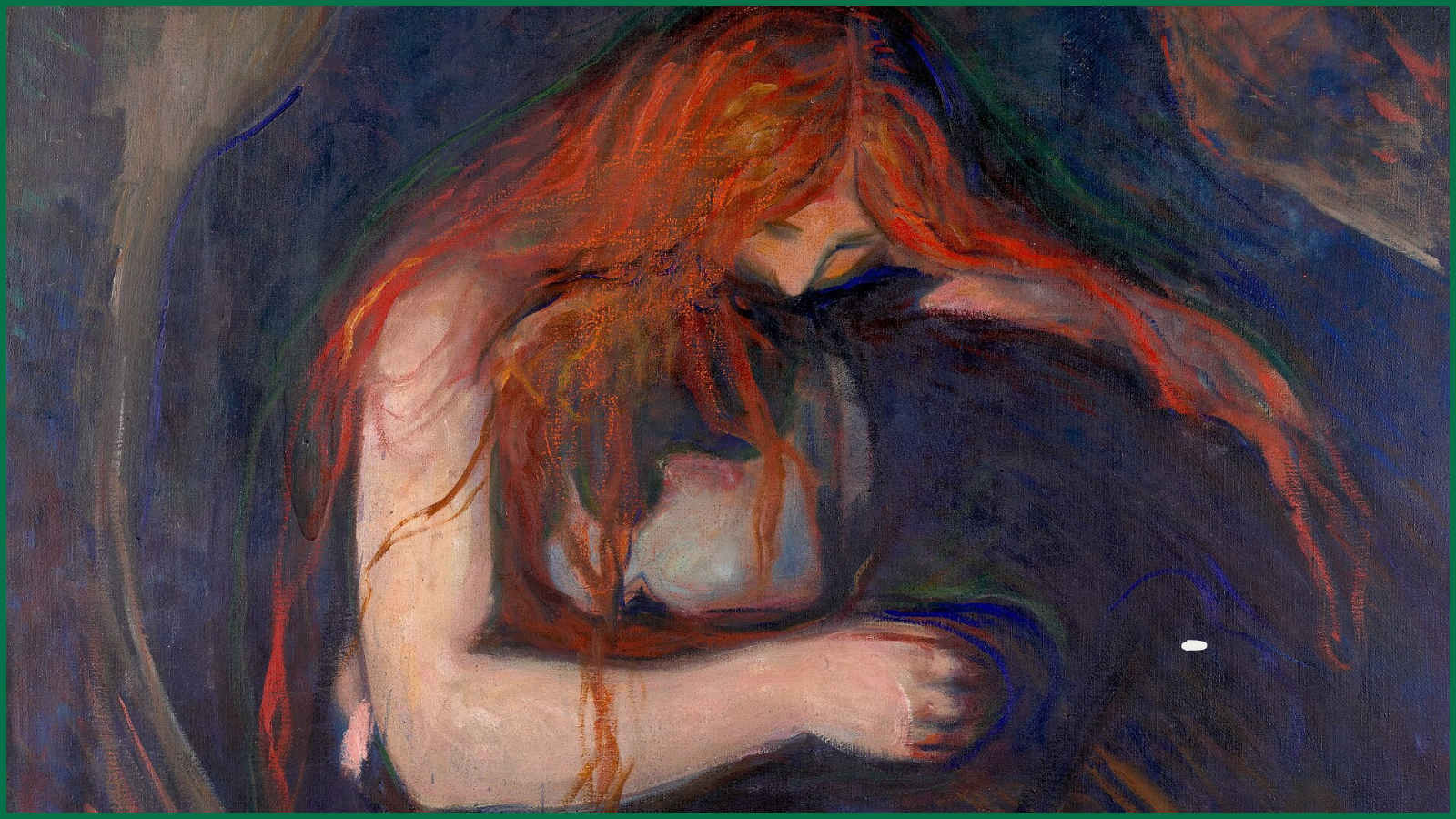
What happens when a vampire bites you? There are versions where the victim is overwhelmed by the agony and the ecstasy of the bloodletting and offer themselves up to be bit again and again. This is how addiction operates.
What is pernicious about the rentier economy is the exploitation of human need to extract hard-earned wages and salaries from value-creating people. And if a need is not found it can always be generated through targeted advertising and addiction. With today’s technology, creating need from thin air has never been easier. The result is the erection of choke points throughout society, whereby rents can be extracted “without any basis in cost outlay.”2
Marx described capital as “dead labour, that, vampire-like, only lives by sucking living labour, and lives the more, the more labour it sucks.” The vampires are growing. It is not only our labour-power they seek—it is our entire means of life. Be safe, friends.
Thanks for reading!
