Will Trump’s past association with Jeffrey Epstein take him down, as it did to Prince Andrew and Peter Mandelson in the UK? Who else might be involved and why is everything so slow to come out? I’ve been hearing about Epstein and Ghislaine Maxwell for years but have only followed the story over the past year.
Respectfully,
Robert.
Hi Robert,
It is impossible to judge whether the full magnitude of the Epstein ring will ever emerge. When this story first made headlines, it seemed plausible that the crimes were only the work of a perverted billionaire who used people like Bill Clinton, Donald Trump, Bill Gates and various Hollywood celebrities to shield his reputation. Since Trump was returned to the White House he has made blunt attempts to suppress the Epstein story—even labelling it as a hoax. Predictably, this tactic has backfired and instead made Epstein an even greater object of scrutiny.
Setting the prurient details of the pedophile ring aside, the number of prominent people that Epstein had personally met and spent time with is strange. Over the summer, Chris Hedges recorded an illuminating podcast with Nick Bryant, the investigative journalist who first published Epstein’s contact list and flight logs. They cover the obscure relationship that Jeffrey Epstein had with Ghislaine Maxwell, his mysterious source of wealth and the possibility that he was an intelligence asset running a honeytrap operation. The “friendships” that Epstein was desperate to make and his connections to the Israeli government certainly add weight to that possibility.
The political ramifications are fairly straightforward. Trump’s proclivities are well documented and long-known at this point. It is unlikely that his involvement in Epstein’s crimes will move the needle for anybody unconvinced by prior evidence. Outside of the Trump cult, don’t be surprised to see a few more heads roll as more details about Epstein’s past associations come to light.
The meaning of Jeffrey Epstein should not be partisan scorekeeping. These are crimes committed against flesh-and-blood working class children whose victimization was enabled by capitalist class power. Intelligence asset or not, it is no coincidence that Epstein first accessed wealth before building a sex trafficking ring. Mark Fisher once described capital as “an abstract parasite, an insatiable vampire and zombie-maker; but the living flesh it converts into dead labour is ours, and the zombies it makes are us.”1 As capitalism turns both nature and humanity into venal objects, those who live by the labour of others are the most ripe to feel entitled to the bodies of workers and their children.
The crimes are obscene but that is not why it runs in the collective consciousness. What the Epstein saga and other conspiracy theories reflect is a deep-seated insecurity that we have about our position in the hierarchy of capitalist production. The glaring lack of justice for working class families preyed on by Jeffrey Epstein and Ghislaine Maxwell is an illustration of class domination; an economy where labouring bodies transform the world into a playground for the rich.
Most of us dread the deadening of the body and will do anything to avoid it. About the deadening of the soul, however, we don’t care one iota.1 —Epictetus
As the earliest human societies emerged conscious from nature egalitarianism was a common characteristic. Economic surpluses were minimal and production of material needs relied on a nakedly social effort. The psychologists David Erdal and Andrew Whiten suggest: “Egalitarian behaviour patterns evolved because…individuals became so clever at not losing out to dominant individuals that vigilant sharing became possible, and this was the most effective economic strategy in the circumstances in which Homo sapiens evolved.”
In the prehistoric era of hunter-gathering, or primitive communism, there was no incentive to hoard resources, ideas or technology. In fact, doing so would have carried detrimental consequences to the individual, the group and the wider species. Resources and technology were freely shared between groups and individuals, and this type of cooperation facilitated the dominion of humanity over the globe. The free exchange of ideas and resources during this era fall into the categories of gifts between tribes, reciprocal exchange between kin and petty barter between individuals.
After ecological pressures provoked the Neolithic Revolution, humanity had to grapple with sedentary living and the production of an economic surplus above what was needed to reproduce the population. In the presence of surplus, our tendency toward cooperation and egalitarianism became inverted and economic classes formed which laid claim to different points along the production and distribution ladder. In a dialectical reversal of epic proportions, the prehistoric aversion to domination gave way to the slave economy, the most oppressive economic system known to history.
Ancient Rome was so saturated with unfree labour that little distinction was made between working citizens earning a wage and slave labour owned by a master. Slaves commonly held managerial roles, conducted business and apprenticed in skilled trades. Selling oneself into slavery was an attractive means to escape poverty. In such an economy, it was the narrow band of elite slave owners who absorbed the surpluses of antiquity.
Dawn of the Market
Both enslaved and wage labour transitioned into tenant farming during the late decline of the western Roman empire. Feudalism was a sort of synthesis between the enslaved labour of Rome and the social organization of the Germanic tribes. Meanwhile, Christian idealism began to permeate the superstructure of medieval Europe. Since most of the population was tied down to agricultural production on plots of land, merchants took on an important role in the circulation of goods. Markets were held at regular times and places throughout Europe, giving prospective buyers and sellers of wares notice to prepare. Merchant guilds coordinated the movement of imports and commercial profits became a pathway for non-landholding Europeans to capture a piece of the economic surplus of the feudal era.
Medieval commerce was sublated by the capitalist system as it began to develop after 1492. After peasants were shook loose from ancestral farmland and piled into cities, permanent shops replaced the market squares and merchant banks funded New World pillaging expeditions. We see a point in history where labour, surplus production and capital break free of physical boundaries. This economic transformation created the foundations of science, Enlightenment philosophy, the modern state, monetary system and, of course, the idea of the free market.
“Free market” is defined by Britannica as “an unregulated system of economic exchange, in which taxes, quality controls, quotas, tariffs, and other forms of centralized economic interventions by government either do not exist or are minimal.” It’s interesting that free market fundamentalism—or laissez-faire economics—arrive on the political scene around the same time as socialism does, during western industrialization.
As noted in the first paragraph, human beings evolved with an aversion to domination and preference for some modicum of economic and political egalitarianism. The adoption of sedentary living and the creation of economic surpluses within a class hierarchy threw back much of the formal cooperation of hunter-gatherers but it did not eliminate the collective want of freedom. Cooperation and freedom from domination is hardwired into our evolutionary history. This is visible in slave rebellions and peasant uprisings, as well as religions preaching liberation of the spirit. What capitalist modernity offers is a chance to concretely understand society and create the necessary political and economic conditions for liberation.
Socialism v. Markets?
For socialists, liberation involves a positive action: the organization of workers to overthrow the state and create a new government that lays hold of the economic levers of power. This would allow society to democratically create the material conditions needed for individual flourishing. Free marketeers are the inverse of this, socialism’s negative correlate: cut the government to a minimum and remove political authority from economic levers. The great promise of the free market is to provide “social order without institutions, claiming not to be one itself.”2 The premise here is that a market of self-interested individuals is the best allocator of goods and services for the whole of society. The market represents true capitalism, and true capitalism only exists where state authority ends.
Voluntary exchange between individuals would certainly be a feature of any pro-social economy. For this reason free market fundamentalism can sound attractive. But it brings forward serious problems owing to the rock-ribbed power imbalances embedded within the capitalist economy. Every class society has featured an elite class which posits a state to protect property and safeguard economic interests and capitalism is no different. In his history of capitalism, Jürgen Kocka writes:
State formation and the origins of financial capitalism were closely connected, and the nexus provided a way for prosperous urban citizens in high finance, a small elite, to establish their influence on politics while simultaneously making their entrepreneurial success dependent on powerful rulers and their shifting political fortunes.3
This is a situation that continues to the present day, with the powerful corporate lobby and central banks that fuse financial capital to the state apparatus.4
Assuming that the Siamese twins of state and corporate power could be surgically separated, the benefits are not clear. The capitalist market is not like the reciprocal exchange and gift economies of our prehistoric ancestors. It descended to us from authoritarian ramparts, by way of colonial subjugation, race-based slavery and violent ethnic cleansing. No wonder that the capitalist market is a bare-knuckled fight in which each participant must attempt to end the day with more money than they began it with.
Even for a bourgeois economist like John Maynard Keynes it was apparent that the accumulation of money had bound society to “pseudo-moral principles which have hag-ridden us for two hundred years, by which we have exalted some of the most distasteful human qualities into the position of the highest virtues.”5 Under such conditions, scams are incentivized, price gouging is profitable, environmental stewardship is burdensome, stock swindles are rife and labour appears only as a costly appendage to production.
Stamping the capitalist market with the title of “free” does not dress the window much either. Engels pointed out the logical fallacy of the “free” aphorism when critiquing a proposal to repackage Germany as a free state: “Taken in its grammatical sense, a free state is one where the state is free in relation to its citizens, hence a state with a despotic government.”
Once the great mass of people is subordinated to market forces by way of survival, the market is free to act on them in despotic ways. The workplace is a totalitarian encampment where using the bathroom and eating lunch are objects of scrutiny, the threat of termination hanging like the sword of Damocles over the necks of employees.6 Meanwhile, bills accrue. Small businesses collapse under the weight of competition. Houses are seized by debt obligations and families go hungry by price shocks. In the absence of income, the free market pushes desperate participants into drug peddling and sex trafficking. Art and corporate advertising become salacious performances demanding attention from a tired population on the go. Sterile escapism is rampant. Information deteriorates to the standards of minds made lazy and politics is a bloodsport. Every stripper pole, inside trade and contract killing can be rationalized so long as it pries away a profit. When Adam Smith likened the market to an “invisible hand” he failed to mention how often it would punch us in the face.
Past the Paradigm
The multitude of social ills kicked up by a despotic market which commands labour and demands consumption is the reason why the free market utopia is a mirage, at best. Even a conservative thinker like John Gray adroitly pointed out that cultural conservatism is not compatible with free market, laissez-faire policies.7 The conservative rebellion against corporate diversity policies and global trade are examples of misalignment between the capitalist market and traditional values.
If the political theatre is the stage of class conflict, the current tug-of-war between interventionist modern liberals and the protectionist populist right wing demonstrates that there is no room in the troupe for free market fundamentalists. The market has already blazed a trail for mass migration, menacing technologies, medical bankruptcy, sky-high utility prices, the outsourcing of decent jobs and hollowing out of public infrastructure. All that’s left to do is fight amongst the wreckage left in its wake.
The capitalist paradigm has only cemented over a scant 300 years of human history. Capitalism has visited humanity with a progression out of feudalism but its market is neither efficient or rational, as the swelling expanse of global slum dwellers, overflowing landfills and microplastics in our bloodstream attest.
What is needed is not the expansion of the capitalist marketplace but its sublation: a pulling forward of our latent cooperative instincts into a universal exchange that rewards economic actors according to the satisfaction of human need rather than profit. In such a post-capitalist market, the gift economy and reciprocal exchange reappear. Rewards accrue to the doctors curing cancer; the innovators shortening the workday; the oceanographers detoxifying our waterways; the engineers constructing comfortable housing and transport for all. For humanity to have a future we must not oppose the current paradigm but go beyond it.
Thanks for reading!
Footnotes:
Epictetus, Discourses and Selected Writings (Penguin, 2008): 15. ↩︎
Fredric Jameson, Valences of the Dialectic (Verso, 2010): 293. ↩︎
Jürgen Kocka, Capitalism: A Short History (Princeton University Press, 2016): 43. ↩︎
David Harvey, The Limits to Capital (Verso, 2018): 321. ↩︎
Keynes as quoted in David Harvey, A Companion to Marx’s Grundrisse (Verso, 2023): 83. ↩︎
David Harvey, A Companion to Marx’s Capital (Verso, 2010): 176. ↩︎
John Gray discussed in Jameson, Valences, 463-4. ↩︎
Entering the year 2000, America was at its peak power. The economy was roaring, the global economy fell in line with U.S. designs, military alliances were swelling, barriers to trade were falling. The American Dream was coming true for many.1 It was from this summit of American prosperity where Darren Aronofsky’sRequiem for a Dream broke loose and tumbled down to the harried masses. It is an artifact of western capitalism that evokes Ozymandias: “Look on my works, ye mighty, and despair!”2
Requiem for a Dream is a novel by Hubert Selby Jr. that was adapted into one of the most lachrymose films ever made, revolving around four characters in Coney Island. There is Sara Goldfarb, a lonely widow with an offer to appear as a contestant on some junk gameshow. Her son Harry is a heroin addict who feeds his habit by repetitively pawning his mother’s television set. His girlfriend, Marion Silver, has a talent for artistic textile designs but gradually becomes hooked on heroin herself. Their friend is the orphaned Tyrone C. Love, fumbling at some misguided effort to find acceptance in the low-level world of organized crime.
Predestination
The psychoanalyst Jacques Lacan said in no uncertain terms: “A letter always arrives at its destination.” The present moment manifests itself by way of a material reality and psychological being that have already crystallized.3 The chance encounter with your future partner; the bus you miss for the first time; the promotion you just got at work—these are the letters that arriving from addresses we have occupied in the past. In the film, this is symbolized quite literally with anxiety-inducing violins thrumming as Sara pushes her contestant form into the mailbox and Tyrone leaves the apartment to pick up a “pound of pure.” Their dreams are set in motion, their letters are out for delivery: Sara will get her 15 minutes of fame after years of invisibility, Marion will get her own artisanal clothing shop, Harry and Tyrone will prove they can earn the serious cash that nobody in their family ever had.
A letter always arrives at its destination but that place isn’t always intended by the sender. Dreams can turn into nightmares. Sara needs diet pills—amphetamines—from a quack doctor so that she will lose weight and fit into her favourite red dress. Harry and Tyrone need just “a little taste” to know how much to cut their product with. Marion needs to keep her creative energy up. We see a cotton ball swell with moisture. We see a syringe barrel boiling and a vein of blood pumping. And the dilated eyes—that eye—a vacant gaze into the abyss:
This is the Night, the interior of human being, existing here in phantasmagoric representations: here a bloody head suddenly shoots up and there another white shape, only to disappear as suddenly. We see this Night when we look a human being in the eye, looking into a Night which turns terrifying. From his eye the night of the world hangs out toward us.4
Image: Alamy
When the film reaches its climax, we see horrific scenes of Sara convulsing under electroshock therapy, Tyrone taunted by racist prison guards, the bloodspray from Harry’s infected arm being amputated and Marion’s grotesque humiliation as a prostitute before a perverted group of johns. Their letters had arrived.
American Dream
This film disturbed a generation of viewers because it is so much more than a cautionary tale about drugs. In fact, the shadow that Requiem casts over audiences does not even belong to drugs; it belongs to the American Dream. Selby writes in the preface to the novel:
I believe to pursue the American Dream is not only futile but self-destructive because ultimately it destroys everything and everyone involved with it. By definition it must, because it nurtures everything except those things that are important: integrity, ethics, truth, our very heart and soul.5
Whatever lofty ideals the phrase may have originally held, the American Dream was always destined to become entangled with notions of wealth and class in a capitalist society like the United States. At the outset of the film, vapid materialism had already hollowed out the lives of our characters and this made them vulnerable to toxic escapism in the form of television, drugs and junk food. Karl Marx:
In all forms of society there is one specific kind of production which predominates over the rest, whose relations thus assign rank and influence to the others. It is a general illumination which bathes all the other colours and modifies their particularity. It is a particular ether which determines the specific gravity of every being which has materialized within it.6
Like the audience, the characters of Requiem are children of capitalism and this is why it haunts us. The American Dream is a capitalist construction that preaches richness in consumption. What Sara, Harry, Marion and Tyrone expose is our collective inability to find richness in “our very heart and soul,” to use Selby’s phrase.
The Gravity of Capitalism
Sara’s pre-standing addiction to television, specifically a self-improvement game show, reveals a person yearning for meaning in her life as a widow and mother to an emotionally absent drug addicted son. The sweets are making her fat. The game show sells a self-help program for $39.95. In a revelatory hallucination, a film crew takes down the walls of her apartment and reveal that her living room has been the TV studio all along. There is no product for Sara; Sara is the product.
Harry appears to have fallen wayward sometime after his father passed away. He does not ask his mother for money to directly feed his drug habit. Instead he has constructed a ritual whereby he barges into her apartment and takes her television set only for her to retrieve it later at the pawnshop. The pawnbroker facilitates the monetary transaction between Harry and Sara, giving Harry the requisite emotional distance to lead such a tormented life. The first thing he does when he scores some cash is purchase his mother a new television set from Macy’s. After extending this material gesture to his mother he can brave to sit down and talk with her. Sara tells him that she does not want commodities; she wants a grandchild. Harry falls to tears upon realizing the void his mother is facing—and the bodies of Marion and himself are too polluted to build the family she asks for. Dazzling cash stacks and getting high have estranged him from his true dreams in life: happiness for his mother and Marion on the pier.
Mirrors hold a significant register in psychoanalysis because it is at the mirror stage when we become cognizant of ourselves as autonomous beings and individuate from our mothers. As Tyrone regards his sliding mirror, his business is doing well and a beautiful woman awaits him in bed. The film flashes back to a young Tyrone running to his mother and jumping up on her lap. “I told you, mom, one day I’d make it,” he whispers. She replies: “You don’t have to make anything, my sweet. You just have to love your mama.” His face belies bewilderment at this recollection: while he has learned to “make it” by a material standard, he has never learned how to love another person. His girlfriend disappears from the plot after this scene.
Marion must have the steepest fall from grace of all four characters: from a comfortable upper middle class family to a drug addicted prostitute. We learn that she resents the emotional coldness of her parents who only care about money and appearances. For this, she defies them by exchanging sex for drugs with her shrink and slumming it with Harry in a decrepit apartment. But we learn that she is not much different from her money-minded folks after all. At the same time she rejects her parents fixation with their textile business, she aspires to have one herself. The warmth and comfort of her relationship with Harry turns cold and transactional as they spiral into addiction. It is this narrow view of human beings as objects of exchange that ultimately makes her addiction vulnerable to exploitation by wealthy predators.
In his Paris Manuscripts, Marx wrote: “Private property has made us so one-sided that an object is only ours when it exists for us as capital, or when it is directly possessed, eaten, drunk, worn, inhabited, etc. In the place of all physical and mental senses there has therefore come the sheer estrangement of all these senses, the sense of having.”7 As our labour and means of life have become saleable commodities, our existence is reduced to that of a spiritually-barren market participant. Community is dissolved, friendships are transactional and familial bonds are strained. So long as this alienated world exists, Requiem will shuffle in its shadows.
See Jacques Lacan, Écrits (W.W. Norton, 2006): 28-29 and Slavoj Žižek, Enjoy Your Symptom! (Routledge, 1992): 1-27 for more on Lacan’s purloined letter and future anteriors. ↩︎
Here’s something I’ve heard applied to Donald Trump, woke liberal activists and everyone Jordan Peterson doesn’t like: postmodern. It’s also a label placed onto some of my favourite films, buildings and artwork, like Eternal Sunshine of the Spotless Mind, the Petronas Towers in Kuala Lumpur and Andy Warhol prints.
What is postmodernism? Is it good or bad?
Cheers,
Sora.
Dear Sora,
In his 1991 book Postmodernism, or, the Cultural Logic of Late Capitalism, Fredric Jameson argued presciently that the radical structural changes to the economy underway in the 1980s created a western culture disillusioned by progress, marking a break with modernity in the process.1 33 years later, the disillusionment has deepened and postmodernism rules the public sphere
After the medieval period was destroyed by the riches of exploited labour and resources from the Americas, modernity followed in its wake. Modernity is characterized by Enlightenment philosophy, secularization and science, liberal democracy, romantic and realist artwork and International Style architecture. It is debatable whether we have truly exited modernity but postmodernism can at least describe its latest evolution.
The most consequential casualty of the postmodern turn is the belief in progress. This has given space for right wing populists around the world to lash out at the previous order and ruling institutions. Lacking any philosophical grounding, there has been a tidal wave of contradictory political expressions coming in from the right: nostalgia for past glory while undermining the institutions that facilitated it; trickle down tax policies and trade protectionism; conspiracy theories and “alternative facts;” religious affirmations and hedonistic menageries of drugs and sex. Anything goes, and this is the hallmark of postmodernism. Because there is no grand narrative of history or final destination for humanity, nothing has to make sense beyond the present moment. Postmodernism did not produce identity politics; on the contrary, identity politics relied on the modernist narrative of a society gradually abolishing social prejudices. The triumphalism of postmodern politics has destroyed the “woke” idea, and liberals abandon it as rats flee a sinking ship.
Many of the postmodern elements seen lately in politics have existed for years in the realm of culture. The parade of cinematic reboots and remakes, nonlinear story structures, imitation of past styles without context and a fusion of high and low art are a few postmodern characteristics that Jameson identified. Postmodernist culture like film, music, artwork or architecture, relies on extensive reference to the past because of an inability to apprehend the future.
Postmodernism isn’t good or bad. It is simply the cultural analog to our current economic structure and material life. Finding resonance with postmodern culture is expected as we, too, are products of late capitalism. Just as we see postmodernism dominate the society of a nihilistic West, futurismdominates the society of an optimistic China. Only when the West has consciously apprehended its economic levers will it be able to determine its future and set foot to a new era yet again.
The artificial intelligence gold rush has been well underway since the release of ChatGPT. Technology companies within the computational ecosystem have seen their shares explode along the ongoing rush toward new data centres, more advanced chips and supporting energy infrastructure. Competition for AI researchers within the United States have seen employee poaching between companies and pay packages of up to $100 million. Trump’s unveiling of the Stargate project, intended to turbocharge domestic AI capabilities, makes clear the national importance of this emerging technology.
Across the Pacific, China’s release of DeepSeek was the first shot across the bow of American dominance over the space. DeepSeek is a large language model AI which rivals ChatGPT in capability but was developed for a fraction of the cost. China has taken an all-hands-on-deck approach to developing AI, cracking down on the video game industry in order to direct resources toward strategic technology, while fusing together civilian and military research to avoid compartmentalization. China is in the process of integrating AI in all facets of the economy and their rapid progress has led to fears of an AI arms race between the “democratic” West and “authoritarian” East.
AI Apocalypse?
Before you fret over the outcome of this battle for technological superiority, first consider that it may not matter. There is an ominous hypothesis that has casted a shadow over the topic of AI since its conception; namely, the total annihilation of humanity. Just in case there weren’t enough existential crises for us to worry about in this late stage of capitalist alienation, computer scientists Eliezer Yudkowsky and Nate Soares have done the podcastcircuit promoting their book about artificial general intelligence: If Anyone Builds It, Everyone Dies. A title like that needs no elaboration.
The historian Yuval Noah Harari has issued a similar warning about AI, as have many prominent figures in the field including Geoffrey Hinton, Yoshua Bengio, Mustafa Suleyman, Sam Altman and Elon Musk. It’s interesting that leaders of this industry have chosen to be up front about the catastrophic risk their product imposes rather than gaslighting the public post-hoc for years, as oil and tobacco companies did.
The AI doomsday scenario has been a staple of science fiction for a long time. The Matrix, Westworld, The Terminator and I, Robot come to mind. Machines become sentient and immediately treat their creators as an obstacle to be destroyed, or so the trope goes. No wonder so many people imagine the arrival of superintelligence ringing out like the battlecry of Krishna: “I have come forth to destroy the worlds.”1
Ghost in the Machine
It’s worthwhile to address this subject head-on, as no discussion of AI technology can be useful to anyone who believes that meaningful advances in the space will instantly kill us all. Firstly, the malevolent sentient machine of Hollywood lore is certainly impossible, as the philosophy of Arthur Schopenhauer attests. Schopenhauer was a cynical thinker but, as the progenitor of psychoanalysis, he understood that drives correlate with biological need and consciousness correlates with knowledge.2 A computer, like any inorganic “body without organs,” may have pre-programmed compulsions but it will not have drives; it may have a vast repository of information but it will not have knowledge.3
The apprehended Idea is the true and only source of every genuine work of art…Machines mince very fine and mix up what is put into them, but they can never digest it, so that the constituent elements of others can always be found again, and picked out and separated from the mixture.4
Machines cannot apprehend an idea because that requires a conscious will to life subsumed by the sensuous world. Capable brains are not the only requirement for consciousness, as cases of feral children demonstrate. Consciousness requires minds in constant negotiation with the opposing demands of our biology, social relations, physical environment, a shared language, subjective emotions, sense perception and received knowledge. As one starts a fire by rubbing sticks, it is a dialectical friction that sparks consciousness in humans and expresses our drives. Inorganic matter, including complex AI systems, simply cannot have that. Pursuing abstract “superintelligence” will always be fantastical, akin to running for the horizon in order to touch the clouds.
But AI could endanger us without conscious decision making. We are talking about revolutionary technology and, returning to Schopenhauer, “with every human undertaking there is something that is not within our power, and does not come into our calculations.”5 What distinguishes AI from software is the ability to interpret data, process new information, make predictions and operate hardware. The momentum of its energy makes an AI system capable of formulating unpredictable goals such as “to count the grains of sand on Boracay, or to calculate the decimal places of pi indefinitely, or to maximize the total number of paperclips in its future lightcone.”6
One can see how AI could execute a decision to sweep humanity away if we come between its calculated actions. The scenarios by which we are swept away are not yet apparent. Hypothetically, an AI with access to unwitting accomplices or robots could formulate a supervirus or as-yet-undiscovered weapon of mass destruction and unleash it right from under our noses.
Technological Disempowerment
It is a common belief that Big Tech is taking our species on a one-way trip aboard a kamikaze plane because this is their own narrative. There is a salient point to be reckoned with here: if both the majority of the population and the leaders of industry are fully aware of a human extinction event resulting from AI development, but are powerless to mitigate the risk, then we must already be enslaved to our system of production. A free and rational person does not accept certain death as the outcome of their work. Only a slave does that.
It is the economic system that renders us powerless—and this is the real threat confronting society. It isn’t AI. AI has the potential to deliver cures for cancer, fix climate change, detoxify the environment, rapidly research new energy breakthroughs for space travel and defeat material scarcity on the cheap. But that won’t happen on its own. For a tool to realize its positive potential it needs to be used for the right reasons.
Technological progress in capitalism has the feel of “one step forward, two steps back.” Automobiles are great—except for the emissions and roadkill. Smartphones have put computers in billions of pockets—but now people are addicted to them. Plastic has opened up a new paradigm of construction—but it’s clogging the oceans. The Internet has achieved global connectivity—but conspiracies and misinformation destroy lives and kill political discourse. The reason this happens is simple: unleashing these technologies is profitable and mitigating their harms is not.
It’s easy to imagine AI as a destructive force because we already live in a society twitching to the fetishes of tech oligarchs. Their capacity to inflict immense social harm should not be underestimated. Because China has subordinated industry to government planning, they have been able to efficiently mitigate the risks of technology by placing the common good over profit. Electric vehicles and renewable energy for cleaner air; shrinking deserts with afforestation; hard-limits on screen time for Chinese youth; suppression of AI slop and misinformation; restricting single-use plastics as a step toward tackling the pollution crisis.
In terms of AI, a recent article in Foreign Affairs highlights China’s superior rollout, scaling automation and robotics with the goal of complete economic integration by 2030. This is China’s strategy to alleviate demands on an aging workforce, with an eye toward future material abundance and socialist distribution. Realization of carefully formulated concrete targets is what will make AI useful.
The West needs to make a direct democratic analog to socialism with Chinese characteristics. Within the realm of public ownership and democratic decision making, AI would be a powerful tool to develop universal human flourishing and abundance. Within the narrow realm of tech oligarchs and the financial elite, it is nothing but a profit generator turbocharging fossil fuel consumption, economic inequality and chatbot psychosis. We can use AI to raise ourselves to heaven—or let them cast us into hell.
Thanks for reading!
Footnotes:
The Bhagavad Gita trans. Laurie L. Patton (Penguin, 2008): 131. ↩︎
Arthur Schopenhauer, The World as Will and Representation, Volume One (Dover Publications, 1969): 203. ↩︎
Nick Bostrom, “The Superintelligent Will: Motivation and Instrumental Rationality in Advanced Artificial Agents,” Minds and Machines Vol. 2, No. 22: 73. ↩︎
China is one of the most misunderstood countries in the West for all of the predictable reasons: the far-away geography, the curious culture, the unfamiliar politics, the ferocious economy. It is either portrayed as a one-dimensional menace to democracies or, less often, as the last hope to save the biosphere or the Global South. China can be the rigid communist or the wild capitalist—it only depends on the point of view of the observer. Dan Wang is the latest to re-cast China, an engineering state in contrast to the lawyerly society of the United States. He hit the shore of this discovery when it occurred to him that many of America’s founding fathers were lawyers and Deng Xiaoping had promoted a lot of engineers in the 1980s. According to Wang, this is the reason why China builds a lot more stuff than the U.S. today. But he’s wrong.
What Wang discovered is only a basic difference between Marxist-Leninist societies and liberal capitalist ones. The Soviet Union was dominated by engineers, as China and Vietnam are today. Even Cuba has been described as “a society of engineers.” Conversely, western bourgeois revolutions were all dominated by those with legal backgrounds; Thomas Jefferson in the U.S., Oliver Cromwell in Britain, Maximilien Robespierre in France—to name only the most notorious. The first prime ministers of Canada, Australia and India were also lawyers. But if the American “lawyerly society” was able to out-build and outproduce the Soviet engineering state, why can’t it do the same against the Chinese?
The answer has little to do with lawyers or engineers and everything to do with economics and governing ideology. Whereas the American commitment to capitalist class power led it directly into a deindustrialized, cannibalistic financial economy, China’s commitment to building socialism led it to becoming the greatest workshop in human history, in command of entire supply chains and advanced technology. America had built a great industrial power by the early twentieth century and organized labour had won considerable political power throughout the New Deal and Cold War eras. But this unravelled almost the moment the Cold War wound down. The disciplining of the western workforce was inevitable in an economic system pursuing profit for the sake of profit, and it arrived in the form of offshore manufacturing, real estate speculation, vulture capitalism, super-exploited migrant labor and intensified corporate lobbying.
Marxism-Leninism in China
China, meanwhile, was an accident of epic proportions. Whereas other Marxist-Leninist states in the Soviet bloc were successfully marginalized from the global capitalist economy, the U.S. under Nixon and Kissinger embraced China in a successful effort to defeat Moscow by exploiting the Sino-Soviet split. Successive presidential administrations gambled that global capitalism would so thoroughly corrupt Chinese socialist aspirations that the country would abandon Marxist thought altogether. This has turned out to be a bad bet if the words of paramount leader Xi Jinping are any indication: “If we deviate from or abandon Marxism, our Party would lose its soul and direction. On the fundamental issue of upholding the guiding role of Marxism, we must maintain unswerving resolve, never wavering at any time or under any circumstances.”
Statements like this from Chinese leadership mystify western audiences, both left and right. Too many people view socialism through the narrow paradigm of the Soviet system or left wing politics at home and conclude that China has hopelessly deviated from Marxist theory. But what if it is the western left that is aimless and the Soviets who were forced to deviate? Western politics is so saturated with capital that even nominally “progressive” forces don’t understand the corporate interests being served by mass migration crises and obsessional identity politics. And the Soviet Union, facing multiple foreign invasions at the outset, rapidly nationalized most of its economy and placed it under a central command in order to first stave off European aggression and then counter American containment strategies. The Soviet Union was able to achieve incredibly high levels of human development and military superpower status, but balancing these two priorities against western counter-pressure proved unsustainable over the long haul.
China pursued somewhat similar policies to the Soviets until American rapprochement came in 1972, when Nixon visited Mao. Imperial pressure against China was lifted, culminating in large amounts of western commercial investment by 1979 and a U.S. State Department upgrade for China to “friendly, developing nation.” This is where the great misunderstanding of China began: for the left, China was seen as selling out the socialist movement to imperialists and for the right, China was increasingly seen as a nascent capitalist champion. Neither side was completely right or wrong.
China did embrace capitalist investment in a way that was not geopolitically possible for other Marxist-Leninist states. The private sector of China is notoriously wild and cutthroat. At the same time this does not represent a reversal of the Marxist course in China, as originally charted by Mao. Consider the Chinese flag: four small stars representing the national bourgeoisie, petit bourgeoisie, the working class and the peasantry. Mao, while fiercely antagonistic toward rent-extracting landlords, had a different understanding of China’s domestic capitalists:
The national bourgeoisie differs from the imperialists, the landlords and the bureaucrat-capitalists. The contradiction between the national bourgeoisie and the working class is one between exploiter and exploited, and is by nature antagonistic. But in the concrete conditions of China, this antagonistic contradiction between the two classes, if properly handled, can be transformed into a non-antagonistic one and be resolved by peaceful methods.1
In Marxist theory, capitalism is seen as a major progressive advance over the feudal mode of production. When Mao came to power, China was largely a feudal state. For this reason Mao favoured China’s capitalist elements over the landlords of the feudal order. Mao proposed a five-tiered structure of ownership during China’s transition phase which has been applied throughout the country: state-owned enterprises, cooperative land ownership, individually owned businesses, private corporations and public-private partnerships. The Communist Party of China, while it bristles under imperialism, has always recognized this classical Marxist principle: capitalism is the mother of socialism, not its enemy. Karl Marx:
The bourgeois period of history has to create the material basis of the new world—on the one hand universal intercourse founded upon the mutual dependency of mankind, and the means of that intercourse; on the other hand, the development of the productive powers of man and the transformation of material production into a scientific domination of natural agencies. Bourgeois industry and commerce create these material conditions of a new world in the same way as geological revolutions have created the surface of the earth. When a great social revolution shall have mastered the results of the bourgeois epoch, the markets of the world and the modern powers of production and subjected them to the common control of the most advanced peoples, then only will human progress cease to resemble that hideous pagan idol who would not drink the nectar but from the skulls of the slain.2
Having built a mass-party of over 100 million members, the CPC believes that China has already completed its great social revolution and have set themselves the task of mastering “the results of the bourgeois epoch.” In Building Socialism with a Specifically Chinese Character, Deng Xiaopingdescribes foreign investment as “a major supplement in the building of socialism,” with the goal of “highly developed productive forces and an overwhelming abundance of material wealth.” This is a redux of Engels, who said that the forces of production “must be multiplied to the extent necessary for the creation of a communal society” before private property can be abolished.3
Whereas the advanced capitalist countries were able to develop their productive forces through a historical process involving colonial extraction, debt bondage, slavery and corporate-driven markets, China is doing the same with a combination of foreign capital investment, state owned enterprises, domestic start-ups and state-dominated markets operating under the umbrella of five year plans and consultative democracy.
The Limits to Capital
Since the dawn of civilization, Marx noted, the property relations of an economy eventually become barriers to the further advancement of technology and production.4 In feudalism, there was only so much progress that was possible in an economy dominated by illiterate subsistence farmers paying rent to lords. The limits inherent to the feudal order are what eventually provoked daring exploration missions leading to the discovery of the Americas, European mercantilism, the plantation economy and subsequent Industrial Revolution.
As industry has progressed, it has gradually given way to rent-seeking financial monopolies and Big Tech companies which are posing enormous barriers to production in western economies. Even our Gross Domestic Product (GDP) data can no longer be trusted, as the economist Michael Hudson explains: “Bank penalties and fees are now counted toward GDP rather than as an economic cost. GDP accounting is now a travesty that credits finance as producing a product rather than zero-sum transfer payments.”5 Our system cannot solve this problem because our system is the problem—and no quantity of Trumpian neofascist rebellions will change the fundamental contours of the western economy. Only a revolution can do that.
Post-revolutionary China, on the other hand, has seen enough to avoid these pitfalls. Financial capital currently plays an important role allocating resources toward innovation and productivity but, left to its own devices, it will devolve into debt predation, real estate speculation and inflating unproductive assets like stocks and cryptocurrencies. According to Marxian economics, money has a price but only production can create objective value. Banks in China are state owned and directed to fulfill the five year plans that build their country. Salaries and compensation for financial service managers have been reigned in and regulatory frameworks ensure that Chinese hedge funds invest in domestic products like DeepSeek rather than asset prices. It’s been said that the West can never produce like China and this is why.
Projects from state owned enterprises, clockwise from left: Raffles City, Huajiang Grand Canyon Bridge, China Energy Engineering Corporation. The public sector can build according to use rather than profit.
Marx and Engels supported free trade and industrial competition as a means of provoking technological revolution and working class development.6 China has used both instruments to build out world-leading high speed rail, renewable energy infrastructure, electric vehicles, high tech skyscrapers and record-setting bridges. Unlike capitalist countries that over-promise and under-deliver on almosteverything, China’s public sector consistently beats its own targets. They have a working class of 772 million people, of which 500 million are considered middle class. But the contradictions created by technological change, fluctuations in value and financially ruinous competition often spur crises, and these crises promote changes to economic relations and political orientation.
Socialism with Chinese Characteristics
For China, crises precede expansion of the public sector. Banking, land and resources are already under socialized ownership. Further, there are 362,000 state owned enterprises in the country comprising 60% of total market capitalization. With many people forecasting future economic turbulence, economists Minqi Li and Lingyi Wei see a China that is well-positioned to:
Either take over the remaining capitalist enterprises or invest in new socially owned enterprises to replace the bankrupt capitalist enterprises. Eventually, this could pave the way for social control over economic surplus, to be used for the free development of all individuals in manners to be determined by democratic decisions.7
Throughout their work, Marx and Engels stressed the need to not simply oppose capitalism but to go beyond it.8 Neither the workers’ state of the Soviet Union nor the welfare states of western nations have actualized this concept.9 By prioritizing production over distribution, China is doing exactly what Marx outlined in his Contribution to the Critique of Political Economy and Engels in his Principles of Communism: driving the forces of capitalist production to their technological limit before crossing the barricade that capitalist relations inevitably impose.
The colossal solar plants, hydro dams and wind farms that China is constructing are not just for show. They are the building blocks of a fully-automated robotic economy powered by the Sun. Under social ownership, an advanced economy of this type makes class distinctions extinct. It makes economic democracy viable, free development of individuals possible and the Communist Party unnecessary—as Mao envisioned.10
In America, plantation slavery funded industrial capitalism and industrial capitalism, in turn, made slavery obsolete. In China, capitalism is funding a high-tech socialist economy and socialism, in turn, will make capitalism obsolete. Marx wrote in The Poverty of Philosophy: “The hand-mill gives you society with the feudal lord; the steam-mill, society with the industrial capitalist.”11 China finishes the thought: “And the socially-owned robot gives you society without class.”
Karl Marx, “The Future Results of British Rule in India,” Dispatches for the New York Tribune: Selected Journalism of Karl Marx (Penguin, 2007), 125. ↩︎
Karl Marx, “Preface” of A Contribution to the Critique of Political Economy: “At a certain stage of development, the material productive forces of society come into conflict with the existing relations of production or—this merely expresses the same thing in legal terms—with the property relations within the framework of which they have operated hitherto.” ↩︎
Michael Hudson, “Finance Capitalism versus Industrial Capitalism: The Rentier Resurgence and Takeover,” in Review of Radical Political Economics, Vol. 53, No. 4: 12. ↩︎
Karl Marx, Capital Volume II (Penguin, 1992): 250. ↩︎
Minqi Li and Lingyi Wei, “Surplus Absorption, Secular Stagnation & the Transition to Socialism in China,” in Monthly Review Vol. 76, No. 5: 25. ↩︎
Erich Fromm, “Marx’s Concept of Socialism” in Marx’s Concept of Man: “Marx, the man who every year read all the works of Aeschylus and Shakespeare, who brought to life in himself the greatest works of human thought, would never have dreamt that his idea of socialism could be interpreted as having as its aim the well-fed and well-clad “welfare” or “workers’” state. ↩︎
Mao Zedong, On Contradiction and On Practice (Midnight Press, 2023): 47. “To build the Communist Party is in fact to prepare the conditions to eliminate the party and all parties.” ↩︎
To be honest, I did not pay much attention to China until I learned that a number of my colleagues were using DeepSeek and preferred it to the American ChatGPT. Since then I have become aware of their advanced renewable megaprojects, electric vehicles and 6G technology, the Great Green Wall, their leading high speed rail network and epic skylines and bridges.
After the recent military parade, a number of people have told me that the advanced equipment on display may not be real, that the West still leads in terms of military power and computer chips. But considering the other ways they have left Western nations behind, I am not so sure. Are they the new superpower? Is China for real?
Thanks,
Bruce.
Dear Bruce,
You’ve answered half of your own question: if the existing civilian technology and visible infrastructure in China is more advanced than anywhere else, why wouldn’t their military be the most advanced as well?
There are obvious safety reasons explaining why live explosives aren’t going to be marched down the centre of Beijing. But given China’s successful track record deploying technology, it is likely that the weapons on display are already operational or will soon be in production. There were many potential customers in the audience, after all.
China is definitely for real. The question about superpower status is difficult to answer and I’ll refer you to a previous article about where things currently stand between Chinese and American supremacy. Questions of that sort are often only apparent in hindsight. Ten years from now, we may look back at the 2025 China Victory Day Parade as a decisive turning point in world history.
The doubters will claim that the power of these weapons is unknowable until they are tested in battle, as if rooting for war. If Xi Jinping has learned any lessons from the great Chinese military strategist Sun Tzu, let’s hope it was this: “The skillful leader subdues the enemy troops without any fighting.”1 With a U.S. shift away from Asia on the horizon, Xi’s parade may have done the trick.
When Heraclitus said, “no man ever steps in the same river twice, for it is not the same river and he is not the same man,” he was emphasizing the permanency of an unyielding process of change through time. Time does not pass calmly forward—it is forceful, obliterating the present and fossilizing the past, with all matter standing as its witness. The essence of this perpetual motion found in nature is what dialectical materialism seeks to grasp as a framework for the analysis of everything in the universe, from the tiniest atoms to the largest stars. Put simply, dialectics is the study of change.
The first thing to establish is that the laws of nature—including the speed of light, gravitational attraction, conservation of energy, etc.—were woven into the universe at its inception. Current science holds that our universe was born from immense countervailing forces: a sub-atomic singularity of infinite density and infinite heat that erupted in a Big Bang.1 In dialectical terms, countervailing forces are referred to as contradictions and contradiction not only set the universe in motion, but they provide the friction that keeps it moving. For example, we see our solar system locked in an orbital tug of war between the gravities of planets and their Sun, cosmic collisions that send whole worlds spinning and tensions between galactic megastructures in a universe that has been inflating outward since the start.
Human societies, though notoriously difficult for the subjective observer to predict, must adhere to natural laws of motion and change all the same: “The reason is that nature and society are not different realities, but are co-evolving existences, in which society is asymmetrically dependent upon the larger natural world of which it is a part.”2 This realization is what gave impetus to Karl Marx’s ingenious application of Hegel’s abstract dialectical method to the concrete, material world in which we live. He described the motion of human societies as elliptical, as in a spiral galaxy or solar system: “For instance, it is a contradiction to depict one body as constantly falling towards another, and as, at the same time, constantly flying away from it. The ellipse is a form of motion which, while allowing this contradiction to go on, at the same time reconciles it.”3 Progress is thus neither linear nor obvious, since change is the product of conflict and creation is the outcome of destruction.
Although Marx did not formally codify the dialectical method he used to present his work in Capital and Grundrisse, his long-time collaborator Friedrich Engels did summarize three main ontological principles:
The transformation of quantity into quality. Also known as a phase transition, this occurs when an accumulation of some input reaches a tipping point, creating something new. For example, liquid water will turn into steam once a quantity of heat has been reached. Or, in outer space, a molecular gas cloud will gradually accrete into a ball and ignite the fusion of a star once a certain threshold of gas and dust have amassed together. In human societies, quantities—of technologies, climate changes, population densities, natural resources and capital accumulation—have led to changes in the quality of society, as seen during the Neolithic Revolution, rise of ancient empires, feudalism and Industrial Revolution. In the contemporary period, changes to quantities are occurring at an exceptionally fast pace, with consequences to quality still unknown.
Interpenetration of opposites. This refers to two elements that are simultaneously opposite one another and interdependent on the opposition in order to exist. For example, light cannot exist without dark or heat without cold. Magnetism relies on the opposition between north and south poles to create a magnetic field and magnetic monopoles simply do not exist. In human society, this phenomenon is most poignantly observed with economic classes. While classless association has been the norm in human evolutionary development, classes themselves can only exist in relation to others. For example, a slave owner cannot exist without slaves. Nor can a landlord exist without tenants or a capitalist without workers. Even the much-discussed “middle class” implies, by mere mention, the existence of an “upper” and “lower” class in relation to it. The interaction of these various classes, their interpenetration with one another, is what accounts for the dynamism of society.
The negation of the negation. As mentioned in the opening paragraph, time fossilizes the past, it embeds history into the present and carries it forward into the future. When a cloud of gas and dust collapses into a star, the gas and dust are not deleted from existence but, rather, transformed into something new and complex. The gas cloud is negated by the star, and the star is eventually negated by a supernova—a stellar explosion of heavy metals and oxygen and helium back into space. Through a process of negation, a gas cloud is thus transformed into the planetary building blocks of the universe. On Earth, life forms are constantly negated by their own evolution into something else better adapted to actually existing environmental conditions, such as dinosaurs into birds. The past is found to mediate the present in all circumstances, however. While some dinosaurs evolved into birds, apes into hominids or flowering plants into fruit-bearing ones, the parameters of these evolutionary negations is set by the physical properties received from the past. This is why grass cannot evolve into an amphibian and humans cannot evolve into lizards.
In terms of human social development, it was the advent of sedentary living, private property and class structure which negated the classless tribal societies that conditioned human evolution for hundreds of thousands of years. The negation of class society by a higher-order classless association is made possible by technological progress and the human desire for cooperation, leisure and self-directed activity—desires embedded in the present that are received from our collective past. As a molecular gas cloud is transformed into heavy metals, the free association of humanity’s tribal past may be transformed into a technologically advanced, classless and abundant global civilization.
Cooperation is a carryover from our collective prehistory—the primordial pillar to our monumental success as a species. Class society perverts this tendency toward cooperation by placing the majority of humans into the service of an elite ownership class—with side effects of violent competition and a degraded biosphere that threatens our existence. It is the negation of classes and the fomenting of universal cooperation innate within us that provides the dialectical basis for a peaceful and healthy free association of producers.
Singularities of this nature are also posited to exist at the centre of black holes, leading some scientists to speculate that black holes serve as a point of origin for our universe and infinite more. ↩︎
John Bellamy Foster, “The Return of the Dialectics of Nature: The Struggle for Freedom as Necessity,” Monthly Review, Vol. 74, No. 7: 13. ↩︎
Karl Marx, Capital, Volume One (Ancient Wisdom Publications, 2019), 198. ↩︎
The chronological sequence of events leading to the present can be looked at in a number of ways. Sometimes it is mystified, a progression guided by the hand of God or a creator. This is generally what is taught in churches. To the more secular-minded, it can appear as a random sequence of events—one unfolding drama after another between the armies of warlords and conquerors, the avarice of kings and emperors, the bedrooms of aristocrats and financiers. This is the “great man theory” of history which supposes that social changes and historic events are mainly impacted by gifted individuals driving the realm of humans forward. Then there are the idealists, asserting the predominance of collective consciousness and content of the mind in determining events. This view holds that the best ideas will advance themselves through free and open communication, with the strongest ones rising to the top and shaping our government, laws, technologies, economic exchange and global institutions.
The materialist conception of history grounds things differently. As humans are evolved from nature and are reliant on it to meet all of our basic needs, materialism places our history on the basis of our natural being. As most hominids and pre-modern humans existed without religious concepts, advanced cognition or complex language, mapping our history onto these things does not make much sense. While human society today may “feel” very much removed from the whims of nature, this is a fallacy since everything from computers, smartphones, houses, clothes and food are all ultimately derived from some natural extraction. Thus the true fault line between society and the world of nature is “the mediating realm of human labour and production.”1 As individuals must be nourished and fed before they can think or speak, so too must any collective of people be able to meet their biological needs before they are able to ponder philosophy, establish an oral history or develop an artistic culture: “The first historical act is thus the production of the means to satisfy these [biological] needs, the production of material life itself.”2
Historical materialism is the assertion that the basis of all history starts with how people produce. Because we, as material beings, are required to first produce our physical bodies before we can produce ideas and individuals, the ideas and individuals that come thereafter will be a reflection of how we produce. Everything else—politics, art, culture, religion—derives secondarily from this basis in production. That is not to dismiss the existence of individual talents or the significance of ideas, but life’s first instances must be materially produced before any individual or collective expressions can be made. The latter depends on the former. Thus it is seen that great men, religion, political intrigue and ideas in general are corollary to the economic system and not the other way around. Human societies, as an outgrowth of nature, therefore emerge with a universal base-superstructure shape that Karl Marx summarized as follows:
In the social production of their existence, men inevitably enter into definite relations, which are independent of their will, namely relations of production appropriate to a given stage in the development of their material forces of production. The totality of these relations of production constitutes the economic structure of society, the real foundation, on which arises a legal and political superstructure and to which correspond definite forms of social consciousness. The mode of production of material life conditions the general process of social, political and intellectual life. It is not the consciousness of men that determines their existence, but their social existence that determines their consciousness.3
Image: Wikimedia Commons
Labour and production are an “everlasting Nature-imposed condition of human existence” but the forms that production takes and the societies that it produces are variable and highly dependent on available technology, access to resources, received cultural values, etc.4 The social hierarchy of production plus the resources in use and the technologies deployed constitute the mode of production—the economic base. Politics, culture, social customs and intellectual products are the superstructure resting atop this base, shaping our individual and collective consciousness. If anybody imagines being born at a different time period than their own, what they are imagining is life within a different hierarchy of production and its corresponding customs and norms.
In history, there has been a progression of four major modes of production that have been well-documented and studied, presented below. A fifth is theorized but has yet to fully emerge.
Primitive communism. This is also known as a tribal or hunter-gatherer society, but it is regarded as a form of communism because they were classless. A classless society does not denote equality or absence of authority or any social hierarchy, however. Classlessness denotes individual autonomy over labour, as nobody has the means to seize the work of others. Surpluses, resources and positions of authority are managed democratically by the group, often by consensus. This mode of production was predominant during the Paleolithic Era when Earth was in an ice age. The economic base consisted of technology such as bows and arrows, early use of fire, rafts, hand axes, and big game resources like rhinoceros’ and woolly mammoths. This mode of production corresponded with a superstructure which found expressions in cave paintings, figurine carvings, flute-like instruments made of bone and animistic religions.
Ancient mode of production. The transition to settlements and agriculture occurred after the ice age had ended and various megafauna species began going extinct. The warmer climate allowed for a transition to domesticated crops and livestock which resulted in much greater food production and increased population densities—even as life expectancy crashed due to higher rates of disease and less nutritious diets. The appearance of large grain surpluses also gave rise to humanity’s first class structures and violence over territory. As warrior-kings and armies developed, enslavement of other peoples became common. This mode of production is largely epitomized by the master–slave class relation seen in Ancient Greece, Rome, Persia and Asia. Humanity’s first cities were created under this mode and it developed technologies like wood ploughs and iron tools, utilizing a variety of resources through aqueducts, roads, mines and quarries. The existence of a slaveholding class resulted in a complex superstructure marked by polytheistic, harvest-based religions, early writing systems, political institutions, philosophy, pottery and astronomy.
Feudal mode of production. Feudalism came into being as the western Roman Empire was gradually undermined by an exhaustion of the slave trade and conflict with Germanic tribes, until it was eventually negated by the tribes altogether. The result was a massive deconstruction of political authority, away from cities and empire and toward rural fiefdoms controlled by warlords-turned-aristocrats and hereditary royal monarchies. This mode of production is defined by the predominant lord–peasant class relation. While ownership of slave labour was diminished, the labour of serfs was captured by agricultural rents paid to the manor. Previously discovered technologies were mostly adapted to village life, including mills, clocktowers and blast furnaces. The superstructure at this time was largely characterized by the rise of monotheistic religion across the known world. In western Europe, this was crystallized in the Catholic Church which offered political legitimacy to rulers in the form of a “divine right to rule” ideology. The Church also dominated the musical, writing, art and social life of this time period.
Capitalist mode of production. As feudal Europe developed its productive forces and its aristocracy matured, a thirst developed for expanding trade routes. Existing routes had become monopolized by the Ottoman Empire and this is what motivated Christopher Columbus to set sail, eventually landing on the shores of what is now the Dominican Republic. Ensuing was an unprecedented wave of settler colonization, with all of the pillage of gold, silver, produce, furs and fish that came along with it. As whole continents cracked open to agriculture and trade, plantations developed and slavery was revived in a racialized form. This veritable rush of wealth led to immense capital accumulation by European powers, ushering in the capitalist era. Technological development began to rise exponentially with the Industrial Revolution of the 1700s, as steam power, cotton gins and telegraphs appeared. Additional crop varieties from the New World and improved plough technology led to enclosures of farmland, expulsions of peasants and the creation of a mass wage-labour force. The capitalist–wage labour, or employer–employee, class relation is dominant under capitalism, rendering both slavery and serfdom uneconomical due to huge increases in production and the need for mass-consumption. The superstructure under capitalism is marked by the rise of liberal representative democracy, a secular public life, the fracturing of the Christianity with Protestant strains, mass media and the commodification of culture and goods and services. With rapid technological change, capitalism has now placed us firmly into the digital age.
Free association of producers. A theoretical system whereby the labouring classes under capitalism—almost 99% of the population—become the ruling ownership class over the economy and government. Systems of socialist ownership sprouted up during the 20th century in opposition to imperial capitalism, while others have found a footing within the global capitalist structure today. National parks, public education, health care services, co-operatively owned enterprises, public transportation and the post office are all examples. Durable forms of socialism have yet to supersede global capitalism in a meaningful way. The goal of a free association is a classless society which minimizes mandatory work and unleashes the creative potential of all individuals as they dedicate themselves to self-directed pursuits. The primary purpose of this economic base is to produce goods and services according to need rather than payment, with the realm of want and culture dictated by free and voluntary exchange between individuals. Calculated surpluses would be managed via direct democratic means and allocated according to the material interests of the liberated society. The superstructure of such a system is unknown, but would be determined organically from the bottom-up, with decentralized communication technology, such as the Internet, playing a central role.
Further reading:
Karl Marx and Friedrich Engels, The German Ideology: Chapter One.
—————————–
John Bellamy Foster, “The Return of the Dialectics of Nature: The Struggle for Freedom as Necessity,” Monthly Review, Vol. 74, No. 7: 6. ↩︎
Karl Marx and Friedrich Engels, The German Ideology: On Feuerbach. ↩︎
Karl Marx, “Preface” of A Contribution to the Critique of Political Economy. ↩︎
Karl Marx, “Chapter 7: The Labour-Process and the Process of Producing Surplus Value” in Capital: Volume One.↩︎
There is a claim that capitalism is defined by free trade and markets but this is an obscurity. Capitalism utilizes both markets and economic planning where beneficial, just like every other economic system has done—including hunter-gatherers, ancient Rome and feudal Japan. The definition of capitalism is actually very simple and specific: private ownership of production and wage labour. These characteristics may seem unimpressive from today’s vantage point but their fruition conceals a long and shady history.
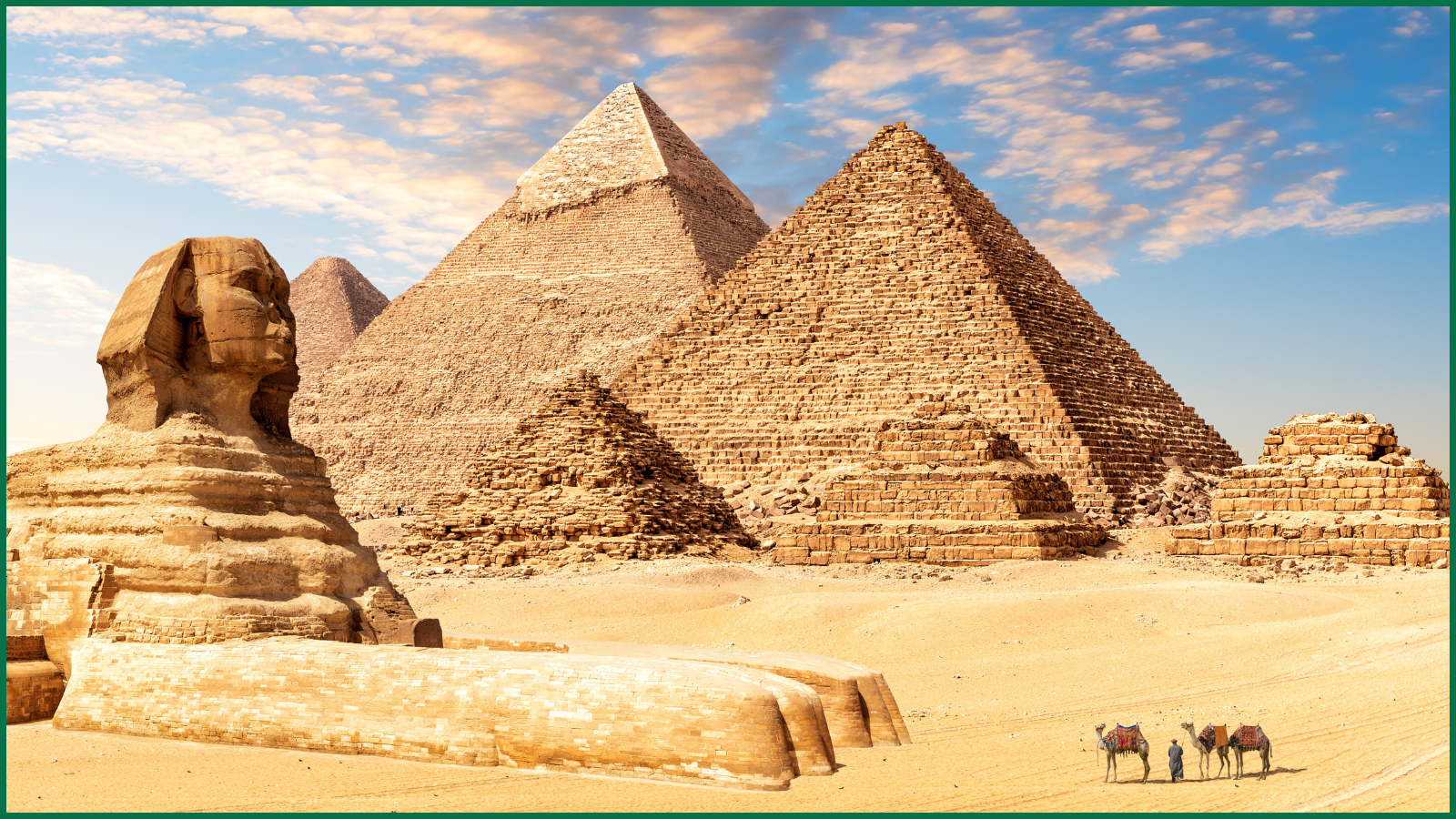
In Capitalist Realism, Mark Fisher points out the prevailing sentiment of 21st century disempowerment: “It is easier to imagine the end of the world than the end of capitalism.”1 As recent movies and television series indicate, there is a fascination with the apocalypse and barren moral landscapes that burn on our consciousness. Now that capitalism is concretized as the social reality in most of the world, the mind’s eye has tunnel vision regarding it. However, this anguish is not a distinct capitalist phenomena. Eschatology is an ancient subject. Generations of medieval peasants saw little change, despite the shifting boundaries of feudal fiefdoms and principalities. The Roman Empire and Ancient Egypt were supposed to last forever. And the Paleolithic era nearly did. For so many who lived and died in the past, it must have also been easier to imagine the end of the world than the end of their own way of life.
That would not be true of every single generation—after all, there are active periods of revolution where artifacts and norms are torn down within the lifetime of individuals. And if anything distinguishes capitalism from what has preceded it, it must be the fixed quality of hectic upheavals. Karl Marx observed: “Constant revolutionizing of production, uninterrupted disturbance of all soil conditions, everlasting uncertainty and agitation distinguish the [capitalist] epoch from all earlier ones.”2 And again: “Modern industry never views or treats the existing form of a productive process as the definitive one. Its technical basis is therefore revolutionary, whereas all earlier modes of production were essentially conservative.”3 The nature of capitalism is therefore paradoxical—its end is unimaginable but so too is any status quo within it. Revolutionary change—in consumer goods, living costs, warfare, culture, nature and demographics—are always descending upon us under capitalism.
Primitive communism, ancient slave societies and feudalism all arose gradually. The phase transitions triggered by natural human evolution, a warming Neolithic climate and the supplanting of Rome’s slave economy with feudalism all took place over centuries. Not so with capitalism. If capitalism is a spinning-hot mess of instability, conflict, technological invention and brutal exploitation, it’s because it was born in a frenzy of looting, genocidal violence, biological contagion and piracy. Feudal Europe was a pressure cooker of mounting debts, stifled trade routes, Catholic Inquisitions, bubonic plague and a bridled merchant class. Capitalism did not really emerge in the world—it exploded onto it the moment Columbus made landfall on Caribbean shores. Observing the golden adornments and timid nature of the Arawak people he encountered, Columbus salivated: “With fifty men we could subjugate them all and make them do whatever we want.”
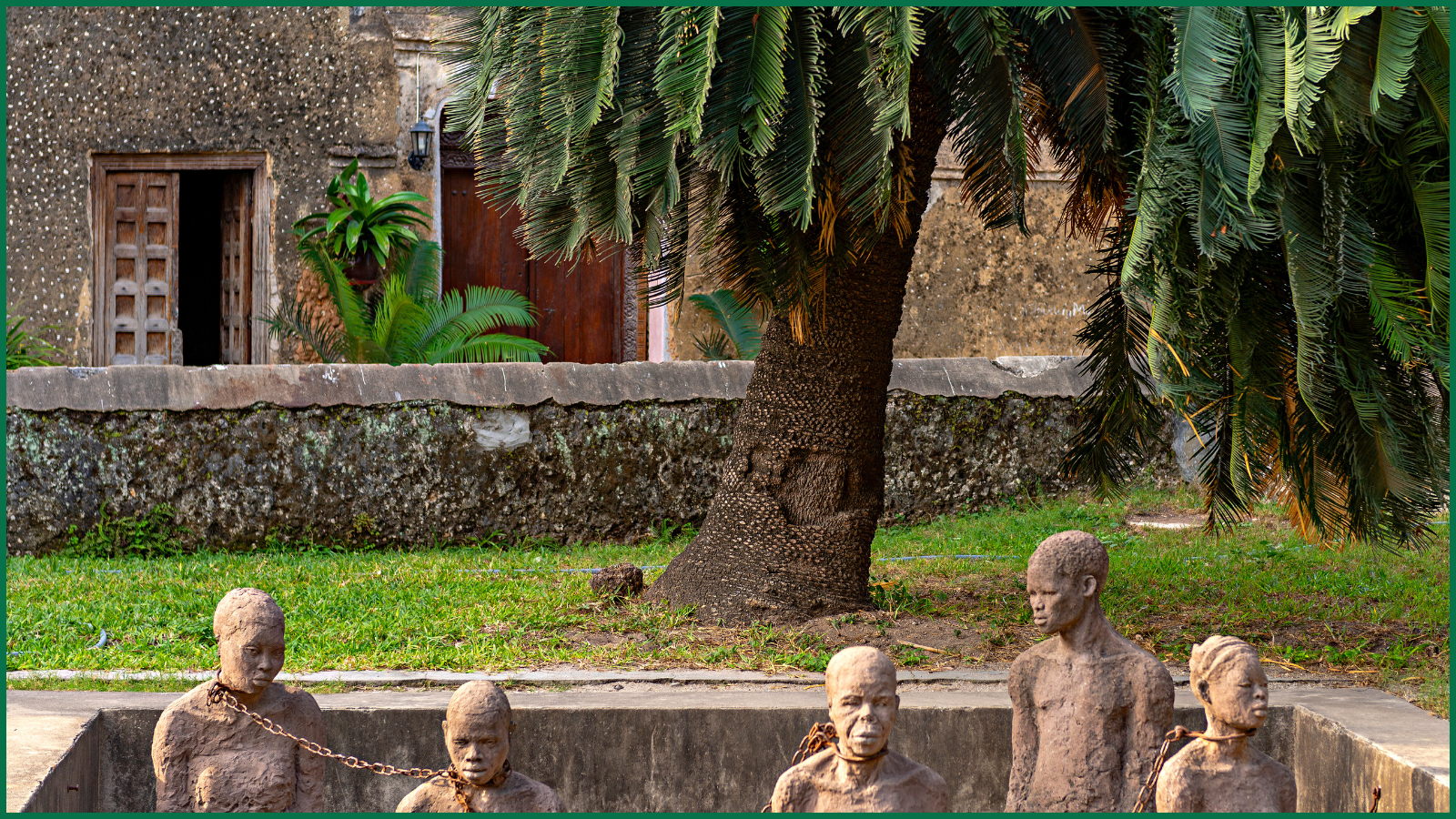
In a short matter of decades the indigenous societies, mired in less-advanced modes of production like primitive communism and slave economies, were broken to the thunder of Old World disease, technology and thirst for lucre. Gold and silver deposits in the Americas were drained by indigenous labour toiling under the swords of conquistadors, oceans were mercilessly exploited, vast tracts of land were cleared for plantations of sugar, tobacco and cotton, the African slave trade was engaged.4 From the European perspective, wealth seemed to amass from thin air, as all debts were paid far from home in the form of blood and environmental ruination. In a preview of what would later become the stock market, expeditions dedicated to pillaging native kingdoms were funded by investors risking capital for shares on future spoils. It was the ransacking of the Americas, the mass-utilization of African slaves and gunboat diplomacy in Asia that marked capitalism’s primitive accumulation stage. To follow still was the Industrial Revolution and formal colonization of South Asia, the Middle East and continental Africa.
The concept of phase transition is also described as “the transformation of quantity into quality.” The pillaging of the Americas illustrates this, as a massive rupture to the feudal mode of production burst open once the natural and social wealth of two continents was exposed to those with armaments and the backing of mercantile investors. European land—the primary source of life and wealth through the feudal age—diminished in its preciousness, and the fortunes of the landed aristocracy diminished along with it. The massive surplus of inputs—precious metals, sugar, cotton, forced labour, etc.—was absorbed by the relatively small population of western Europe and forced a phase transition from a relatively closed and stable feudal system into a rabidly expansionary global capitalism.
As land in Europe lost its importance in a rapidly evolving mode of production, pressure was applied to agriculture to squeeze more out of the lands. New rotation methods were implemented, new American crops like potatoes and corn were planted, new ploughs were deployed, peasants that had worked lands for generations were evicted by force. The separation of peasants from their livelihood on the land is how wage labour emerged. The collision between the masses of peasants dispossessed of their ancestral lands and a new class of capital owners is what gave birth to the modern system:
The historical conditions of [capitalism] are by no means given with the mere circulation of money and commodities. It can spring to life only when the owner of the means of production and subsistence meets in the market with the free labourer selling his labour-power. And this one historical condition comprises a world’s history. Capitalism, therefore, announces from its first appearance a new epoch in the process of social production.5
Feudalism was being negated fast, especially in Britain where the Industrial Revolution began. The overwhelming amounts of resources flooding Europe spurred productive innovation in order to process it all. New forms of capital were merged into a fledgling factory system, such as steam power, milling machines, blast furnaces and power looms. But now the capital owner was faced with a unique problem posed by this new web of economic relations: overproduction. Too many goods could be produced for the domestic market to possibly absorb at a profit.
Typical in the history of capitalism, the solution was found at the end of a gun. Leveraging their technological advantages, European states in the service of financial capital laid siege to India and China, the great powers of Asia. China became a dumping ground for opium and the Indian domestic economy collapsed as their market was flooded with cheap European textiles and manufactures. Much of South Asia and Africa were formally colonized, transformed into outlets for excess European production and becoming sites of resource extraction under systems of forced labour.
It was these three broad motions that resulted in a world under capitalist domination. First, the pillaging of North and South America and genocidal exploitation of enslaved Africans and indigenous peoples. Second, the creation of a mass of wage labourers drawn from the European peasantry through enclosures that separated them from their land. Finally, the establishment of extractive colonies across almost the entirety of Asia and Africa. While these processes have continued to evolve rapidly over the 20th century to the present, the mechanism whereby one class extracts profit at the expense of another has not changed—it is baked into the logic of capitalism. The geographer, David Harvey, sums up capitalist history thus:
The transformation of labour, land and money into commodities rested on violence, cheating robbery, swindling and the like. The common lands were enclosed, divided and put up for sale as private property. The gold and silver that formed the initial money commodities were stolen from the Americas. The labour was forced off the land into the status of a “free” wage labourer who could be freely exploited by capital when not outright enslaved or indentured. Such forms of dispossession were foundational to the creation of capital. But even more importantly, they never disappeared.6
It is difficult not to recognize capitalism as a zero-sum game when considering its history and present-day unfolding. Over a billion people in less-developed capitalist countries live in slums—a number projected to double by 2050. Over 700 “dead zones” without oxygen have formed in the ocean as a byproduct of heavy shipping traffic, plastic waste, overfishing and the acidification of waters by carbon emissions. Over 187 million people have died from wars involving capitalist competition over resources since the last century—and that number is climbing. Even in the core capitalist countries of the West, an increasing number of crises and epidemics are building—the mental health crisis, climate crisis, housing crisis, inflation crisis, drug epidemic, refugee crisis—with more to come. While its productive capacity is unquestionable, an enormous surplus is amassed by a small number of elite capital owners—close to 0.1% of the population—and arrives by a process of destabilizing exploitation, including international military coercion, imbalanced trade treaties and unmitigated pollution of the biosphere.
It is the contention of classical Marxist philosophy that a positive-sum economy working for all is only possible along the lines of a democratic, classless economy that puts wealth creation and scientific discovery at the disposal of the working class. On progress under capitalism, Marx states:
When a great social revolution shall have mastered the results of the bourgeois epoch, the markets of the world and the modern powers of production and subjected them to the common control of the most advanced peoples, then only will human progress cease to resemble that hideous pagan idol who would not drink the nectar but from the skulls of the slain.7
Karl Marx, Capital: Volume One (Ancient Wisdom Publishing, 2019), 318. ↩︎
Ian Angus, “The Fishing Revolution and the Origins of Capitalism,” Monthly Review, Vol. 74, No. 10. ↩︎
Karl Marx, Capital: Volume One (Ancient Wisdom Publishing, 2019), 120. ↩︎
David Harvey, Seventeen Contradictions and the End of Capitalism (Oxford University Press, 2014), 57. ↩︎
Karl Marx, “The Future Results of British Rule in India,” in Dispatches for the New York Tribune: Selected Journalism of Karl Marx (Penguin, 2007), 125. ↩︎
It was Aristotle who first observed that civilization does not really begin until an economic surplus is produced by one class for use by another—a point taken up by Karl Marx and Friedrich Engels in the opening line of The Communist Manifesto: “The history of all hitherto existing society is the history of class struggles.”1
Without slaves and masters, plebeians and patricians, serfs and lords, workers and capitalists, then systems of writing, military, philosophy or political authority could not have been developed and expressed by civilization. While a surplus depends on a labouring majority of the population to produce it, throughout history it has been captured by a minority of ruling class elites who have used it to entrench authority. The struggle over production and control of this surplus is known as class conflict and it manifests itself in myriad ways—terms of interest and debt, governmental leadership, monetary policy, the dictatorship of the workplace, cost of education and healthcare, decisions regarding the social safety net, access to home ownership and the rights of tenants, etc. It is within this confrontation between elites and the labouring masses that all political decisions are made and social direction is taken.
Class systems, while persistent and stubborn, have no basis in nature and present themselves as an obstacle to harmonious living. This is why both Thomas Jefferson and Jean-Jacques Rousseau believed indigenous societies provided more happiness and social stability to their members, as fruits of labour were democratically allocated and law was a matter of popular opinion instead of a violently-enforced dictate by one class onto another. Marx writes:
One thing, however, is clear—nature does not produce on the one side owners of money or commodities, and on the other, men possessing nothing but their own labour-power. This relation has no natural basis, neither is its social basis one that is common to all historical periods. It is clearly the result of a past historical development, the product of many economic revolutions, of the extinction of a whole series of older forms of social production.2
As discussed in the article on capitalism, it is only when the capital owner meets in the marketplace those with nothing but their labour to sell that the capitalist mode of production is born. From this point onward, workers and capitalists are locked into an interpenetration of opposites and go on to supplant the previously dominant lord and serf class relation in Europe before conquering the globe. Prior to the Industrial Revolution, proto-capitalism could only be concerned with looting existing riches from the technologically disadvantaged. And while the coercive elements of capitalism have never disappeared, it did manage to become a mode of production in its own right—the most productive to ever exist—owing to the unlocking of resources on a massive scale, subsequent technological innovation and the forceful drawing of an urban wage labour pool from the countryside. The latter is a process still underway in many less-developed parts of the world.
Like feudalism and the slave economies of antiquity, multiple classes exist along the base and superstructure of capitalism: bureaucrats, intellectuals, media personalities, contractors and soldiers exist alongside destitute slum-dwellers, drug addicts and the fully homeless. But the employer–employee relation is dominant because it enables vast wealth and power to concentrate in few hands and produces almost every available good and service for consumption. These two classes are inter-dependent, they cannot exist without the other and yet they possess contrary material interests: the employer wants to keep wages paid for labour time as low as possible, while the employee wants the opposite. Owing to this contradiction, capitalism has witnessed a succession of struggles over union-organizing, outsourcing of jobs to cheaper, less-regulated countries and political conflict at the state level over public benefits and investment.
Consciously recognized or not, class conflict between employers and employees provide much of the friction that animates our politics, society and individual lives. Despite the inter-dependence of these two great classes, the power imbalance clearly favours capital owners. While an employer may choose to hire a worker to assist in generating profits, the employer will have many prospective employees to choose from and, in any case, does not need any specific worker in order to survive. This is not true for the worker, who must find employment to survive and will have far fewer employment prospects available to them than an employer will have prospective employees. In other words, as presently constructed, the capitalist class needs the working class to create value but the working class needs the capitalist class to actually survive.
This power imbalance that exists at the economic base of capitalism likewise manifests in the superstructure. Whereas the Catholic Church played the dominant role in mediating class relations and asserted the nobility’s “divine right to rule” during feudalism, it is the state that performs this function in capitalism. As the locus of production shifted from farmlands and enslaved populations toward a global web of resource extraction and colonial markets, a robust state apparatus in the service of the capital class became necessary to ensure the protection of property throughout the supply chain:
State formation and the origins of financial capitalism were closely connected, and this nexus provided a way for prosperous urban citizens in high finance, a small elite, to establish their influence on politics while simultaneously making their entrepreneurial success dependent on powerful rulers and their shifting political fortunes.3
It is through the capitalist state apparatus that much of the world became exploited as colonies or subjugated by unequal treaties in the service of investment. It is through this state apparatus that great wars over resources and markets are fought, where great masses of debt are leveraged, where prisons are filled, where school curriculums are devised, where infrastructure projects are authorized, interest rates are set and budgets are formed. All of this is carried out under the direction of elite stakeholders, while the public is only roused to “vote” every so often for this-or-that corporate-backed political party. Since this vote is the only meaningful say that the public has in its own politics, Emma Goldman adroitly observed: “If voting changed anything, they’d make it illegal.”4
If the state were in the hands of the public, it would be unlikely to mediate class conflict in the interests of capital owners. But in the hands of financial capital, the state has the unique ability to socialize costs and privatize profits. For example, the 2003 invasion of Iraq was funded largely by debts leveraged against the American taxpayer and fought with the bodies of working-class sons and daughters. Meanwhile trillions of dollars of public money disappeared into the pockets of bondholders and the CEOs of defence contractors. Another example was during the COVID-19 response when central banks around the world acted in unison to eliminate interest rates and prop up stock market assets by printing money at a time of mass lay-offs and restrictions on movement for the non-yacht owning public. In the aftermath, it is no surprise that the capital owners came out wealthier than ever before while the global working class suffers crippling inflation and a punitive cost of living. This is the capitalist state working as intended—socializing costs and privatizing gains—and this service is the chief reason why “a stateless capitalism is unthinkable.”5
From its outset, capitalism was predicated on the violent destruction of traditional societies, the coercive acquisition of wealth, class conflict, environmental ruination and reinventions of production in the interest of profit. These core characteristics have hardly changed. Workers and consumers alike are powerless relative to the capital-controlled market, and the state is in the hands of those same elite interests lurking behind every crisis, making a serene life on this Earth nearly impossible. While capitalist technology has given humanity the tools to solve economic scarcity, employing them in a socially and ecologically harmonious way is stonewalled by a state of class contradiction. Class consciousness describes the active decisions of one class to pursue their interests by state capture and force. The economic elites have accomplished this. But there is an emerging consciousness bubbling under the surface of digital connectivity, a new language developing in the full sunlight of existing oligarchy. Once working class consciousness has crystallized, the construction of a new, liberatory government may commence.
One major characteristic separating the Marxist school from other philosophies is the engagement with liberal economics following Marx’s exhaustive survey of classical English political economy. As physical beings, we have real biological needs sated by an ever-more complex capitalist economic system. It is this system of production and consumption that cannot help but exert influence on our conscious thoughts—and that is true even as few people have any meaningful understanding about how our economic system works. So many imagine economics as stock tickers, randomly fluctuating commodity prices, national GDP charts, unemployment percentages and bespectacled accountants with blank personalities.
Statistics are revelatory but they are only surface-level expressions of the multitude of relations between people engaged with each other in production and consumption. More generally, global society as a whole “does not consist of individuals, but expresses the sum of interrelations, the relations within which these individuals stand.”1 In economic terms, wealth and status are acquired relative to others. Within capitalism we can say an individual is “wealthy” only because he generally has more money or assets than most others. We can identify others as “employee” or “employer” or “contractor” or “entrepreneur” only in the presence or absence of a relation to clients, a boss or paid staff. Value is likewise a social product created through interrelations. Marx writes: “The law of gravity asserts itself when a house falls about our ears. The determination of the magnitude of value by labour time is therefore a secret, hidden under the apparent fluctuations in the relative values of commodities.”2 Like gravity, value is asserted not as a material force but as a relation between subjects locked in a process of exchange.
In the realm of capitalist relations, the signature object of production is the commodity.3 A commodity embodies three value forms in a self-supporting dialectical unity:
Use-value refers to the utilitarian qualities of a commodity and its ability to satisfy the wants or needs of people. For example, chicken and vegetables can satisfy hunger, just as a smartphone can satisfy the want of entertainment and communication. How one might use a commodity is a subjective quality unlike price.
Exchange-value roughly corresponds with the objective cost to produce commodities as they move along the supply chain. Price can fluctuate wildly in accordance with monetary liquidity and the law of supply and demand but, in equilibrium, the exchange-value of a commodity tends to reflect the cost of producing it—the labour time and materials. For this reason, chicken and vegetables tend to exchange at significantly lower prices than smartphones which require specialty materials and expert design. Supply and demand determines short-term oscillations in price but it does not define exchange-value.
Value. Value refers to the natural material and quantity of labour congealed in a commodity. It is a historical constant that, absent mental and physical human labour, nothing can be produced or consumed. Therefore, labour is the only component of the process that transforms nature into commodities. Value is in constant flux and cannot be measured with precision because the labour-time congealed by a commodity must be socially necessary if it is to impart value. Inefficient workers or technologically-backward factories cannot impart value into their product by taking more time than is necessary to produce it. By the metric of socially necessary labour time, chicken and vegetables purchased at the grocery store will have a lesser value than those same items served on a plate in a fine dining restaurant. A smartphone, on the other hand, will have more value than either of those commodities because of the additional labour time required to produce a more sophisticated item.
To avoid confusion, it should be emphasized that this unity of values is what is found in commodities on the market. Marx did not believe that value was a measurement that could be universalized. Previous modes of production saw the construction of mountainous pyramids and gleaming temples which contain impossibly-high amounts of congealed labour and priceless materiel and no realistic use-value or market exchange could ever justify producing such wonders today. The rationale behind the historical production of priceless artifacts, monuments and palaces belong to entirely different sets of economic relationships that are now extinct.
In present times, an individual may expend great quantities of labour time writing bad novels or packing sand castles and never produce a commodity because their product has no use-value that someone would exchange for. The last idiosyncrasy to note is the world of scams, derivatives, fiat currency and financial speculation that are all designed chiefly to transfer money between market participants without contributing to the global store of value. One notorious example is quantitative easing, which sees the money supply increase faster than the actual production of value. This is what causes inflation.
With knowledge of the value forms, one can apply them to any commodity that is produced and sold in the capitalist system we live in. A potted plant finds use-value in its aesthetics and air purifying potential. It might exchange for $20 and it congeals a value relative to its growing conditions, the time it took to reach a 12 inch height and the transportation required to deliver it to the local gardening centre.
As the only commodity capable of imparting more value than it withdraws, labour is the linchpin—without this commodity, the global web of capitalist production collapses. The wage and salary worker must “bring a commodity to the market, i.e., his own skin.”4
The employee offers up their labour-power for use by an employer, transferring a value that correlates with their cumulative experience and skills. In exchange, they are paid a wage that is primarily determined by the supply and demand of the labour market. And it is from this special commodity where the enormous surpluses of the modern age are derived, where government budgets are inked, armies are raised and corporate largesse is created: that labour-power injects more value into a commodity than it will receive back in a wage.
Discovering this surplus-value is what led to Marx’s articulation of crisis theory; as workers produce a surplus beyond what they are able to consume, the system must be constantly expand in order to absorb the created surplus. Inherent to capitalism are periodic eruptions due to overproduction and barriers to expansion that result in economic recessions and depressions. This tendency toward crisis is papered over by mass immigration, warfare, “free trade” agreements and a flow of debt and credit, but crisis in capitalism can only be delayed and never avoided.
In this capitalist economy, the use-value of cheap labour is sought the world-over and unemployment levels are carefully managed in order to suppress wages via inflow immigration, the outsourcing of production and state expenditures or cuts. The result is a feast whereby a global ruling class gorges on those with nothing to sell in the market but their bodies.
It was shown that the appropriation of unpaid labour is the basis of the capitalistic mode of production and the robbery of the worker is carried out by its means; that the capitalist, although he buys the labour-force of the worker at the full value which it possesses in the market as a commodity, yet derives more from it than he has paid for it, and that in the last instance this surplus creates the total amount of value from which the capital steadily increasing in the hands of the capitalistic class is amassed.5
As presently constructed, the capitalist class needs the working class to create value but the working class needs the capitalist class to actually survive. A massive power imbalance between the elite capitalist ruling class and workers is thus concretized by economic necessity and witnessed by the commodity, value-forms conjoined.
Further Reading:
Karl Marx, Critique of Political Economy: Part One.
The relation of organic beings to their environment has always been one of give-and-take. While nature furnishes the conditions that organisms need to survive, it has also manufactured hazardous weather events, predators, diseases and landscapes that spell certain death. In concordance, a healthy ecosystem begins with the soil required for vegetation, which in turn supports a pyramid of animal and insect populations. All things living return, lifeless, to the soil and start the cycle anew. But this metabolism can be disturbed. Overpopulation of one species relative to others, tectonic shifts and volcanic explosions, atmospheric composition, hydrological changes and, infamously, asteroid strikes from outer space—any of these things open up a metabolic rift in the ecological cycle that result in mass extinctions and a phase transition of the environmental regime.
Since the last ice age ended with the Younger Dryas, humanity has struggled to find metabolic concordance with its environment as new modes of production and class conflict arose. Friedrich Engels observed:
The people who, in Mesopotamia, Greece, Asia Minor and elsewhere, destroyed the forests to obtain cultivable land, never dreamed that by removing along with the forests the collecting centres and reservoirs of moisture they were laying the basis for the present forlorn state of those countries. When the Italians of the Alps used up the pine forests on the southern slopes, they had no inkling that by doing so they were cutting at the roots of the dairy industry of their region; they had still less inkling that they were thereby depriving their mountain springs of water for the greater part of the year and making possible for them to pour still more furious torrents on the plains during the rainy season. Thus at every step we are reminded that we by no means rule over nature like a conqueror over a foreign people, like someone standing outside nature—but that we with flesh, blood and brain, belong to nature, and exist in its midst and that all our mastery of it consist in the fact that we have the advantage of all other creatures of being able to learn its laws and apply them correctly.1
We can recognize that classless hunter-gatherer societies had a mode of production that could have lasted forever as it was technologically-bound to the necessity of sustainable resource consumption and replenishment. But a metabolic rift emerges at the outset of settlement, private property and class division. The soil is tilled, the population proliferates, wildlife is suppressed, waste and nutrients become dislocated by urbanization. While the ancients are forgiven for their lack of foresight toward unintended environmental consequences, the present situation reveals a unique contradiction: while capitalism affords us the science to decode nature’s laws, its momentum denies us the ability to abide them in any rational way.
The expansionary logic of capitalist production is driven by market competition, the quest for profits and the dominance of exchange-value over use-value in economic relations. As labour and nature are the source of all values in capitalism, they are squeezed mercilessly for the surplus that sweats from their pores.2 The result is an economic system of deeply deformed priorities. Because the use-value of something is only evaluated in terms of what it can exchanged for, the capitalist economic system is unable to price a breathable atmosphere, a healthy ocean, an intact rainforest or an endangered species. On the contrary, minimizing production costs for the sake of profit dictates active harm to the ecosystems that underpin our biological existence. The reason why microplastics float free in our bloodstreams and millions of Amazonian acres disappear annually is because there is no profitable exchange that restricts the use of plastic or spares billions of trees from cattle ranches and sugarcane plantations. While the use-value of a livable biosphere is obvious, within the confines capitalist production both nature and people become venal objects, subordinate and abused.3
The systemic nature of environmental challenges are important here, lest one chalk them up to moral failings or inadequate education. For example, it is a consequence of capitalist production that every year 54 billion tons of annual emissions enter the atmosphere and 20 million tons of plastic flow into oceans. But this does not represent “a moral deficit of individual capitalists. They are obliged to follow such behaviour due to competition with other capitalists if they want to survive as capitalists. The decision to act in accordance with that blind drive appears rational.”4 Any attempt from the civil society to legislate better practices will likewise be met with a well-funded wall of oligarchic political resistance, rendering so much effort futile. And the emissions spewed into the atmosphere and plastic dumped into the oceans accelerates, each year more than the last, expanding in lockstep with the capitalist system itself. This is to say nothing of the emptying of aquifers, global deforestation, the hole in the ozone layer, acidifying oceans and the mass extinction of species simultaneously in motion.
While Marx identified extreme disturbances in the Earth’s ecological metabolism due to industrial production, he did not view the metabolic rift as something unique to the capitalist mode as it is a common feature of all class societies, including the feudal and ancient slave economies. What capitalism has done is elevate the rift to the level of existential threat and, through a process of technological advance, it poses an opportunity to resolve global class conflict altogether. Classlessness, he writes,
is the genuine resolution of the conflict between man and nature and between man and man—the true resolution of the strife between existence and essence, between objectification and self-confirmation, between freedom and necessity, between the individual and the species. Communism is the riddle of history solved, and it knows itself to be this solution.5
To understand his conclusion, we can look to the long-simmering crisis of climate change as it relates to ruling class power. On the one hand, we have a faction of the ruling class which profits directly from fossil fuel combustion and has spent billions of dollars to propagandize the population into believing that there is no consequence to the 53 billion tons of nitrous oxide, methane and carbon dioxide emitted annually. This faction is seen prominently in the Koch Industries and ExxonMobils of the world. Then there is the other faction of elites who ostensibly recognize the problem while hypocritically living lavish, emission-intensive lifestyles, pursuing egoistic conquests of outer space and contradictory public policy. Elon Musk, Jeff Bezos and Mark Zuckerberg fit into this category, with the latter repeatedly calling for action on climate change while treating himself to a 387-foot super yacht that spews 40 tons of carbon dioxide per hour at cruising speed.
Under the auspices of a ruling class engaged either in denialism or outright hypocrisy, what wisdom is the working public supposed to gather from any attempt to manage emissions? Emissions reduction is contextualized either as a outright conspiracy theory or an undue demand to sacrifice yet more of the economic pie—a pie which they produce and receive crumbs to eat.
As it stands, “the emissions of the world’s millionaires alone would deplete 72 percent of the remaining carbon budget for staying with the 1.5°C [warming] limit,” but there is no talk of capping the individual emissions of the global elite.6 No action can be taken against an elite capitalist class at the helm of the political levers and in control of economic production. And still,
the consequences of not reducing emissions on the scale proposed by the IPCC would be calamitous. A 2°C increase could cause the Antarctic ice sheets to disintegrate resulting in up to a nine-meter rise in sea levels. A temperature increase of three degrees could raise sea levels by 25 meters, endangering world food production. This, as well as the melting of the Himalayan glaciers, could result in billions of climate refugees. An increase in carbon dioxide concentrations of 550 parts per million, a 4°C temperature increase, could raise sea levels by as much as seventy-five meters, inundating most coastal areas.7
Imagine asking billions of working people and their progeny to risk all this disaster so that a meagre 1.5 percent of the world’s population may enjoy a plush existence, unfettered. This is the flex of ruling class power.
It remains that a technologically advanced economy need not fly within the narrow horizon of commodified nature toward a ruthless pursuit of profit. New value forms can be discovered and asserted. The use-values of a liberated working class will include clean air and water, artistic and scientific progress, a free wild, medical discovery, creative innovation, automated production, leisure and abundance. Our 200,000-year history has shown that ecological ruin and ruling class power is not a feature of our species but an aberration to our story.
In the typical western city, one does not have to search very hard to find the signs: derelict buildings, littered streets, homeless with pockmarked faces pushing carts filled with bottles. Across North America, opioid abuse and a cost of living crisis have sent homeless populations climbing against a backdrop of city blocks scorched by wildfire, ground tremors from fracking, mass flooding by storm surges and condos of glittering glass. In 2018, Chris Hedges published one of the most potent illustrations of capitalist alienation with America, The Farewell Tour.
In the book, he sets the table early: “Hurricane after hurricane, monster storm after monster storm, flood after flood, wildfire after wildfire, drought after drought will gradually cripple the empire, draining its wealth and resources and creating swaths of territory defined by lawlessness and squalor.”1
Hedges then introduces us to Christine Pagano, a woman who fell into drugs during high school after her stepfather was caught sleeping with her 16-year-old classmate and her home life imploded. Years after experimenting with heroin, she would turn to prostitution in order to feed a $500 heroin habit and sold her body in Jersey City to Wall Street traders, business executives and bankers “who were the prostitutes’ main customers.”2 She shares that this was preferable to Camden, New Jersey, where “‘the poverty is so bad. People rob you for $5, literally for $5. They would pull a gun on you for no money.’”3
Then there is Robin Rivera, the product of a troubled home who later earned minimum wage at a hair salon in Los Angeles. She accepted a proposition from a talent agent in the pornography industry in the hope of making ends meet. “‘They tied me up and hung me from the ceiling,’ she said,” adding that she was also electrocuted with a cattle prod. “‘They put a hook in my ass’” and “‘tied my ponytail to it. They tied my arms to a barrel. They tied my legs to a barrel. He put a vibrator on me…Five hours is a long time. For $900.’”4
Depravities of this kind are rarely discussed in the media. This could be due to the sheer numbers of those who indulge—up to one-quarter of web searches and one-third of downloads relate to pornography, after all. But it is corollary to the economic imbalances and deprivations of the economic sphere, the “rough neighbourhoods” on the other side of the tracks in our cities or the beggars encountered at home and abroad. As noted in “Ecology,” capitalism turns both land and people into commodities—“venal objects”—and this becomes the lived experience for all-too-many in rich and poor countries alike.5
When Marx discusses “alien capital” confronting “alien labour,” he is spotlighting two economic processes which move on their own momentum, as though independent of human agency.6 Human beings are creative by nature and we define ourselves by conscious, self-directed activity. Under capitalism, this is rarely the case. Individuality and self-expression is seldom found in production; work is transactional and conducted under authoritarian oversight for a wage on which to subsist. In his Economic and Philosophic Manuscripts, Marx writes that “the need for money is therefore the real need created by the modern economy, and the only need which it creates.” It is this need of money that elevates exchange-value to the highest priority, with use-value of only secondary consideration to a profitable exchange. Work is reduced to a pursuit of that universal commodity, money, and it is only in that cramped space of time off the job when we are free to express ourselves, largely as consumers. Due to the energy consumed by employment, leisure itself is distorted and becomes a site of excess and expense. Born of this common need for money, we see an extension of products which appeal to our base instincts, subservient only “to inhuman, depraved, unnatural and imaginary appetites”—of the sort highlighted in the above paragraphs.7
As psychoanalyst Erich Fromm interpreted Marx, “alienation leads to the perversion of all values.” Because economic aims are “the supreme aim of life, man fails to develop any truly moral values,” and “the riches of a good conscience, of virtues, etc.” are impossible as they lack monetary impetus.8 The capitalist system of production severs society from the splendour of nature and turns individuals into replaceable parts—whether they be numbered employees and managers or prostitutes and johns. Freethinking and meditative contemplation is thus muzzled with individuals crippled by a pursuit of exploitation and libidinous excitations. Downstream from a mountain of emissions and cheap labour are resort vacations and cruises, restaurants serving high-priced cocktails and IMAX movies with sensory-melting special effects. This is what passes through the free time of conforming consumers under capitalism today.
Engels saw this “spiritual-barrenness” through all echelons of society. Corporate conglomerates are the fountainhead of prepackaged, empty pleasures but there is a social context to it. Everyone seeking to maintain or improve their standing within the capitalist hierarchy ultimately become slaves to their own employment—even elite financiers and CEOs become “slave of his own capital and his own profit-getting.”9 Even the ruling class beneficiaries of capitalism’s wealth find themselves with limited agency when it comes to maintaining their standing. If they do not open mass markets, pollute, debt-shark or shrewdly exploit, they will simply be overtaken by a more capable servant of capitalist expansion.
The total alienation of the individual by the ever-complex and expanding process of capitalist production is the reason behind mental health epidemics. In the United States, 90% of people believe there is a crisis of mental health and 20% experience acute symptoms. In Canada, almost half the population is estimated to experience episodes of mental illness by age 40. In Britain, depression is the condition most commonly encountered by the National Health Service and the instructor Mark Fisher observed: “Many of the teenage students I encountered seemed to be in a state of what I would call depressive hedonia…an inability to do anything else except pursue pleasure. There is a sense that ‘something is missing’—but no appreciation that this mysterious, missing enjoyment can only be accessed beyond the pleasure principle.”10 Supporting the Marxist theory of alienation are the manystudies concluding that the more a country is penetrated by capital relations, the worse the mental health becomes. Fisher explains: “When it actually arrives capitalism brings with it a massive desacralization of culture. It is a system which is no longer governed by any transcendent Law; on the contrary, it dismantles all such codes, only to re-install them on an ad hoc basis.”11 The implication is that less-developed countries contain communitarian cultures that are less eroded by capital and experience lower rates of mental illness when compared to the hyper-competitive, technologically advanced and socially isolating realms of wealthy capitalist nations.
But the task of building an unalienated, harmonious society necessary to individual freedom and human flourishing will not be accomplished by sliding backward on the development scale. Marx did not advocate for an anti-capitalist world, but rather, a post-capitalist one. This means negating the liberal order by incorporating capitalism’s high economic productivity while removing its deleterious effects on the social fabric and natural environment. Capitalist productive forces have brought humanity an enormous capacity to produce but an incredibly inefficient and wasteful manner of allocation. By exerting a conscious, democratic control over the production process, a material output could be allocated according to need rather than payment. The pursuit of exchange-values creates an alienating and immoral world but the pursuit of use-values reverses this effect. Houses to live in rather than speculate with. Medicine to save lives rather than profit. Nature for its aesthetics and life-giving functions rather than plunder. Food grown for nutritional quality instead of an ultra-processed quantity.
Use-values demand broad input from consumers and workers, they demand the elimination of noxious products and exploitative services from production, they demand positive, humanistic outcomes from artificial intelligence, they promote free time and activity that nurtures the latent talents within all individuals. In other words, they place moral virtue, community, family, mental tranquility and natural beauty into the heart of economic production.
A post-capitalist and unalienated free association is one where people are their own masters, liberated from state authority, irrational market fluctuations and corporate dictates. To quote Marx, “the associated producers regulate their interchange with Nature rationally, bring it under their common control, instead of being ruled by it as by some blind power; they accomplish their task with the least expenditure of energy and under conditions most adequate to their human nature and most worthy of it… Beyond it begins that development of human power, which is its own end, the true realm of freedom, which, however, can flourish only upon that realm of necessity as its basis.”12